Practice inference skills Math Worksheets for Ages 4-9
3 filtered results
-
From - To
Enhance your child's critical thinking abilities with our "Practice Inference Skills Math Worksheets" designed for ages 4-9! These engaging and interactive worksheets help young learners develop essential reasoning and comprehension skills through age-appropriate math questions. Featuring a variety of fun exercises, children will practice making predictions, identifying patterns, and deducing information in a supportive and playful environment. Our worksheets facilitate independent learning while building a strong mathematical foundation crucial for future success. Perfect for homeschooling, tutoring, or classroom use, these resources foster confidence in young students, making math an enjoyable adventure. Explore the fun of learning math today!
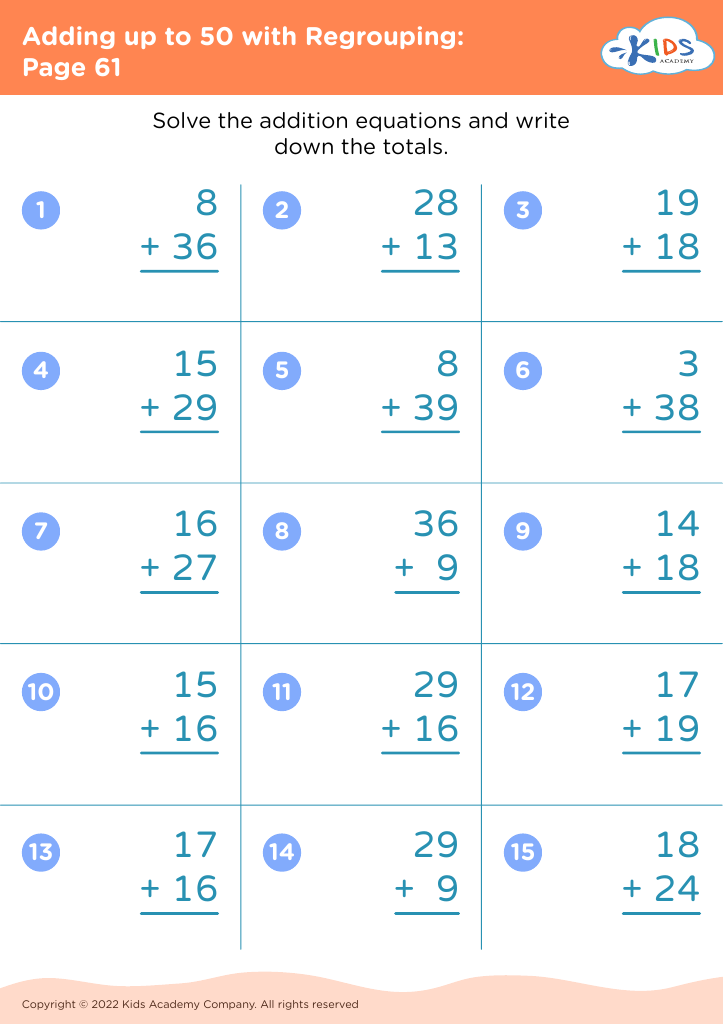
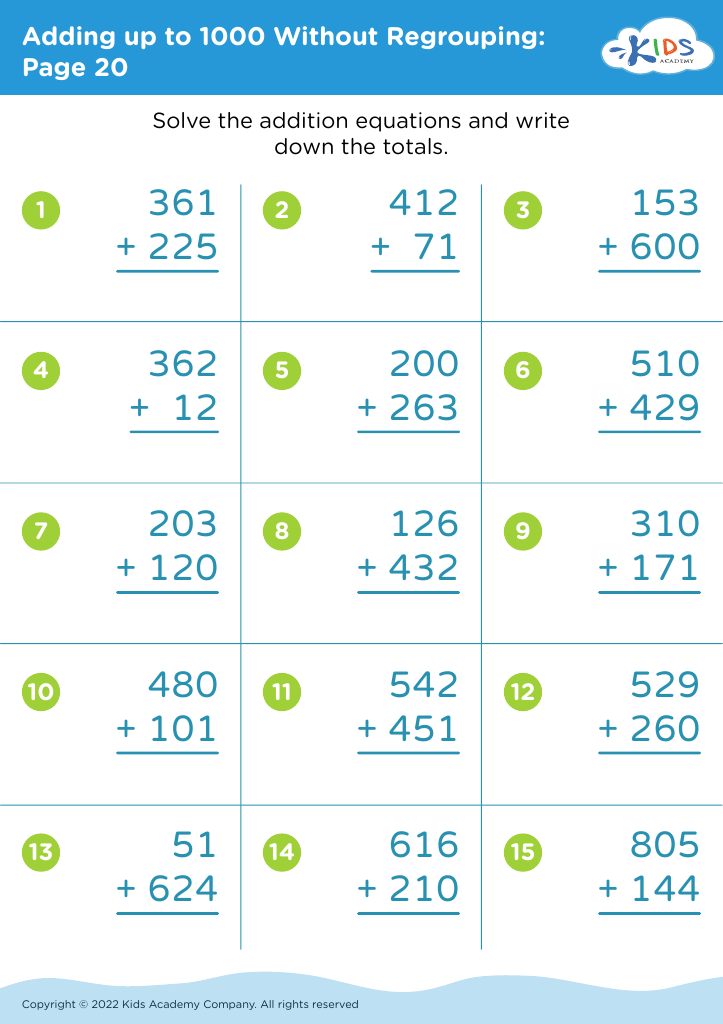
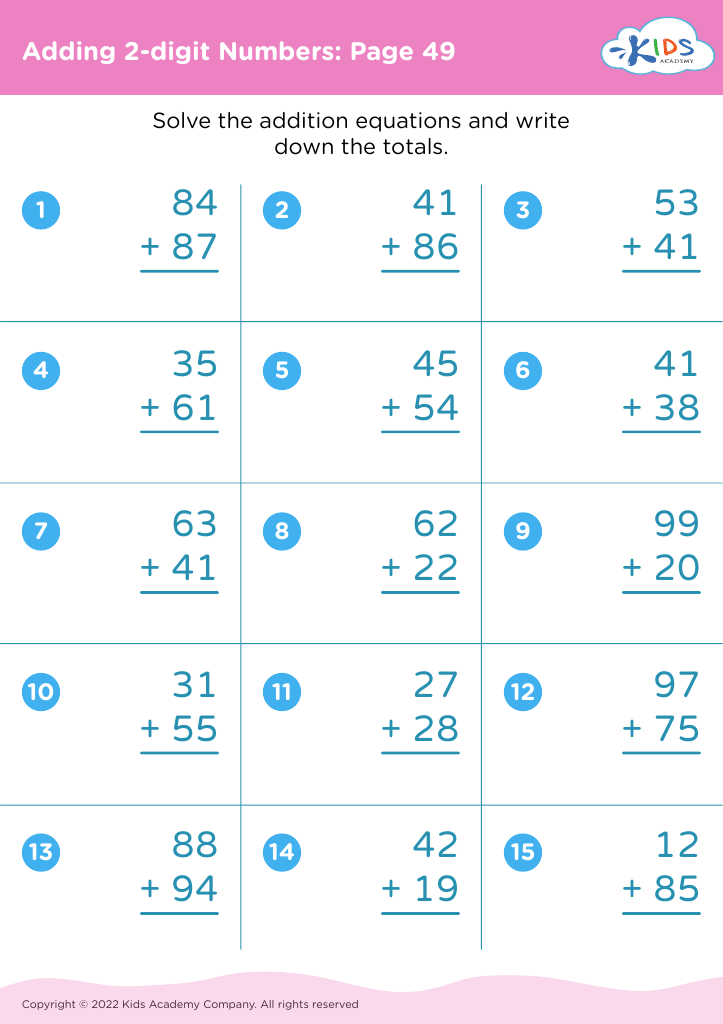








Practice inference skills in math for children aged 4-9 is crucial for comprehensive cognitive development and foundational learning. At this young age, kids are beginning to understand mathematical concepts and relations; by cultivating their inference skills, we empower them to make connections between numbers, shapes, and real-world scenarios. Inference skills help children analyze problems, derive logical conclusions, and apply their understanding to solve various mathematical challenges.
Encouraging these skills supports not only mathematical proficiency but also enhances critical thinking, which is integral to success in all subject areas. As children learn to infer information from given data, they develop the ability to think independently and approach complex problems confidently.
For parents and teachers, focusing on inference skills aligns math teaching with broader educational goals, fostering curiosity and a love for learning. Engaging activities like pattern recognition, comparisons, and predictions in math help children grasp abstract concepts while making learning enjoyable. This prepares them for advanced mathematical thinking and nurtures perseverance, resilience, and creativity—all essential traits for lifelong learners. Investing time in building these skills during early education sets the stage for future academic success, confidence, and a positive attitude toward mathematics.








