Shape identification Math Worksheets for Ages 4-9 - Page 2
33 filtered results
-
From - To
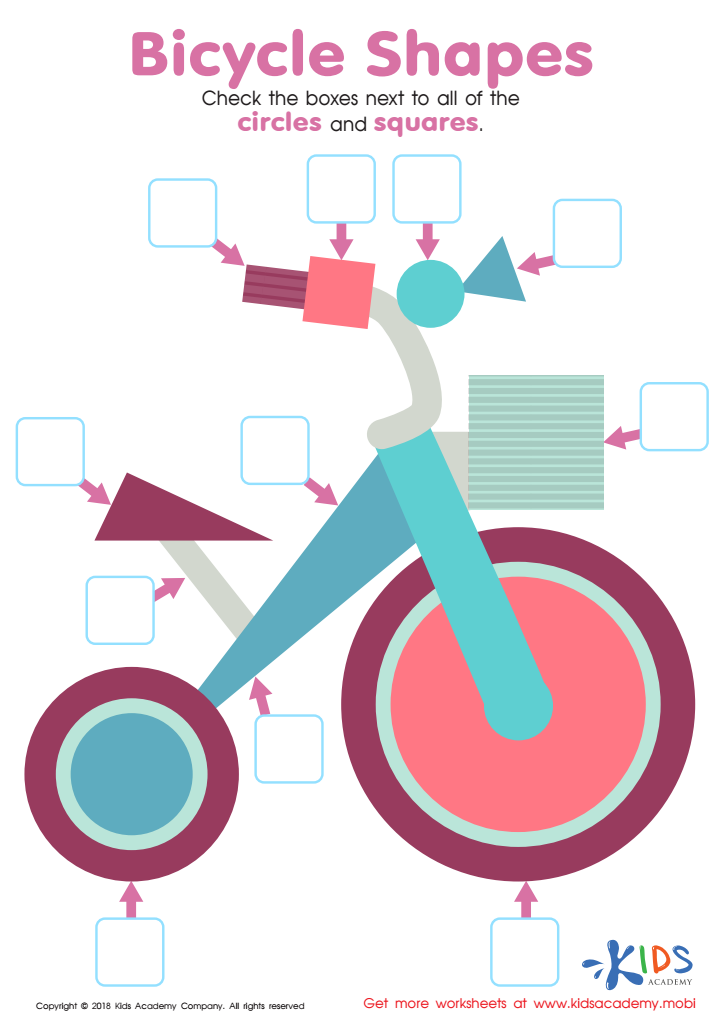
Bicycle Shapes Worksheet
 Assign to My Students
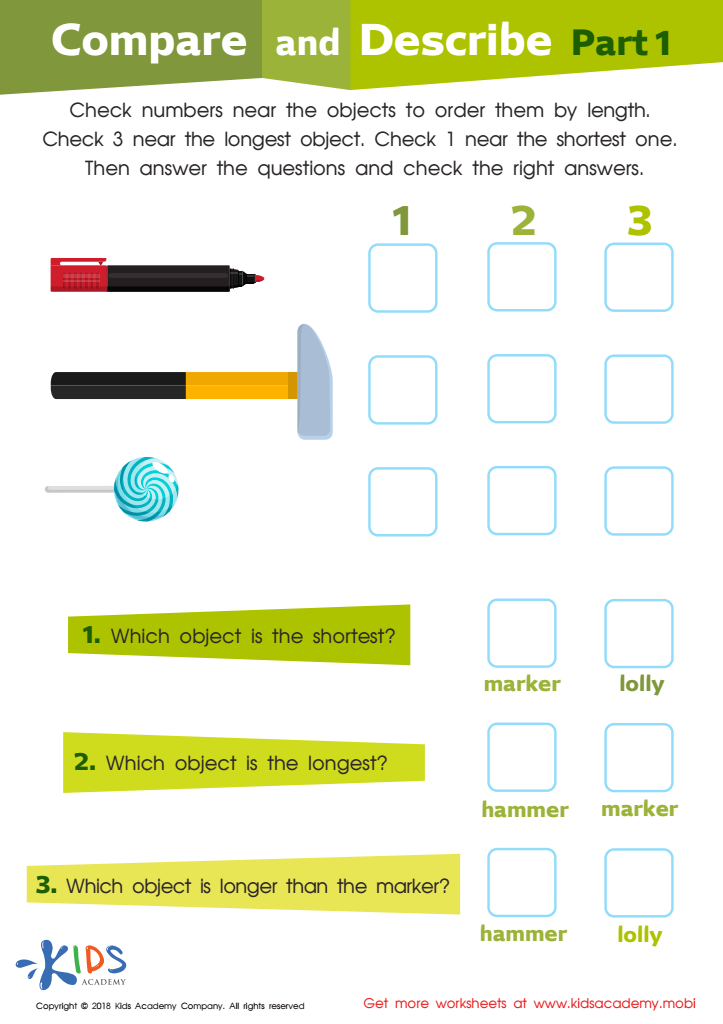
Compare and Describe: Part 1 Worksheet
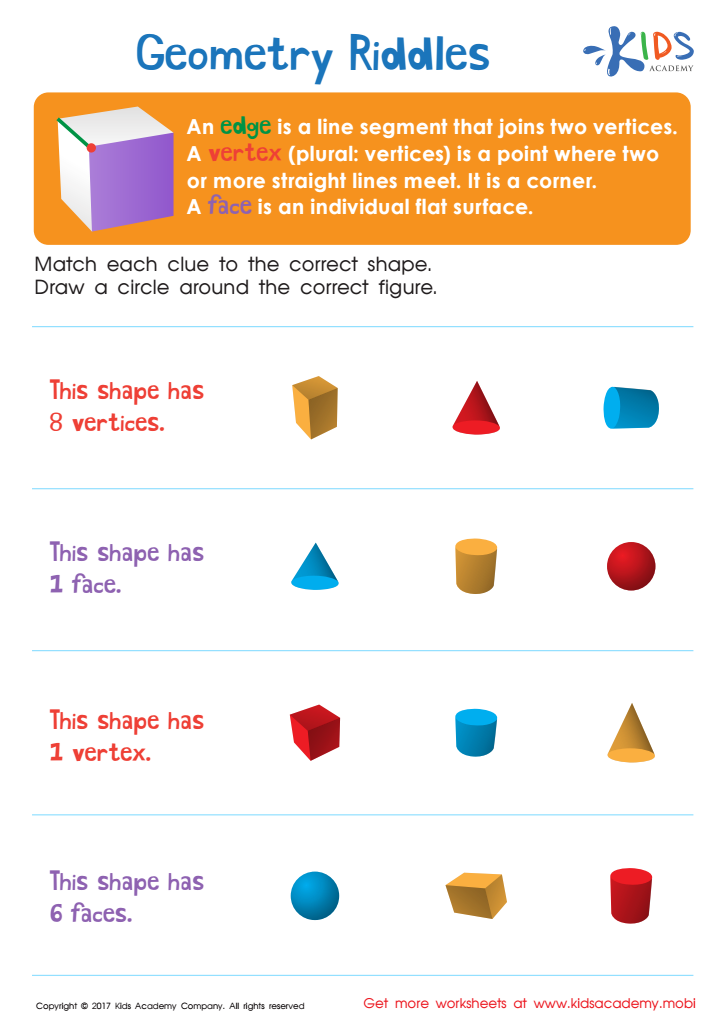
Geometry Riddles Printable
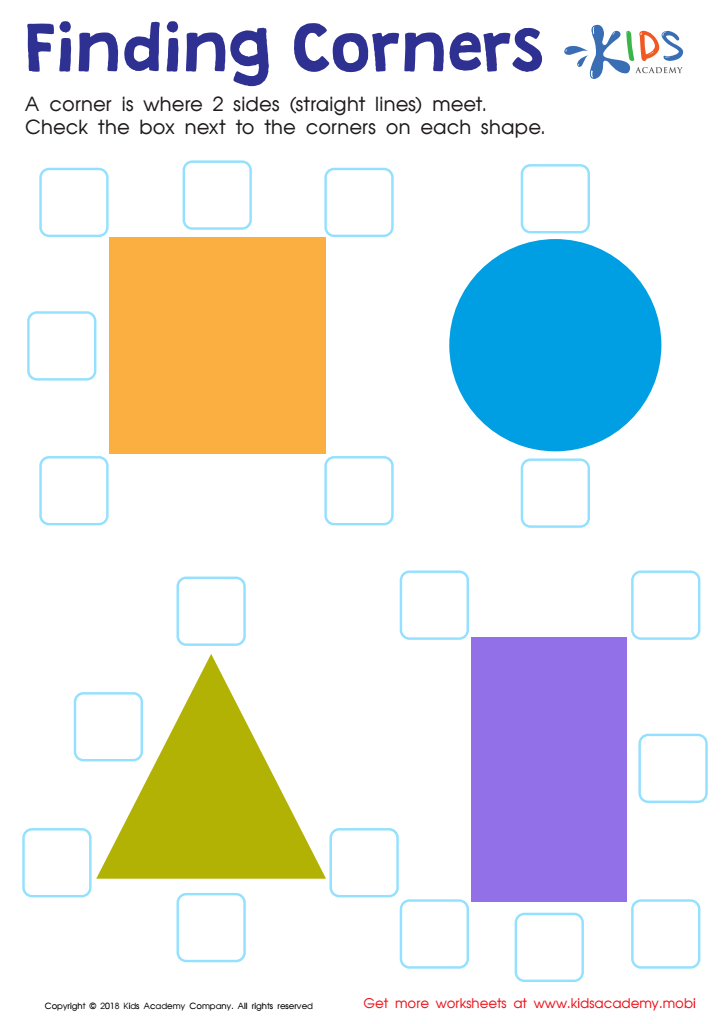
Finding Corners Worksheet
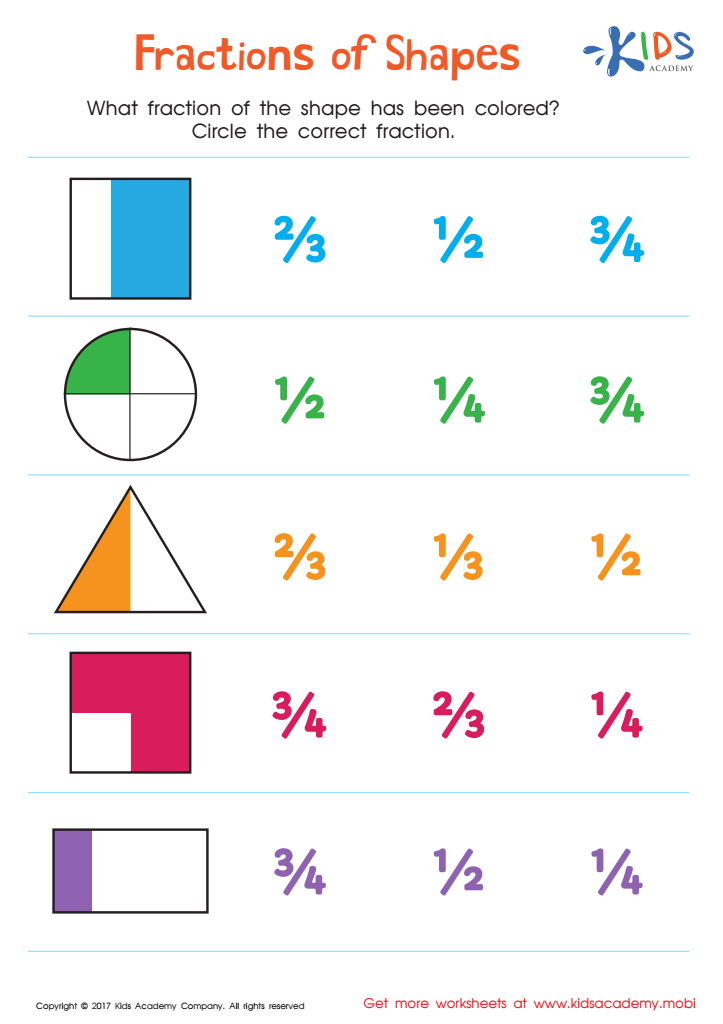
Fractions of Shapes: Math Concept Worksheet
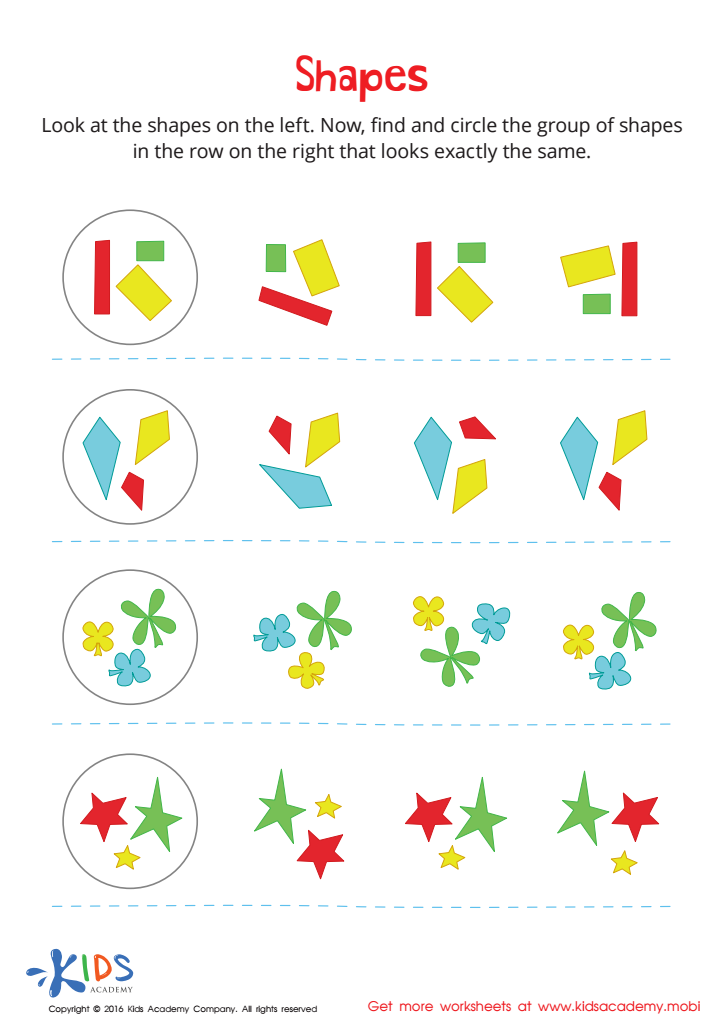
Shapes Worksheet








Shape identification is a foundational mathematical skill that plays a crucial role in cognitive and academic development for children aged 4-9. Understanding and recognizing different shapes is not just about knowing their names; it provides a gateway to more complex mathematical concepts and problem-solving skills.
For young children, identifying and differentiating between shapes develops their ability to observe and classify objects based on attributes, an essential skill for mathematics and science. It lays the groundwork for geometry, helping kids grasp how shapes fit together to form the world around them. This visual-spatial understanding is critical when they start learning about patterns, symmetry, and spatial reasoning, which have applications not only in math but also in daily life and other subject areas.
Moreover, shape identification enhances fine motor skills and hand-eye coordination when children draw or construct shapes, aiding in their overall physical development.
From a cognitive perspective, the process of recognizing, sorting, and categorizing shapes encourages logical thinking and problem-solving, fostering early analytical skills. These skills boost confidence and curiosity—core attributes that facilitate lifelong learning.
Parents and teachers who emphasize shape identification sets children on a path toward academic success, supporting holistic development encompassing cognitive, fine motor, and conceptual skills. In summary, shape identification is more than just a math skill; it's an all-encompassing developmental tool essential during the formative years.








