Spatial awareness Math Worksheets for Ages 4-9 - Page 2
32 filtered results
-
From - To
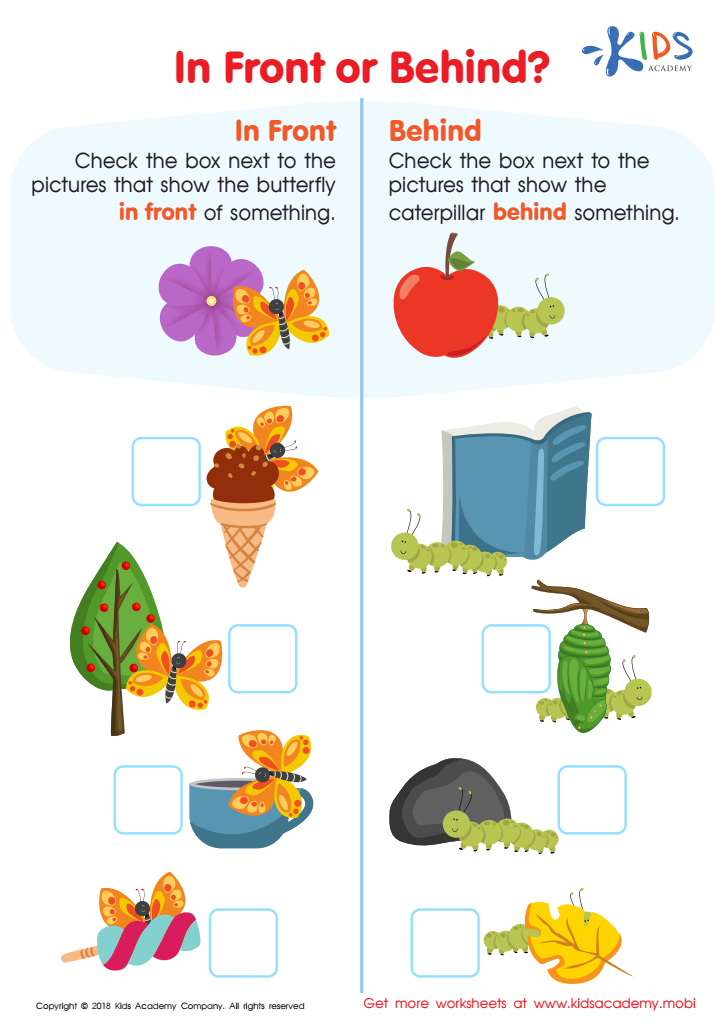
In Front or Behind Worksheet
 Assign to My Students
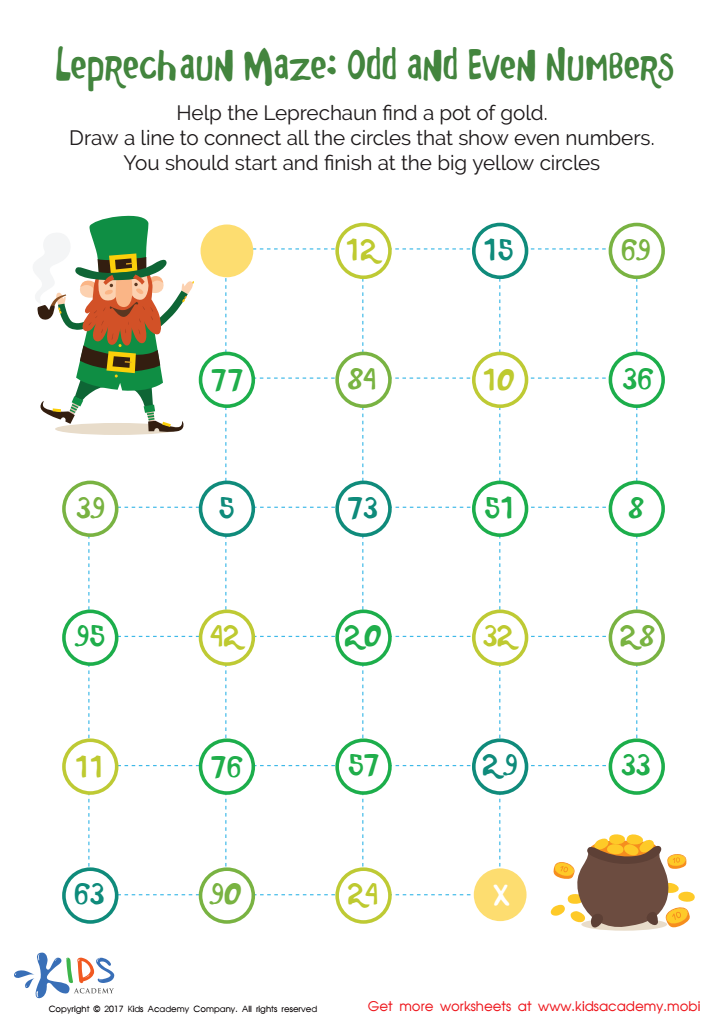
Leprechaun Maze Printable
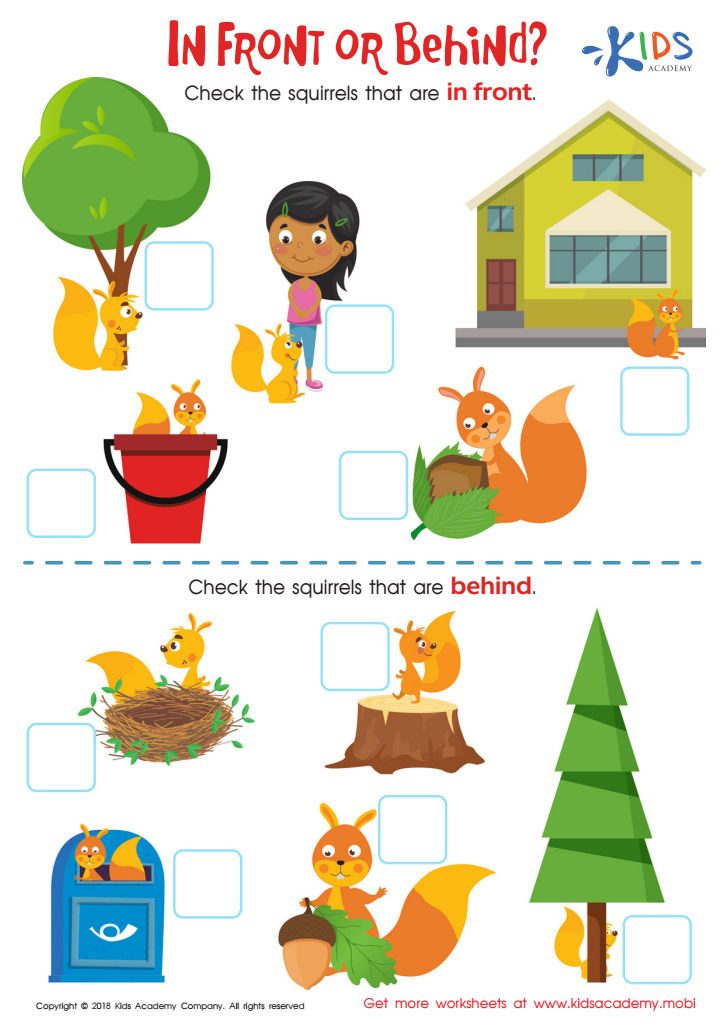
In Front or Behind: Part 2 Worksheet
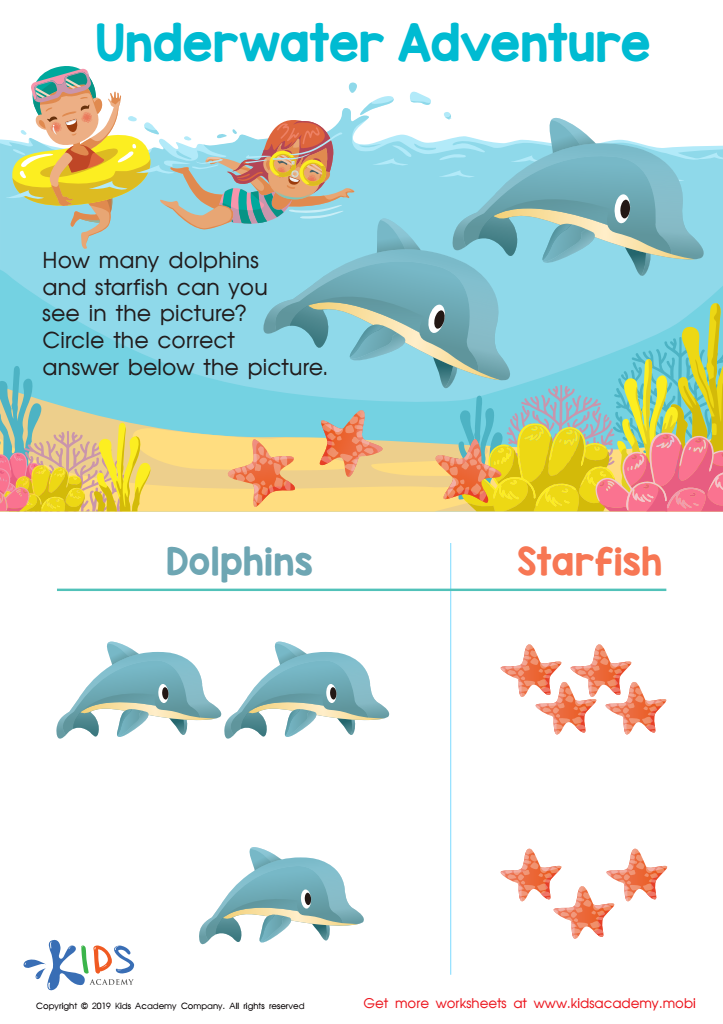
Underwater Adventure Worksheet
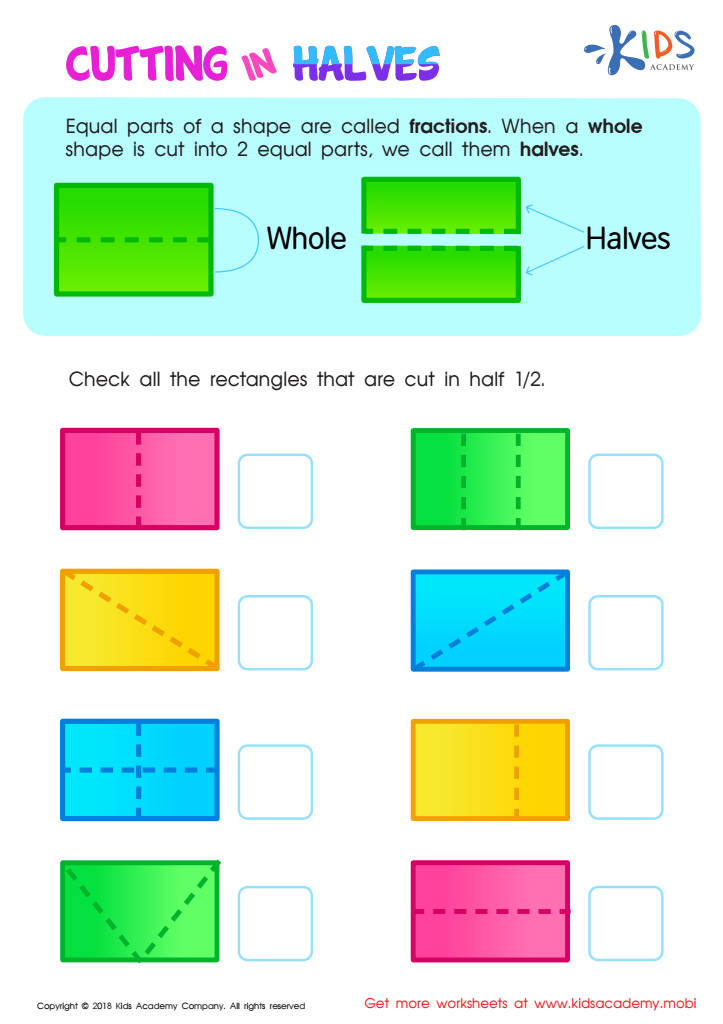
Cutting in Halves Worksheet
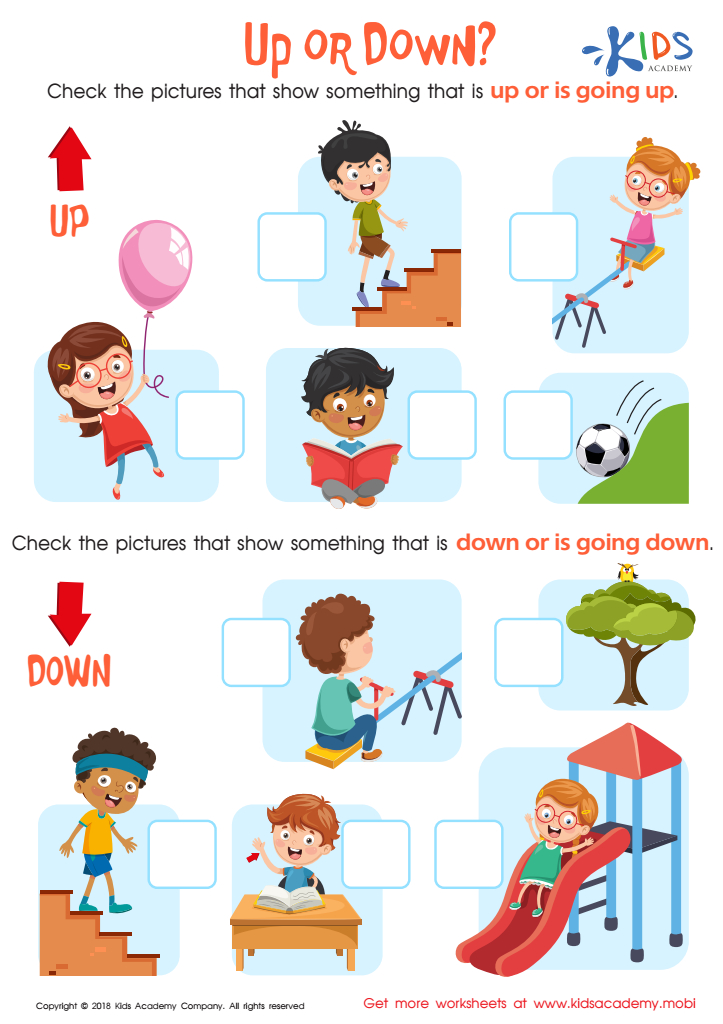
Up or Down Worksheet




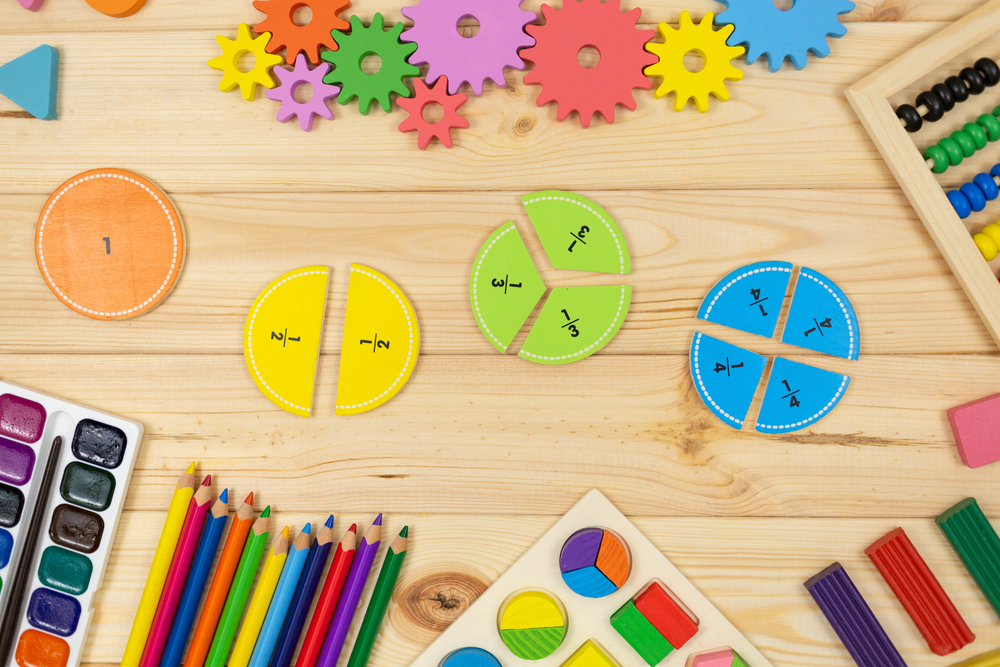

Spatial awareness is a crucial skill that significantly impacts children's overall development, particularly in early math education. For children aged 4 to 9, this skill involves understanding how objects relate to one another in space, which is foundational for various mathematical concepts. Parents and teachers should care about fostering spatial awareness because it enhances children's problem-solving abilities and critical thinking.
Early exposure to spatial concepts—such as shapes, sizes, and the relationships between objects—creates a strong basis for later understanding of geometry, measurement, and even algebraic thinking. Engaging children in activities that develop spatial awareness, like puzzles, building blocks, and interactive games, not only makes learning fun but also promotes cognitive development. Moreover, strong spatial skills are linked to proficiency in STEM (science, technology, engineering, and mathematics) fields, which are vital in today’s technology-driven world.
Additionally, nurturing spatial awareness can bolster children's confidence in math, mitigating math anxiety and fostering a more positive attitude toward learning. By prioritizing spatial awareness, parents and teachers can help children build essential skills that translate into lifelong benefits, preparing them for academic success and practical challenges in everyday life.








