Understanding area Math Worksheets for Ages 4-9
3 filtered results
-
From - To
Discover the essentials of understanding area with our engaging math worksheets designed for children aged 4-9. These carefully crafted activities provide a fun and interactive way to help young learners grasp the concept of area. From hands-on tasks to colorful visuals, each worksheet encourages exploration and critical thinking. Students will develop important skills while measuring space, learning about dimensions, and practicing simple calculations. Ideal for both classroom and home use, these resources support foundational math skills in a playful and approachable manner, ensuring that children build confidence and a love for learning. Start your child's journey into the world of area today!
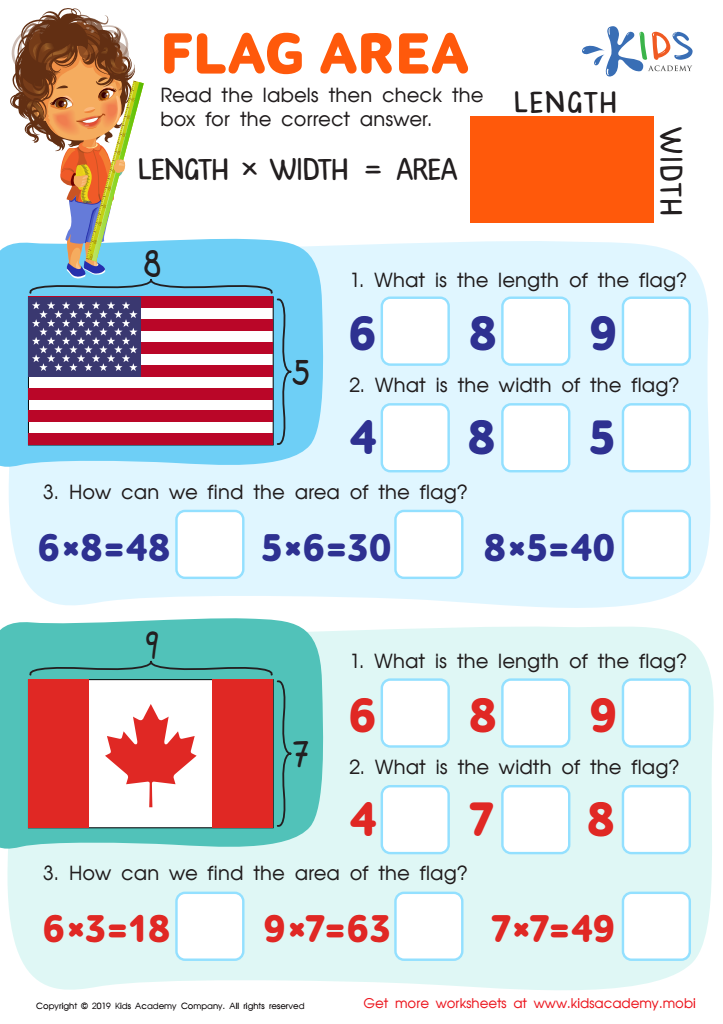
Flag Area Worksheet
 Assign to My Students
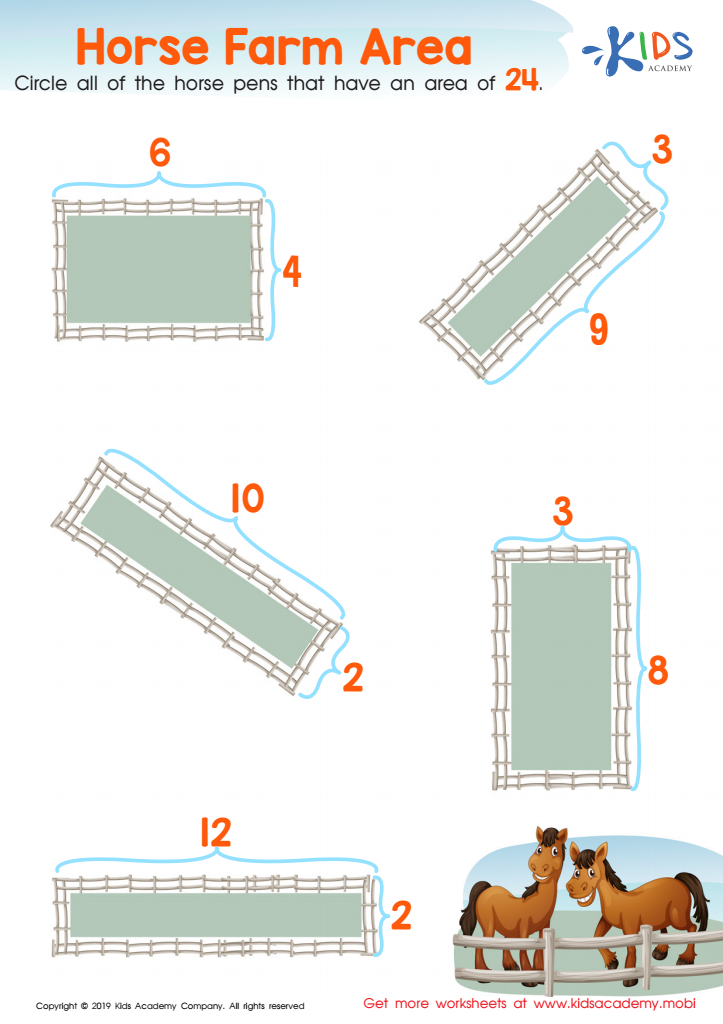
Horse Farm Area Worksheet
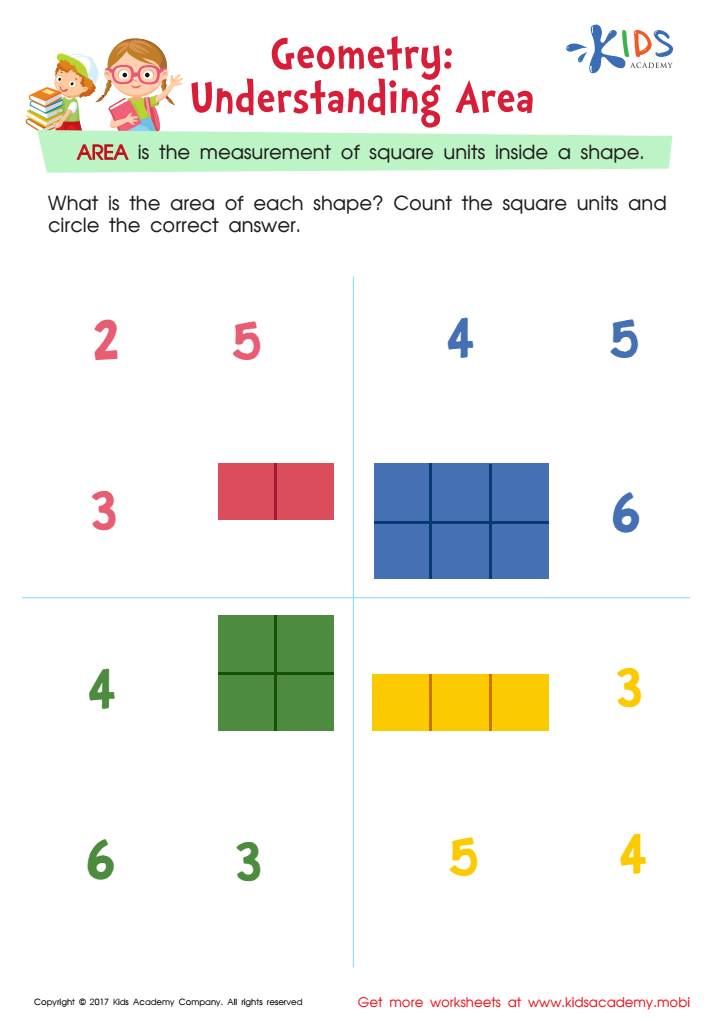
Understanding Area Worksheet








Understanding area is a fundamental mathematical concept for children aged 4-9 as it lays the groundwork for future learning in geometry, measurement, and problem-solving. At this young age, children are naturally curious, and engaging them with area through hands-on activities can ignite a passion for math. Parents and teachers should care about this topic because comprehending area helps children develop spatial awareness, which is crucial for everyday activities such as packing, designing, or even cooking.
Additionally, learning about area fosters critical thinking skills. Students learn how to visualize space and understand how different shapes fit together, promoting logical reasoning. By incorporating real-world applications, like calculating the area for a garden or a play area, they can see math's relevance beyond the classroom.
Furthermore, early exposure to this concept can bridge gaps in knowledge, ensuring children gain confidence in their abilities as they advance in their education. Parental and teacher support reinforces the value of math in everyday life, encouraging a growth mindset. Ultimately, fostering a strong understanding of area builds a solid mathematical foundation that will benefit children academically and help them navigate the world with greater competence.








