Understanding directions Math Worksheets for Ages 4-9
7 filtered results
-
From - To
Unlock your child’s potential with our "Understanding Directions Math Worksheets for Ages 4-9"! These engaging worksheets are designed to develop critical thinking and spatial awareness by teaching young learners to follow and comprehend directions. Perfect for kids aged 4-9, each activity incorporates fun elements to make learning math concepts such as left, right, up, and down an exciting journey. By completing these worksheets, children will enhance their problem-solving skills and gain confidence in navigating directions, building a strong foundation for future math success. Start exploring today and watch your child thrive!
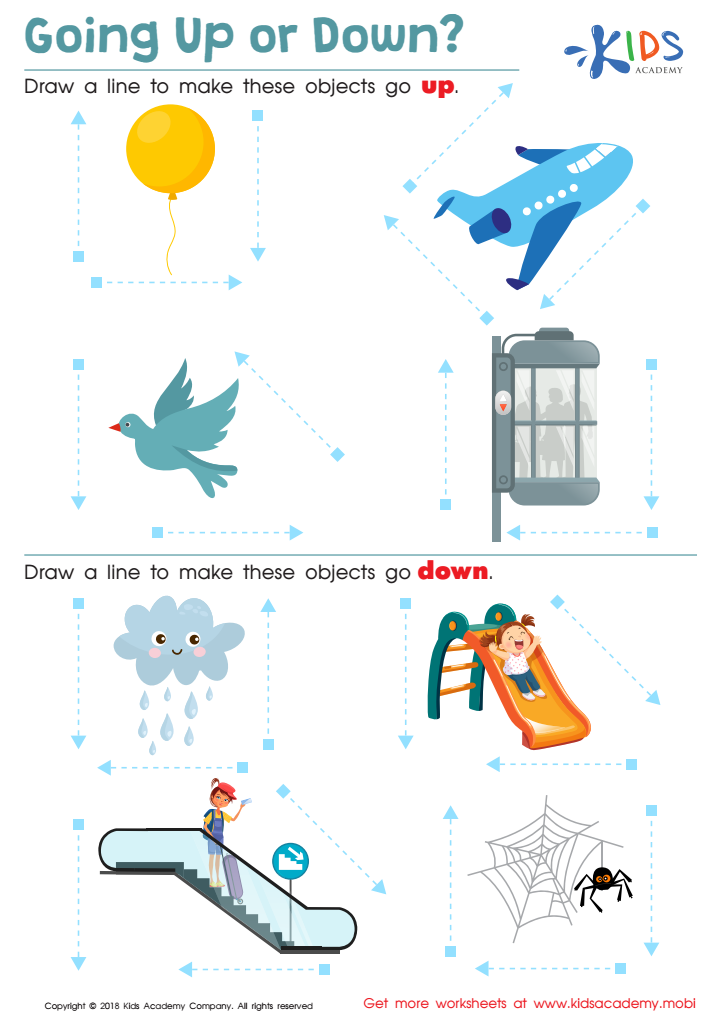
Going up or Down? Worksheet
 Assign to My Students
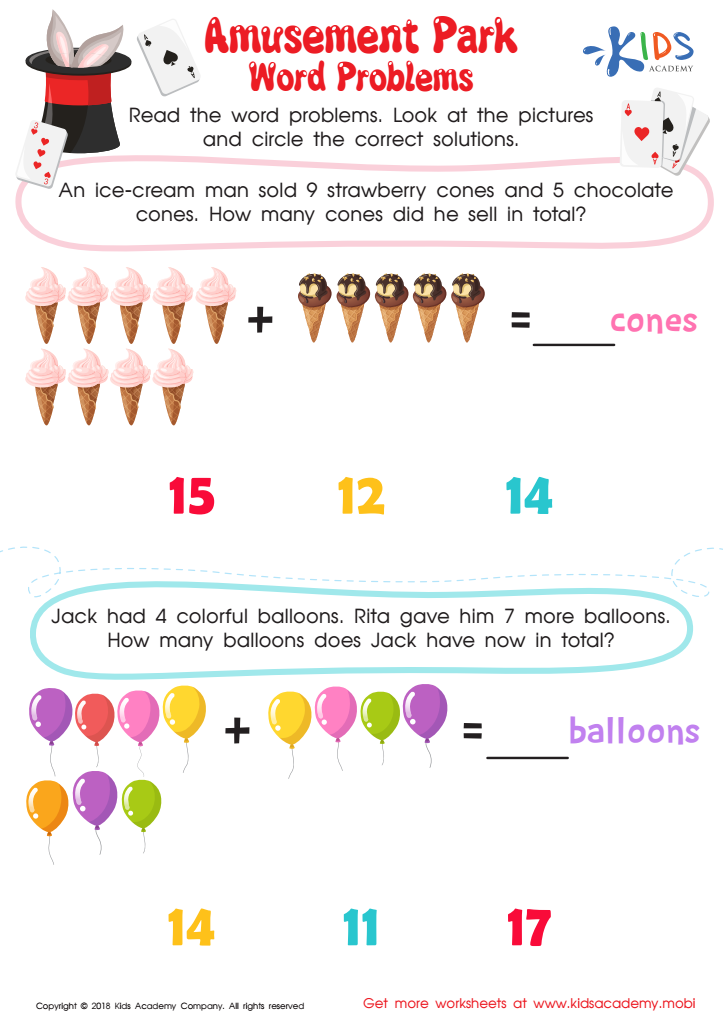
Amusement Park Word Problems Worksheet
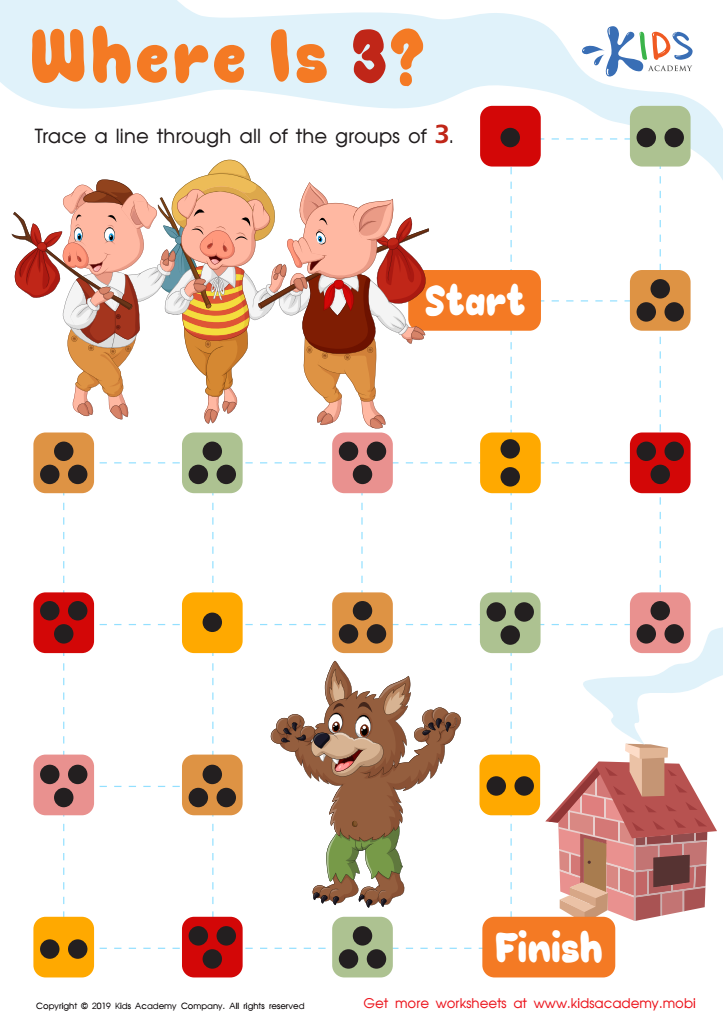
Where Is 3? Worksheet
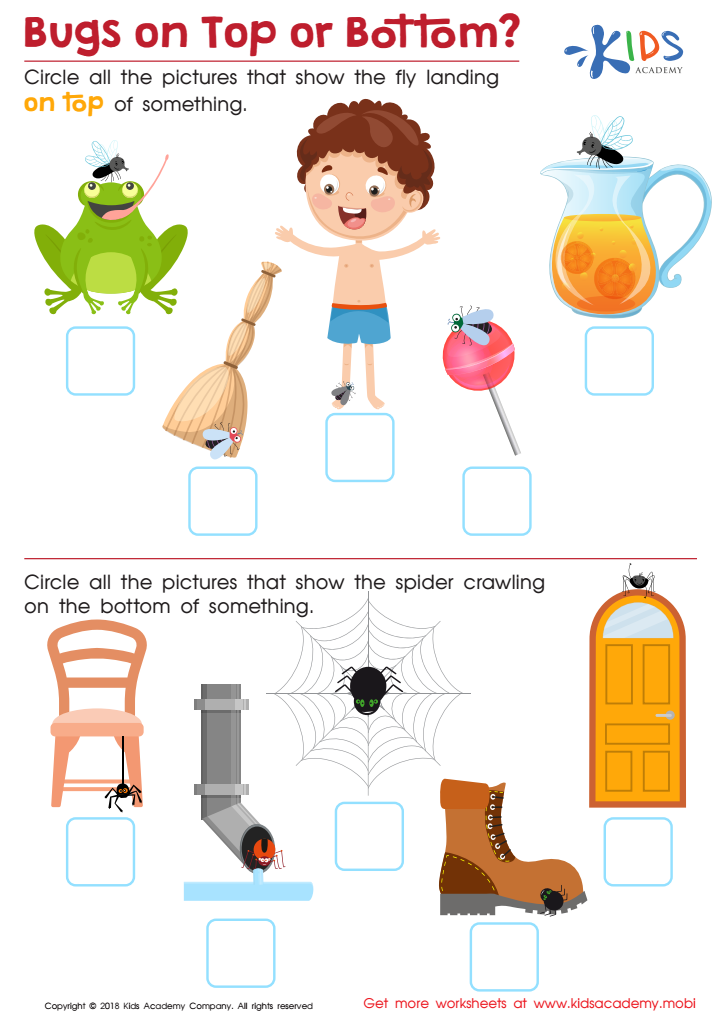
Bugs on Top or Bottom? Worksheet


.jpg)


.jpg)

Understanding directions in math is essential for young children ages 4-9 as it lays the foundation for a range of critical thinking and problem-solving skills necessary for their future learning. At this age, kids are developing spatial awareness, which is the ability to understand and interact with the space around them. Mathematics activities that incorporate directions—like identifying left and right, up and down, or following a sequence of steps—enhance this spatial reasoning.
When children comprehend directions, they can follow instructions accurately, whether in the classroom or in daily tasks. This skill is fundamental not just in math but across various subjects. For example, in a math problem that involves placing objects in specific positions or following a sequence of operations to solve equations, knowing directions becomes crucial.
Additionally, grasping directional concepts supports literacy and comprehension. Kids who learn to follow verbal and written instructions improve their ability to understand and execute tasks independently. Parents and teachers play a critical role in fostering these skills through engaging activities, such as treasure hunts that involve clues based on directions or through interactive math games.
Enabling children to understand directions in math promotes confidence, independence, and prepares them for more complex mathematical and real-world tasks. Investing time in this area sets a solid groundwork for lifelong learning.








