Understanding patterns Math Worksheets for Ages 4-9 - Page 3
52 filtered results
-
From - To
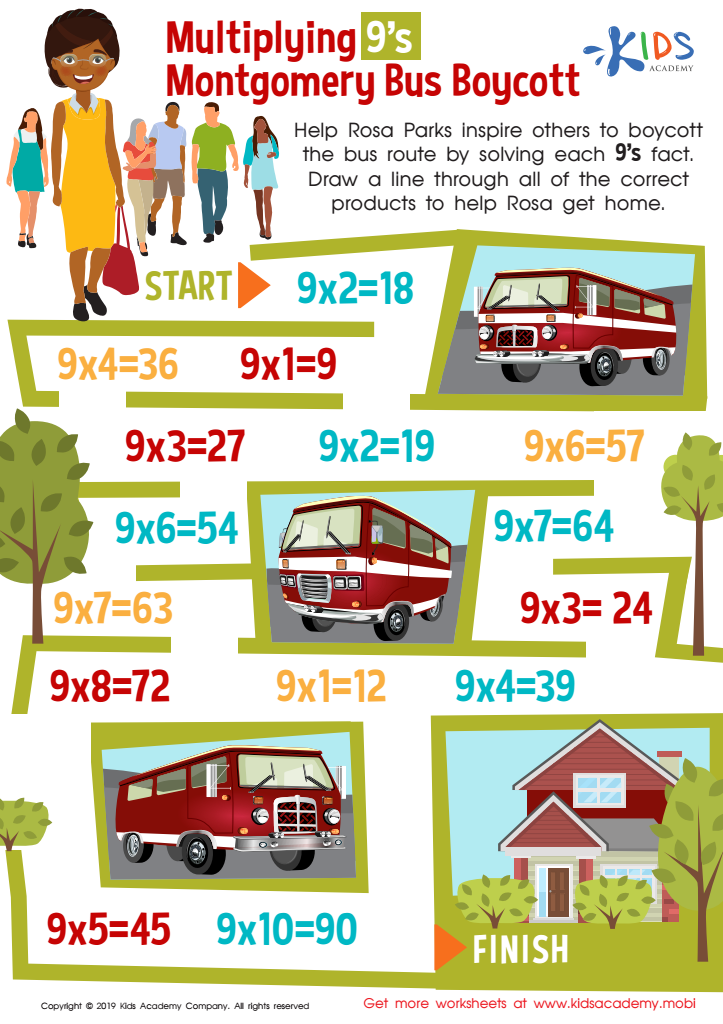
Multiplying 9’s Montgomery Bus Boycott Worksheet
 Assign to My Students
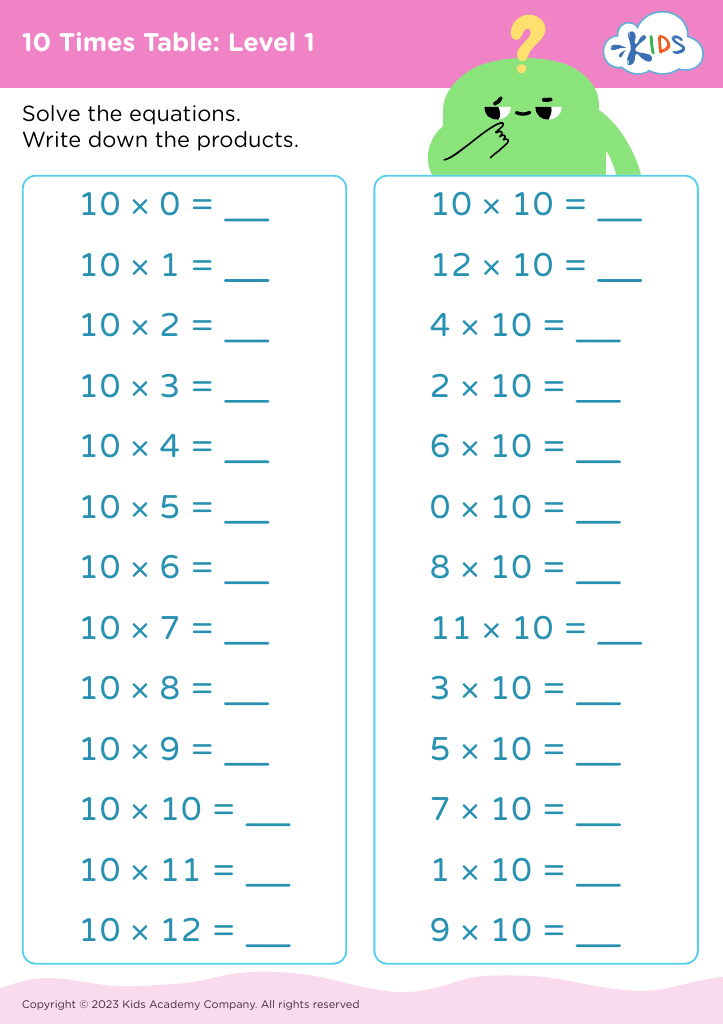
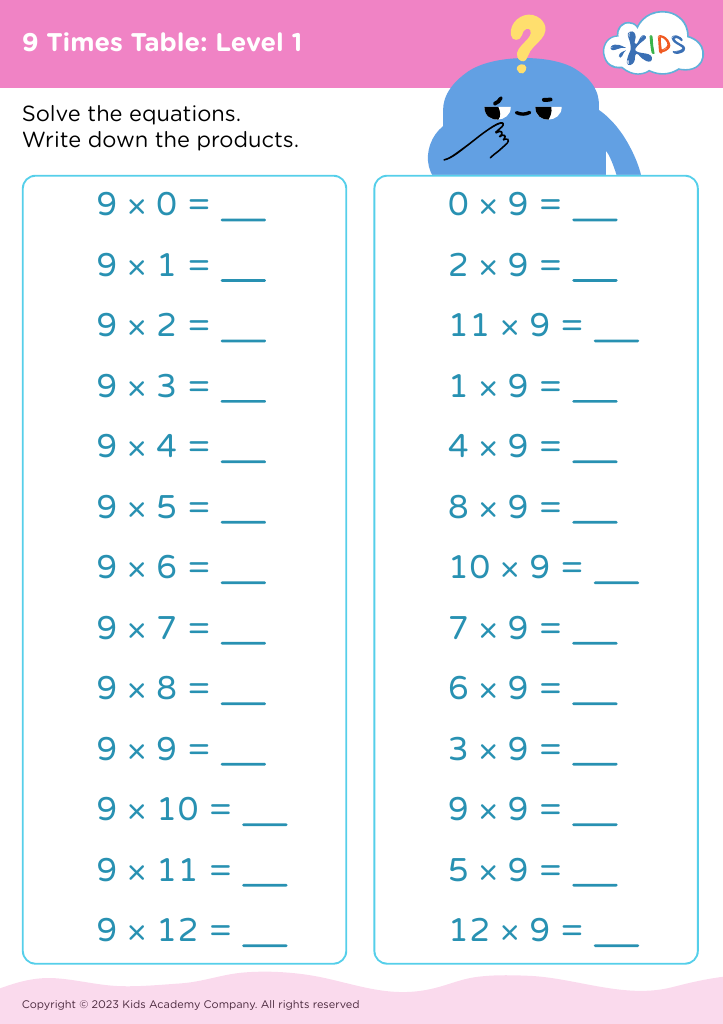
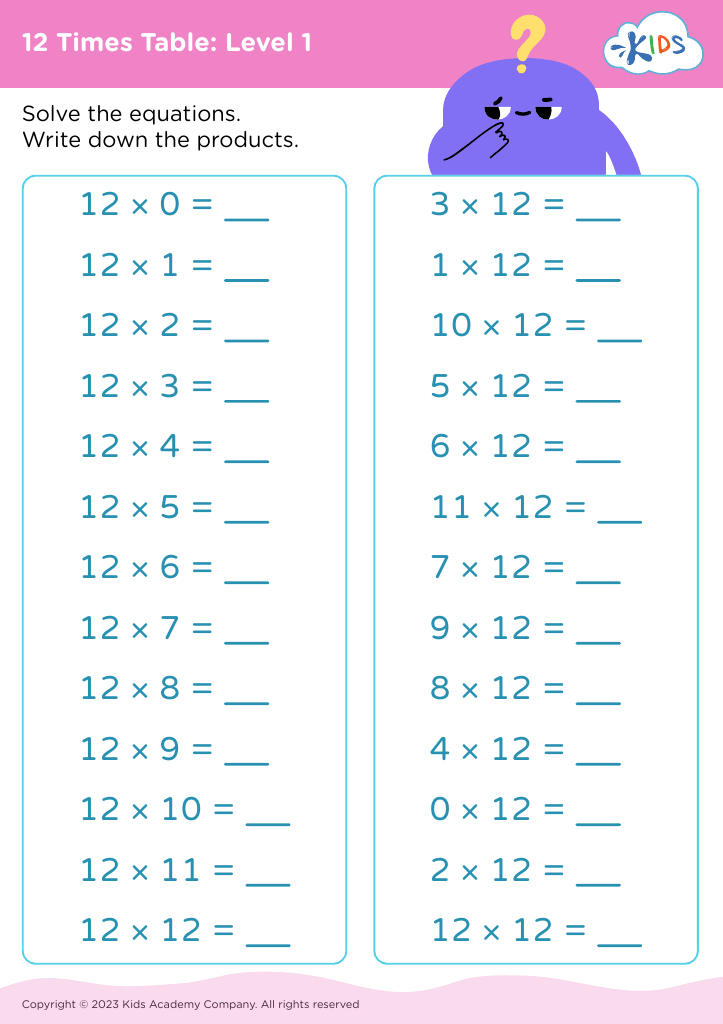







Understanding patterns in mathematics is crucial for children aged 4-9, as it lays the foundation for more complex mathematical concepts later in life. Patterns, both numerical and visual, are essential early experiences that promote critical thinking and problem-solving skills. When children recognize patterns, they develop predictive abilities, enabling them to foresee outcomes, an essential skill not only in math but in everyday life.
For parents and teachers, fostering pattern recognition paves the way for a deeper understanding of mathematical operations, geometric concepts, and algebraic thinking, all of which will be built upon in higher grades. Engaging children with patterns encourages them to explore relationships and create connections between numbers and shapes, making math more cohesive and intuitive.
Additionally, learning through patterns can nurture a child’s creativity and curiosity, fostering a love for learning. It makes math enjoyable, helping reduce anxiety or negative attitudes toward the subject. This engagement lays the groundwork for lifelong learning and resilience in facing challenges.
Moreover, incorporating pattern activities at home or in the classroom can enhance bonding between parents, teachers, and children, creating a supportive learning environment. Understanding patterns is not just a math skill; it's a vital step in a child's overall cognitive development.








