Understanding sequence Math Worksheets for Ages 4-9
6 filtered results
-
From - To
Explore our engaging "Understanding Sequence Math Worksheets" tailored for children aged 4-9! These worksheets are designed to enhance critical thinking and problem-solving skills by helping young learners grasp the concept of sequences in a fun and interactive way. With a variety of activities, children will practice recognizing patterns, ordering numbers, and visual sequencing, all essential foundations for their mathematical journey. Each worksheet is easy to follow, fostering independent learning while building confidence in math. Perfect for both classroom and home learning, our resources provide an enjoyable and effective way for kids to master sequencing and develop early mathematical skills!
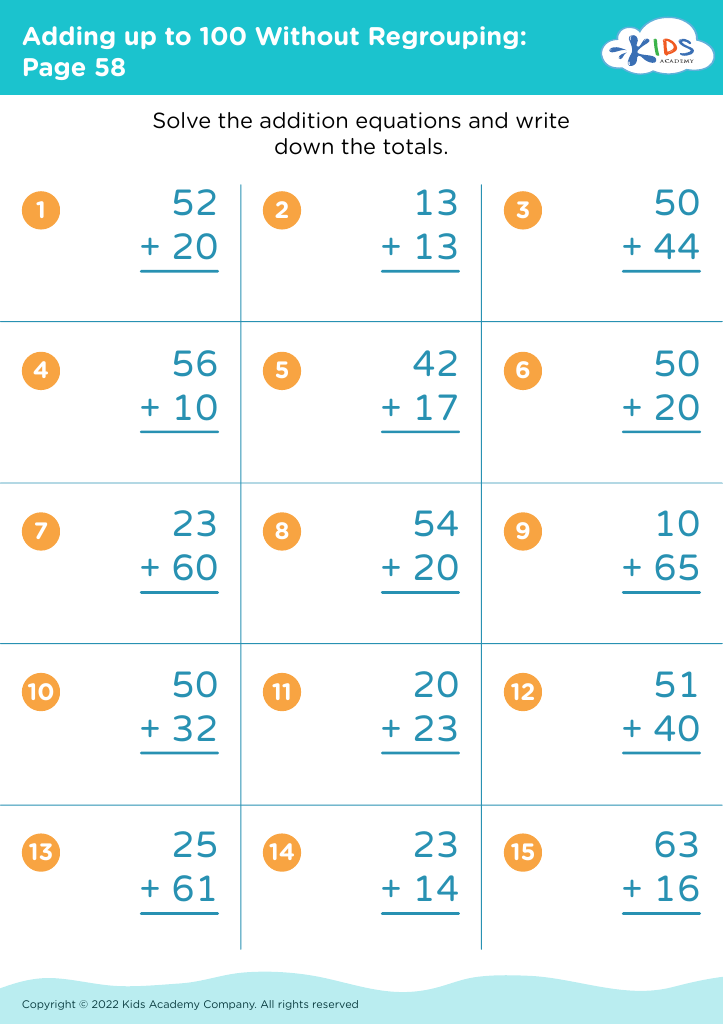
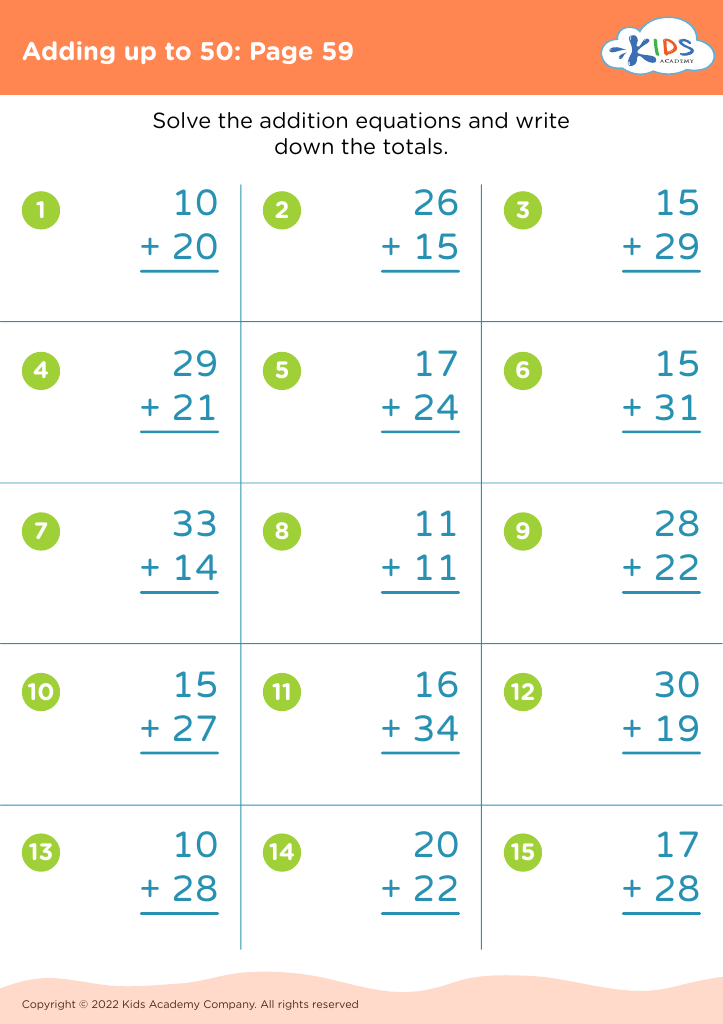
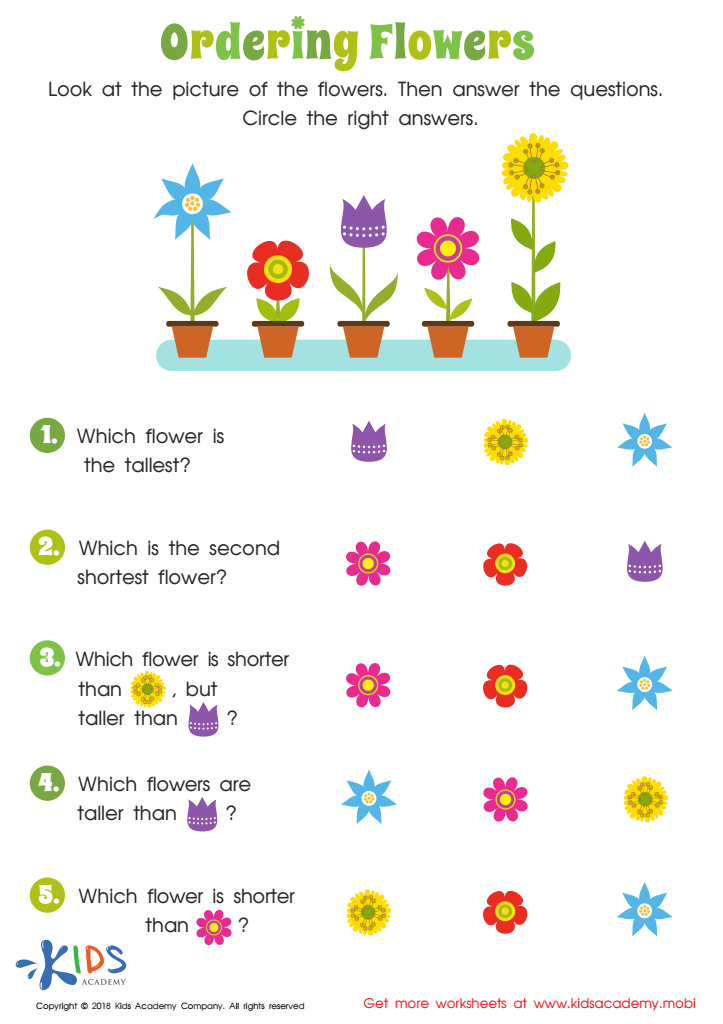
Ordering Flowers Worksheet
 Assign to My Students
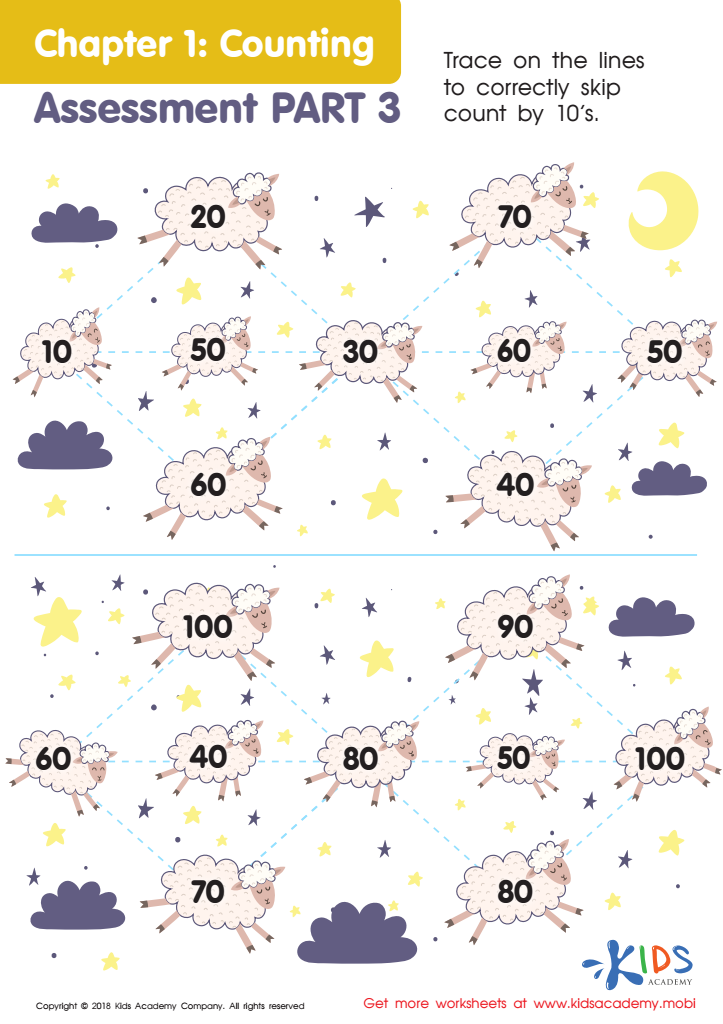
Counting: Assessment 3 Worksheet








Understanding sequence math is crucial for children aged 4-9 as it lays the foundation for their overall mathematical development. At this age, children are naturally curious and engaged in learning, making it an ideal time to introduce concepts of order and logic. Sequence math helps them comprehend patterns, which are vital for more complex math skills like addition, subtraction, and even later stages of problem-solving.
By grasping sequence, children learn to predict outcomes and identify relationships among numbers, enhancing their analytical skills. This understanding helps in real-world situations, such as arranging events in chronological order or following steps in a recipe.
Moreover, sequence math also encourages cognitive development. It fosters critical thinking and the ability to organize thoughts systematically. Parents and teachers play a pivotal role in this learning process, guiding children through engaging activities such as sorting, sequencing games, and pattern identification.
Furthermore, facilitating a solid grasp on sequences can instill confidence in young learners, making them more enthusiastic about math as they progress. Investing in early mathematical understanding ultimately empowers children with skills that transcend academics, influencing their problem-solving abilities in everyday life.








