Understanding skip-counting Math Worksheets for Ages 4-9
3 filtered results
-
From - To
Discover the essential skills with our Skip-Counting Math Worksheets designed for kids ages 4-9. Our engaging activities develop early math abilities by teaching how to effortlessly count by 2s, 5s, 10s, and beyond. Perfect for home or classroom use, these printable worksheets help children build strong numerical foundations, improve pattern recognition, and enhance problem-solving skills. With fun exercises tailored to their age, kids will enjoy learning as they boost confidence in their counting abilities. Prepare your child for future math success with Kids Academy's expertly crafted skip-counting resources today! Start nurturing your little math whiz with us.
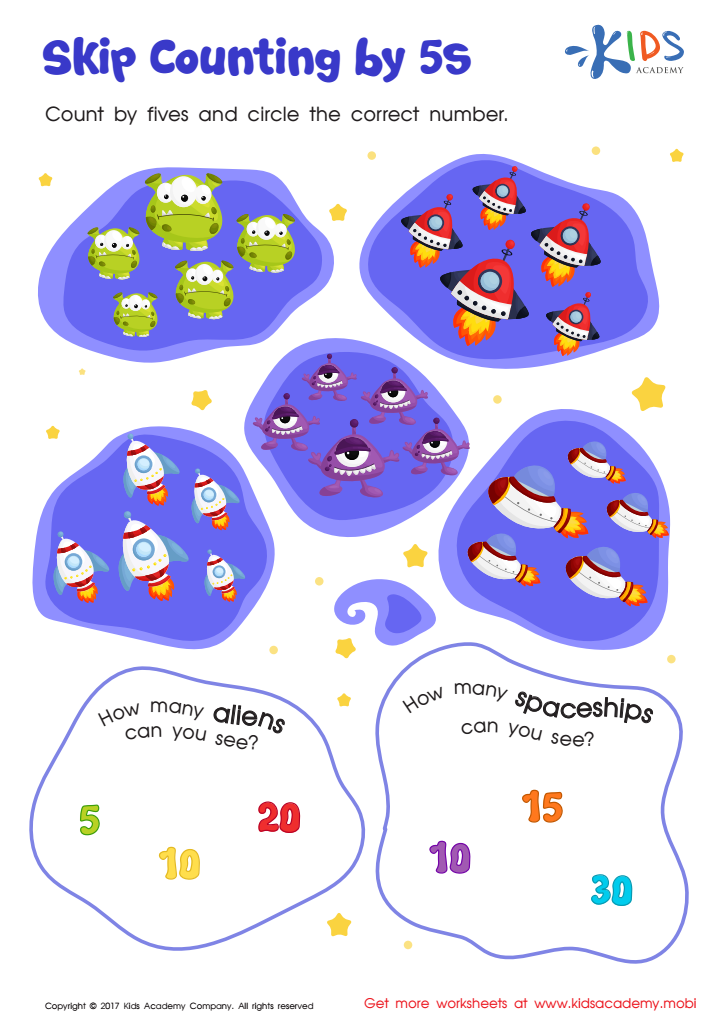
Skip Counting by 5s: Aliens and Spaceships Printable
 Assign to My Students
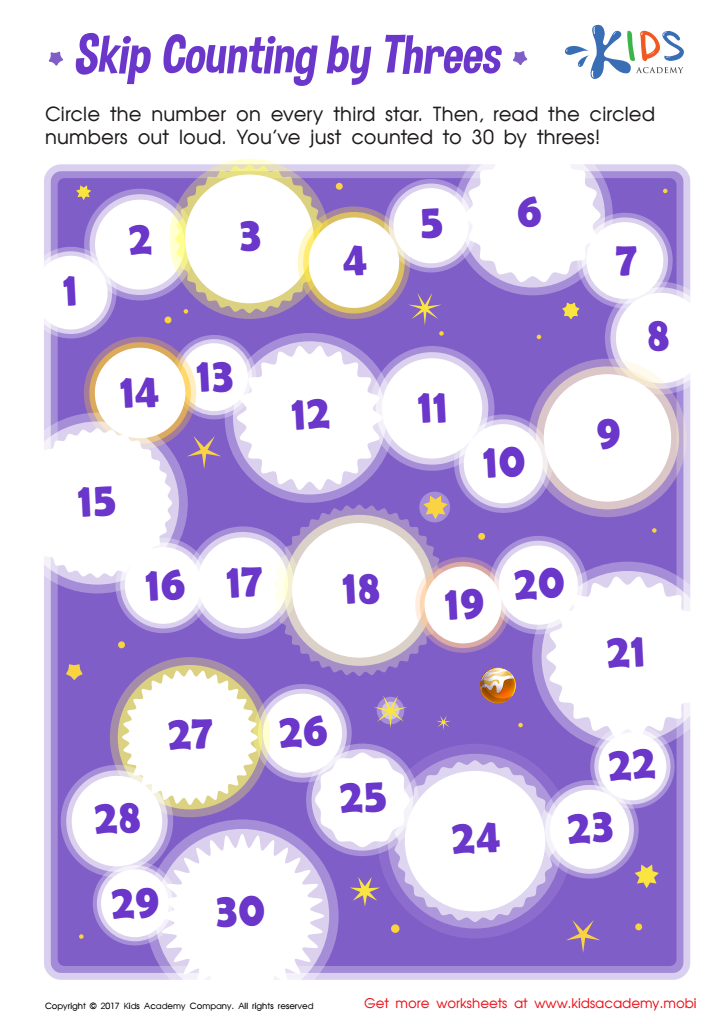
Skip Counting By Three Printable
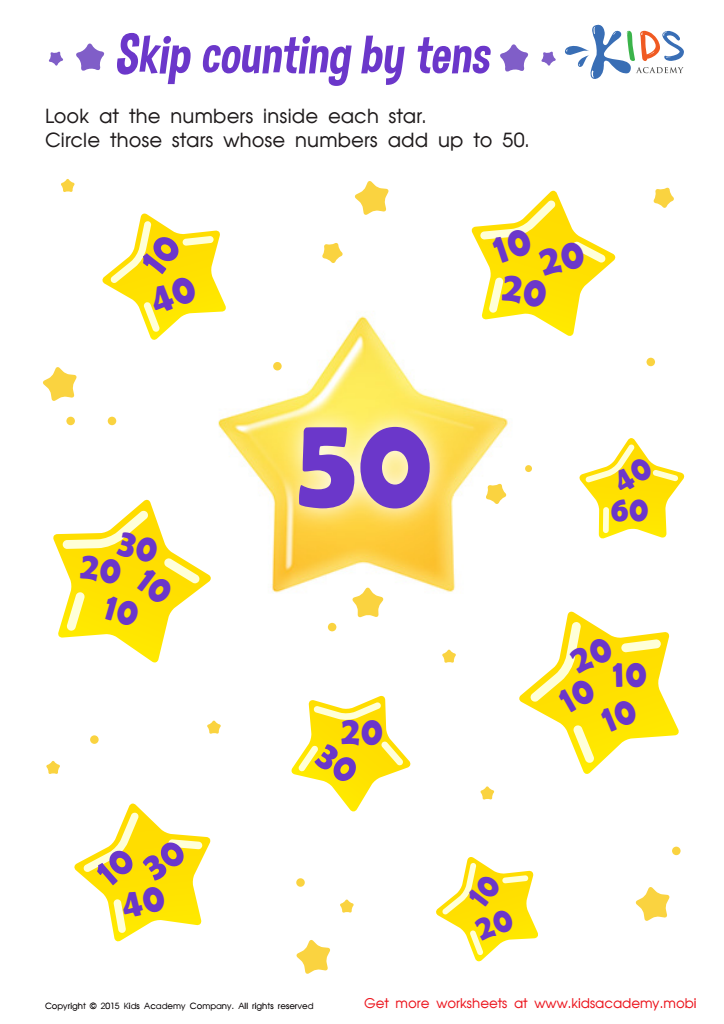
Learn Dozens: Skip Counting by Tens Printable








Understanding skip-counting math for ages 4-9 is crucial for several reasons. First, it lays the groundwork for more complex mathematical concepts, such as multiplication and division. By mastering skip-counting, children learn to see patterns and sequences, which helps them grasp the concept of multiples and sets—key elements in higher arithmetic operations.
Second, skip-counting fosters numerical fluency. Kids become more comfortable and quick at figuring out math problems, which can build their confidence and reduce math anxiety. Early math success can lead to a positive attitude towards the subject and enhance overall academic performance.
Another critical aspect is its practical application. Skip-counting is essential for everyday tasks such as telling time, counting money, and even understanding calendars. It helps children comprehend the world around them in a way that pure rote memorization may not achieve.
From a developmental perspective, skip-counting exercises fine motor skills, memory, attention, and cognitive capabilities. It stimulates brain development, fostering problem-solving abilities and logical thinking.
In summary, parents and teachers should care about understanding skip-counting because it paves the way for more advanced math skills, promotes numerical fluency, provides practical life skills, and supports overall cognitive development. Cultivating these skills early on sets children on a path to lifelong mathematical competence and confidence.








