Visual discrimination skills Math Worksheets for Ages 4-9
4 filtered results
-
From - To
Boost your child's math learning with our engaging Visual Discrimination Skills Math Worksheets, perfect for ages 4-9. Designed to enhance visual perception, these worksheets help students identify differences in shapes, sizes, and patterns, laying the foundation for essential mathematical concepts. Each activity is crafted to be fun and interactive, fostering critical thinking and problem-solving abilities. As children complete the exercises, they develop greater confidence in their math skills while improving their attention to detail. Suitable for both classroom and home use, these worksheets provide a valuable resource for parents and educators aiming to strengthen young learners' mathematical foundations. Explore our collection today!
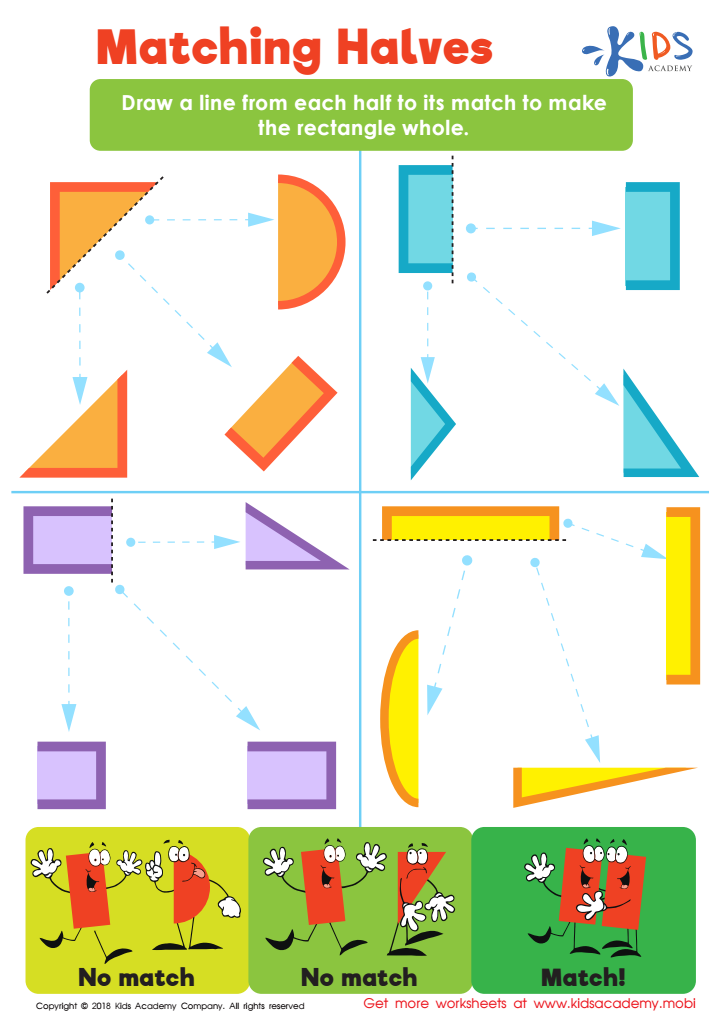
Matching Halves Worksheet
 Assign to My Students
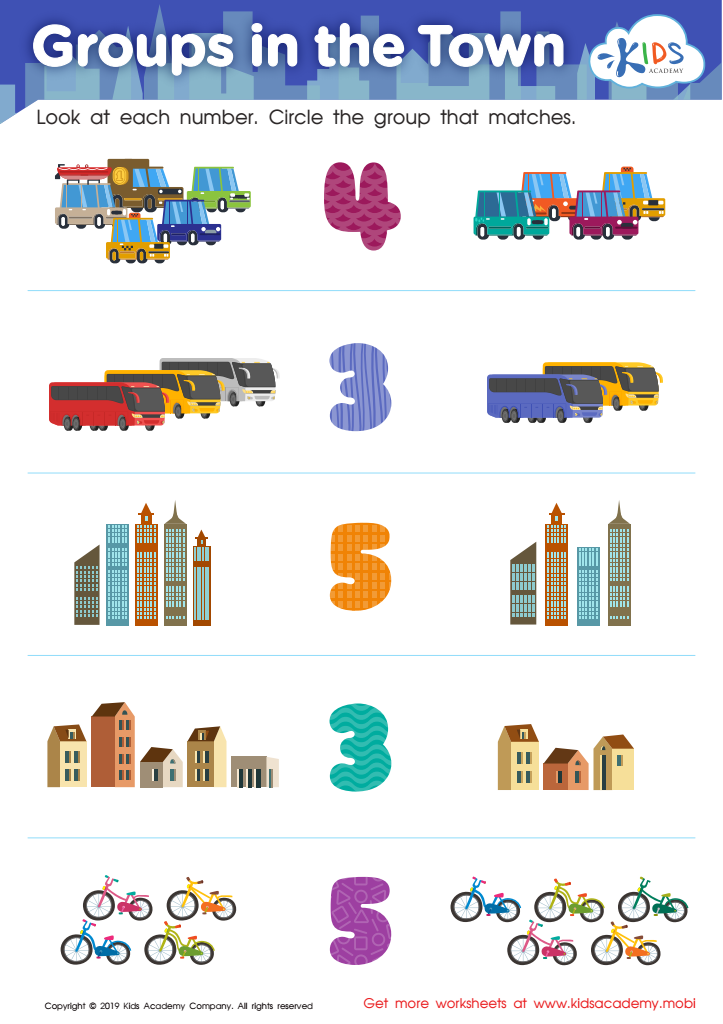
Groups in the Town Worksheet
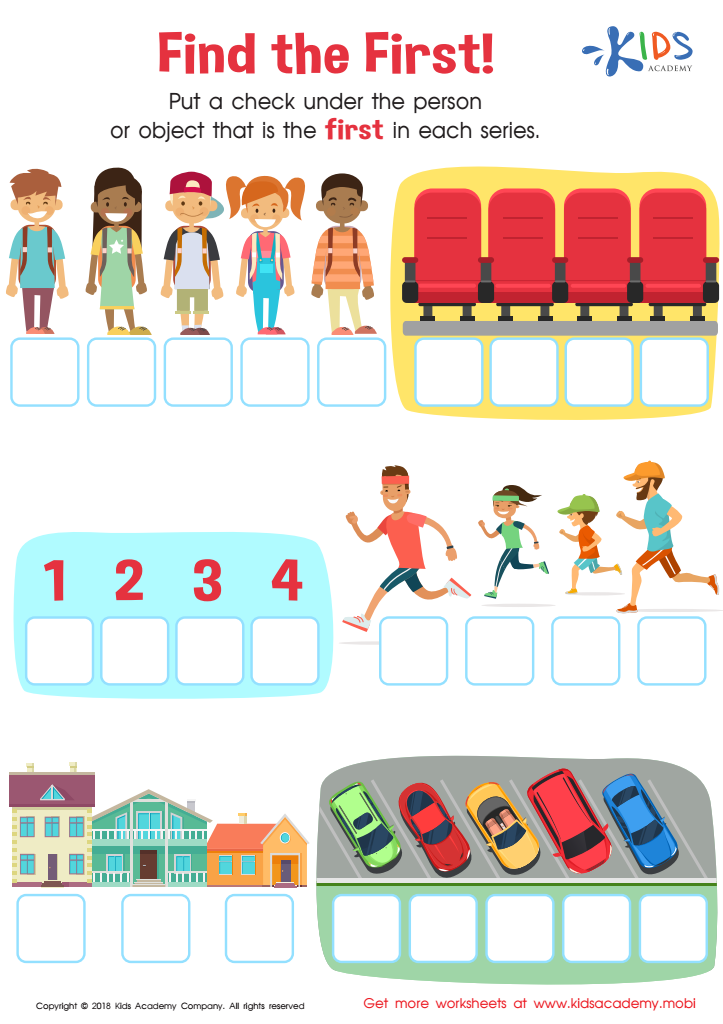
Find the First! Worksheet







Visual discrimination skills are essential for children aged 4-9, particularly in mathematics, as they provide the foundation for understanding and processing visual information. Visual discrimination refers to the ability to distinguish between different shapes, sizes, colors, and patterns, enabling children to recognize important mathematical concepts.
For parents and teachers, nurturing these skills is crucial for several reasons. Firstly, strong visual discrimination enhances a child’s ability to recognize numbers and basic geometric shapes. This recognition aids in developing counting skills, sorting, and even basic problem-solving. Additionally, children who can accurately identify visual differences can better understand spatial relationships and follow patterns, facilitating their grasp of more complex mathematical ideas later on.
Moreover, visual discrimination plays a significant role in developing fine motor skills and hand-eye coordination—skills that are vital during early writing and drawing stages. When children practice math through visual activities, they build confidence and a robust foundation for future learning.
Engaging in activities that promote visual discrimination not only boosts cognitive development in math but also aligns with wider learning outcomes. Schools and homes focusing on these skills can foster an enriching environment that supports children’s overall academic success and lifelong love for learning.








