
Color Identification Matching Worksheets for Ages 4-9
3 filtered results
Difficulty Level
Grade
Age
-
From - To
Subject
Activity
Standards
Discover our engaging Color Identification Matching Worksheets for Ages 4-9, designed to make learning fun and effective for young children. These vibrant, age-appropriate worksheets help kids develop essential skills such as color recognition, matching, and cognitive abilities. Each worksheet is crafted to boost confidence and encourages logical thinking through various interactive activities. Perfect for parents and teachers looking to supplement classroom learning or support at-home practice, our worksheets provide a solid foundation for young learners. Join Kids Academy today and give your child the tools they need to succeed in a playful and educational environment.
Favorites
With answer key
Interactive
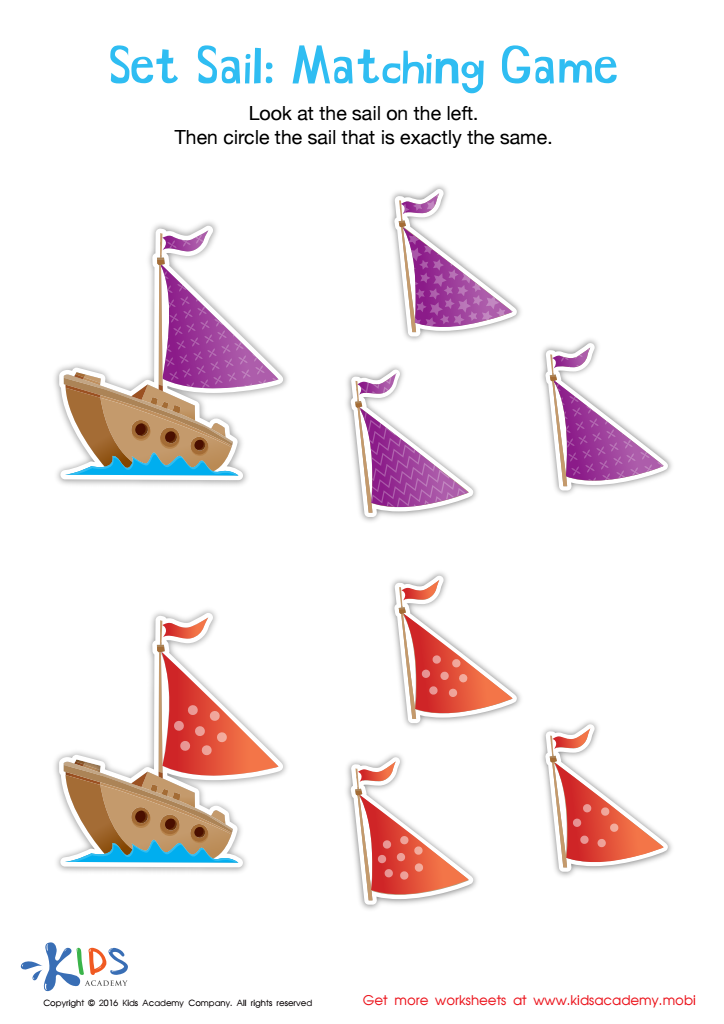
Set Sail Worksheet
Set sail with this fun matching game for toddlers! Kids will love finding the same pattern on the sails, improving their problem-solving and counting skills. Enjoy this bright and engaging worksheet!
 Assign to My Students
Set Sail Worksheet
Worksheet
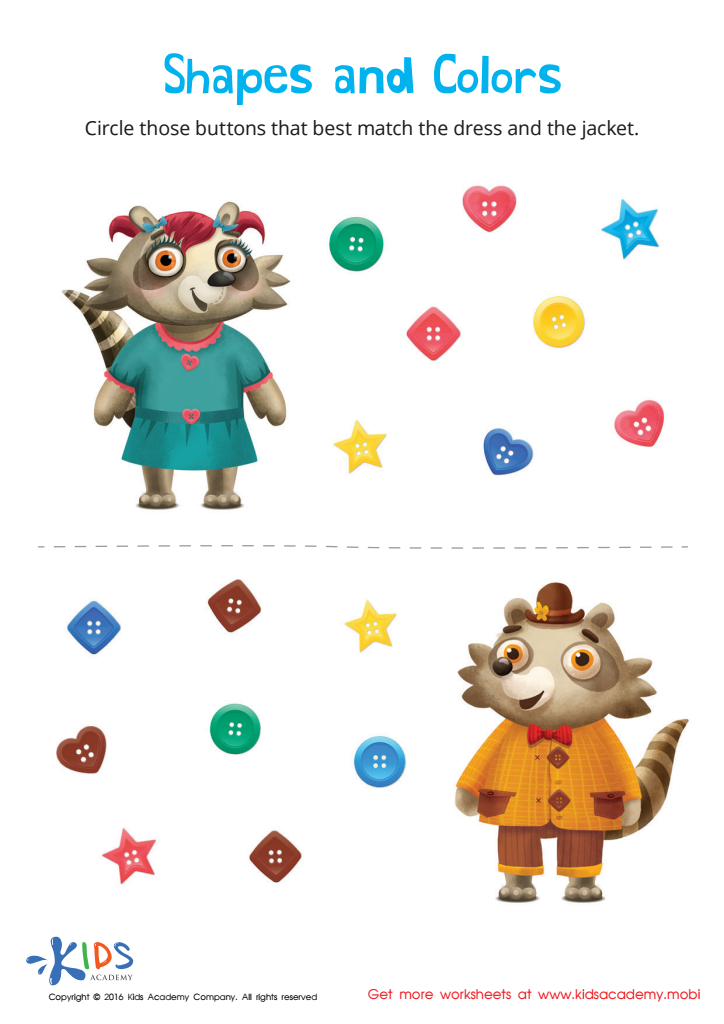
Matching: Shapes and Colors Worksheet
Help Mr. and Mrs. Raccoon find the right buttons to match their shirts! Kids will identify shapes and colors and learn to match them correctly.
Matching: Shapes and Colors Worksheet
Worksheet
Join Kids Academy for Free
Who is primarily going to use this learning content?





Color Identification Matching activities are crucial for children ages 4-9 as they support various aspects of cognitive, social, and emotional development. From a cognitive perspective, recognizing and matching colors enhances visual discrimination skills, which are foundational for reading and other academic tasks requiring the identification and differentiation of symbols. By practicing color recognition, children also learn to classify objects, a skill that can expand into understanding complex categories in subjects like mathematics and science.
Socially, color identification games can be cooperative, involving teamwork, sharing, and communication. For instance, working together on a colorful puzzle allows children to develop better interpersonal skills as they discuss and decide which pieces fit where. Emotionally, mastering colors provides a sense of accomplishment and boosts self-esteem. Engaging with colors can also be therapeutic, offering a fun, low-pressure way for children to express themselves creatively.
Moreover, early success in these activities lays a foundation for future learning, making academic concepts less daunting. For children with developmental delays or language barriers, visual games are a universal medium for comprehension and engagement. In summary, integrating Color Identification Matching into the daily routine for young children aids in holistic growth and academic readiness.








