Comparing numbers Measurement Worksheets for Ages 4-9
3 filtered results
-
From - To
Unlock your child's mathematical potential with our engaging "Comparing Numbers Measurement Worksheets" designed for ages 4-9! Our curated selection of worksheets effectively helps young learners understand the concept of greater than, less than, and equal to through fun and interactive activities. Each worksheet is crafted to enhance children’s skills in comparing numbers and improve their confidence in math. Perfect for home or classroom use, these resources promote critical thinking while turning learning into an enjoyable experience. Dive into our printable worksheets to give your child a strong foundation in measurements and comparisons, setting them on the path to math success!
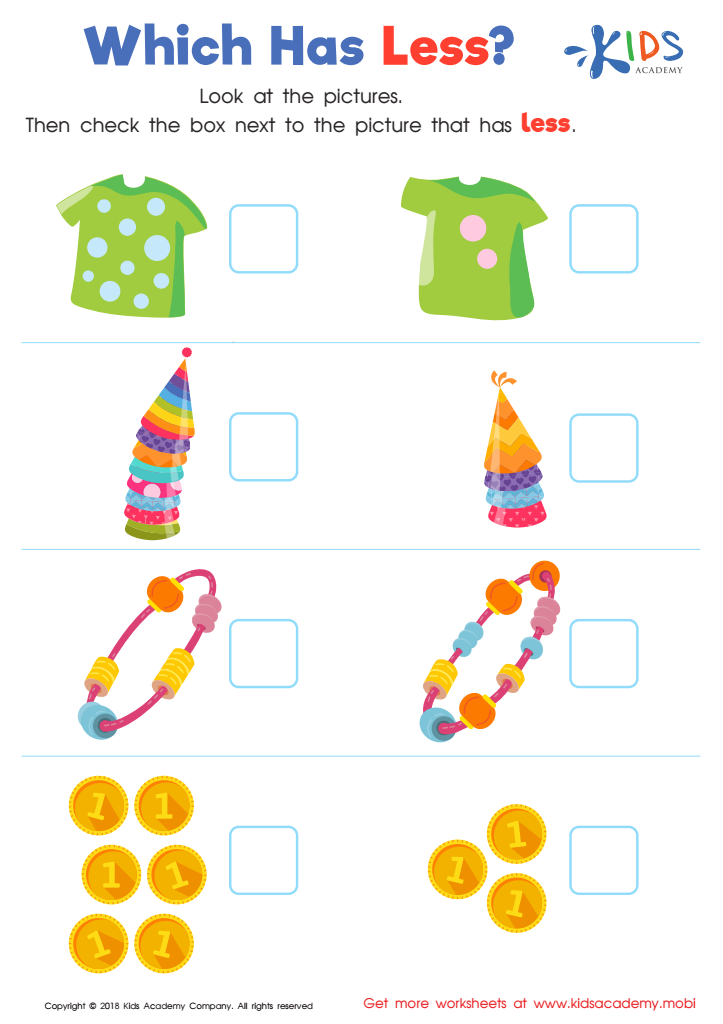
Which Has Less? Worksheet
 Assign to My Students
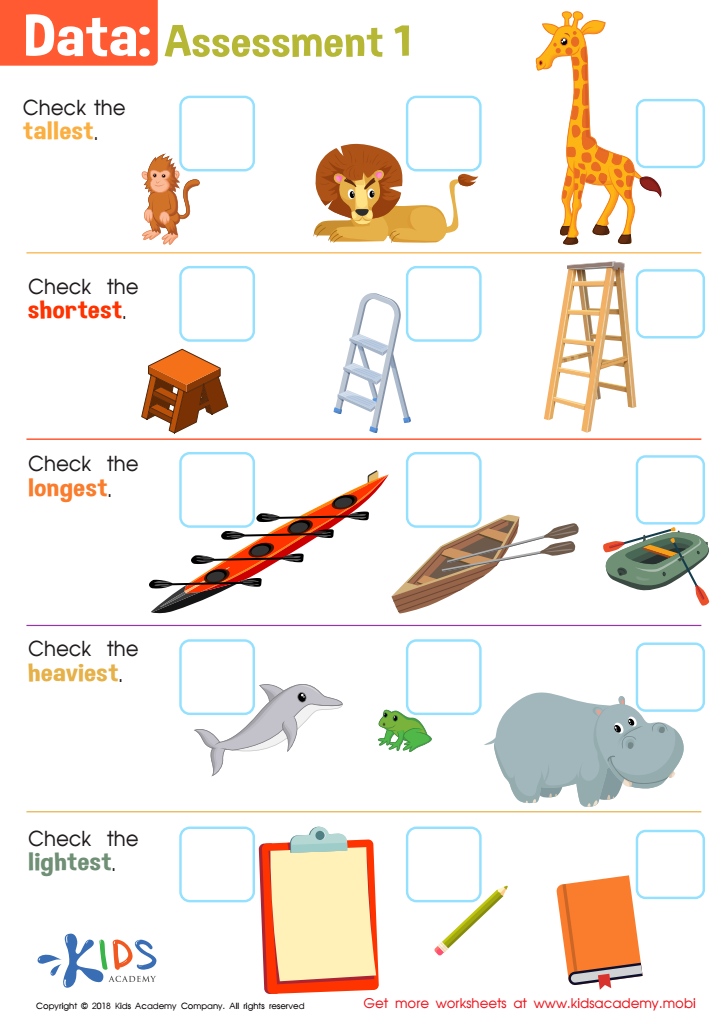
Data: Assessment 1 Worksheet
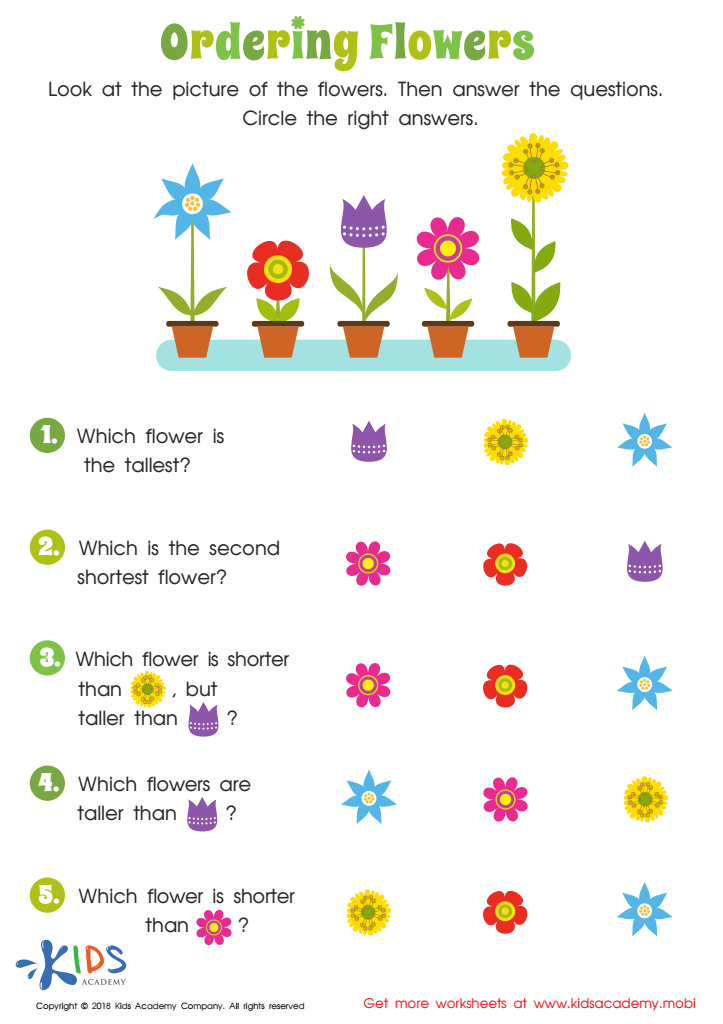
Ordering Flowers Worksheet








Parents and teachers should prioritize comparing numbers and measurement for children ages 4-9 as these foundational concepts are crucial for mathematical development and real-world application. At this stage, children start to understand quantities, recognize differences, and make decisions based on size, weight, length, and time. Engaging in activities that promote these skills helps children develop critical thinking and problem-solving abilities, laying the groundwork for more complex math concepts in later grades.
Furthermore, when children compare numbers, they learn to analyze and categorize information, skills that are transferable to various subjects. Measurement activities activate their sensory experiences and motivate engagement, offering a hands-on way to explore math, thus fostering a positive attitude toward learning.
Socially, these skills also aid in cooperative play and teamwork. For example, children might measure ingredients in a cooking activity or compare the heights of plants in a garden. Ultimately, a strong grasp of comparing numbers and measurement not only enhances mathematical competence but also equips children with essential life skills, promotes confidence, and prepares them for academic success and practical situations they will encounter every day.








