Mathematical reasoning Measurement Worksheets for Ages 4-9
4 filtered results
-
From - To
Explore our Mathematical Reasoning Measurement Worksheets designed for children ages 4-9 to boost their math skills. These engaging, age-appropriate printables help young learners grasp essential measurement concepts through fun activities. Whether measuring length, weight, or volume, each worksheet is crafted to enhance problem-solving abilities and critical thinking. Perfect for classroom use or at-home practice, our worksheets are your go-to resource for developing foundational math skills. Watch your child gain confidence and love for math as they master measurement with ease! Start their mathematical journey today with Kids Academy.
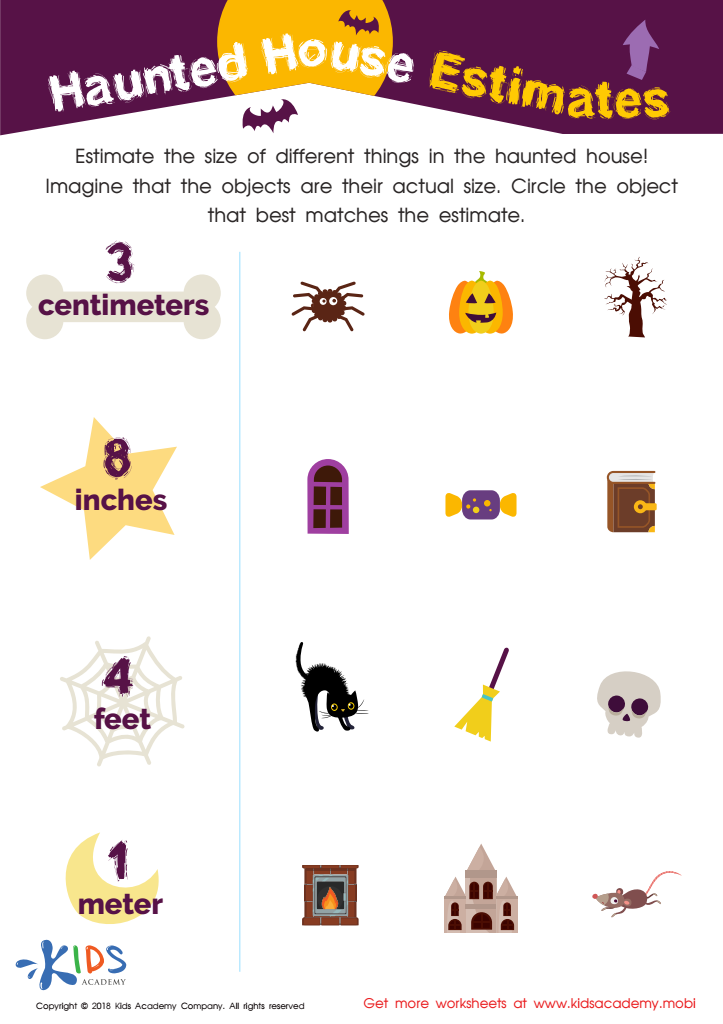
Haunted House Estimates Worksheet
 Assign to My Students
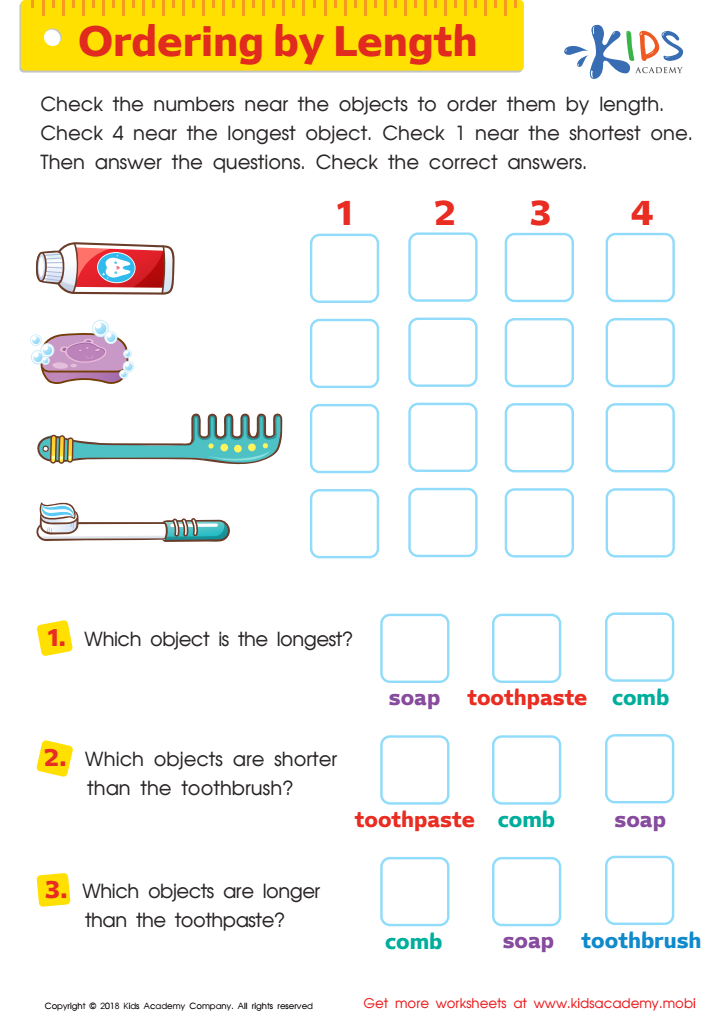
Ordering by Length Worksheet
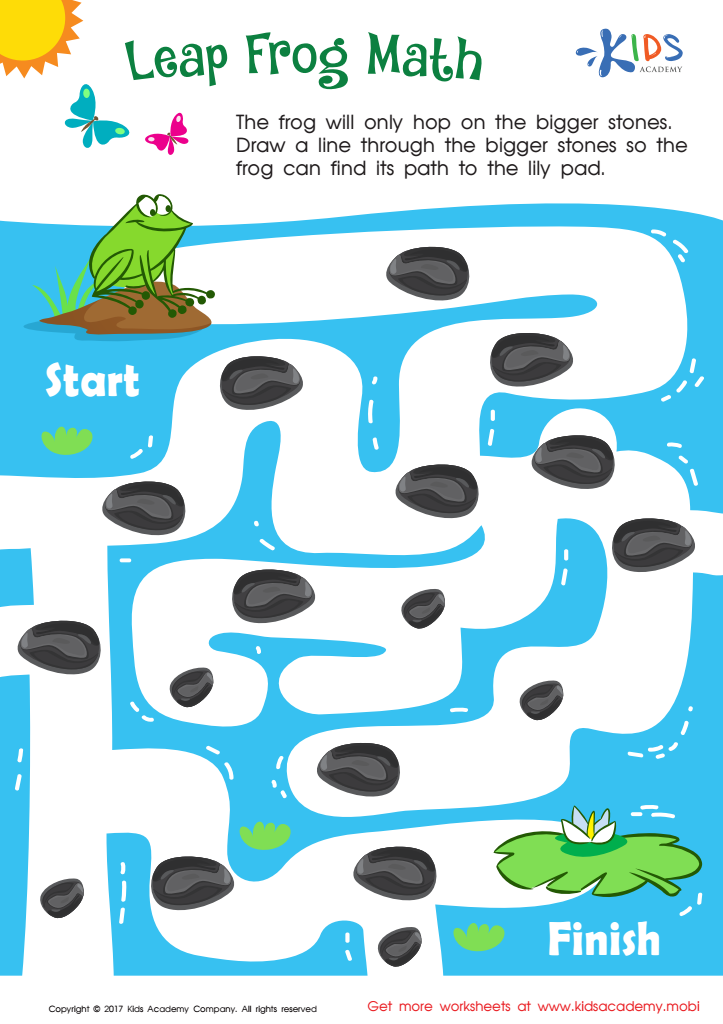
Math Puzzle Worksheet
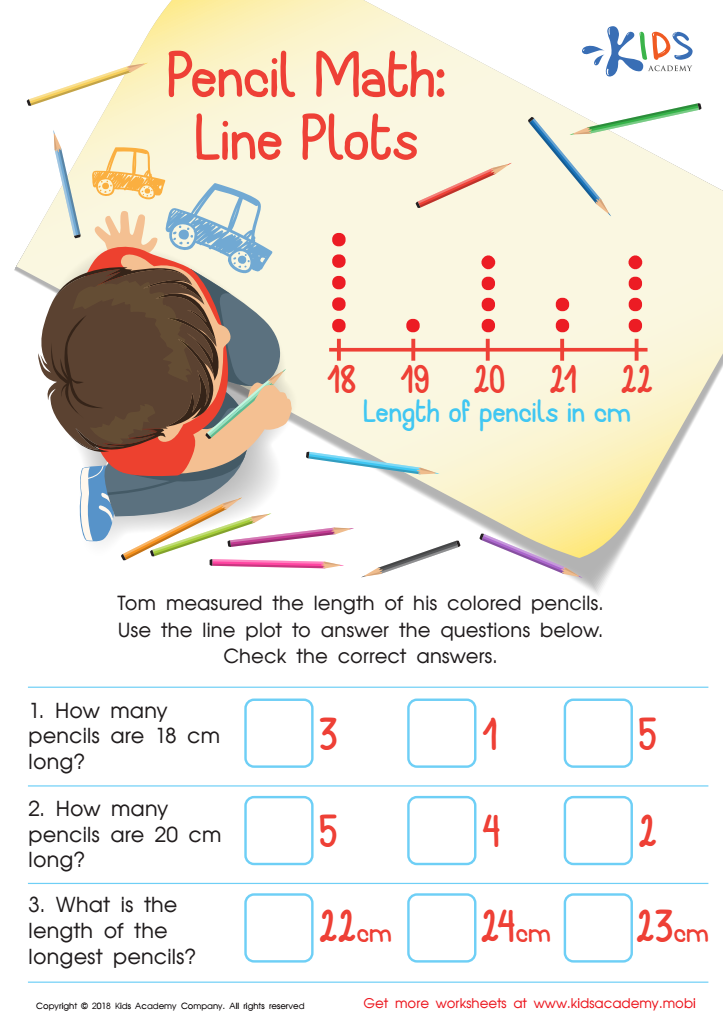
Pencil Math: Line Plots Worksheet








Mathematical reasoning and measurement skills are foundational for children aged 4-9 as they set the stage for future academic success and everyday problem-solving abilities. Cultivating these skills early provides a range of benefits that extend beyond math classrooms. Firstly, mathematical reasoning enhances critical thinking and analytical skills, enabling children to approach problems logically and devise multiple solutions. This fosters a growth mindset, empowering children to embrace challenges and persist through difficulties.
Measurement, a key component of early math education, introduces children to important concepts such as length, weight, volume, and time. Understanding measurement helps children make sense of the world around them, from comparing the sizes of objects to understanding temporal concepts like days and weeks. This practical knowledge directly applies to everyday life activities, such as cooking, shopping, and organizing time efficiently.
Additionally, early proficiency in these areas boosts self-confidence and lays a strong foundation for more complex mathematical concepts encountered in later grades. Engaging young learners with hands-on, playful activities makes math enjoyable and relevant, reducing anxiety and building a positive attitude towards learning.
Ultimately, prioritizing mathematical reasoning and measurement in early education enables children to develop skills that are essential for academic achievement and practical, real-world problem-solving, setting them up for lifelong success.








