Practical application Measurement Worksheets for Ages 4-9
3 filtered results
-
From - To
Discover a range of fun and educational measurement worksheets tailored for children ages 4-9! These engaging resources help young learners grasp essential measurement concepts such as length, weight, volume, and time through practical applications. Designed to be both interactive and easy to understand, our worksheets guide kids step-by-step as they measure everyday objects, compare sizes, and solve real-world problems. Ideal for at-home learning or classroom use, they also spark curiosity and foster the analytical skills necessary for future math success. Set the foundation for a lifetime love of learning with our measurement worksheets!
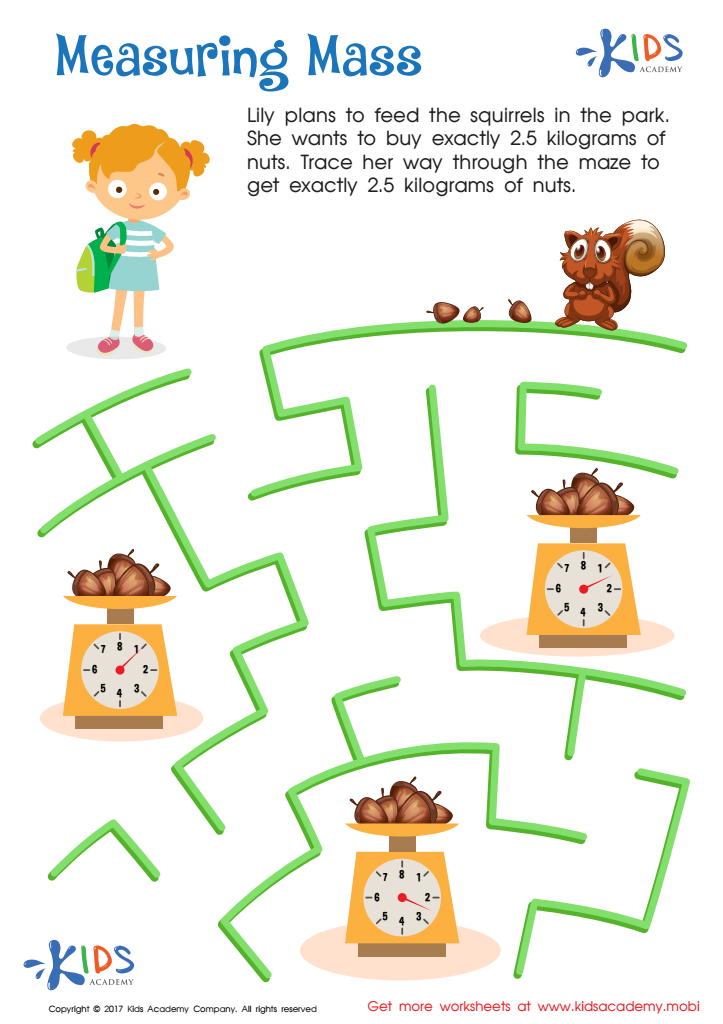
Measuring Mass Worksheet
 Assign to My Students
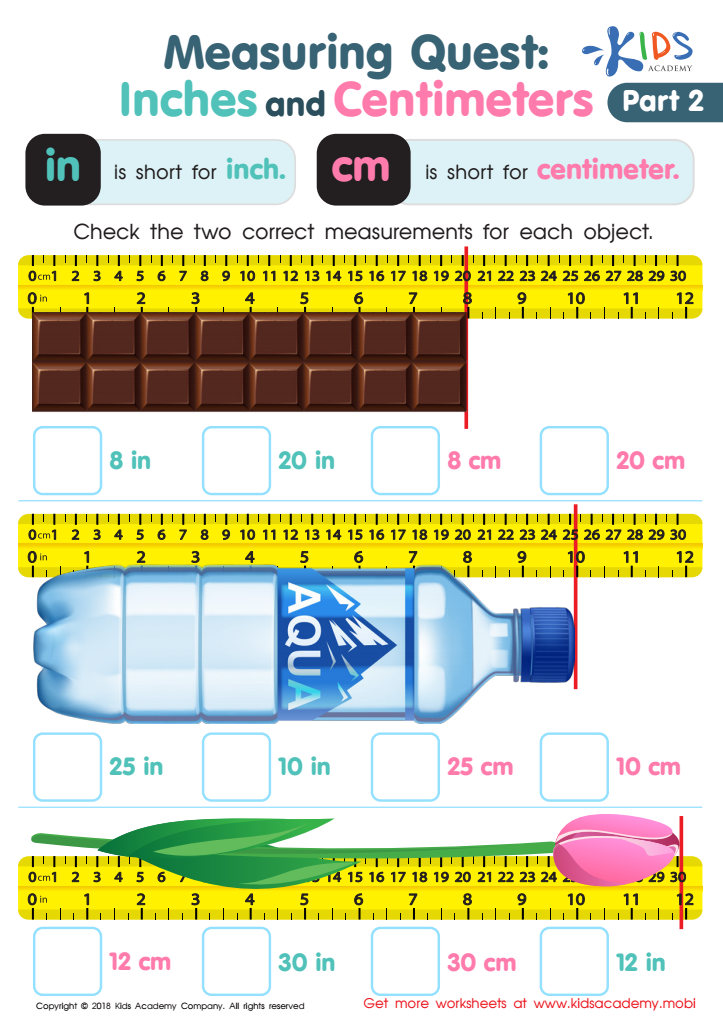
Measuring Quest: Inches and Centimeters - Part 2 Worksheet
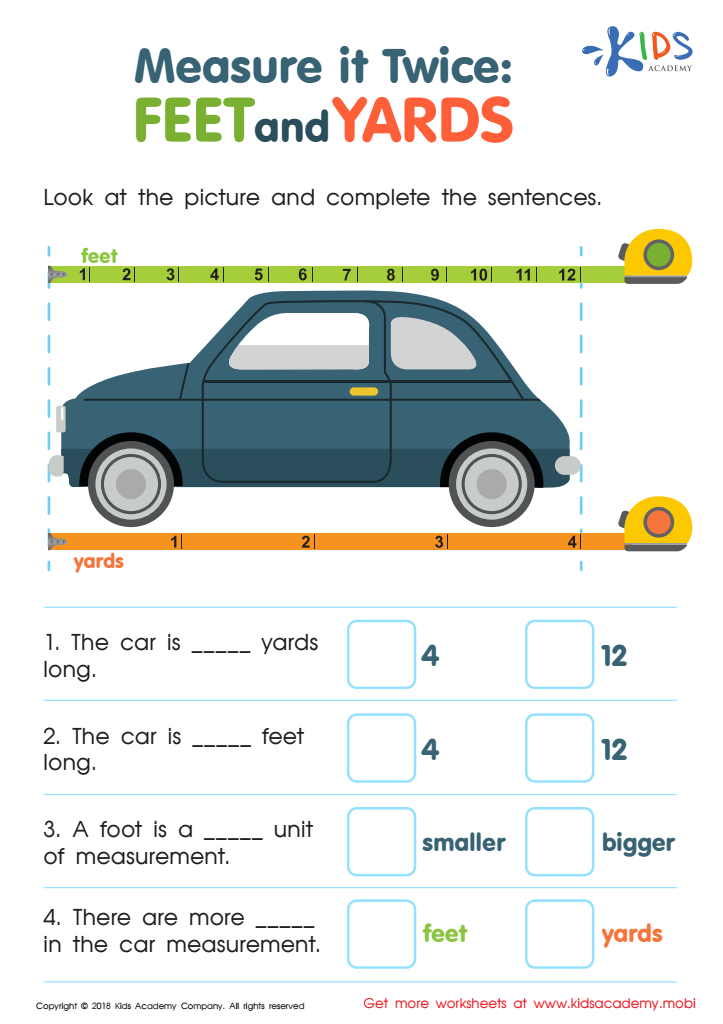
Measure It Twice: Feet and Yards Worksheet








Practical application of measurement for ages 4-9 is crucial as it helps young children understand and relate abstract mathematical concepts to their everyday experiences, fostering a solid foundation in math skills. When parents and teachers actively incorporate measurement activities, children learn to compare, sort, and quantify objects, which enhances their cognitive skills like estimation and spatial awareness. For example, measuring ingredients during cooking or determining the height of a plant nurtures curiosity and promotes hands-on learning, making lessons more engaging and meaningful.
Additionally, early exposure to measurement concepts, such as length, weight, volume, and time, lays the groundwork for future success in more advanced math and science topics. It also supports the development of problem-solving and critical thinking skills, as children learn to make predictions, collect data, and interpret results.
Furthermore, understanding measurement in practical terms helps children develop life skills that are essential for everyday activities, such as following a recipe, building a model, managing time, and even navigating distances. Lastly, involving measurement in a playful and interactive way encourages a positive attitude towards math and reduces math anxiety, building confidence and a lifelong love for learning.
Overall, the practical application of measurement is vital as it intertwines academic growth with real-world relevance, promoting comprehensive development in young learners.








