Spatial awareness Measurement Worksheets for Ages 4-9
3 filtered results
-
From - To
Enhance your child's spatial awareness with our engaging Spatial Awareness Measurement Worksheets designed for ages 4-9! These interactive worksheets are perfect for helping young learners develop essential skills in understanding space, shapes, and their relationships. Our activities encourage exploration, problem-solving, and critical thinking while keeping children motivated and entertained. Perfect for home or classroom use, these worksheets are tailored to build confidence in measuring distances and recognizing patterns. Equip your child with the foundational skills needed for future math success while fostering a love for learning. Download your Spatial Awareness Measurement Worksheets today and watch your child's growth in understanding space and geometry!
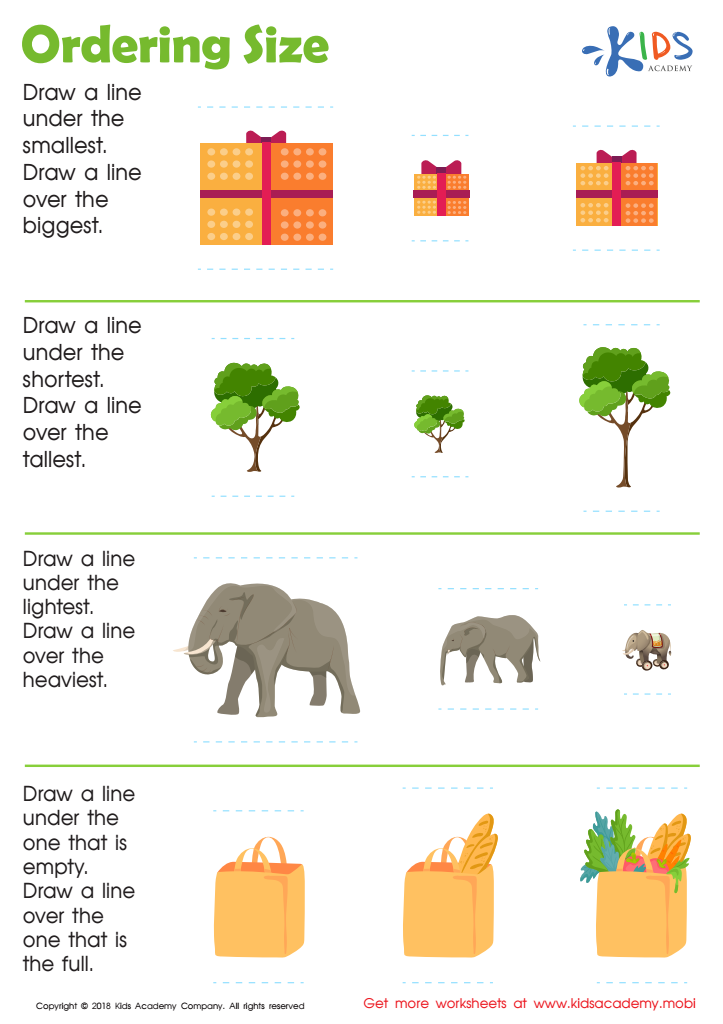
Ordering Size Worksheet
 Assign to My Students
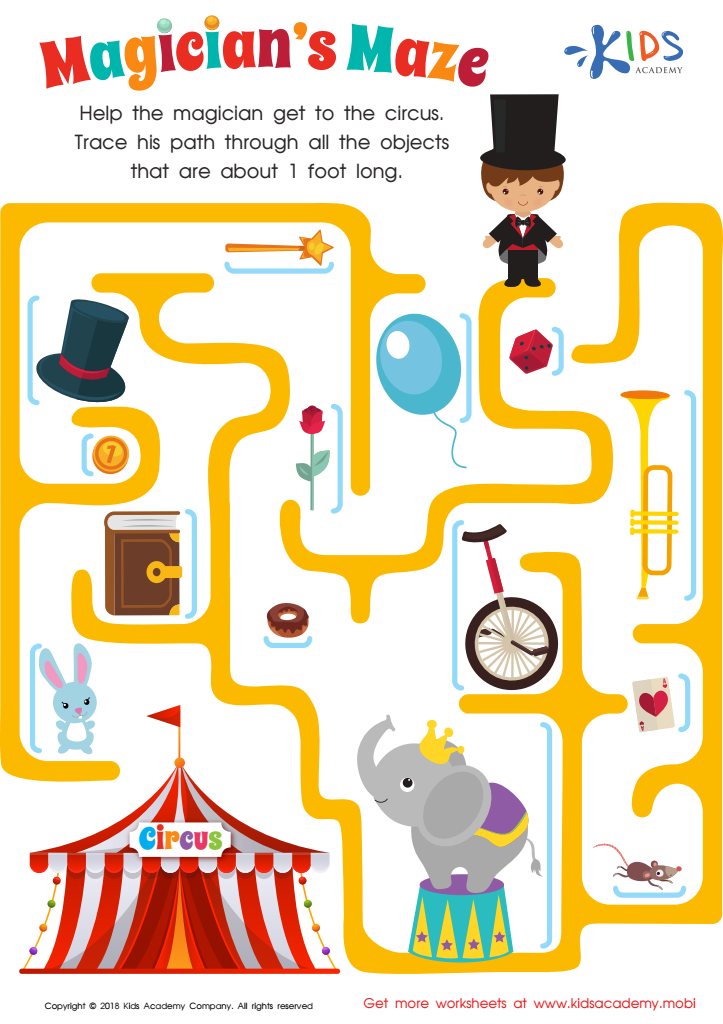
Estimating Length: Magician's Maze Worksheet
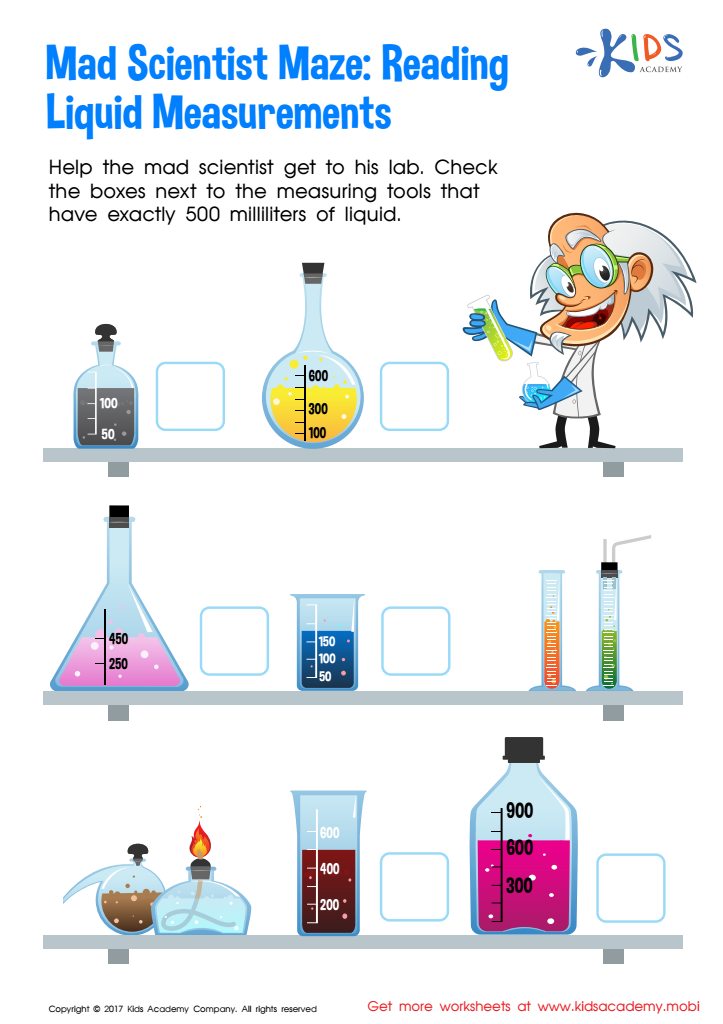
Reading Liquid Measurement Worksheet








Spatial awareness is a crucial cognitive skill that develops early in childhood, significantly influencing a child's understanding of the world around them. For parents and teachers of children aged 4-9, fostering spatial awareness is essential for several reasons. Firstly, spatial awareness lays the groundwork for fundamental mathematical skills, including geometry and measurement, which are critical for academic achievement. Children who grasp concepts like direction, shape, and spatial relationships tend to perform better in math and science as they progress through school.
Moreover, strong spatial awareness enhances problem-solving and critical thinking abilities. It equips children with the skills to visualize and manipulate objects in their minds, which is vital for everyday tasks and complex tasks alike. This skill also ties into motor development, as it often influences a child's ability to navigate their environment, coordination, and physical activity.
Additionally, nurturing spatial awareness promotes creativity and imaginative play. Engaging in activities that enhance these skills—like building with blocks or playing certain games—encourages exploration and curiosity. Ultimately, by prioritizing spatial awareness, parents and teachers can significantly contribute to well-rounded child development, paving the way for success in academics, social interactions, and life skills.








