Understanding measurement units Measurement Worksheets for Ages 4-9
3 filtered results
-
From - To
"Understanding Measurement Units Measurement Worksheets for Ages 4-9" from Kids Academy offer a fun, engaging way for young learners to grasp essential measurement concepts. Our thoughtfully designed worksheets cover various units of length, weight, and capacity, tailored specifically for children aged 4-9. These printables transform complex ideas into age-appropriate activities, encouraging hands-on learning and critical thinking. Perfect for both classroom and home use, our worksheets help kids build a strong foundation in measurement, paving the way for future math success. Unlock the door to essential math skills with our comprehensive and creative measurement units printables.
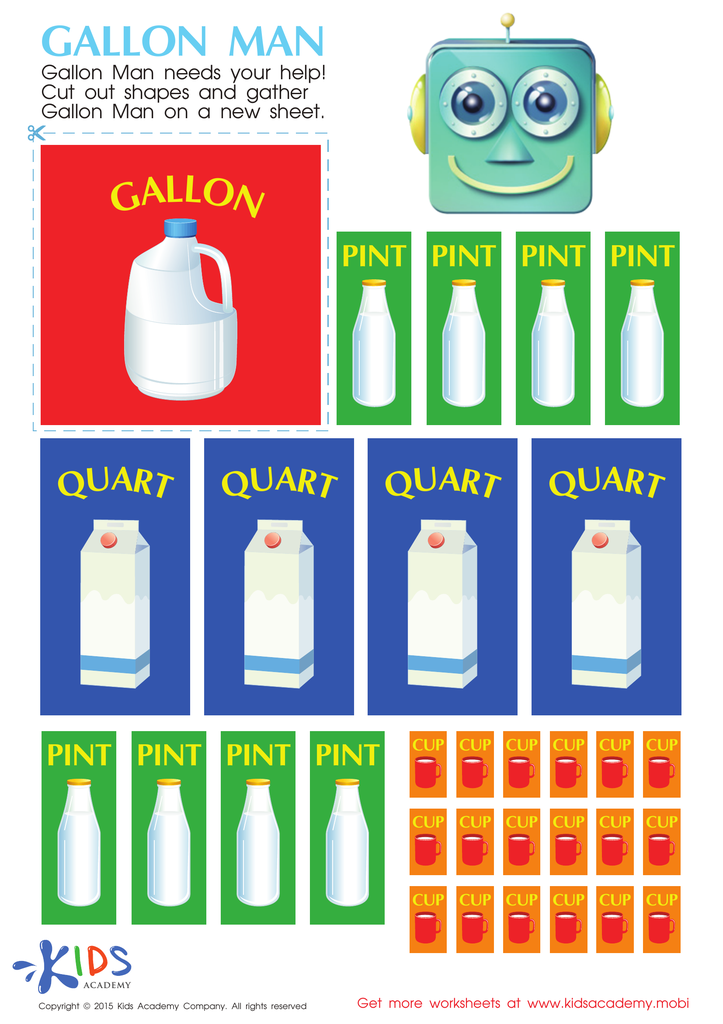
Cups, Pints and Quarts With Gallon Man Worksheet
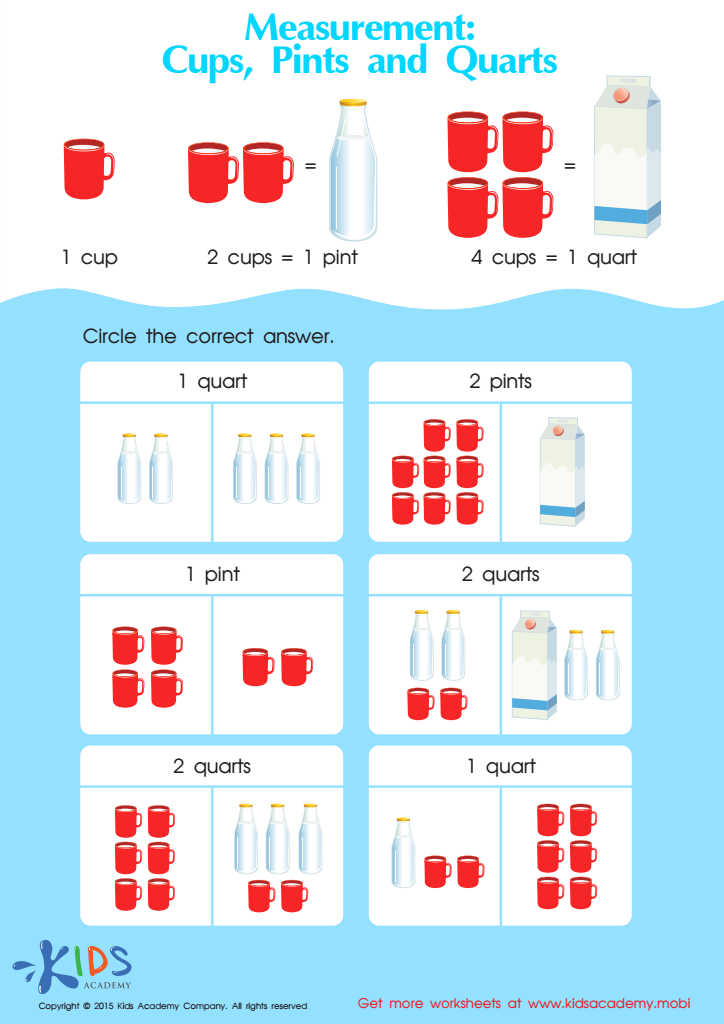
Cups, Pints and Quarts Worksheet
 Assign to My Students
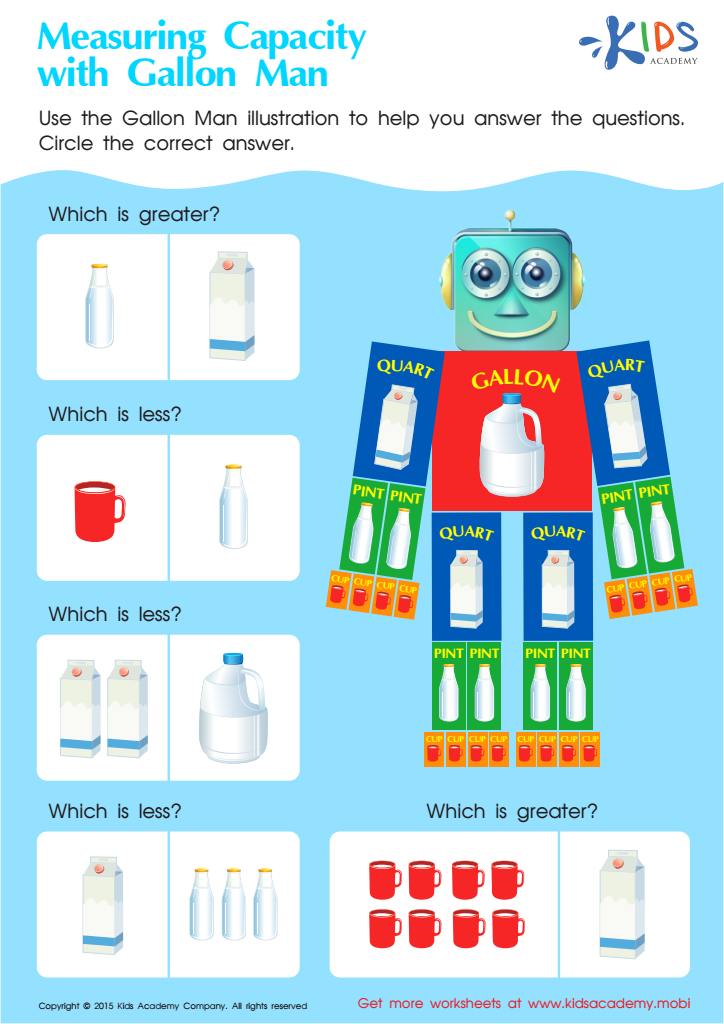
Measurement: Measuring Capacity with Gallon Man Worksheet








Understanding measurement units is crucial for young children aged 4-9 because it lays a foundational skillset for their future academic and real-world success. Measurement is integral to everyday life, from cooking and crafting to navigation and science. Introducing these concepts early helps children develop a fundamental sense of quantity, space, and practical problem-solving.
For parents, helping children grasp measurement units enhances their cognitive development and critical thinking skills. Simple activities like cooking, where ingredients are measured, or shopping, where weights and volumes are considered, offer practical, hands-on experiences that make the units more tangible and relatable. Understanding measurement also improves children's mathematical abilities, aiding in areas like addition, subtraction, and pattern recognition.
For teachers, incorporating measurement lessons into the curriculum ensures that students build a comprehensive skillset early on. Activities like measuring classroom items or charting weather patterns make learning interactive and engaging. Teaching measurement fosters precision and accuracy, qualities that are transferable to many subjects, including science, technology, engineering, and math (STEM).
In essence, understanding measurement units equips children with not only academic competency but also essential life skills. Early exposure to these concepts under the guidance of attentive parents and creative teachers can ignite a lifelong appreciation for learning and problem-solving.








