Addition Practice Numbers up to 100 Worksheets for Ages 4-9
4 filtered results
-
From - To
Welcome to our Addition Practice Worksheets designed for children ages 4 to 9, focusing on numbers up to 100! These engaging and interactive worksheets provide a fun way for young learners to master addition skills. With a variety of exercises tailored to different learning levels, your child will practice addition through colorful illustrations and scenarios. Our resources help build foundational math skills, enhance problem-solving abilities, and boost confidence in young learners. Perfect for home or classroom use, these worksheets offer a great way to make math enjoyable. Start your child’s journey towards mastering addition today!
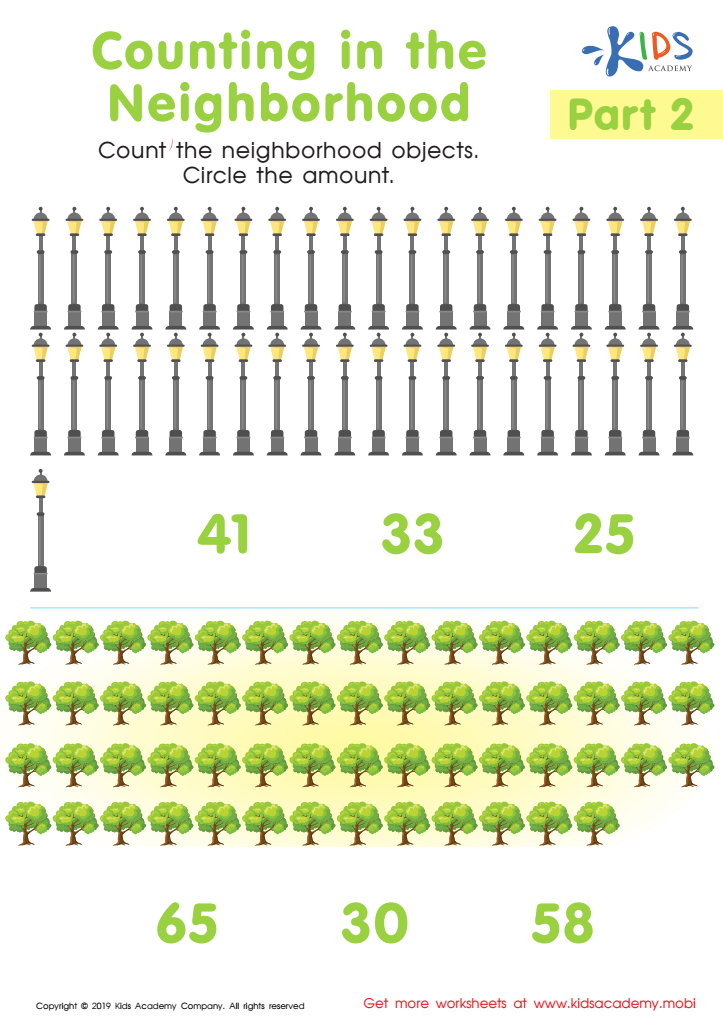
Counting In The Neighborhood Part 2 Worksheet
 Assign to My Students
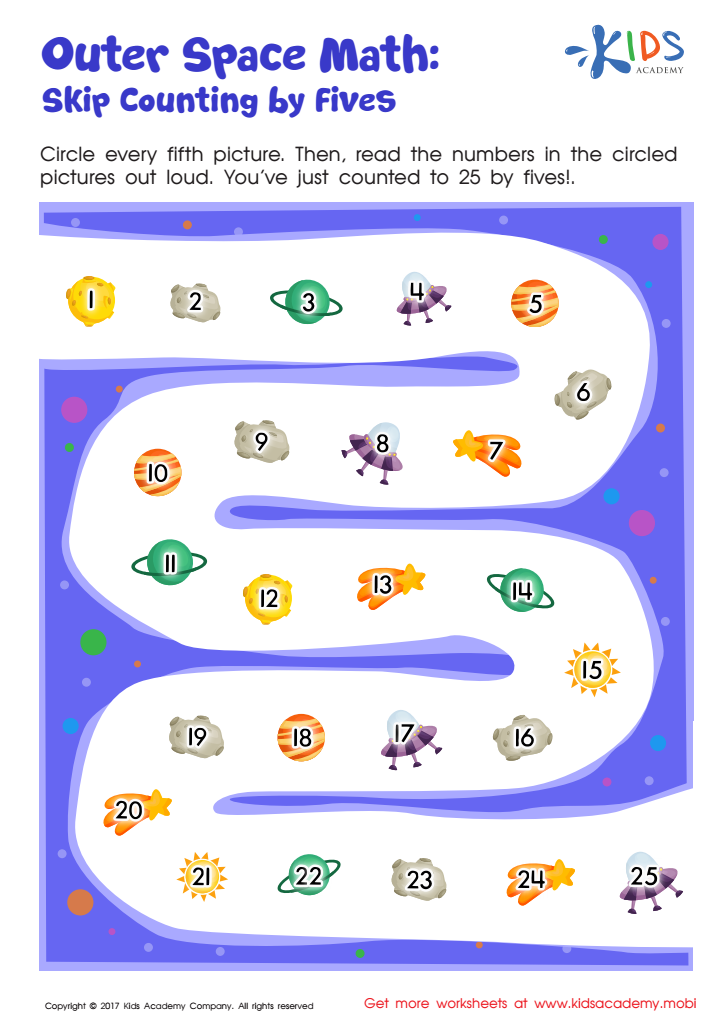
Skip Counting by 5s: Outer Space Math Printable
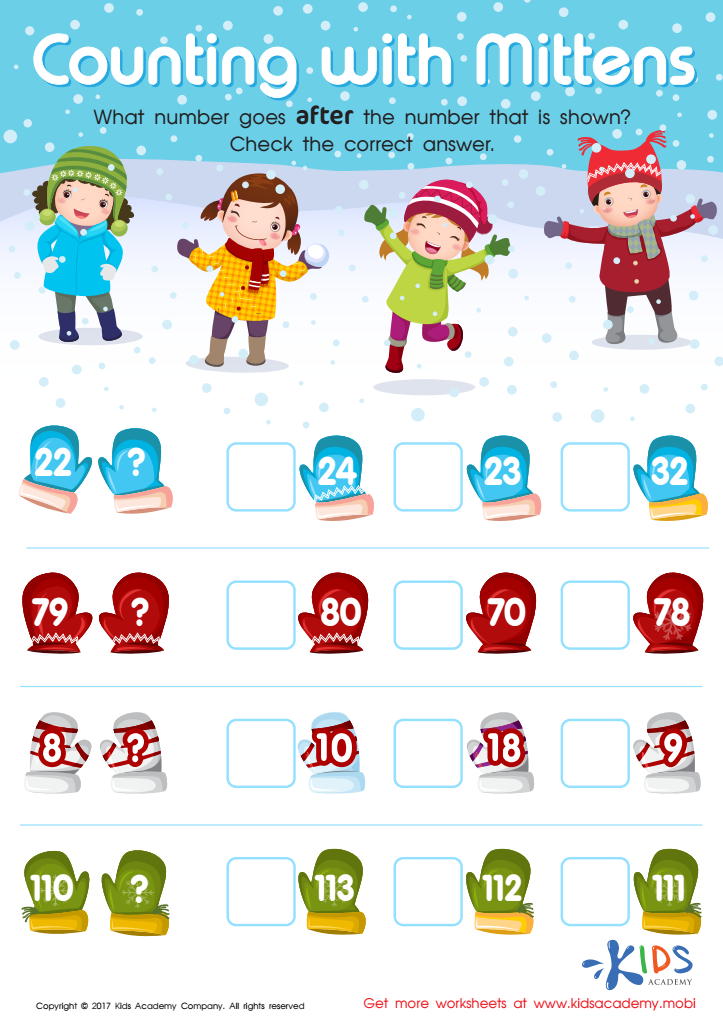
Counting with Mittens Worksheet
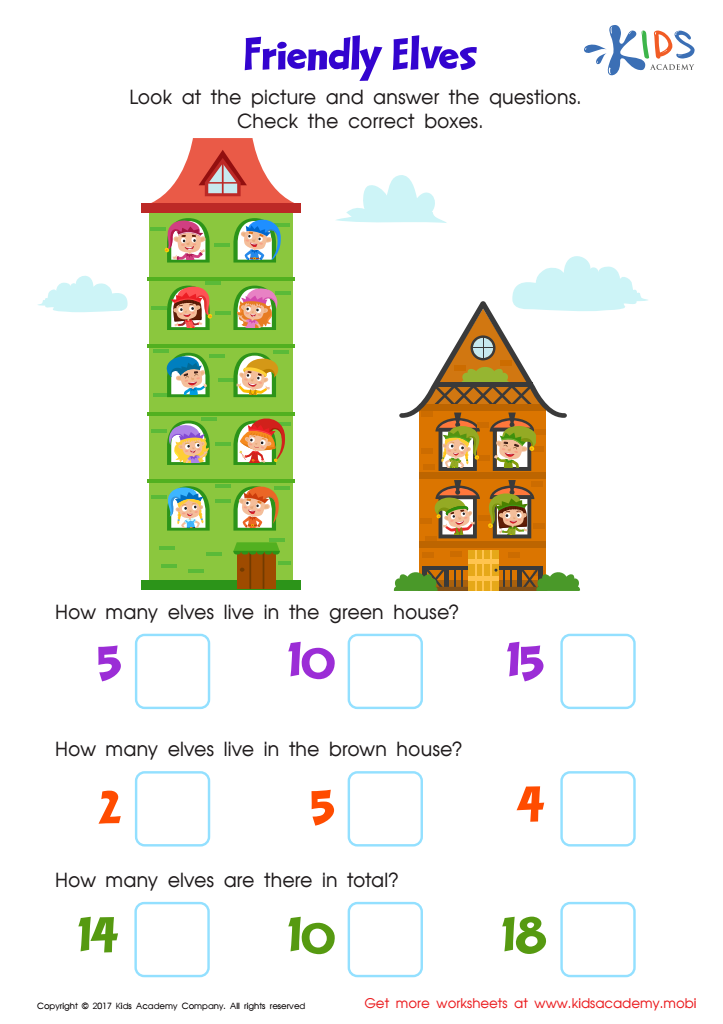
Place Value: Friendly Elves Worksheet







Parents and teachers should prioritize addition practice for children aged 4-9, particularly up to 100, for several compelling reasons. First, mastering basic addition lays the foundation for future mathematical skills. In this age range, children learn not only to add, but they also develop critical thinking and problem-solving abilities that will serve them throughout their academic careers.
Addition practice enhances cognitive development, promoting number sense and a better understanding of how numbers interact. It encourages children to visualize problems and practice mental math, which is essential for tackling more complex mathematical concepts later on. This early literacy in math fosters confidence and boosts self-esteem as children experience success through mastery of addition.
Furthermore, early proficiency in addition can impact overall academic performance. Children who are comfortable with numbers are more likely to engage positively in math during their schooling, reducing anxiety around the subject. Additionally, recognizing the importance of continual practice and reinforcement can help solidify these skills.
Involving parents in this practice also promotes family bonding and creates a supportive learning environment. Whether through games, worksheets, or real-life applications, engaging children in addition practice is critical for their long-term success and a healthy numerical intuition.