Number Recognition Numbers up to 100 Worksheets for Ages 4-9 - Page 2
27 filtered results
-
From - To
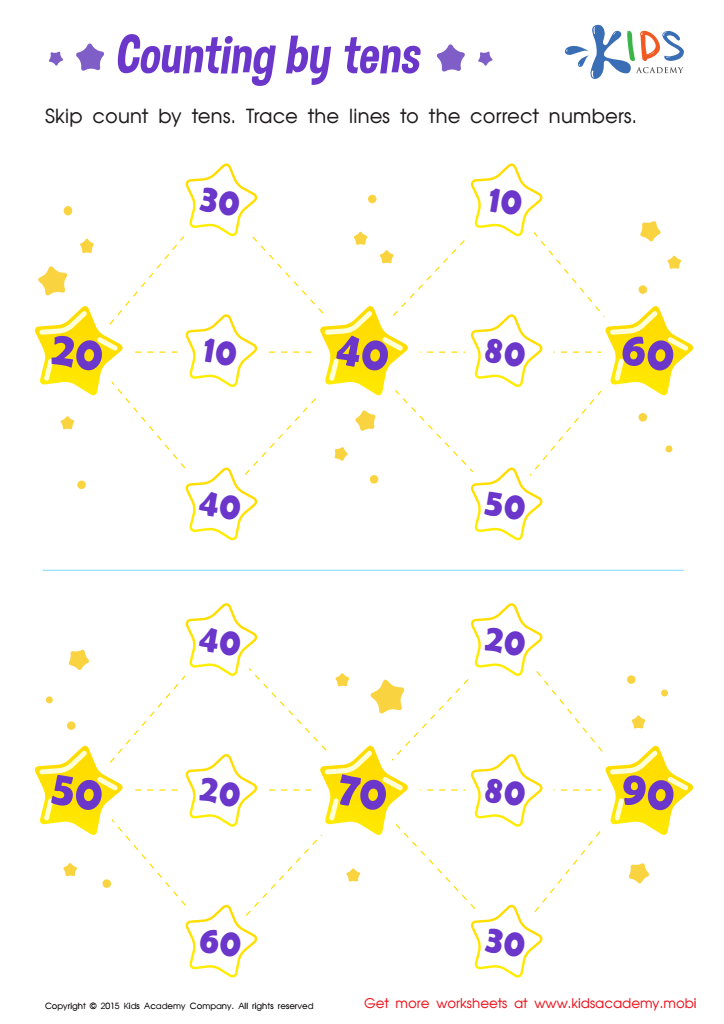
Learn Dozens: Counting by Tens Printable
 Assign to My Students
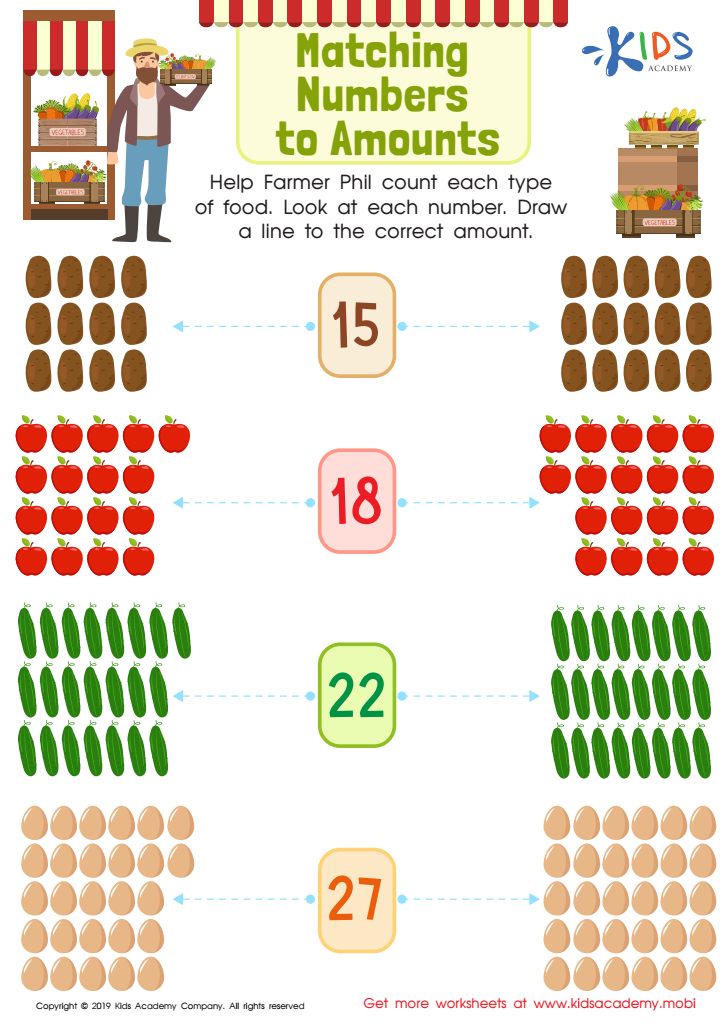
Matching Numbers to Amounts Worksheet

Counting on the City Skyline: Dot-to-Dot Worksheet








Number recognition up to 100 is a foundational skill essential for young children, laying the groundwork for successful mathematical learning and everyday life skills. For ages 4-9, grasping numbers up to 100 aids cognitive development and helps build the base for complex arithmetic concepts such as addition, subtraction, multiplication, and division. Early familiarization with numbers fosters problem-solving skills and logical thinking, encouraging children to recognize patterns and make connections with the world around them.
Parents and teachers should prioritize number recognition because it boosts confidence in young learners as they progress through school. This skill contributes to improved performance in various educational activities, including counting objects, understanding quantities, and using a number line to solve problems. Number literacy also supports real-life activities, like managing money, telling time, and following sequenced instructions, which are vital for independent living.
Moreover, early competence in number recognition correlates with higher academic achievement in later years, as math serves as a critical subject that supports learning in science, technology, engineering, and more. Therefore, fostering a strong understanding of numbers up to 100 should be a significant focus for parents and educators, as it equips children with the tools needed for both academic success and everyday functionality.








