
Basic Math Skills Sorting Worksheets for Ages 4-9
4 filtered results
Difficulty Level
Grade
Age
-
From - To
Subject
Activity
Standards
Discover our engaging Basic Math Skills Sorting Worksheets designed for children aged 4 to 9! These worksheets foster a hands-on learning approach, helping young learners master fundamental mathematical concepts through fun and interactive sorting activities. By organizing numbers, shapes, and sizes, kids enhance their critical thinking and problem-solving abilities. Perfect for classroom use or home practice, these easy-to-follow worksheets cater to diverse learning styles while encouraging kids to develop essential math skills. Get ready to boost your child's confidence and proficiency in math with our thoughtfully crafted resources—ideal for early education and foundational math learning! Explore and sort today!
Favorites
With answer key
Interactive
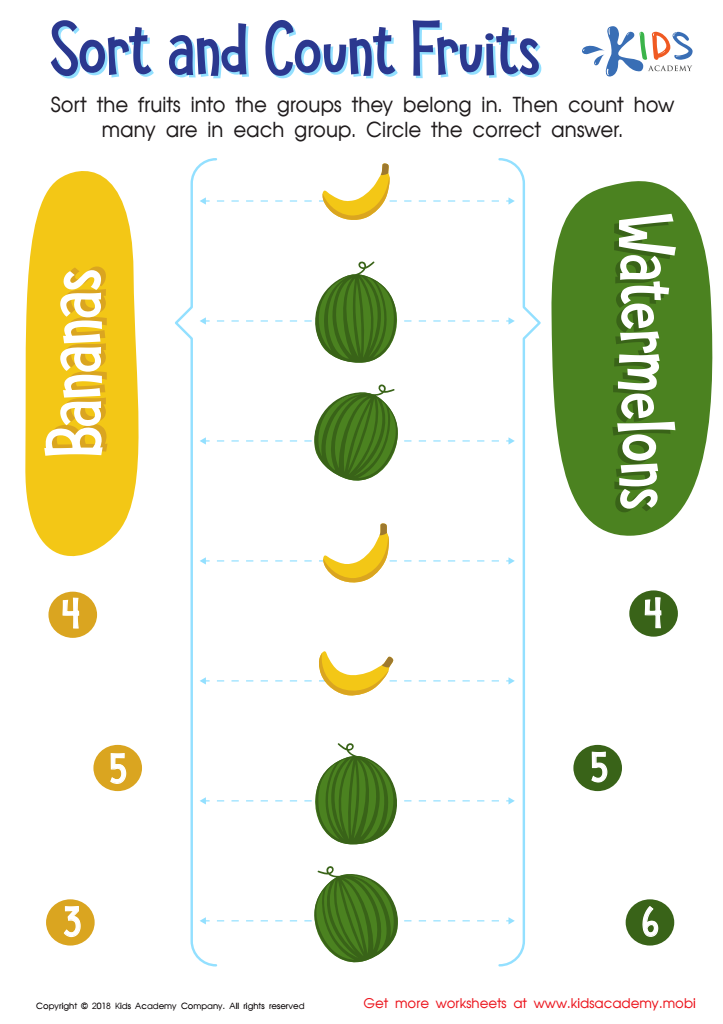
Sort and Count Fruits Worksheet
Allow your children to hone their critical thinking and number reasoning skills with this free worksheet. They'll sort, count, and trace fruits while learning basic number sense. A fun, delicious learning experience with familiar pictures they'll love.
 Assign to My Students
Sort and Count Fruits Worksheet
Worksheet
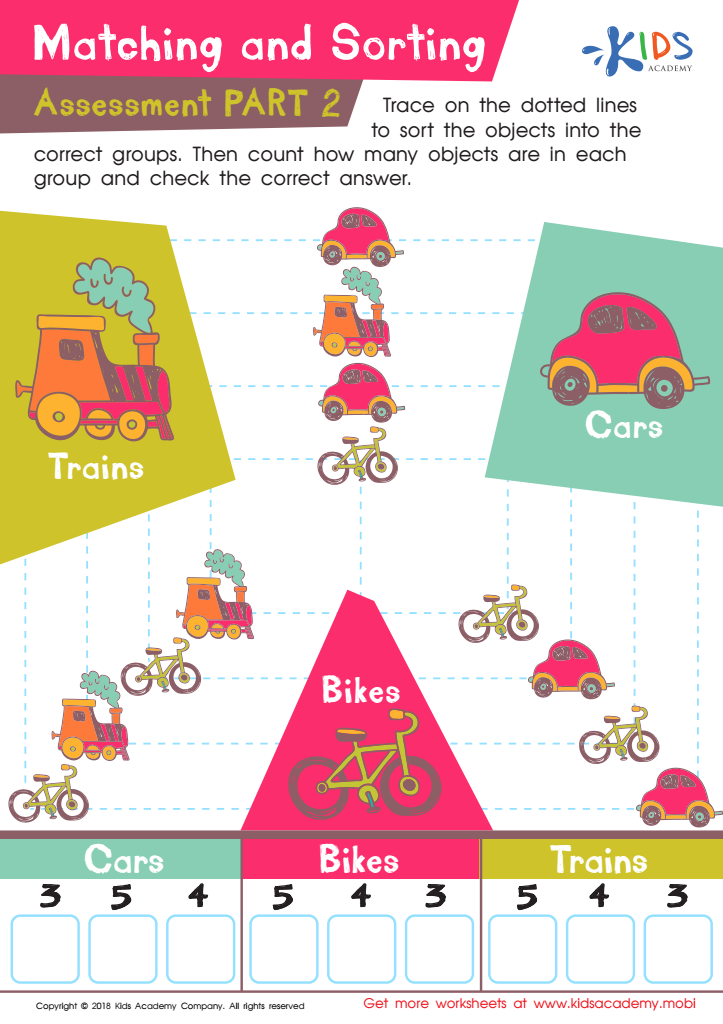
Matching and Sorting for Kindergarten: Assessment 2 Worksheet
This assessment tests matching, sorting and fine motor skills. It challenges kids to identify properties and attributes of pictures, trace guidelines and count the types of vehicles. It's a great way to practice basic number sense and hone in on important foundational skills.
Matching and Sorting for Kindergarten: Assessment 2 Worksheet
Worksheet
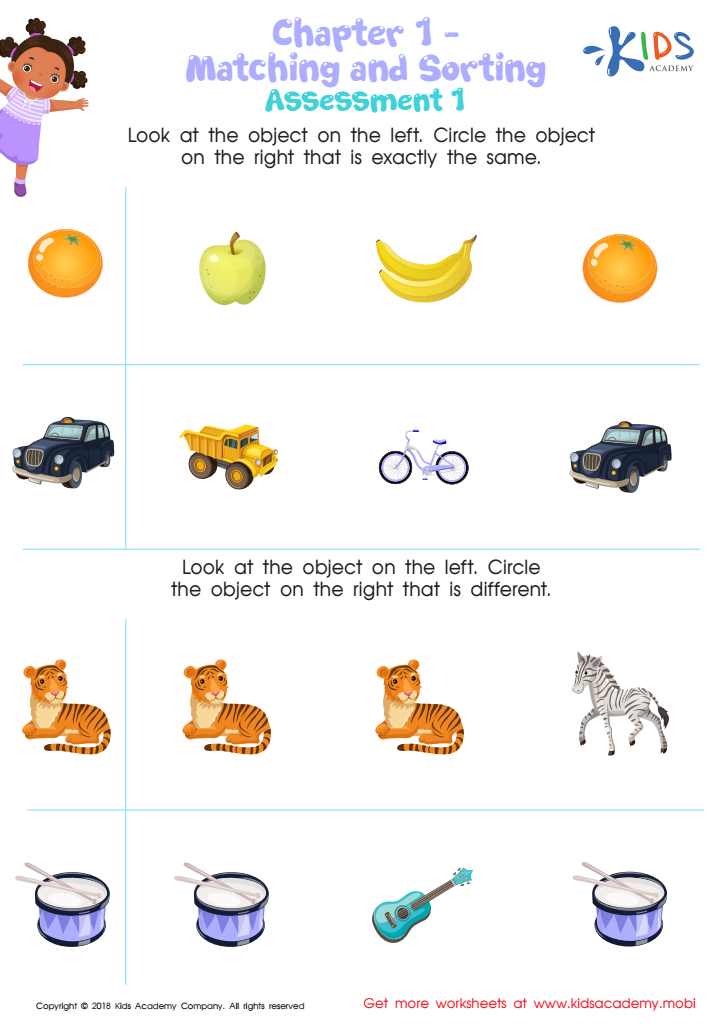
Matching and Sorting for Preschool: Assessment 1 Worksheet
Test your child's matching skills with this worksheet! Ask them to name each of the objects pictured, then circle the ones that are the same. Repeat for the second task. It's a great way to assess their skills and have fun at the same time!
Matching and Sorting for Preschool: Assessment 1 Worksheet
Worksheet
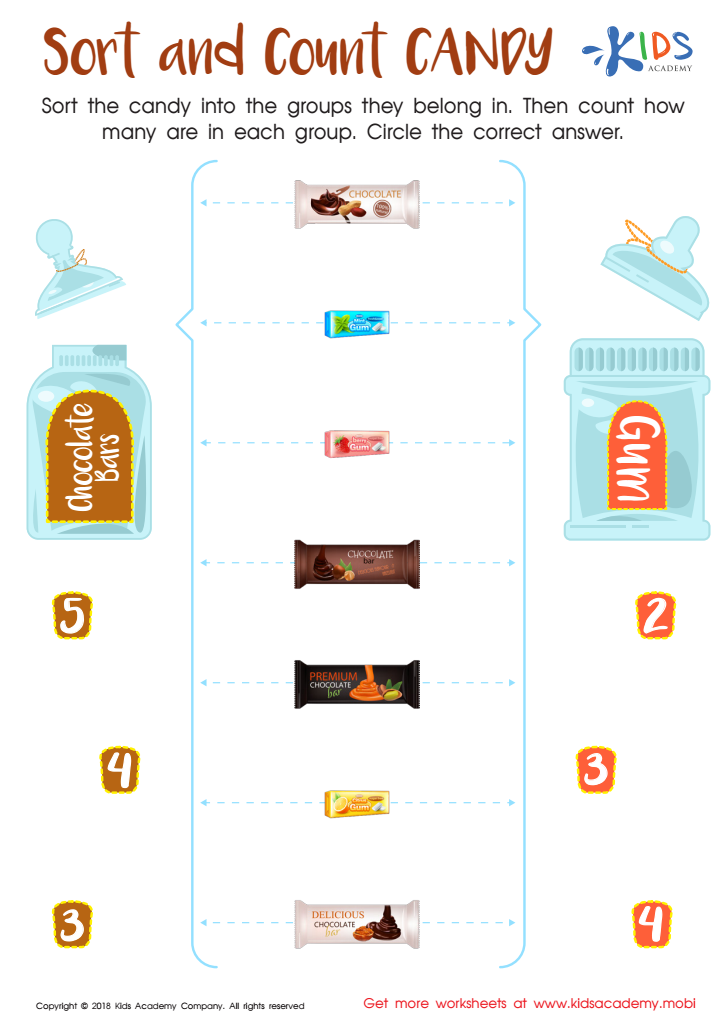
Sort and Count Candy Worksheet
Sort chocolate and candy with your kids! Help them use recognizable items and pictures to sort, practice counting with one-to-one representation, and develop their fine motor skills with the traceable lines. Download this free worksheet to get started. Yum!
Sort and Count Candy Worksheet
Worksheet
Join Kids Academy for Free
Who is primarily going to use this learning content?








Basic math skills, particularly sorting, play a vital role in the cognitive and social development of children aged 4-9. Sorting helps children recognize patterns, categorize objects, and make comparisons, which are foundational skills for more complex mathematical concepts. When children sort items based on attributes like size, color, or shape, they are practicing critical thinking and decision-making skills, enhancing their ability to problem-solve effectively.
Moreover, sorting activities foster fine motor skills and hand-eye coordination as children manipulate physical objects. Socially, when done in groups, sorting tasks encourage collaboration and communication, teaching children how to share, negotiate, and learn from one another.
Parents and teachers should care about these skills because they set the groundwork for future academic success. Early engagement in sorting and other foundational math exercises can lead to improved performance in later math tasks, such as addition and subtraction. Recognizing the importance of sorting also highlights how everyday activities can be transformed into fun, interactive learning experiences. By introducing sorting games in a playful manner, caregivers can foster a love for math while building essential skills in a supportive environment, ultimately contributing positively to a child's educational journey.








