Multiplication practice Times Tables Worksheets for Ages 4-9
33 filtered results
-
From - To
Discover engaging Multiplication Practice Times Tables Worksheets designed specifically for ages 4-9! Our carefully curated worksheets aim to make learning times tables fun and effective. These printable resources help children build a strong mathematical foundation by focusing on essential multiplication skills. With interactive exercises and colorful designs, our worksheets capture young learners' interests and enable them to practice and master multiplication at their own pace. Join us today to enhance your child's numeracy skills, boost their confidence in math, and ensure they excel in their educational journey. Find the perfect multiplication practice materials to support your child's growth.
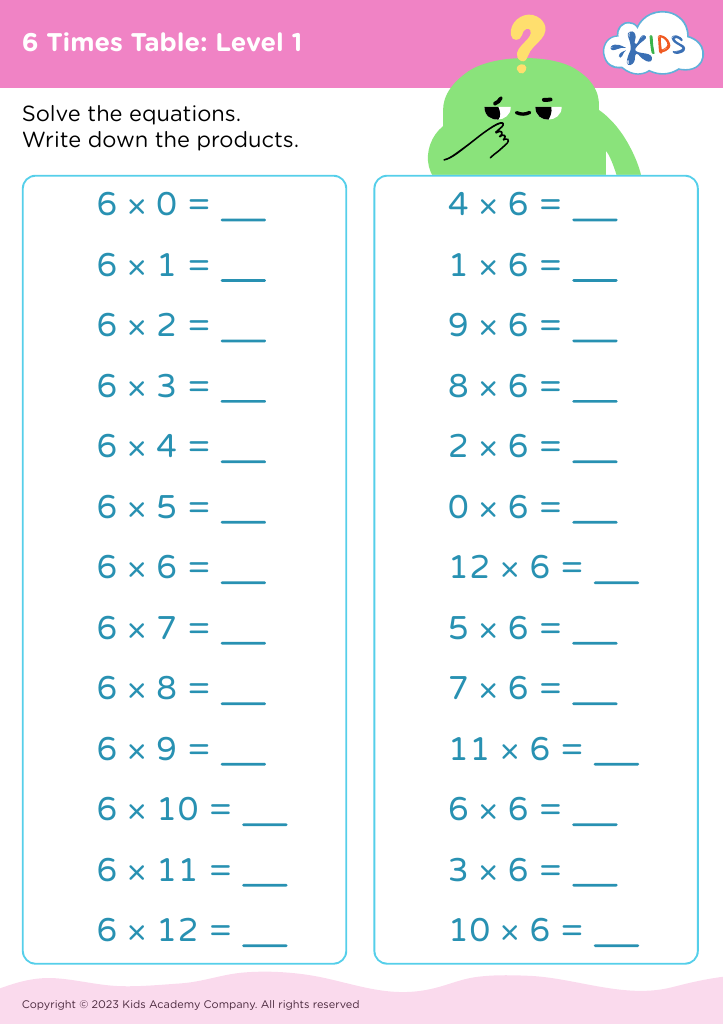
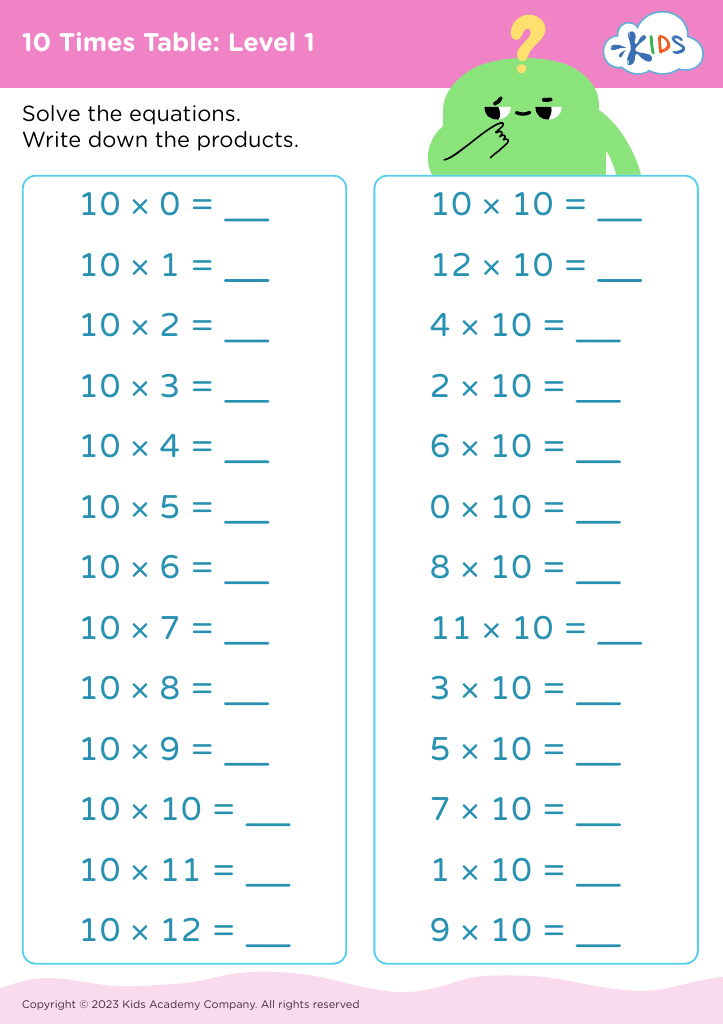
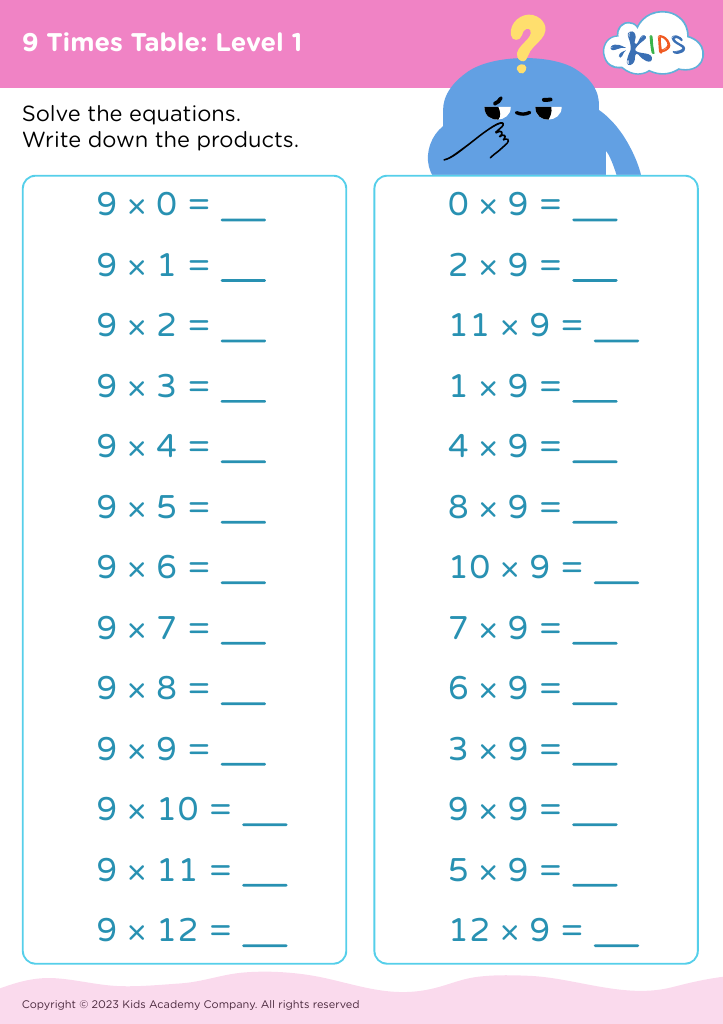
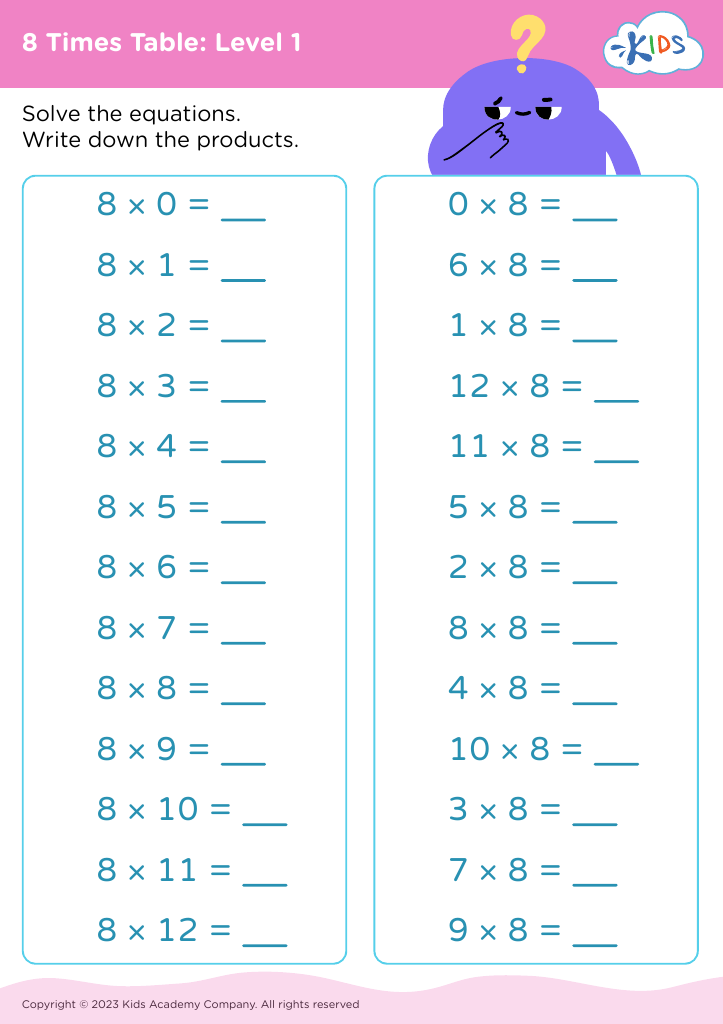
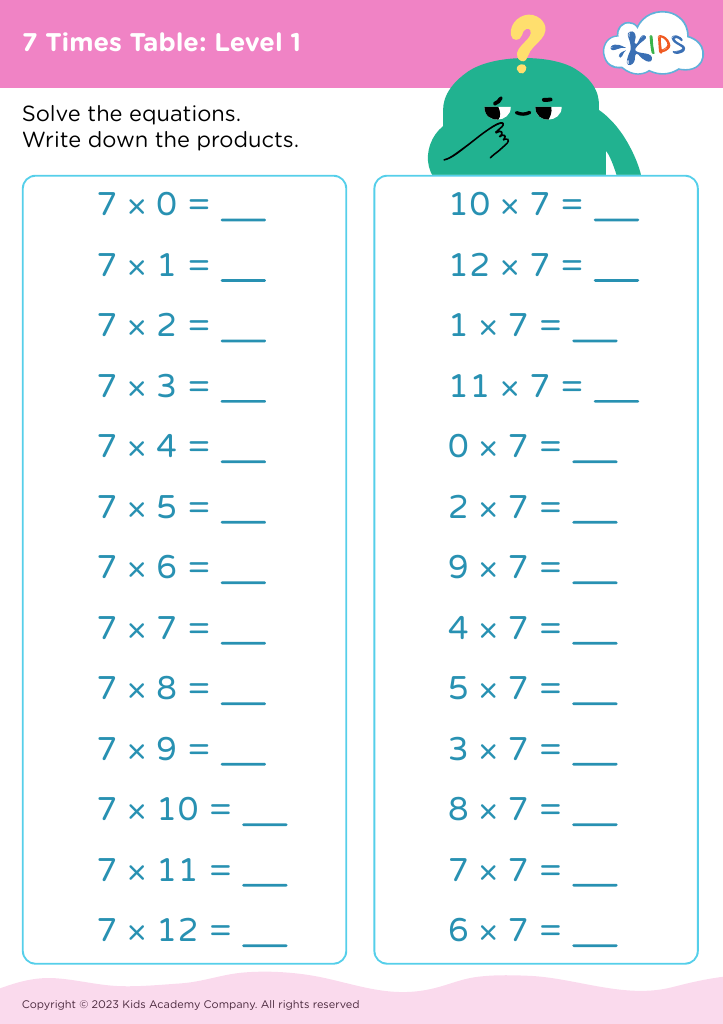
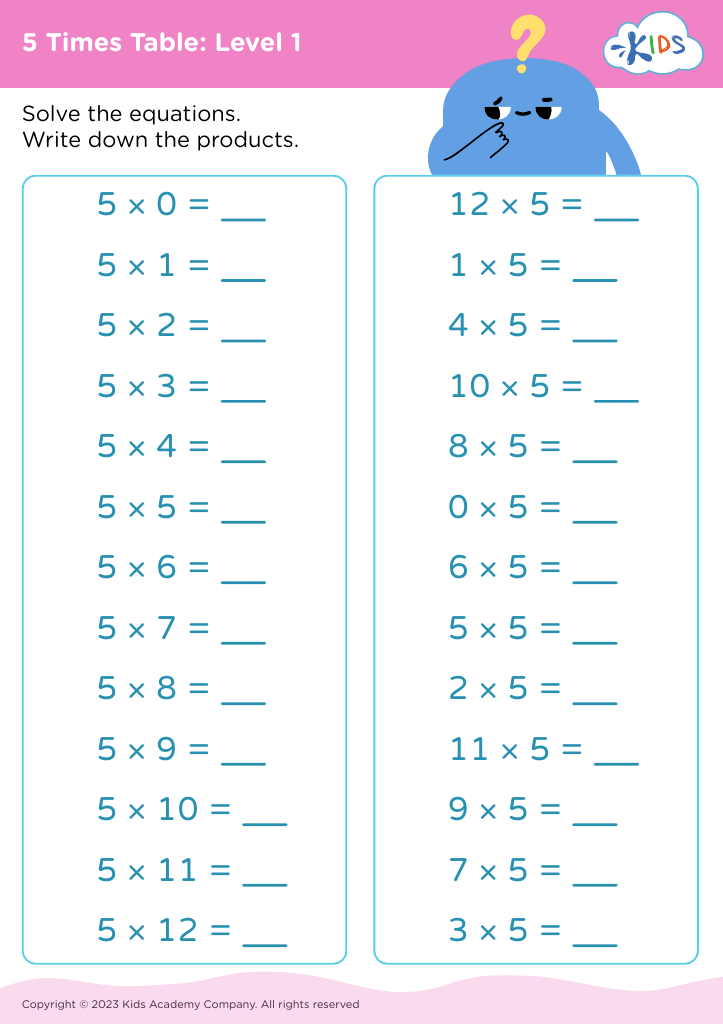
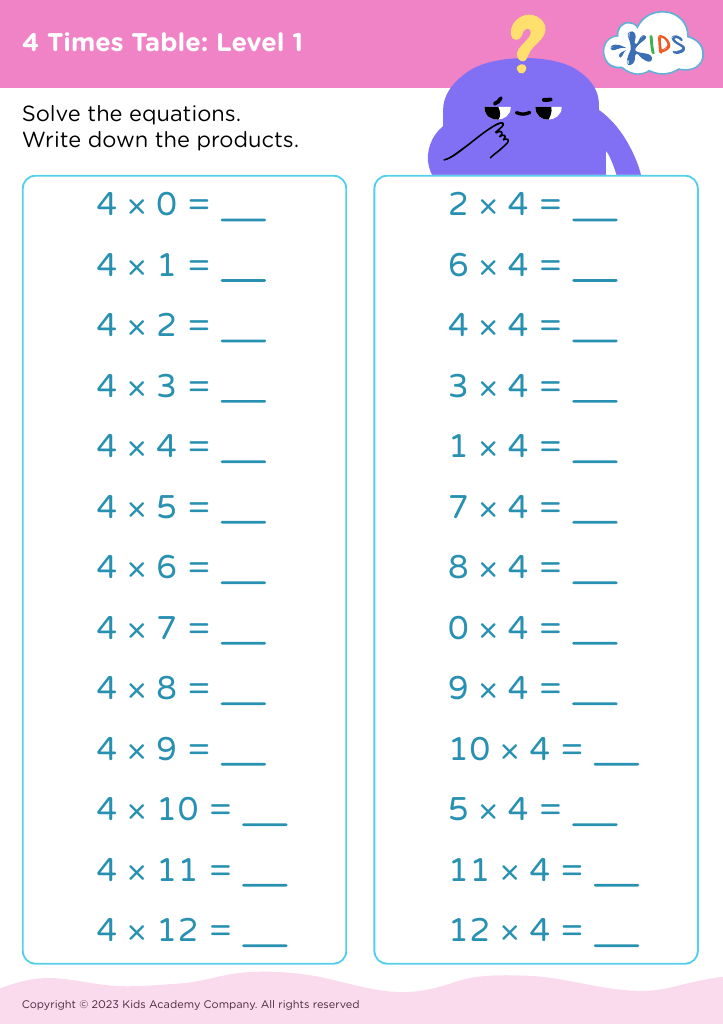
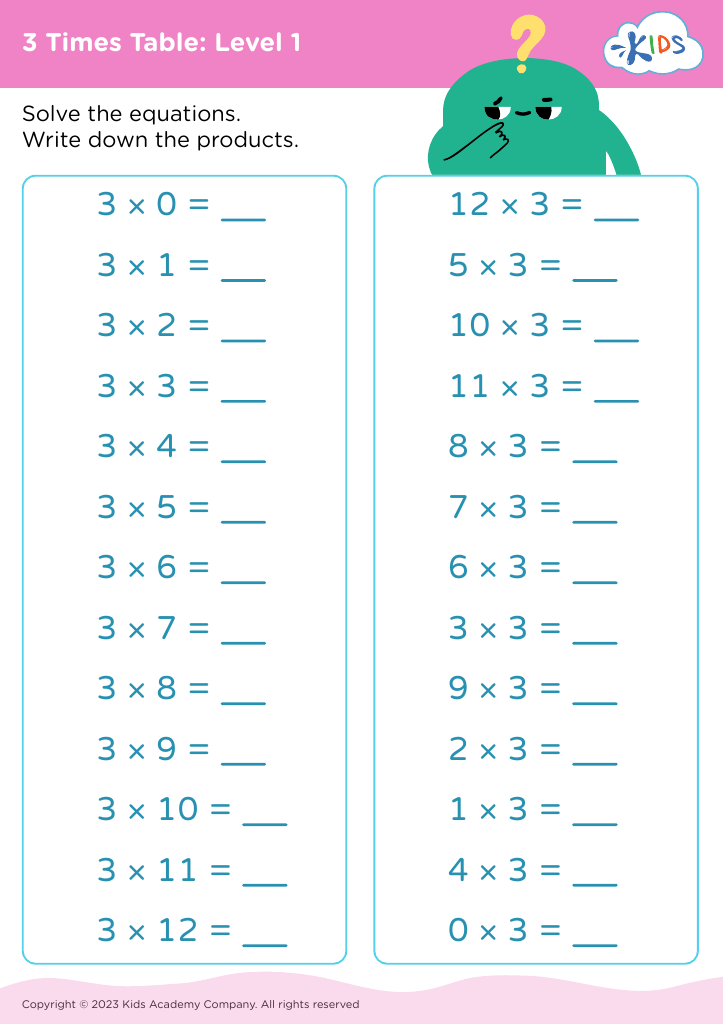
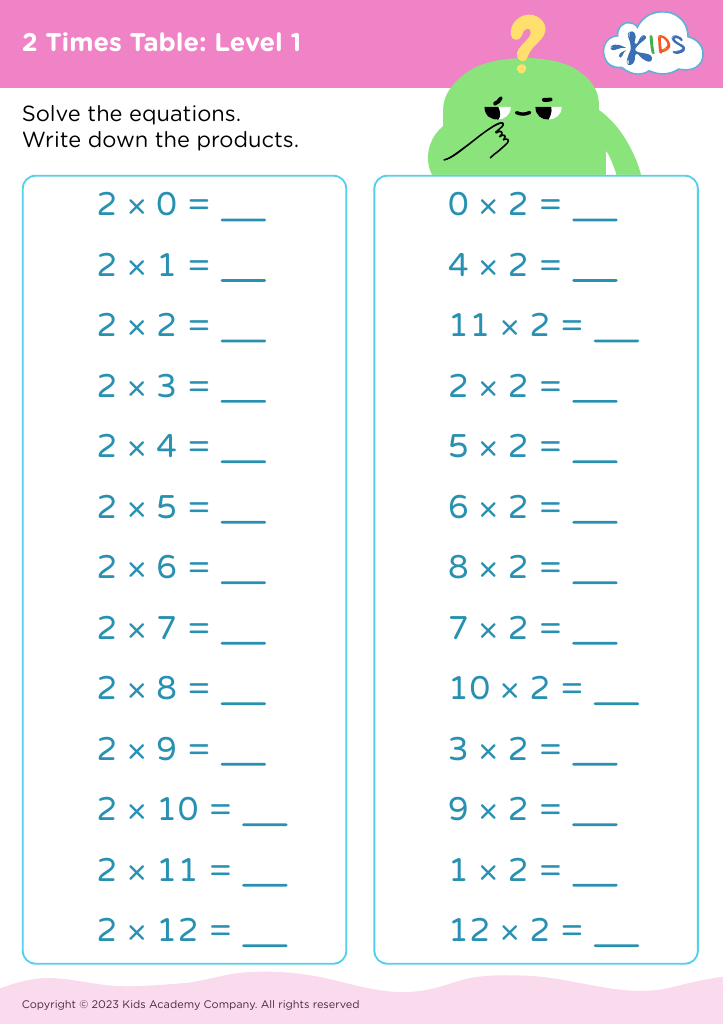
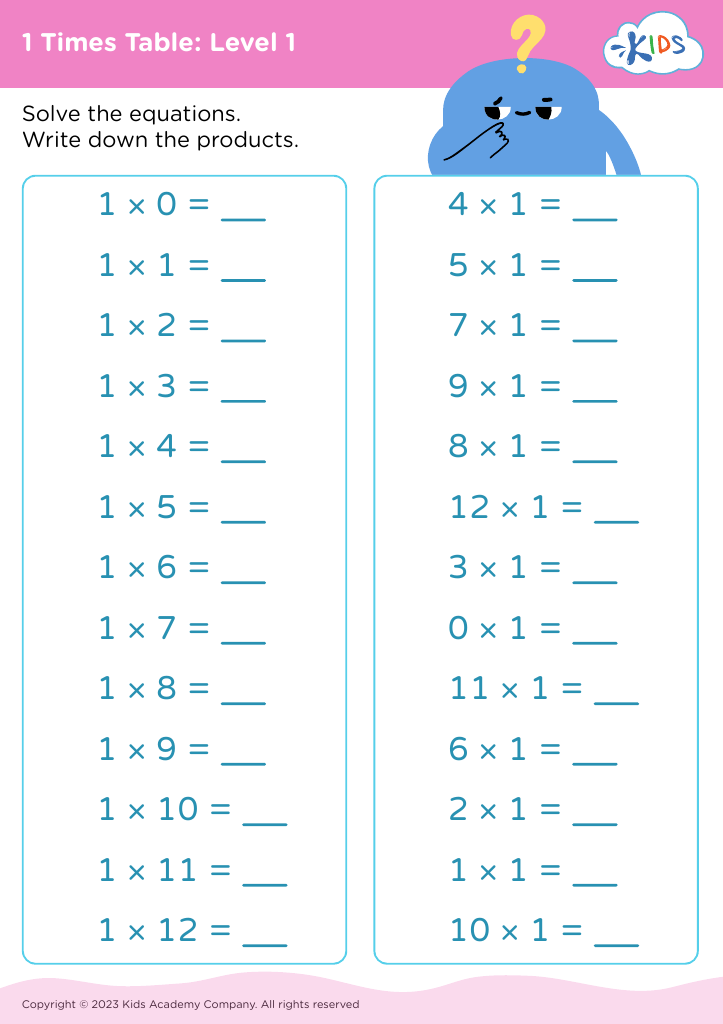
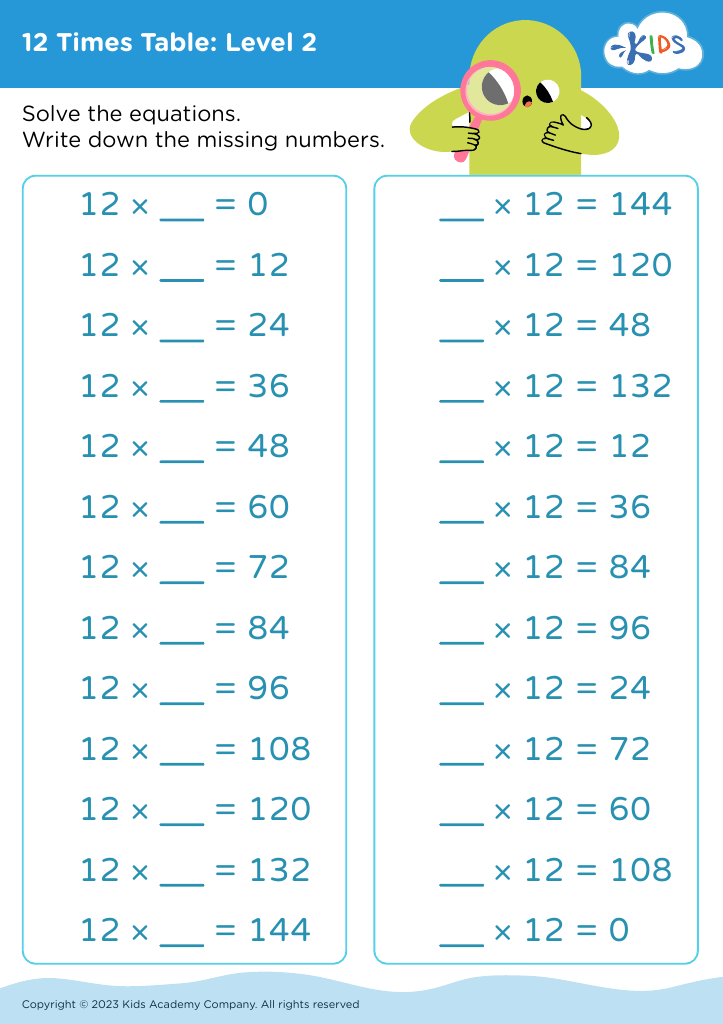
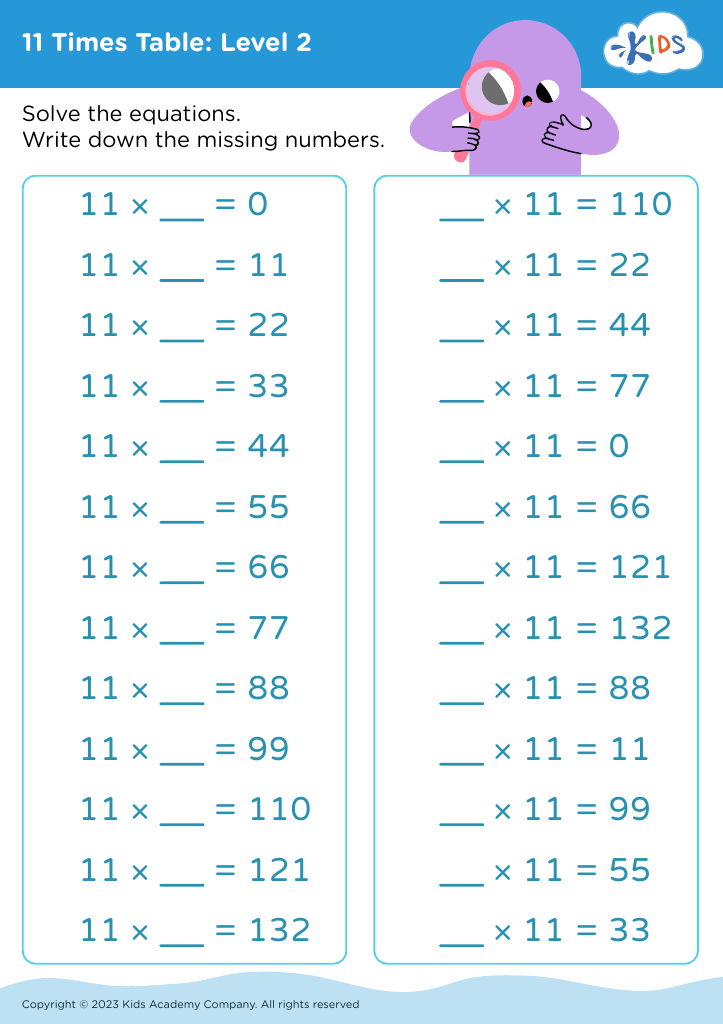
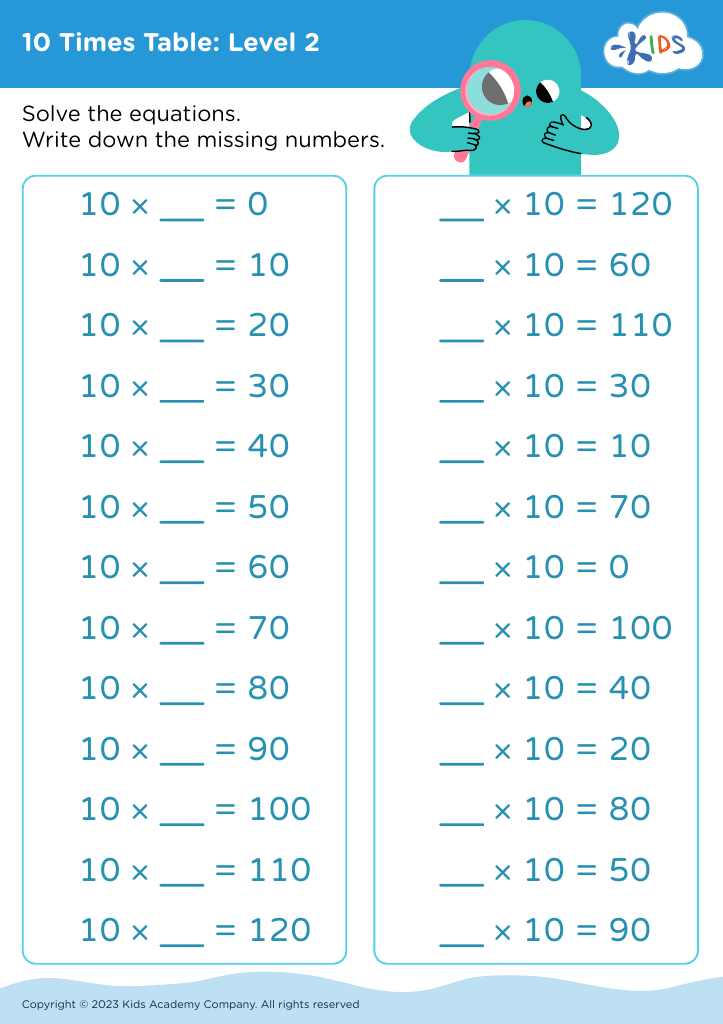
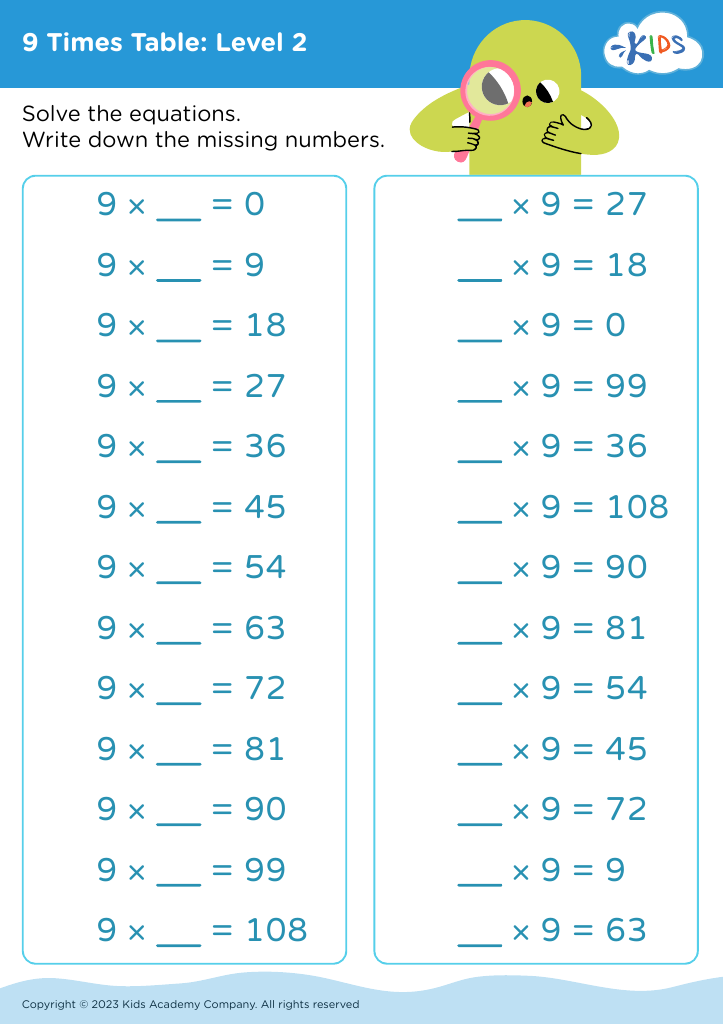
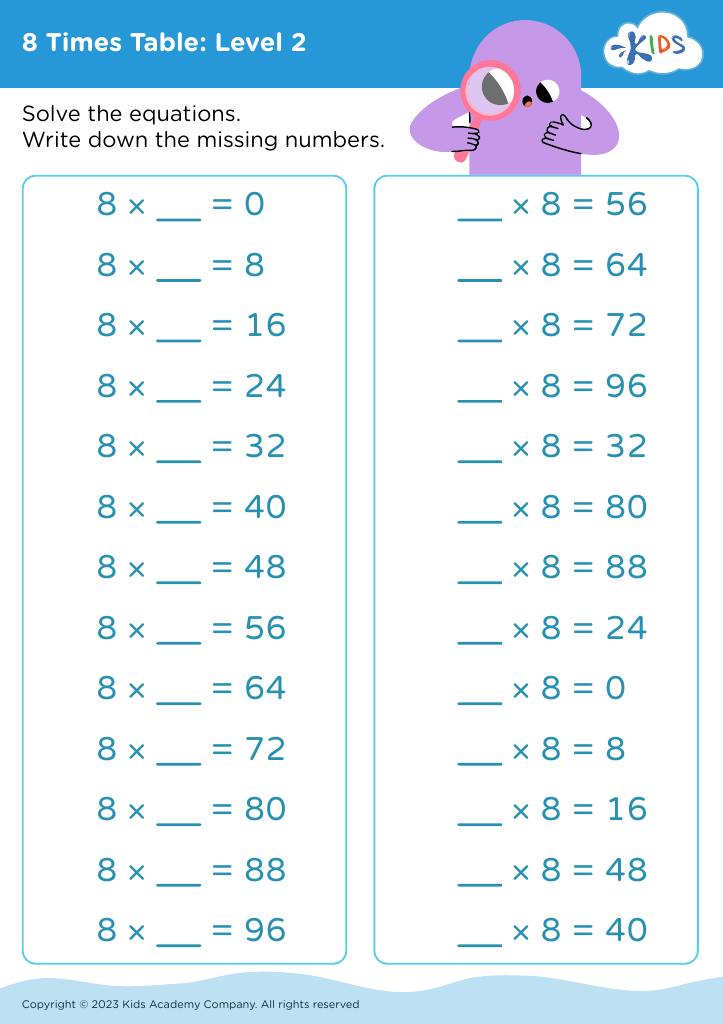
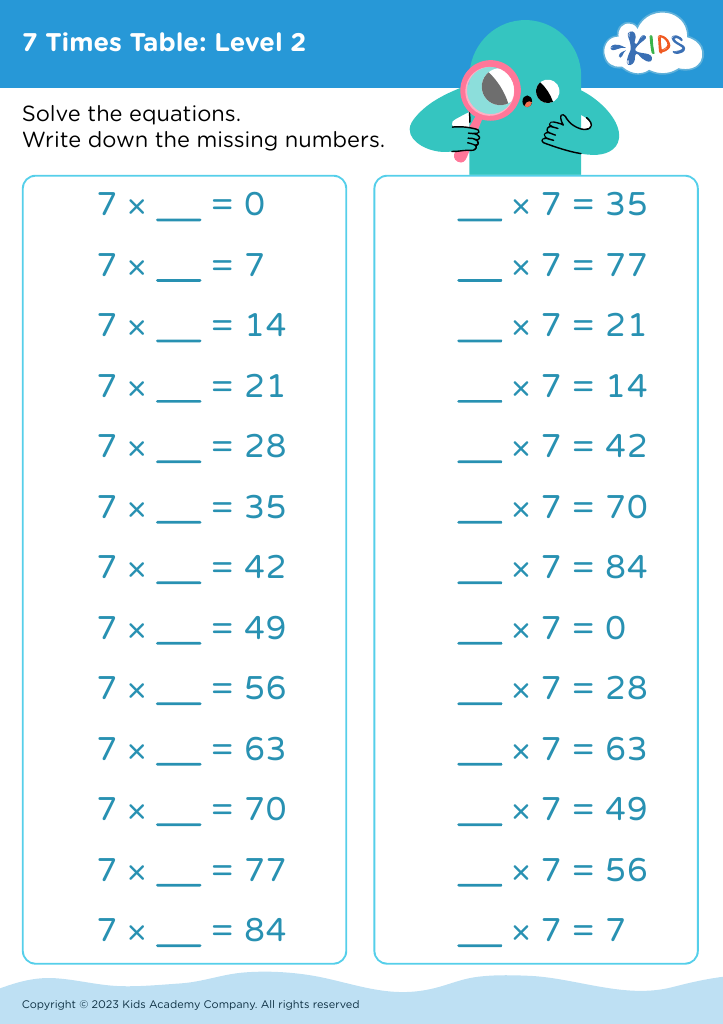
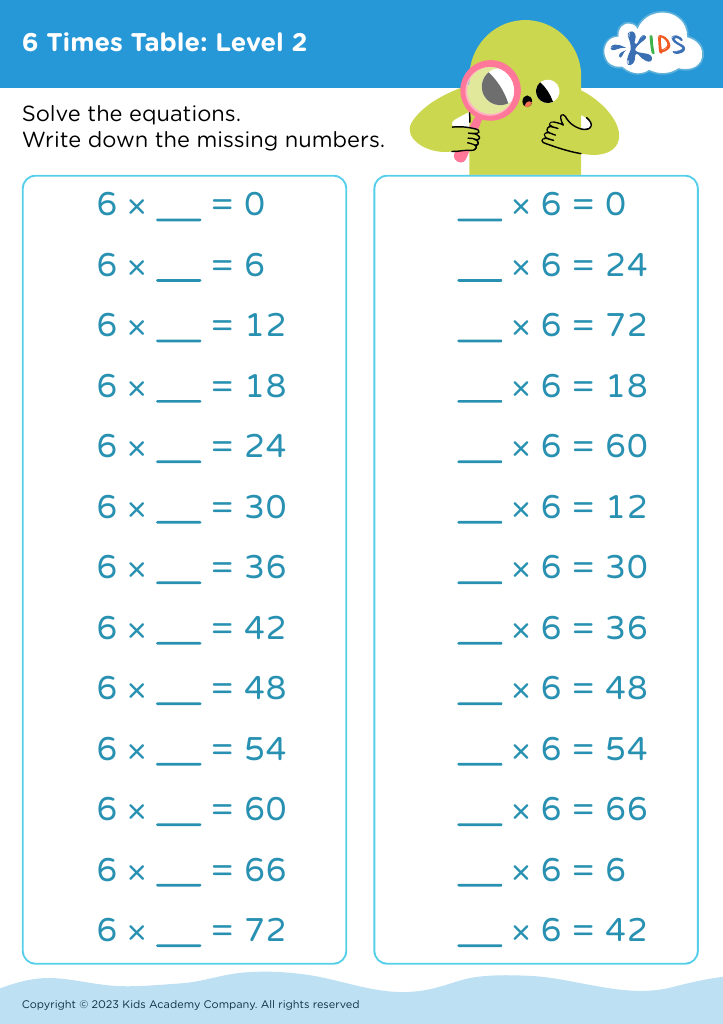
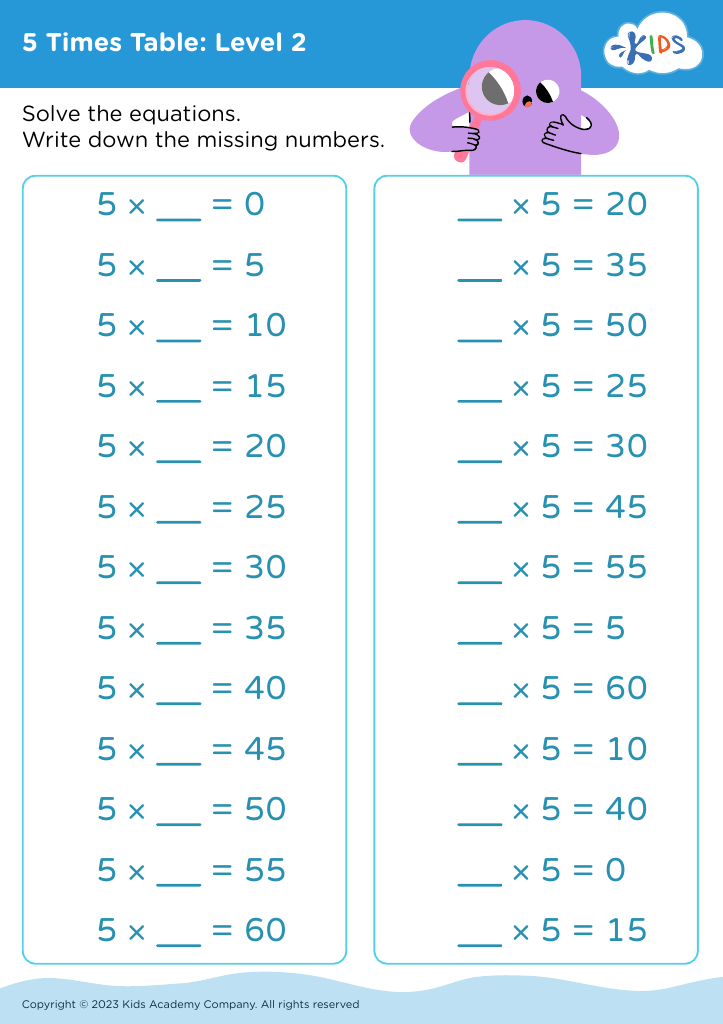
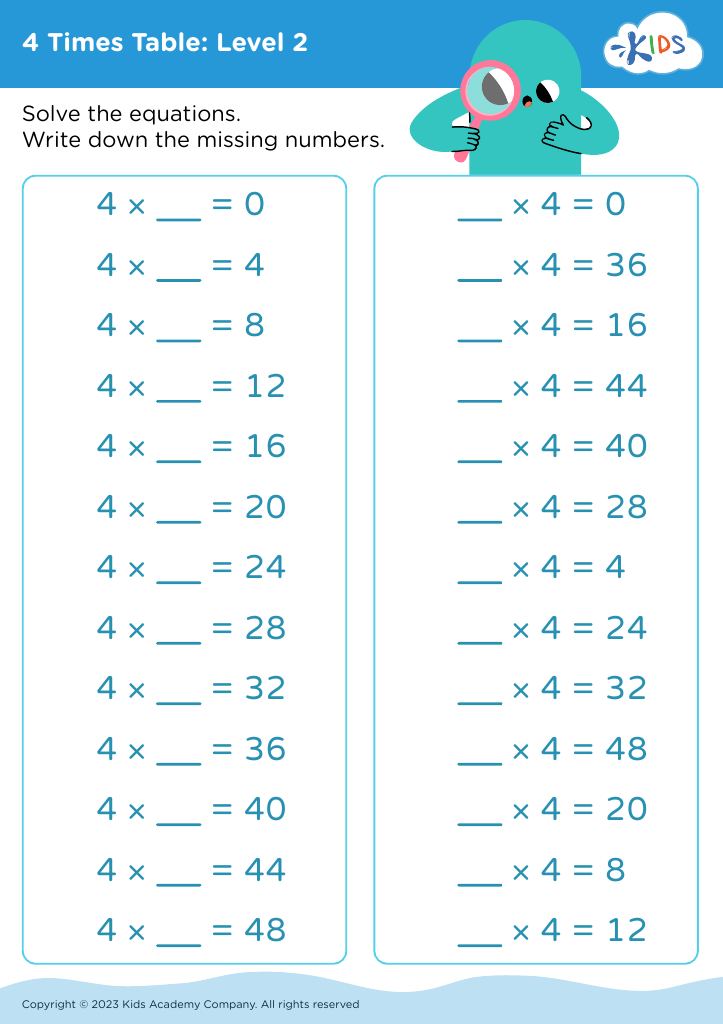
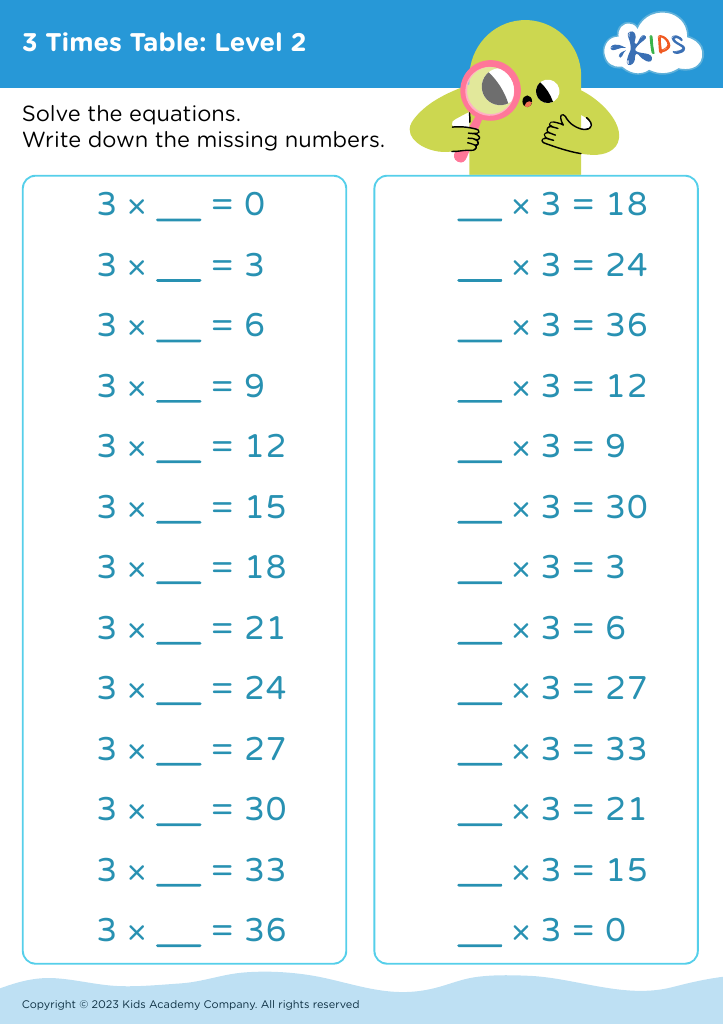
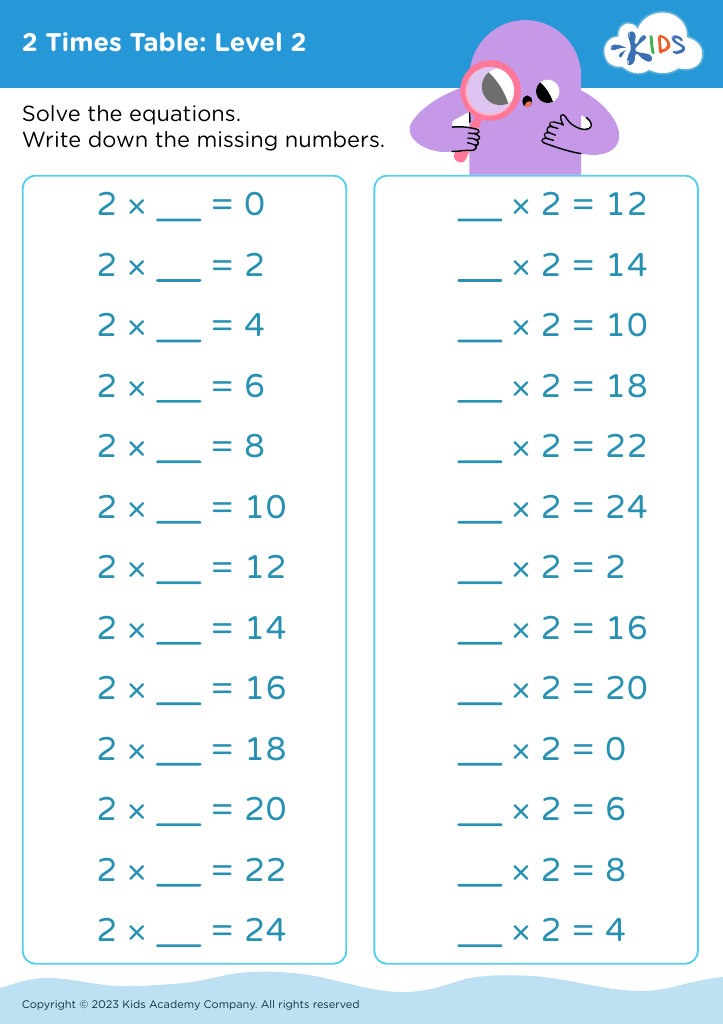
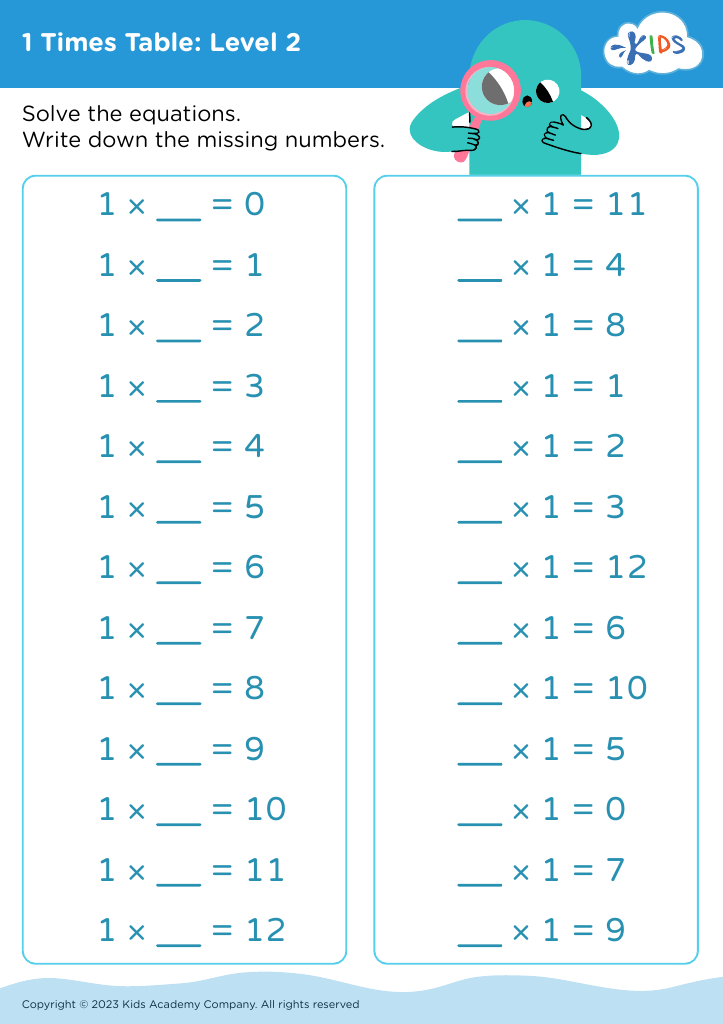
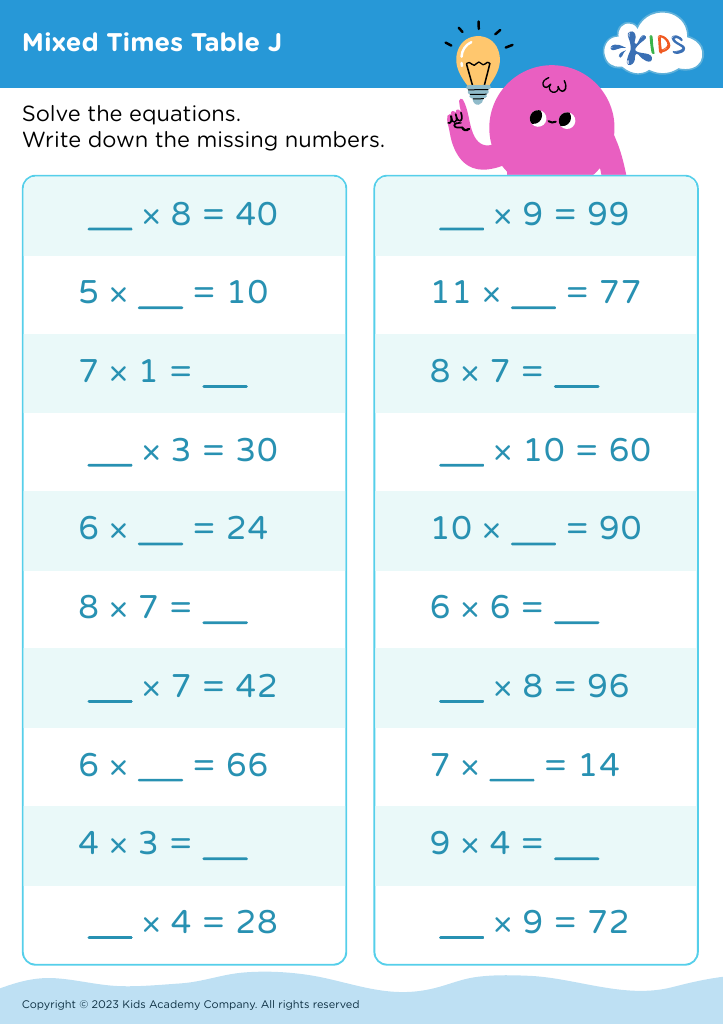
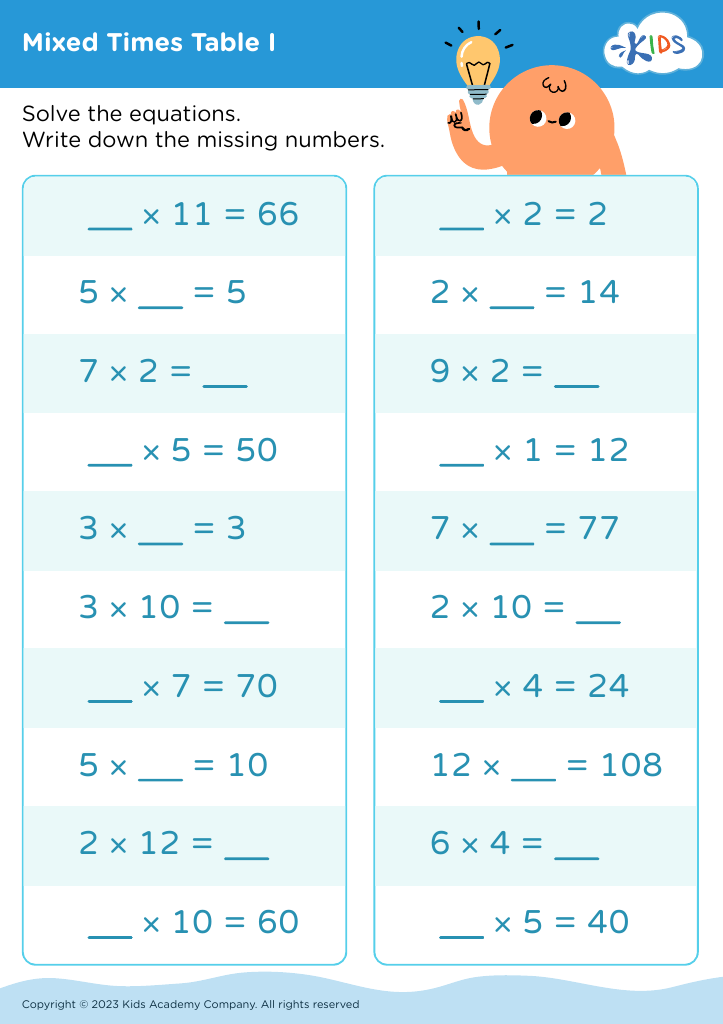





Parents and teachers should prioritize multiplication practice and times tables for children ages 4-9 because this foundational knowledge is crucial for their mathematical development. Early exposure to multiplication enhances numerical fluency, allowing children to solve more complex problems with ease as they advance in their education. By mastering times tables, children build key arithmetic skills that are necessary for understanding higher-level math concepts, including division, fractions, and algebra. Regular practice helps strengthen memory and cognitive abilities, fostering confidence and independence in mathematical problem-solving.
Solid multiplication skills support daily life activities, such as calculating costs, measuring ingredients, and managing time. This foundational skill not only promotes academic success but also equips children with essential life skills. Additionally, engaging in multiplication practice at an early age can spark a lasting interest in mathematics, paving the way for a positive attitude towards learning and academic achievement.
Moreover, structured and enjoyable multiplication practice, through games, songs, or interactive activities, can make learning fun and engaging, encouraging persistence and resilience in young learners. Parents and teachers play a pivotal role in guiding and supporting children's mathematical journeys, ensuring they have the tools needed for future success and making math enjoyable and anxiety-free.








