
Grammar practice Building Vocabulary Worksheets for Ages 4-9
3 filtered results
Difficulty Level
Grade
Age
-
From - To
Subject
Activity
Standards
Discover our engaging Grammar Practice Building Vocabulary Worksheets designed specifically for children ages 4 to 9. These worksheets provide a fun and interactive way for young learners to enhance their grammar skills while expanding their vocabulary. Featuring colorful illustrations and age-appropriate exercises, our materials help reinforce essential language concepts such as noun-verb agreement, adjective use, and sentence structure. Perfect for home or classroom use, these worksheets promote essential literacy foundations and build confidence in young readers and writers. Start your child’s journey to becoming a skilled communicator today with these thoughtfully crafted resources that make learning grammar enjoyable!
Favorites
With answer key
Interactive
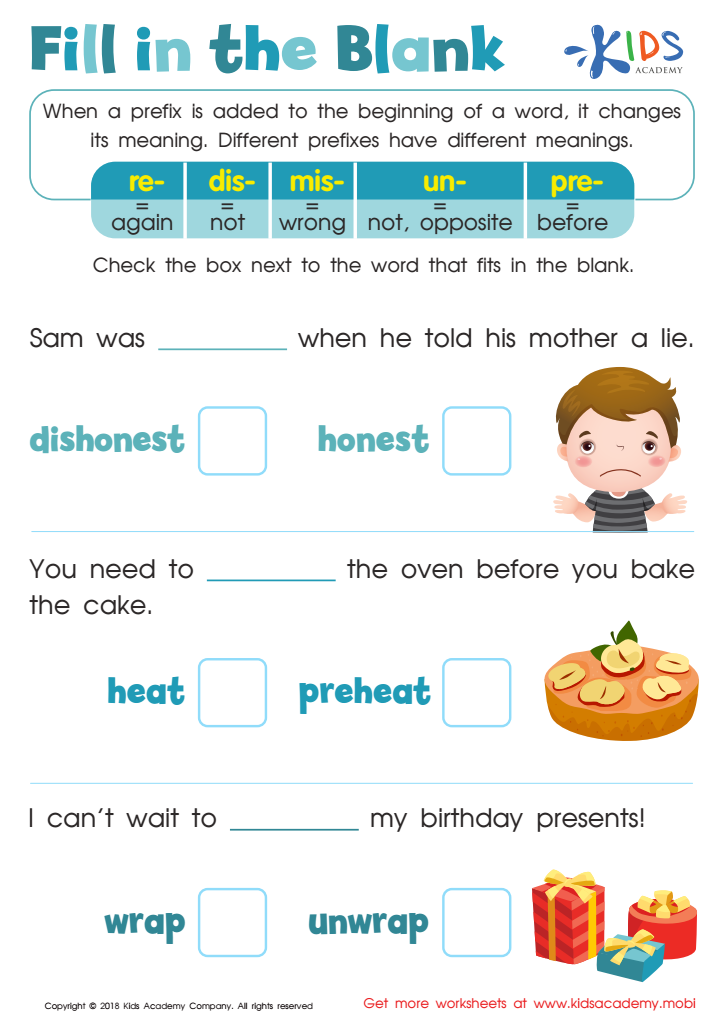
Reading: Fill in the Blank Worksheet
Students can practice understanding the meaning of common prefixes with this worksheet. They read sentences and pick the correct word with the appropriate prefix to complete it. Downloadable and a great addition to reading and vocabulary resources, this helps improve comprehension with mastery of the skill!
 Assign to My Students
Reading: Fill in the Blank Worksheet
Worksheet











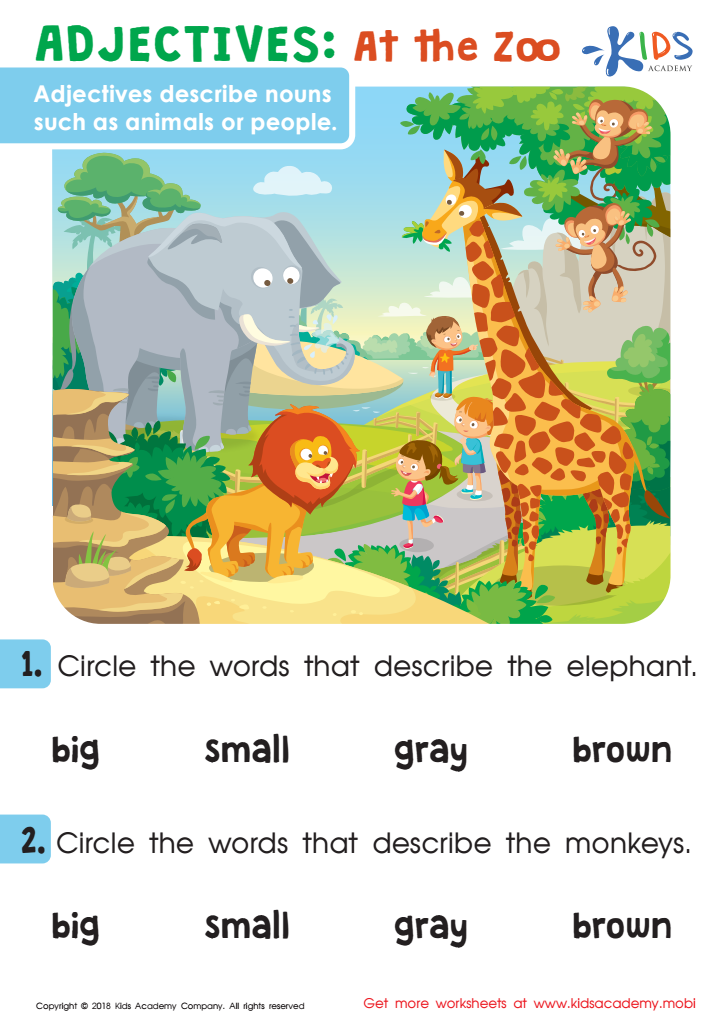
Adjectives: At The Zoo Worksheet
Take your kids to the zoo and ask them about their favorite activities and animals. This worksheet is a great way for kids to learn about adjectives. Explain that adjectives describe nouns like people or animals (e.g. big, tall, dark). Look at the printout with your kids and help them circle words that describe the animals in the picture.
Adjectives: At The Zoo Worksheet
Worksheet
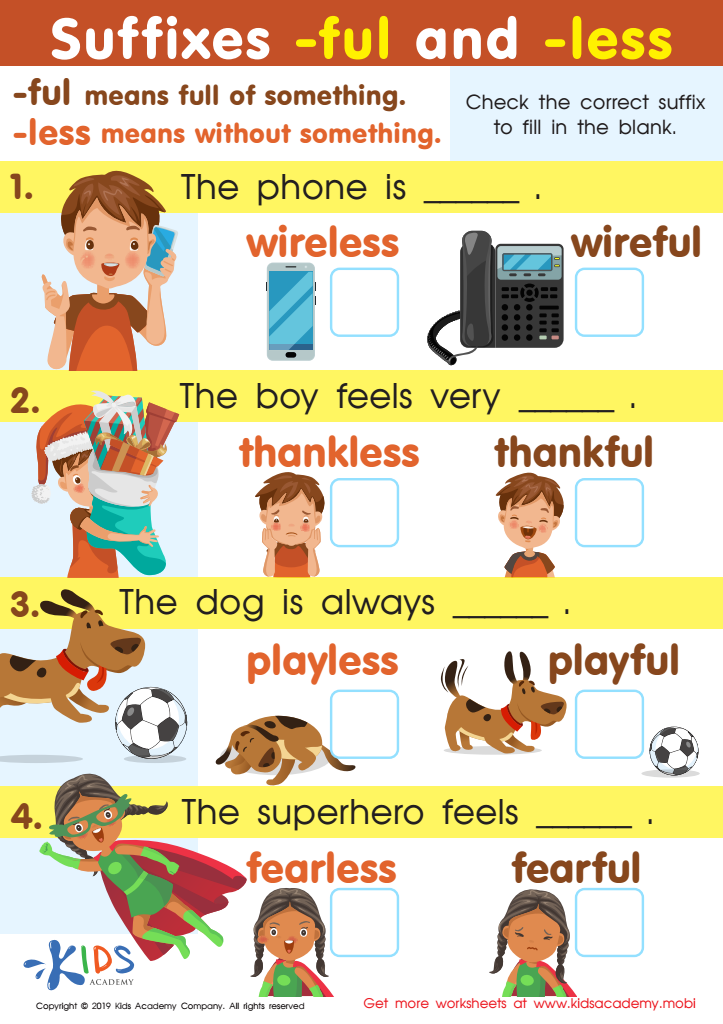
Suffixes –ful and –less Worksheet
Before you start this worksheet, make sure your kids know about suffixes. Explain that they're added to the end of words to change their meaning. In the worksheet, kids will learn about the suffixes –ful and –less. Look at the sentences in the picture with them, and help them to choose the right one for each blank.
Suffixes –ful and –less Worksheet
Worksheet
Join Kids Academy for Free
Who is primarily going to use this learning content?








Parents and teachers should prioritize grammar practice and vocabulary building for children aged 4-9 because these foundational skills significantly influence cognitive development and future academic success. At this young age, children are like sponges, eagerly absorbing and processing language. A strong grasp of grammar helps them form coherent sentences, understand story structures, and convey their thoughts clearly. This ability nurtures effective communication, an essential life skill.
Moreover, vocabulary building expands children's experiences and understanding of the world. The more words they know, the more accurately they can express feelings and ideas, engage in conversations, and comprehend what they read. A rich vocabulary enhances reading comprehension, making it easier for them to tackle complex texts later on.
Additionally, when grammar and vocabulary are emphasized early, children are less likely to struggle with writing and reading as they progress in their education. It sets a strong foundation for literacy, critical thinking, and academic achievement. Creating engaging activities—like storytelling, word games, and interactive exercises—can make learning enjoyable. By fostering these skills, parents and teachers empower children to become confident communicators, better prepared for their future educational journeys and the complexities of the world around them.








