Phonics recognition Building Vocabulary Worksheets for Ages 4-9
5 filtered results
-
From - To
Explore our engaging Phonics Recognition Building Vocabulary Worksheets, specifically designed for children aged 4-9. These interactive resources are perfect for enhancing foundational reading skills while making learning fun! Each worksheet focuses on phonetic sounds and word recognition, helping young learners expand their vocabulary in a playful way. Kids will enjoy a variety of activities, from matching words with images to fill-in-the-blank exercises, all aimed at reinforcing their understanding of phonics. Ideal for classroom use or at-home practice, our worksheets create a solid literacy foundation, preparing children for future academic success. Download now and encourage a love for reading!
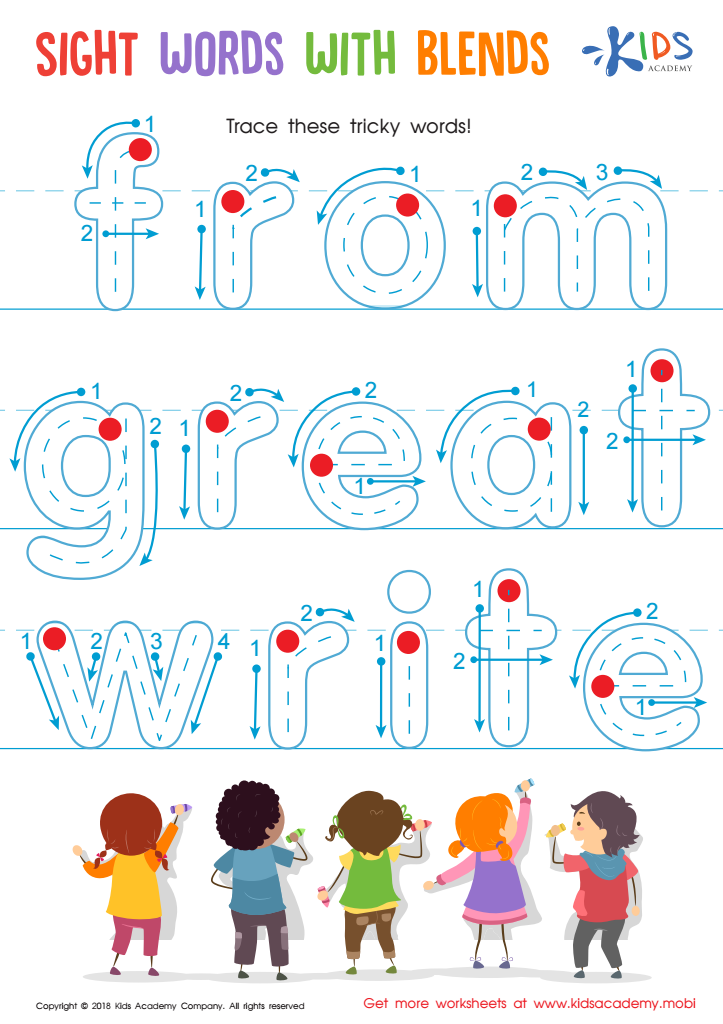
Sight Words with Blends Worksheet
 Assign to My Students











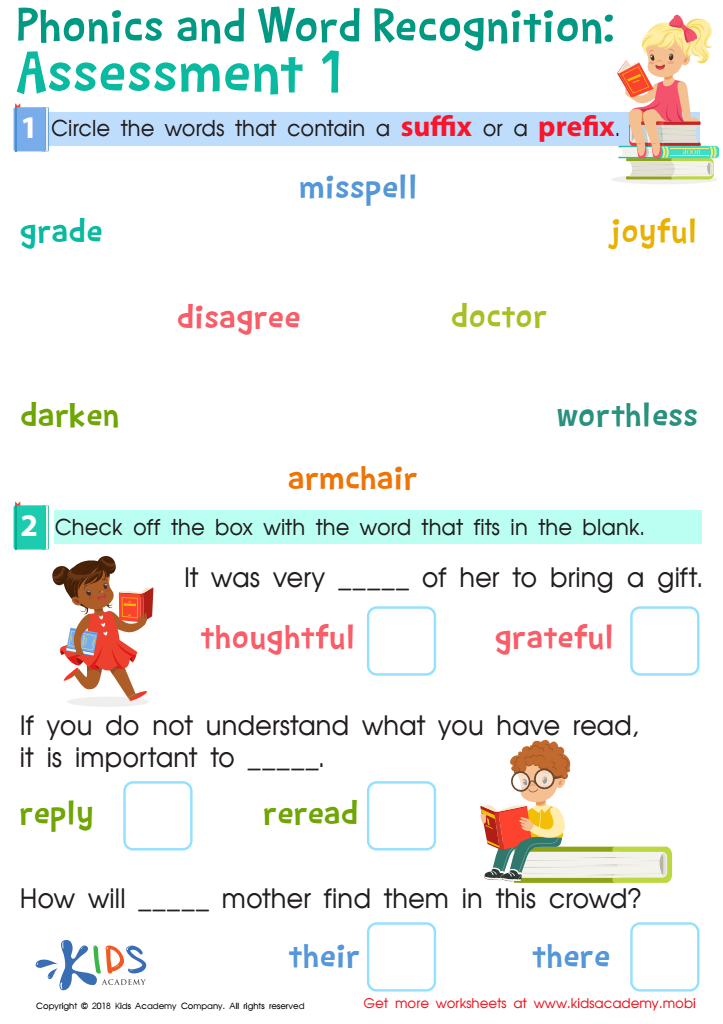
Phonics and Word Recognition: Assessment 1 Worksheet
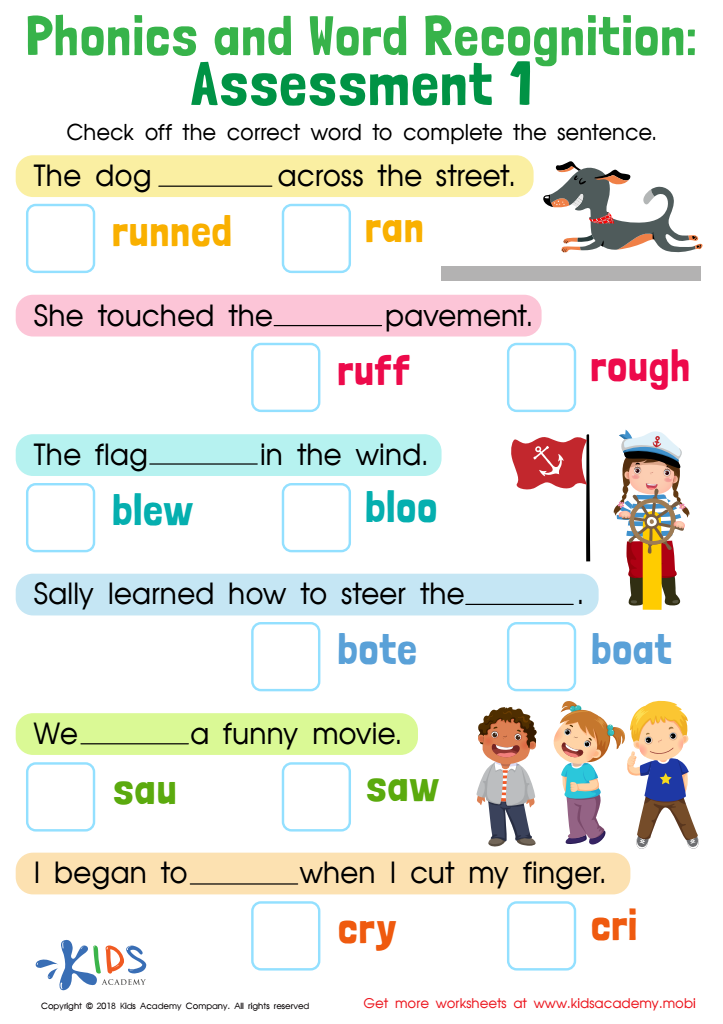
Phonics and Word Recognition: Assessment 1 Worksheet
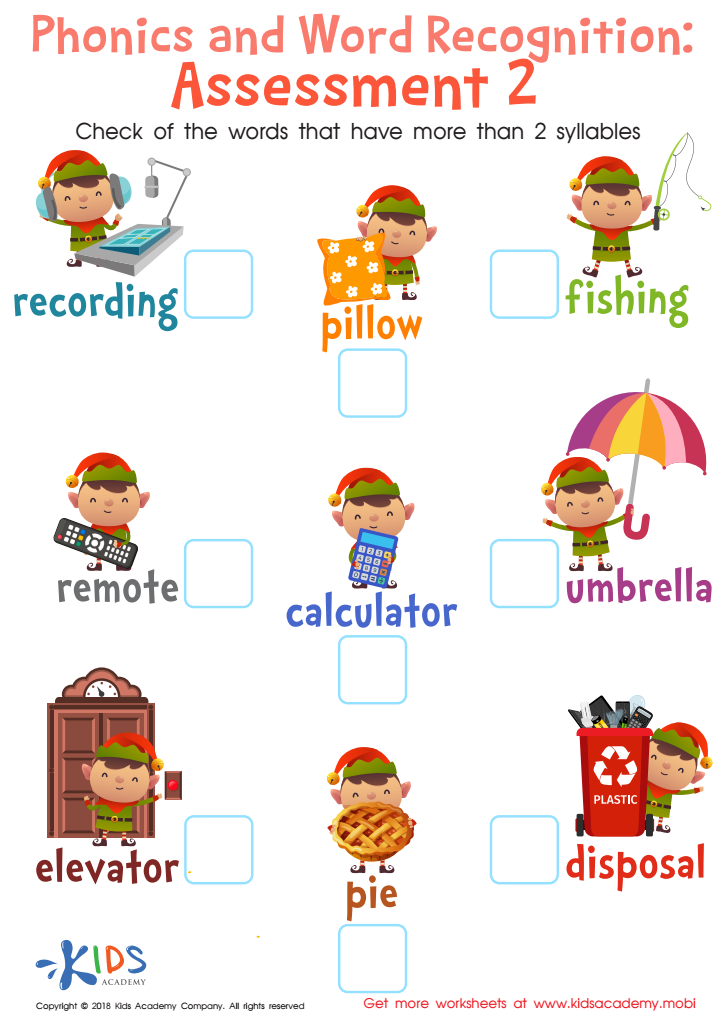
Phonics and Word Recognition: Assessment 2 Worksheet
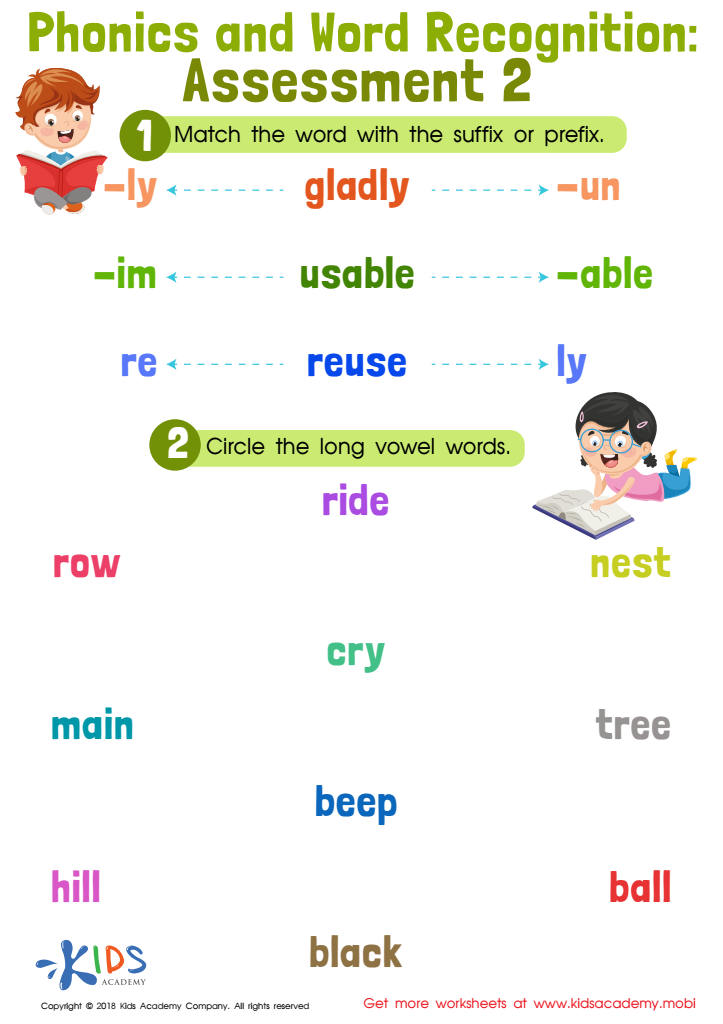
Phonics and Word Recognition: Assessment 2




.jpg)



Parents and teachers should prioritize phonics recognition and vocabulary building for children aged 4-9 because these foundational skills play a crucial role in literacy development. Phonics recognition equips young learners with the ability to connect sounds to letters and words, facilitating reading fluency. This skill not only helps children decode new words but also boosts their confidence in reading independently.
Building vocabulary complements phonics instruction by enhancing comprehension. A robust vocabulary enables children to understand and make sense of what they read. It also allows them to express their thoughts and ideas more effectively. Exposure to a rich assortment of words through engaging reading materials and activities can spark curiosity and foster a love for language.
Furthermore, early mastery of phonics and vocabulary correlates with successful academic outcomes later on. Children with solid literacy skills tend to perform better across subjects, supporting their overall learning journey. Families and educators working together to support these skills is essential, as collaboration fosters a learning-rich environment. By prioritizing phonics and vocabulary, parents and teachers can set children on a path to becoming proficient, enthusiastic readers, which will benefit them for years to come.








