
Synonym identification Building Vocabulary Worksheets for Ages 4-9
3 filtered results
Difficulty Level
Grade
Age
-
From - To
Subject
Activity
Standards
Enhance your child’s vocabulary with our "Synonym Identification Building Vocabulary Worksheets for Ages 4-9"! These engaging worksheets help young learners quickly identify and understand the meaning of synonyms, boosting their reading comprehension and language skills. Specially designed for kids aged 4-9, each worksheet combines fun illustrations and practical exercises to make learning enjoyable. With our carefully curated activities, your child will learn to recognize and use different words with similar meanings, expanding their vocabulary effortlessly. Perfect for both classroom use and at-home practice, these worksheets are a valuable tool for early language development. Let’s make learning synonyms fun!
Favorites
With answer key
Interactive
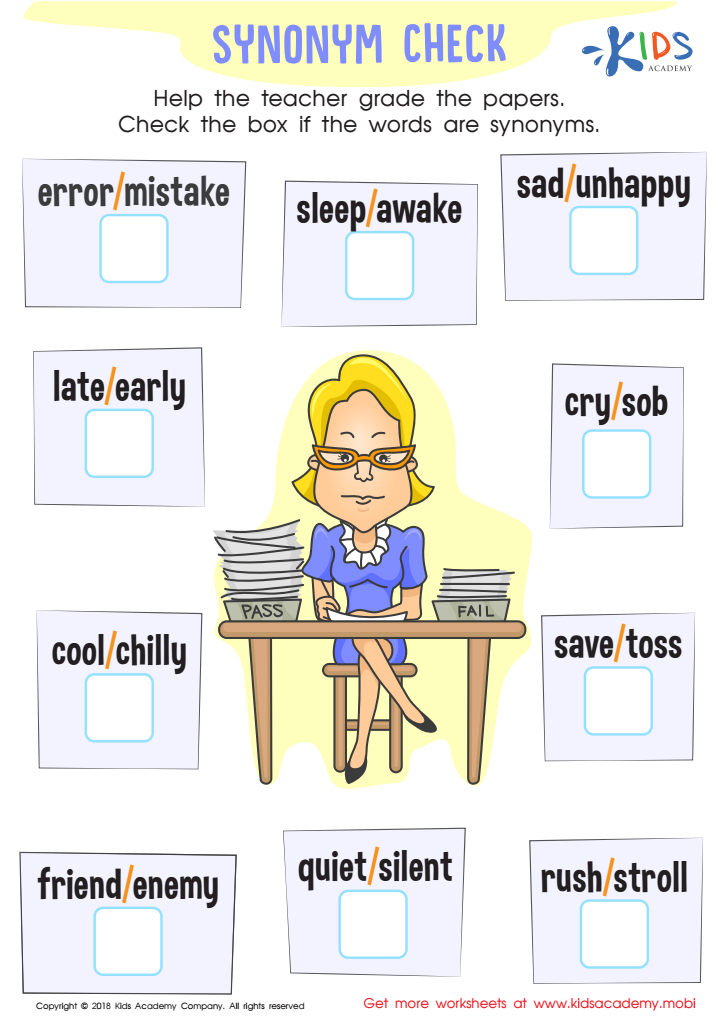
Synonym Check Worksheet
Ask your kids what a synonym is, and listen to their definitions. If needed, explain it's a word that has a similar meaning to another. Give examples, then ask them to do the same. For this worksheet, get them to help grade the papers. Have them check the boxes if the words are synonyms.
 Assign to My Students
Synonym Check Worksheet
Worksheet











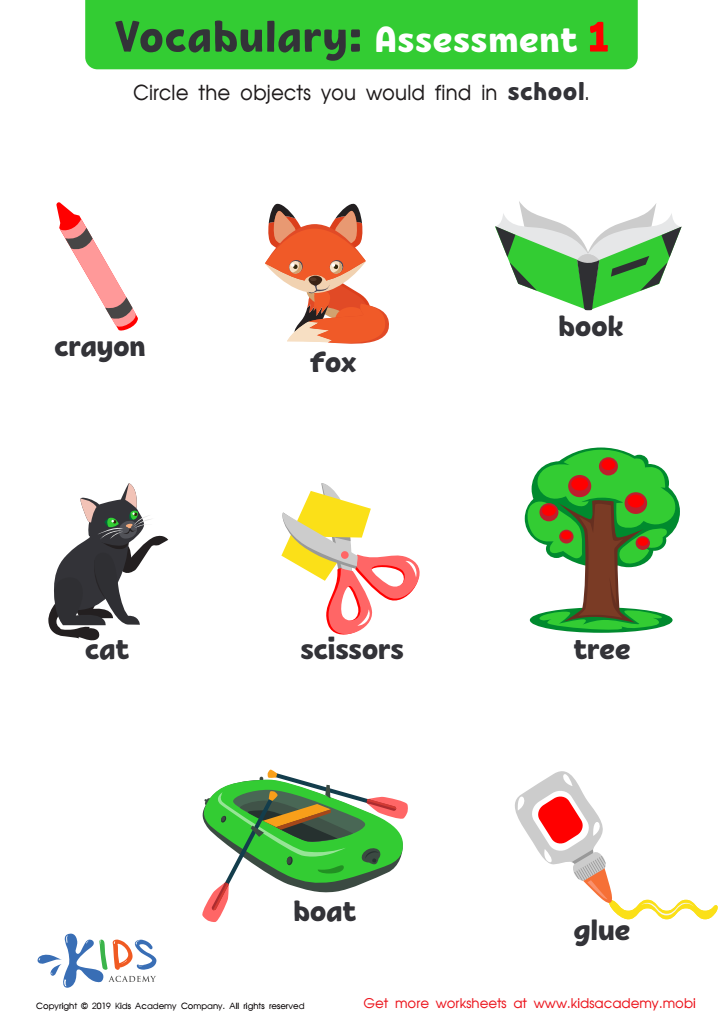
Vocabulary: Assessment 1 Worksheet
Want to check your child's vocabulary? This worksheet has kids identify objects from school through picture clues. It reinforces reading and fine motor skills, while providing an assessment of their reading growth and needs.
Vocabulary: Assessment 1 Worksheet
Worksheet
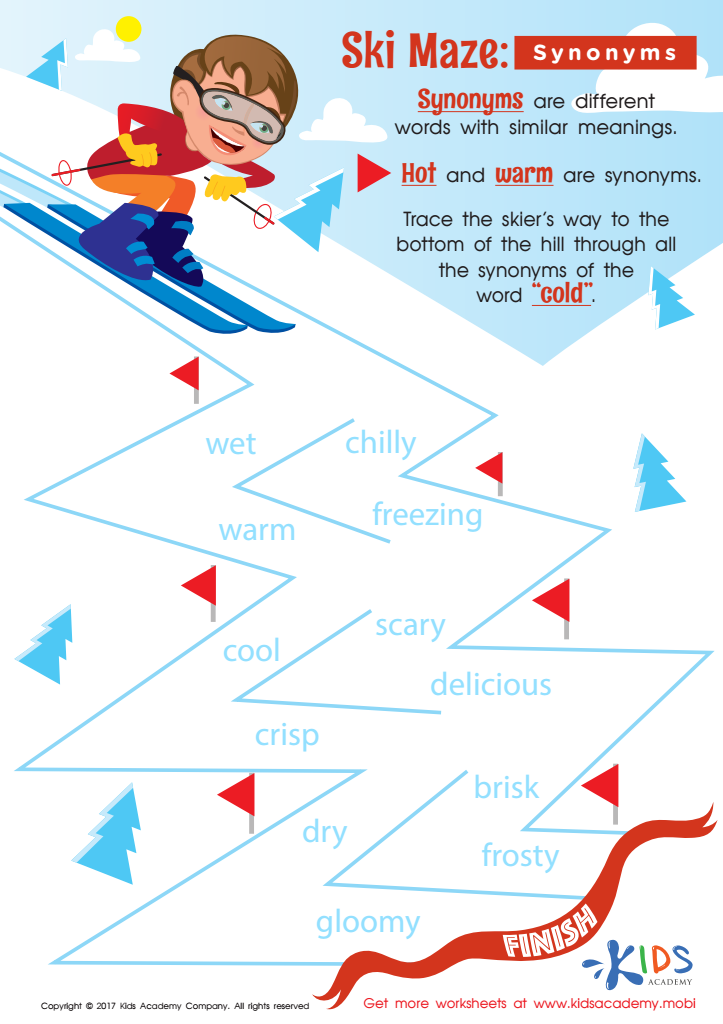
Free Printable Synonym Worksheet
Our free printable synonym worksheet for 2nd grade will help kids learn similar words to expand their vocabulary. Kids will have fun challenging themselves to find all the words that are synonyms for “cold”. Enhance their language and writing with this joyful worksheet!
Free Printable Synonym Worksheet
Worksheet
Join Kids Academy for Free
Who is primarily going to use this learning content?






.jpg)

Identifying synonyms and building vocabulary in early childhood is crucial for several reasons. Firstly, a broad vocabulary helps young children express their thoughts, feelings, and ideas more clearly, enhancing both verbal and written communication. When children can choose from a diverse set of words, they become more articulate and better understood by peers and adults.
Moreover, learning synonyms helps deepen comprehension skills, as it shows children how different words can have subtle distinctions in meaning even when they are similar. This ability to discern fine differences improves reading comprehension. Building a robust vocabulary at an early age is linked to better academic performance. Children with a rich vocabulary find it easier to engage with educational material across all subjects, leading to greater success in school.
In social settings, a strong vocabulary aids in forming relationships as children communicate more effectively with their friends and teachers. It boosts confidence and fosters effective communication, making social interactions smoother and more enjoyable.
Therefore, parents and teachers should prioritize synonym identification and vocabulary building in their teachings, as it lays a solid foundation for academic success and effective communication. Nurturing these skills from ages 4-9 sets children up for lifelong learning and personal development.








