
Phonics skills improvement Reading Worksheets for Ages 4-9
3 filtered results
Difficulty Level
Grade
Age
-
From - To
Subject
Activity
Standards
Enhance your child's phonics skills with our engaging reading worksheets designed for ages 4-9. These interactive resources focus on essential phonemic awareness, enabling young learners to sound out words, recognize letter patterns, and improve reading fluency. Each worksheet features fun activities that promote vocabulary development while building confidence in reading. Whether in the classroom or at home, our worksheets cater to diverse learning styles and are easy to incorporate into daily routines. Empower your child’s reading journey with these thoughtfully curated materials that make learning enjoyable and effective. Start boosting phonics skills today for a brighter reading future!
Favorites
With answer key
Interactive
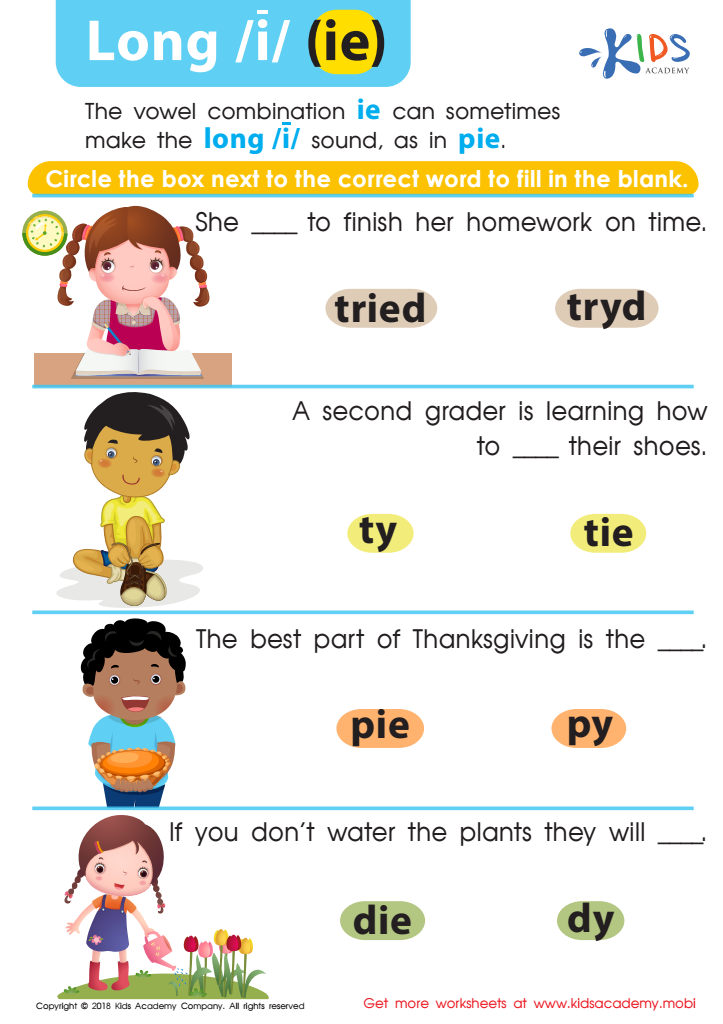
Reading: Long I and IE Worksheet
Have your child list words with the long /i/ sound (eg. 'pie'), and if needed, help them out with some examples. Read each word in the worksheet together and check their answer by having them circle the correct word.
Reading: Long I and IE Worksheet
Worksheet
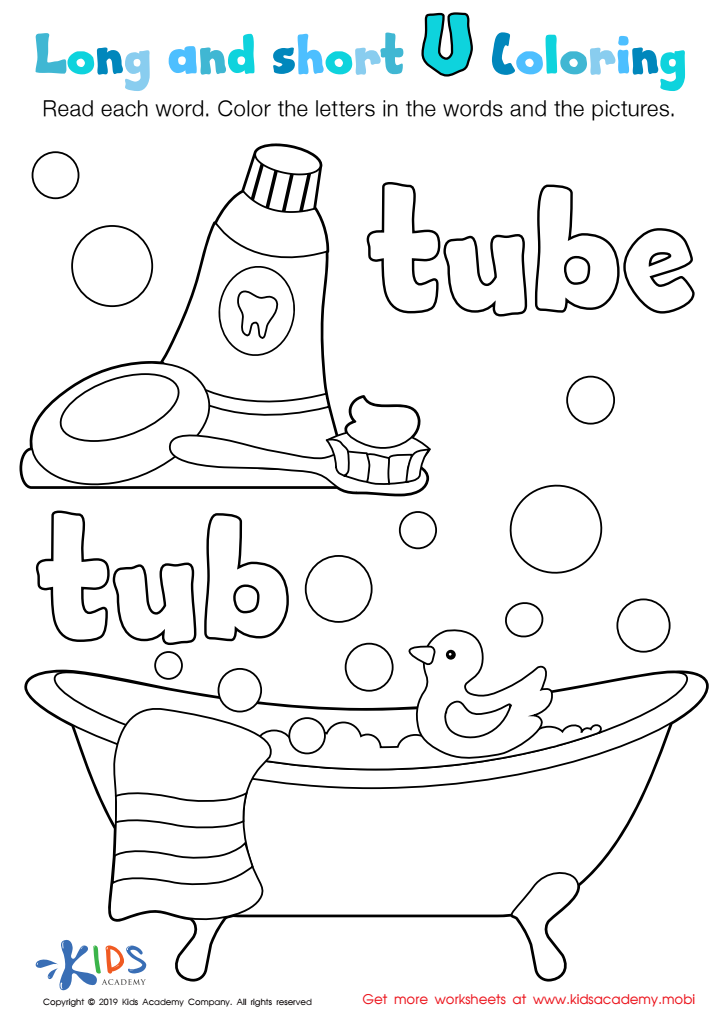
Long and Short U Worksheet
Revised: Spice up your lesson on long and short vowels with this fun printout! Kids read the words "tube" and "tub," then reinforce the sound by coloring in the words and pictures. It's a great way to make phonics class enjoyable!
Download (PDF)
 Assign to My Students
Assign to My Students
Long and Short U Worksheet
Worksheet
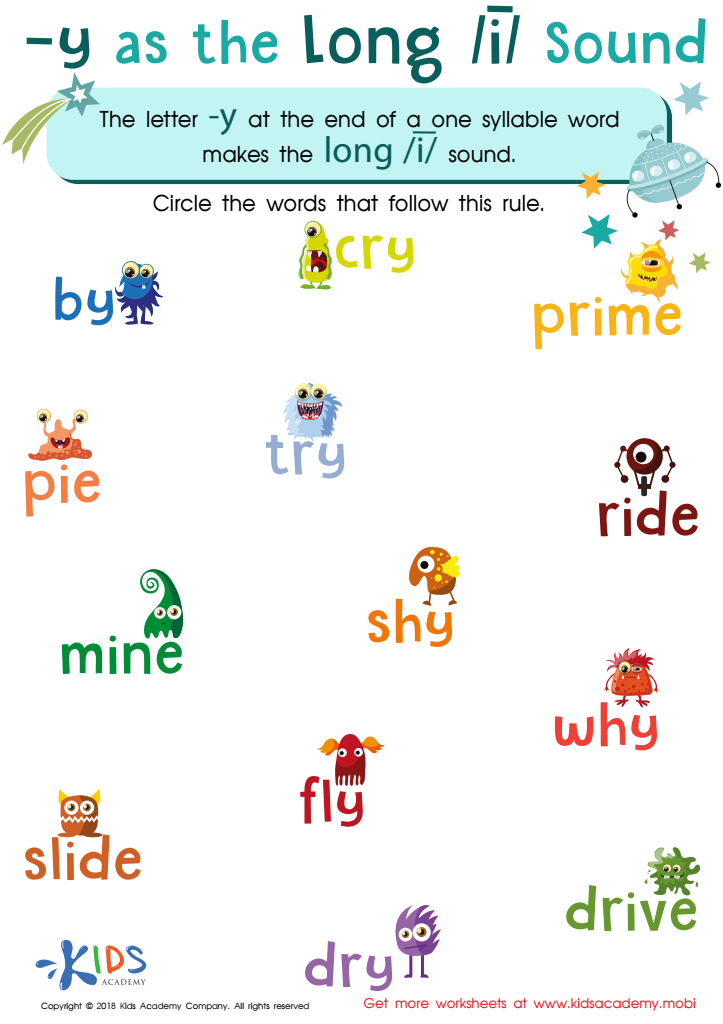
Reading: Y as Long I Worksheet
Students need practice and exposure to letters that make different sounds for decoding and reading success. This printable is a great resource for language arts classes: it explains that words ending with Y and having only one syllable make the long I sound. Students will circle all words with Y that have this sound.
Reading: Y as Long I Worksheet
Worksheet
Join Kids Academy for Free
Who is primarily going to use this learning content?







Phonics skills are crucial for young learners aged 4-9, as they form the foundation for proficient reading. Understanding phonics—how letters and sounds correspond—enables children to decode words and ultimately builds their ability to read fluently. When parents and teachers prioritize phonics skills improvement, they set children on a path to academic success.
First, strong phonics skills promote confidence, allowing children to tackle new texts without fear of failure. This sense of achievement encourages a lifelong love for reading. Furthermore, solid phonics knowledge is directly linked to comprehension. When children can break down words, they are more likely to understand and process the text they read, leading to better retention and engagement.
Additionally, phonics aligns with literacy standards, making it essential for children’s performance on assessments. Parents who actively support phonics at home, such as through reading together and engaging in phonics games, foster positive literacy habits.
Ultimately, investing time and resources into improving phonics skills can lead to improved academic outcomes, improved communication skills, and enhanced cognitive development. This investment lays the groundwork for a child's future learning and success in society. Therefore, parents and teachers should prioritize phonics education for young learners.








