Understanding suffixes Reading Worksheets for Ages 4-9
6 filtered results
-
From - To
Explore our "Understanding Suffixes" reading worksheets designed for children ages 4-9! These engaging worksheets help young learners grasp the concept of suffixes, enhancing their vocabulary and improving reading comprehension. Through fun activities like matching, filling in the blanks, and word transformations, kids will learn how suffixes modify base words to change their meanings or grammatical functions. Our user-friendly format ensures an interactive and enjoyable learning experience. Perfect for home or classroom use, these worksheets empower children to expand their language skills while boosting confidence in reading and writing. Dive into the world of suffixes today!
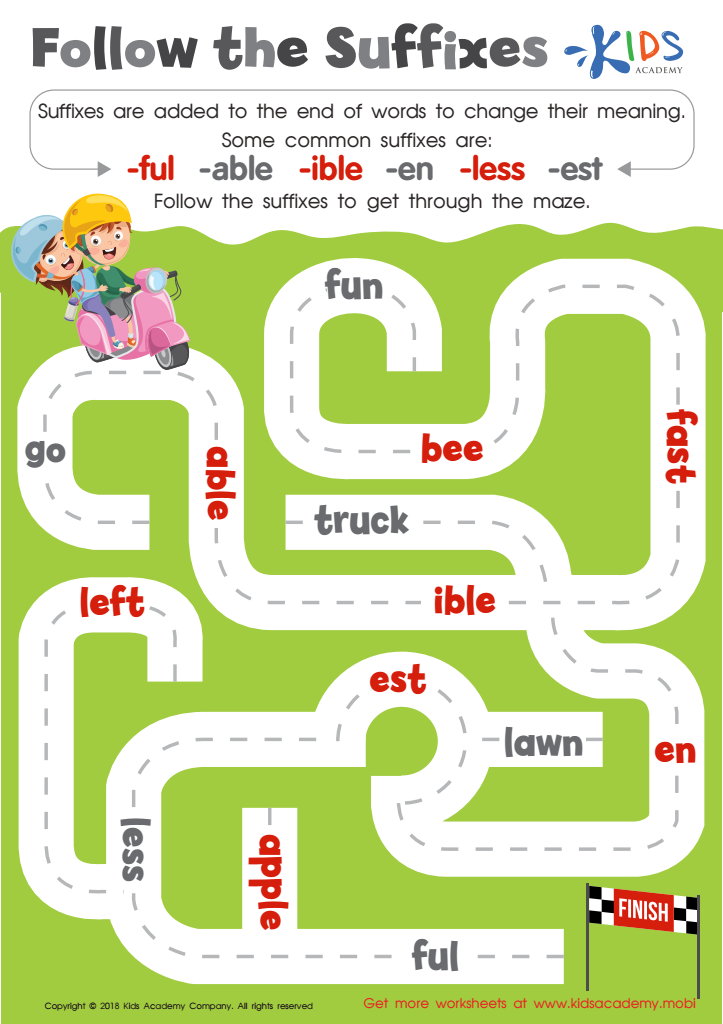
Reading: Follow the Suffixes Worksheet
 Assign to My Students
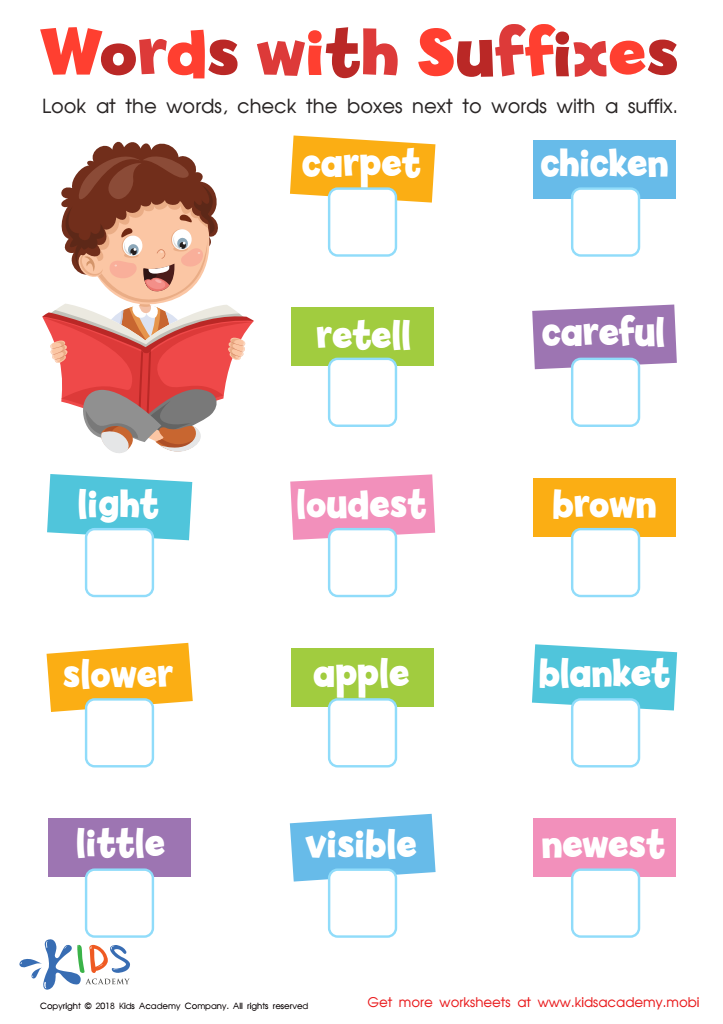
Reading: Words With Suffixes Worksheet
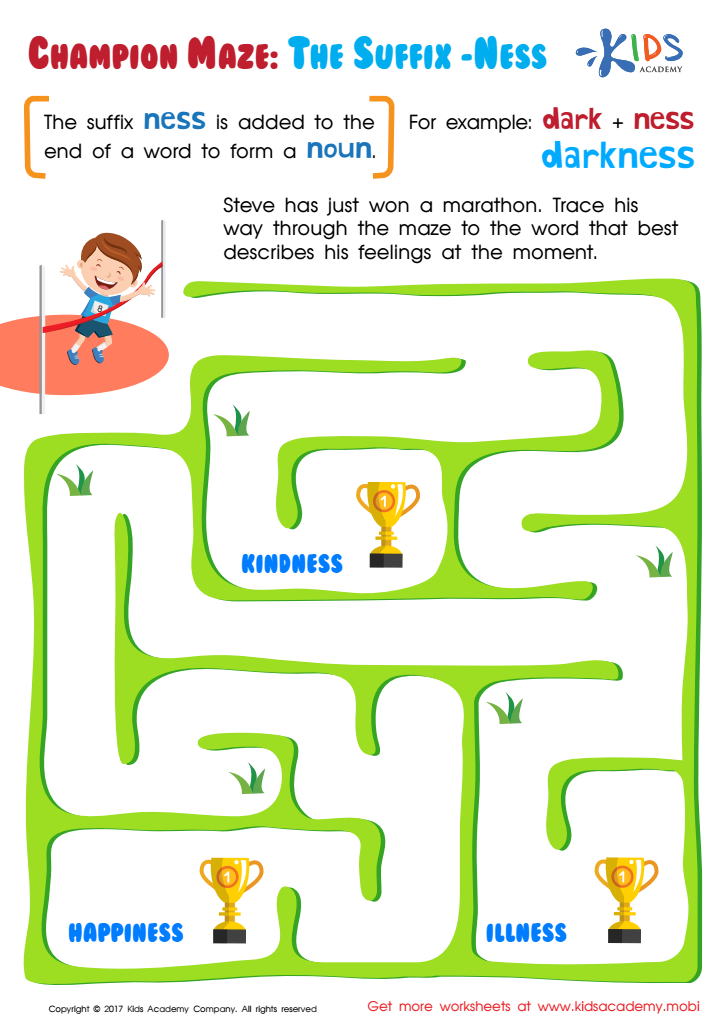
Suffix Ness Worksheet
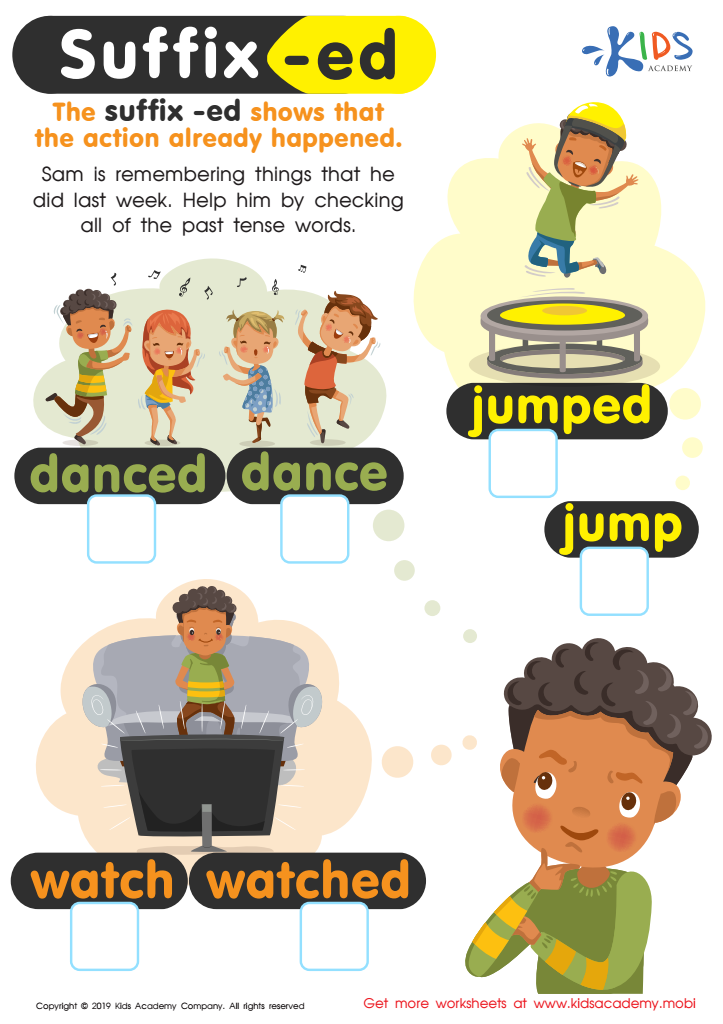
Suffix-ed Worksheet
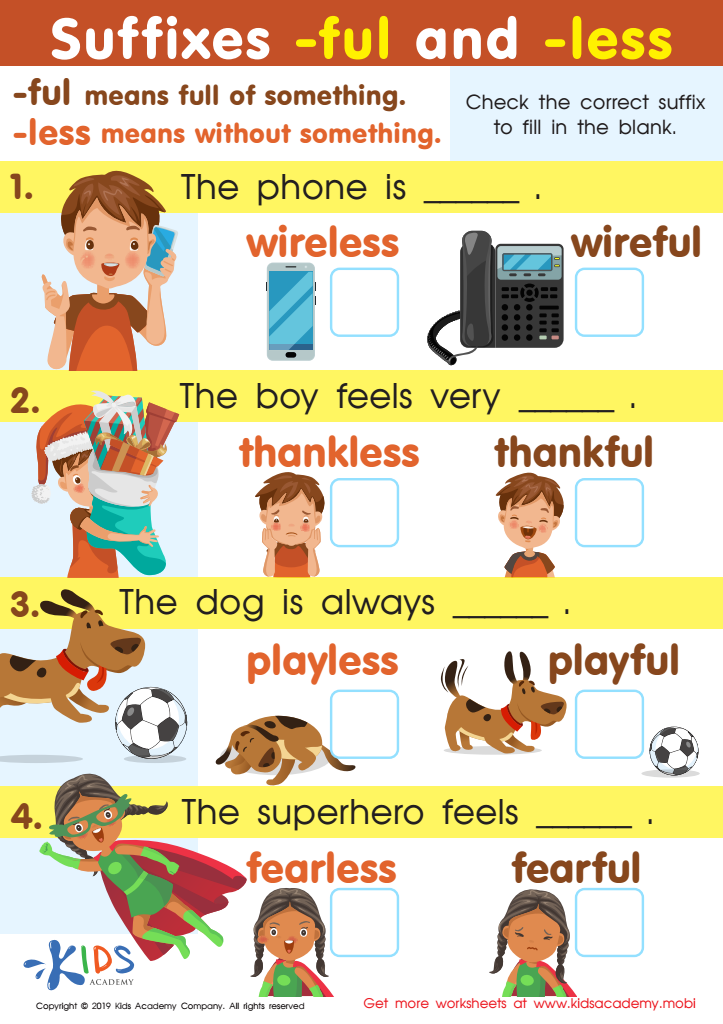
Suffixes –ful and –less Worksheet
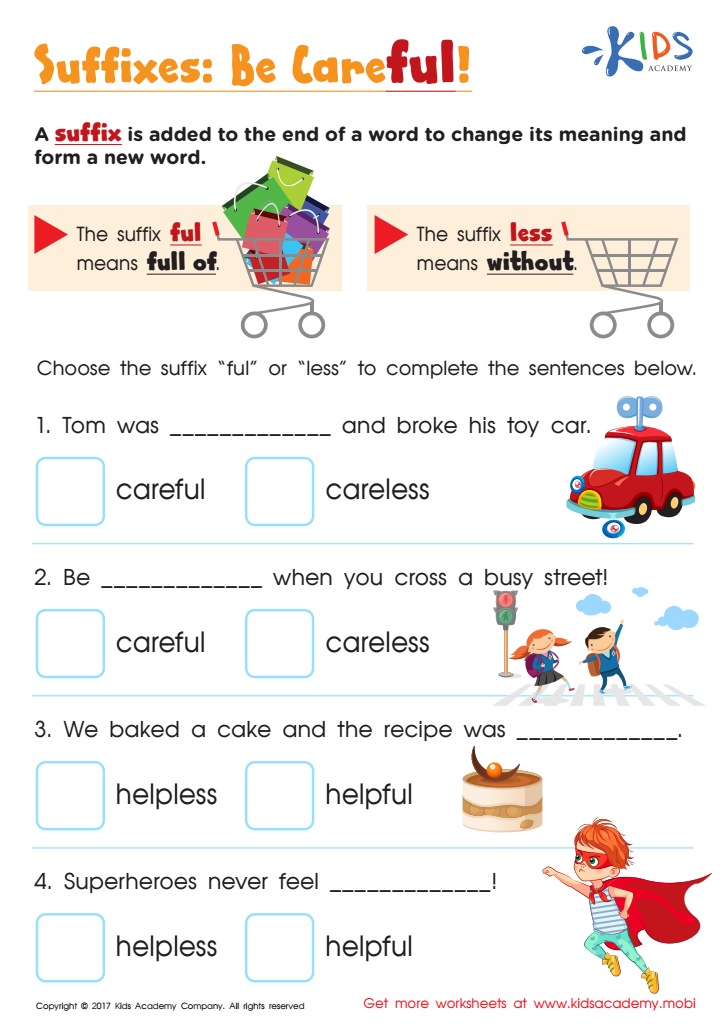
Suffixes Ful and Less Worksheet








Understanding suffixes is vital for children aged 4-9, as it plays a significant role in their reading and overall literacy development. Suffixes, which are word endings that alter a word's meaning or grammatical function, help children develop a deeper understanding of language. When educators and parents emphasize learning suffixes, they empower students to decode unfamiliar words, expanding their vocabulary and fostering confidence in reading.
For example, recognizing the suffix “-ing” can help children understand the action in a verb, while “-ed” indicates a past event. Identifying these suffixes aids in comprehension, allowing kids to infer meanings from context rather than getting stuck on challenging words. Additionally, mastering suffixes encourages children to explore word families and build connections between related words.
Support from parents and teachers can further motivate young readers to engage with language. Introducing activities that focus on suffixes, such as creative storytelling or word games, will make learning fun. Ultimately, developing a strong foundation in suffixes not only enhances reading skills but also nurtures a lifelong love for language, leading to improved academic performance and effective communication in the future.








