Understanding Sequences Reading Comprehension Worksheets for Ages 4-9
4 filtered results
-
From - To
Discover our engaging "Understanding Sequences" reading comprehension worksheets designed for children ages 4-9! These interactive resources help young learners develop critical skills by teaching them to arrange events in a logical order, enhancing their understanding of stories and information. Each worksheet includes age-appropriate texts and relatable scenarios, encouraging kids to identify sequences in narratives and real-life situations. Our printable worksheets make learning fun and accessible, fostering a love for reading while boosting comprehension skills. Perfect for classroom use or homeschooling, these exercises empower children to think sequentially and improve their overall reading proficiency. Start building foundational skills today!
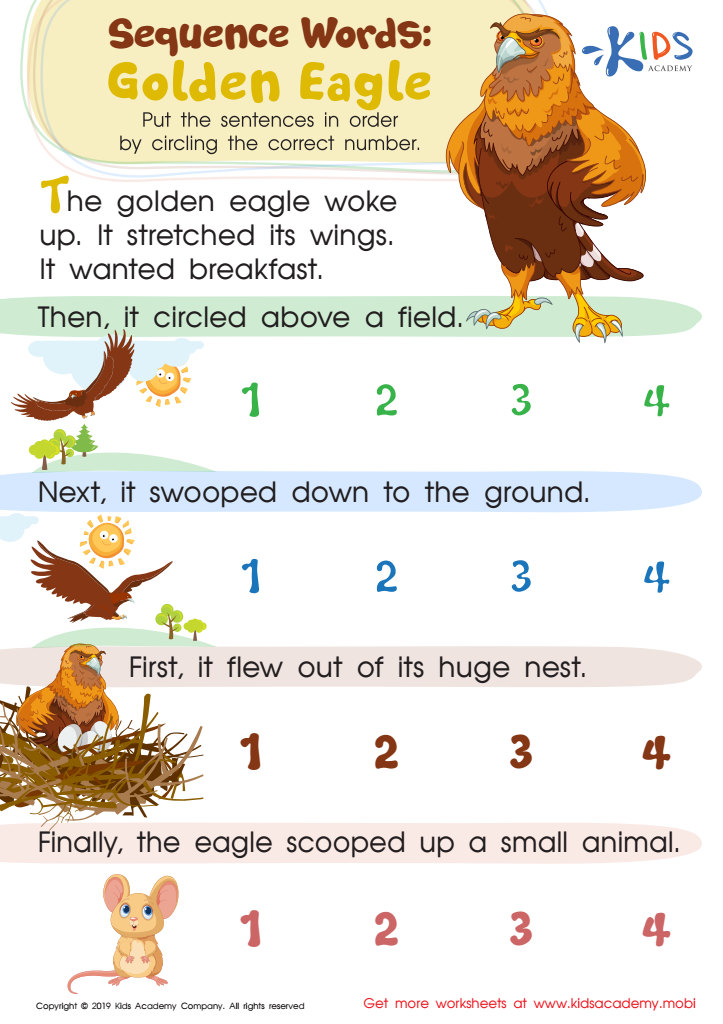
Sequence Word Eagle Worksheet
 Assign to My Students
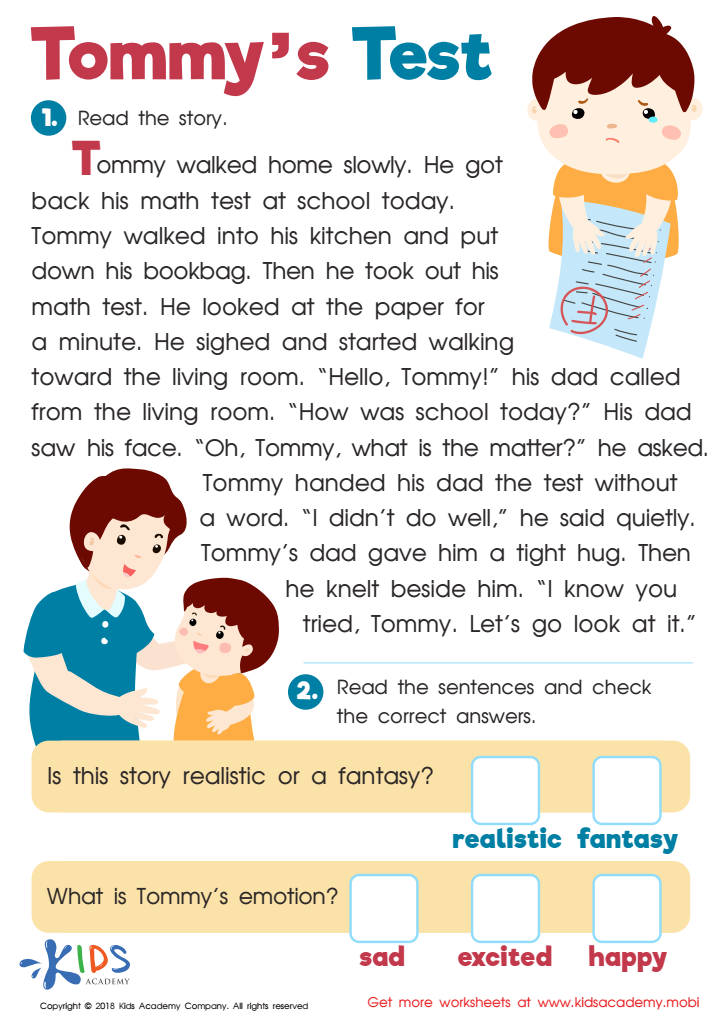
Tommys Test Worksheet
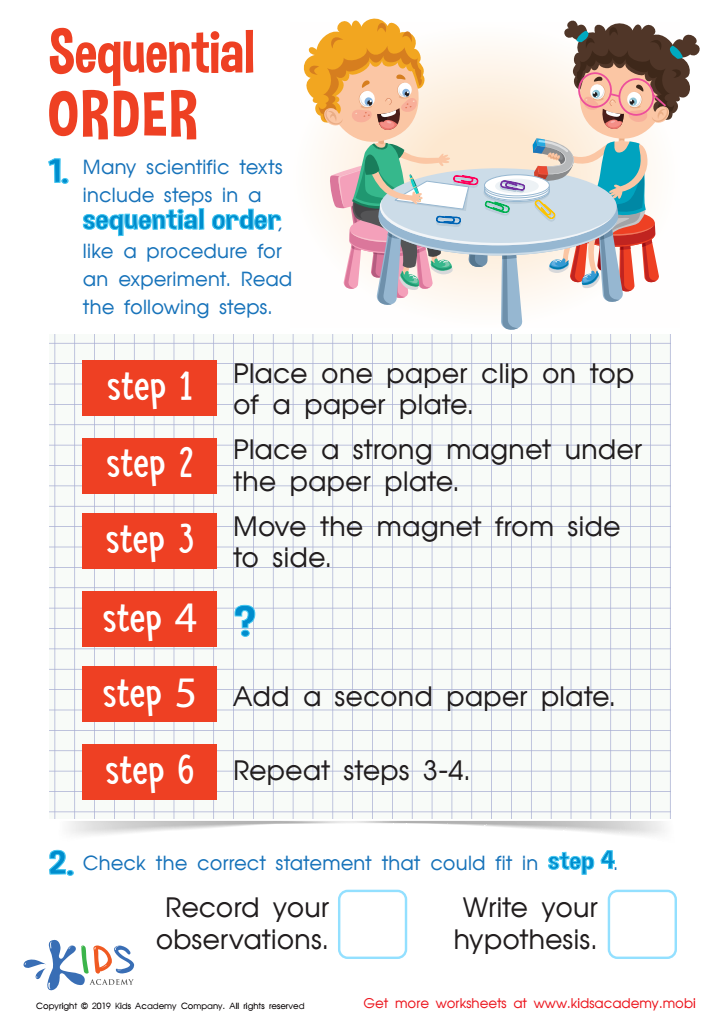
Sequencential Order Worksheet
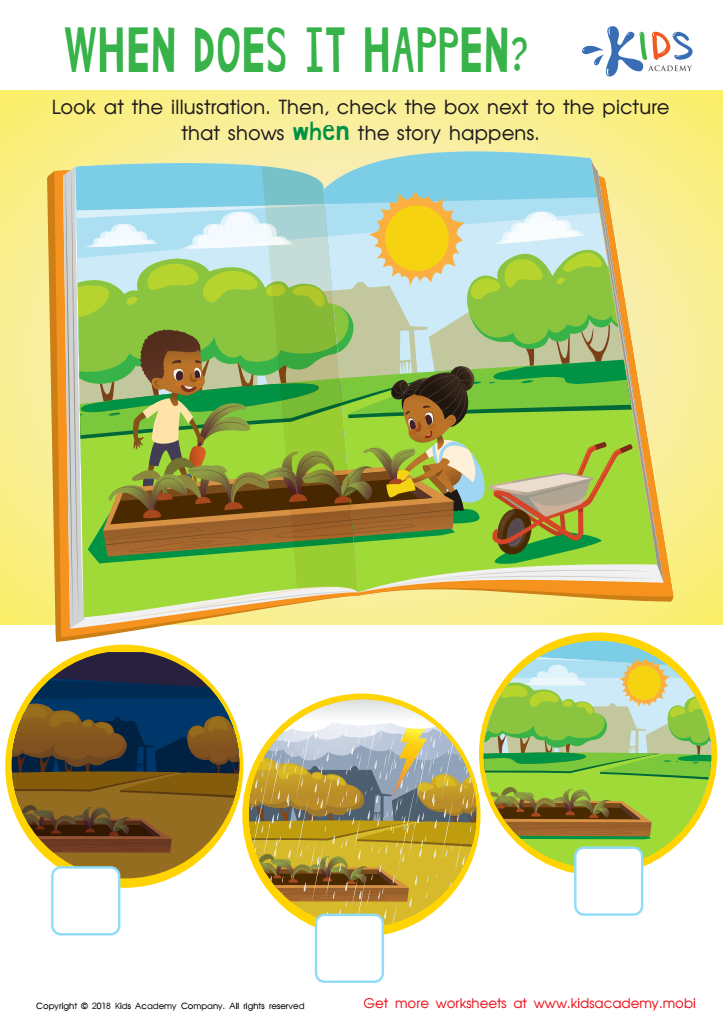
When Does It Happen? Worksheet






Understanding sequences is crucial for reading comprehension among children aged 4-9. This skill helps young learners grasp the order of events, enhancing their ability to interpret stories and make sense of narrative structures. When children can identify the sequence of a story—what happens first, next, and last—they are more likely to retain important details and fully understand the plot. This foundational understanding not only bolsters comprehension but also supports critical thinking and inference skills.
Parents and teachers should prioritize this aspect of literacy because it lays the groundwork for more complex reading tasks in later grades. Engaging children in discussions about sequences can spark their interest in stories and encourage a love for reading. By asking questions like "What happened before…?" or "What do you think will happen next?" adults can guide children to think critically and make connections between different parts of a text.
Furthermore, understanding sequences enhances children's writing skills, as they learn to structure their narratives coherently. Overall, focusing on this reading comprehension skill equips children with tools to succeed academically and fosters a lifelong appreciation for literature, making it essential for their overall development.








