Analytical thinking Reading Fiction Worksheets for Ages 4-9
4 filtered results
-
From - To
Discover our engaging "Analytical Thinking Reading Fiction Worksheets" designed for ages 4-9! These well-crafted resources help young learners develop critical thinking skills while enjoying captivating stories. Each worksheet encourages children to analyze characters, plot, and themes, fostering a deeper understanding of fiction. With fun reading exercises and interactive activities, children will enhance their comprehension and reasoning abilities. Ideal for teachers and parents alike, our worksheets promote holistic learning in a playful manner. Support your child's analytical skills through imaginative storytelling and enriching literary experiences. Explore our collection today and inspire a lifelong love for reading and critical thinking!
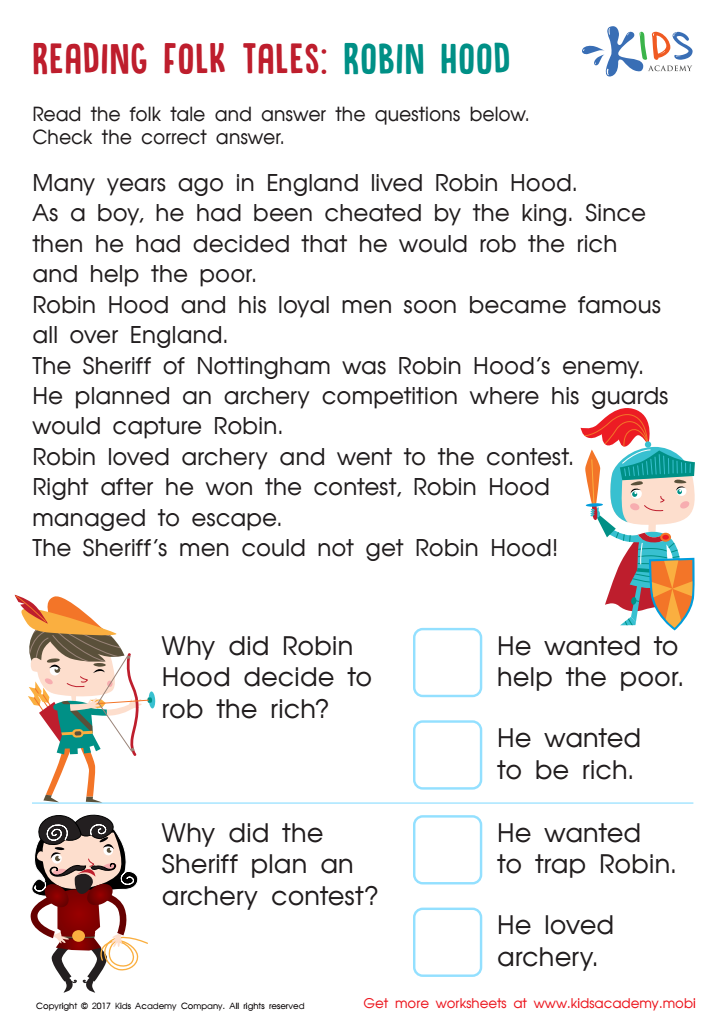
Robin Hood Folktale Worksheet
 Assign to My Students
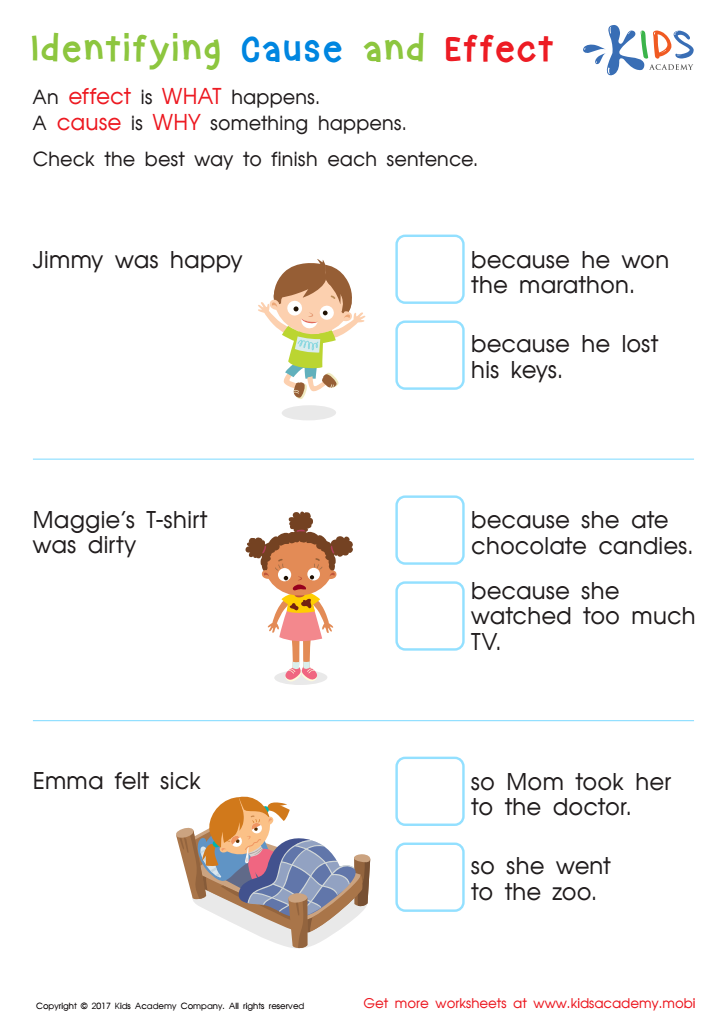
Indentifying Cause and Effect Worksheet
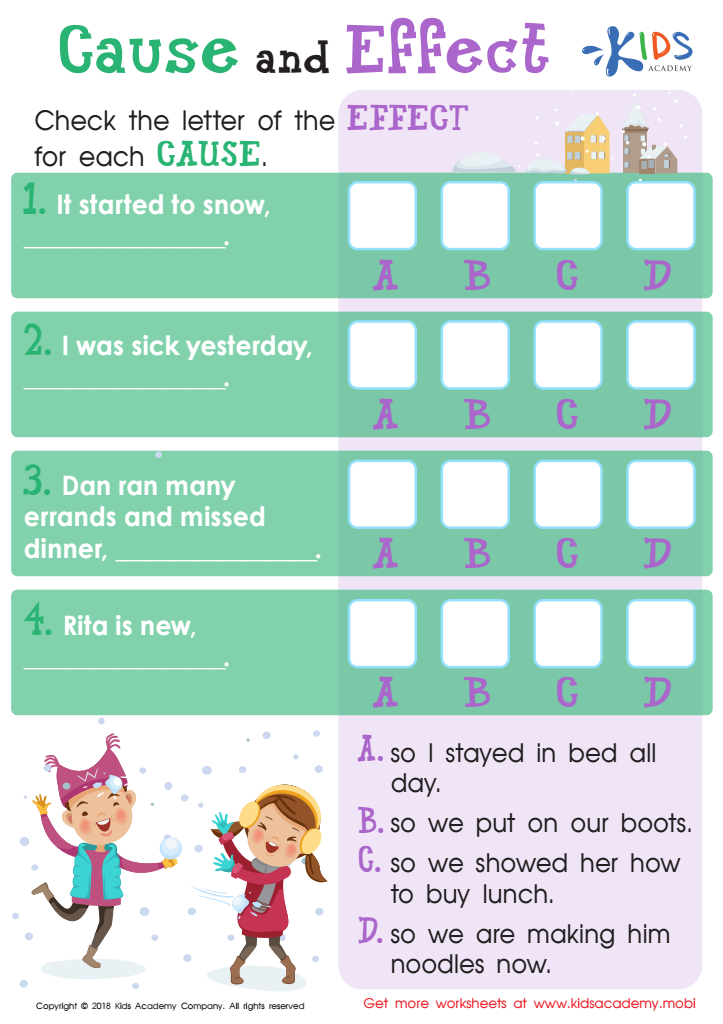
Cause and Effect Worksheet
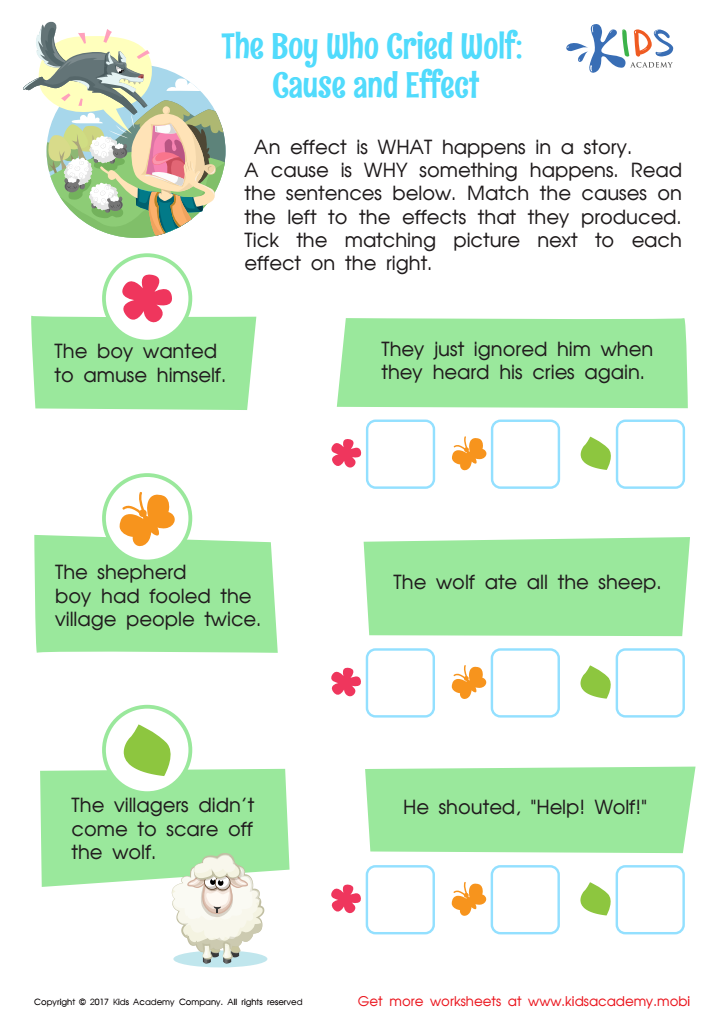
The Boy Who Cried Wolf: Cause and Effect Worksheet





.jpg)

Parents and teachers should prioritize analytical thinking through reading fiction for young children, ages 4-9, as it lays a vital foundation for cognitive development and critical reasoning skills. Reading fiction engages young minds in storytelling, encouraging them to think beyond mere words. It fosters imagination and creativity while prompting children to analyze plots, characters, and settings, ultimately enhancing their ability to draw conclusions and make connections between ideas.
Through fiction, children learn to identify cause-and-effect relationships, explore moral dilemmas, and understand diverse perspectives, skills that are crucial for emotional intelligence and empathy. Engaging with characters' motivations and actions helps students develop reasoning skills, enabling them to evaluate different viewpoints and outcomes.
Furthermore, reading promotes vocabulary expansion and comprehension skills, which are essential for academic success. When parents and teachers discuss stories, asking open-ended questions encourages children to articulate their thoughts and defend their viewpoints, reinforcing analytical thinking. By installing a love for fiction at an early age, parents and educators empower children to be curious, inquisitive learners capable of navigating complex ideas and challenges as they grow. Ultimately, nurturing analytical thinking through reading fiction helps shape well-rounded, thoughtful individuals prepared for the future.








