Character analysis Reading Fiction Worksheets for Ages 4-9
5 filtered results
-
From - To
Empower young readers with our "Character Analysis Reading Fiction Worksheets for Ages 4-9." These engaging worksheets help children delve deeper into their favorite stories, enhancing comprehension and critical thinking. Through fun and interactive activities, kids practice identifying characters' traits, feelings, and motivations. Ideal for classroom use or homeschooling, our worksheets are thoughtfully designed to align with educational standards. Foster a love for reading and literature by guiding children to understand the characters that bring stories to life. Explore a world of imagination and learning with our character analysis resources today!
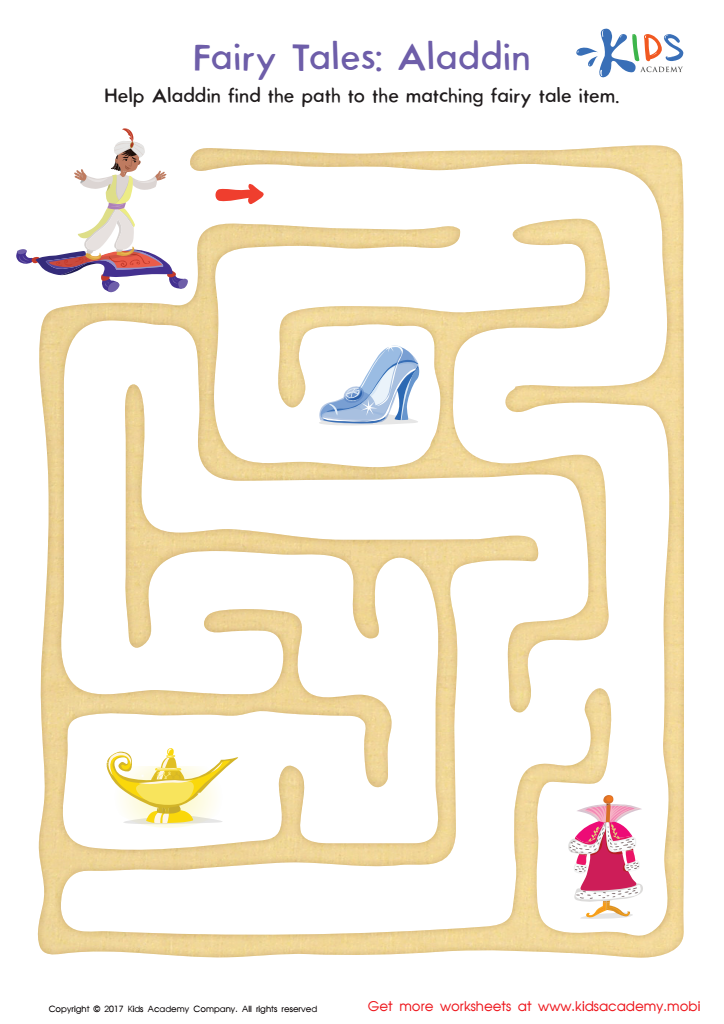
Fairy Tales Aladdin Printable
 Assign to My Students
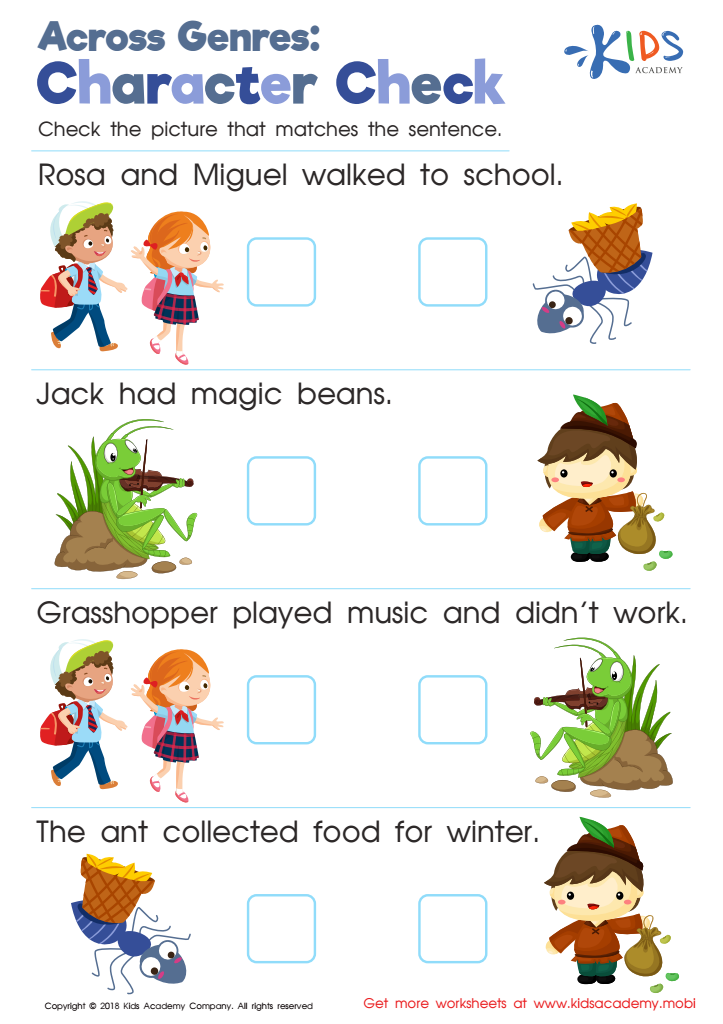
Across Genres: Character Check Worksheet
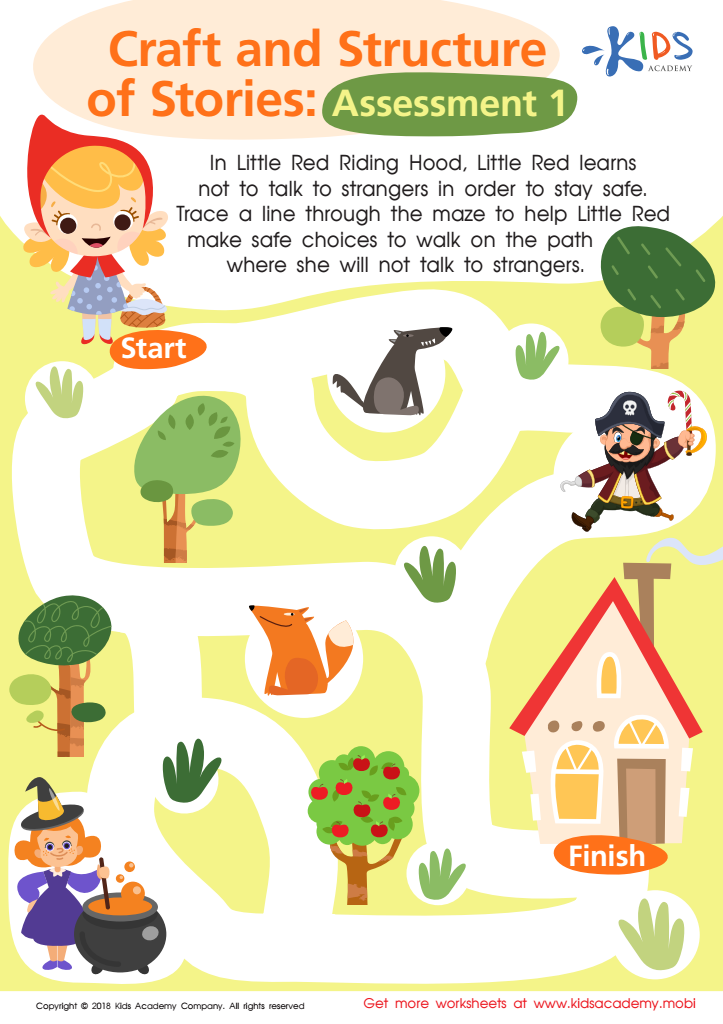
Craft and Structure of Stories: Assessment 1 Worksheet
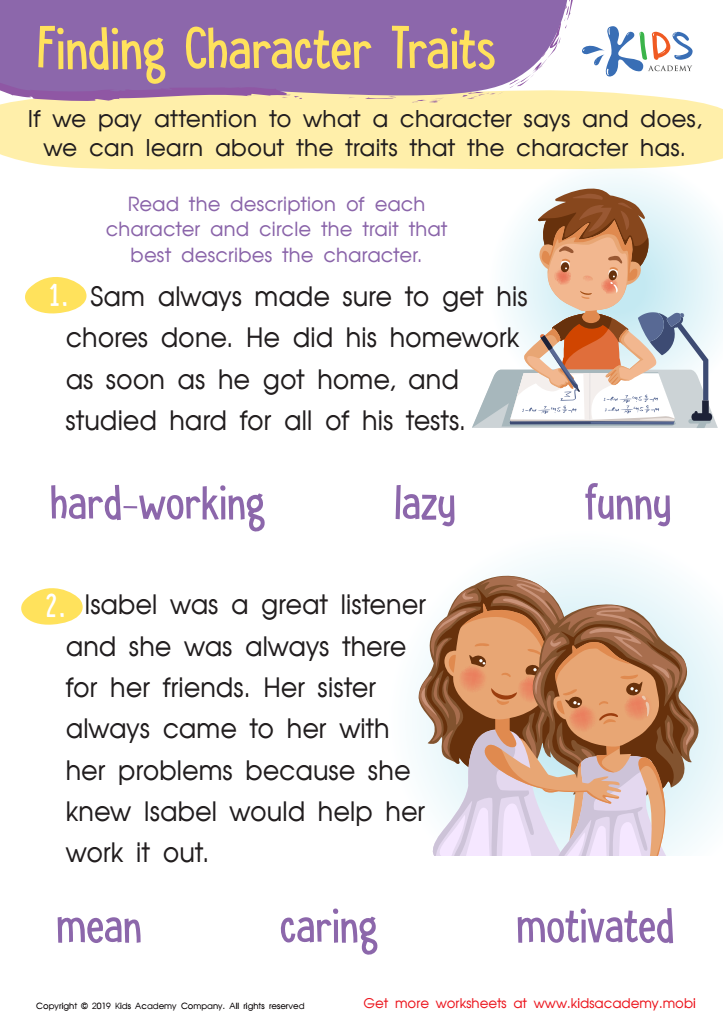
Finding Character Traits Worksheet
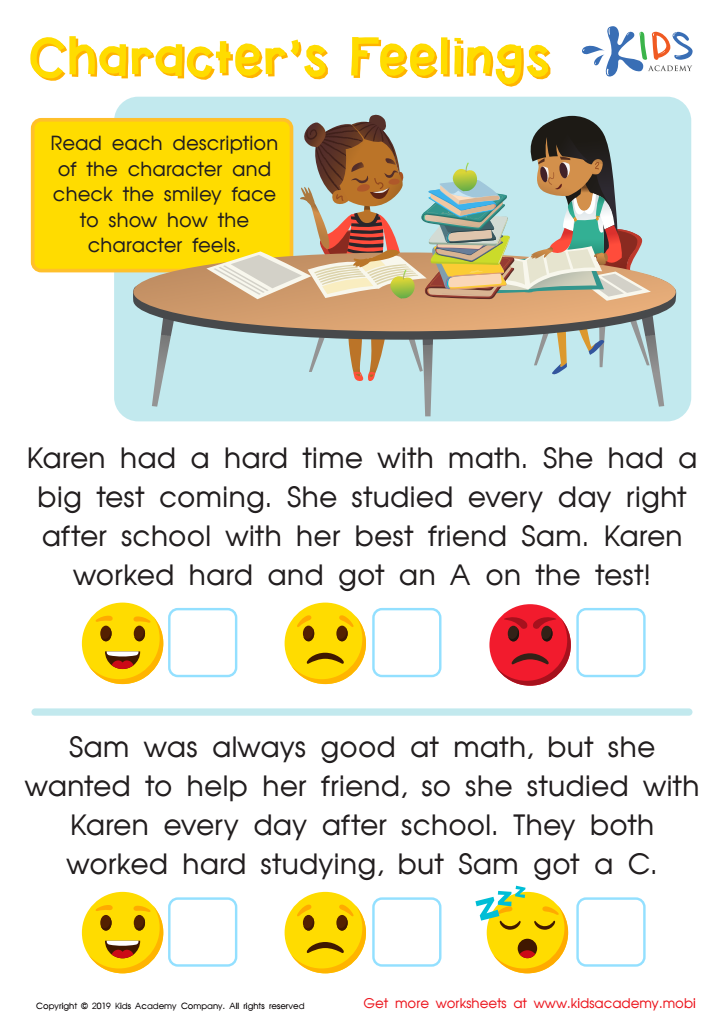
Character’s Feelings Worksheet








Parents and teachers should care deeply about character analysis in reading fiction for children ages 4-9 because it plays a crucial role in their cognitive and emotional development. At these formative ages, children are not just learning to read; they are also learning to navigate social relationships and understand diverse perspectives. By engaging in character analysis, children develop empathy, an essential life skill, by placing themselves in the shoes of characters different from themselves. This helps them recognize feelings, motivations, and morals, fostering emotional intelligence.
Moreover, character analysis enhances critical thinking skills. When children evaluate why a character behaves in a certain way or predict what they might do next, they are practicing important cognitive skills like inference, reasoning, and problem-solving. These skills are fundamental for academic success and life-long learning. Additionally, discussing characters and their traits can improve verbal and communication skills, as children articulate their thoughts and engage in dialogue with peers and adults.
Finally, focusing on character analysis can make reading more enjoyable and engaging for young readers. When children connect with characters on personal levels, they are more likely to develop a love for reading. This love for stories can translate into a greater desire to read more, leading to improved literacy skills and academic achievement. Therefore, parents and teachers investing the time in character analysis is invaluable for a child's holistic development.








