Critical thinking development Reading Fiction Worksheets for Ages 4-9
4 filtered results
-
From - To
Enhance your child's critical thinking skills with our engaging Reading Fiction Worksheets, designed for ages 4-9. These thoughtfully crafted worksheets encourage young learners to delve deeper into stories, fostering comprehension and analytical abilities. Through fun activities such as character exploration, story predictions, and thematic discussions, children develop essential skills that promote thoughtful interpretation and problem-solving. Our resources are tailored to spark imagination while reinforcing foundational reading skills, making learning both enjoyable and effective. Equip your child with the tools for lifelong learning by introducing them to the world of fiction through our interactive critical thinking worksheets today!
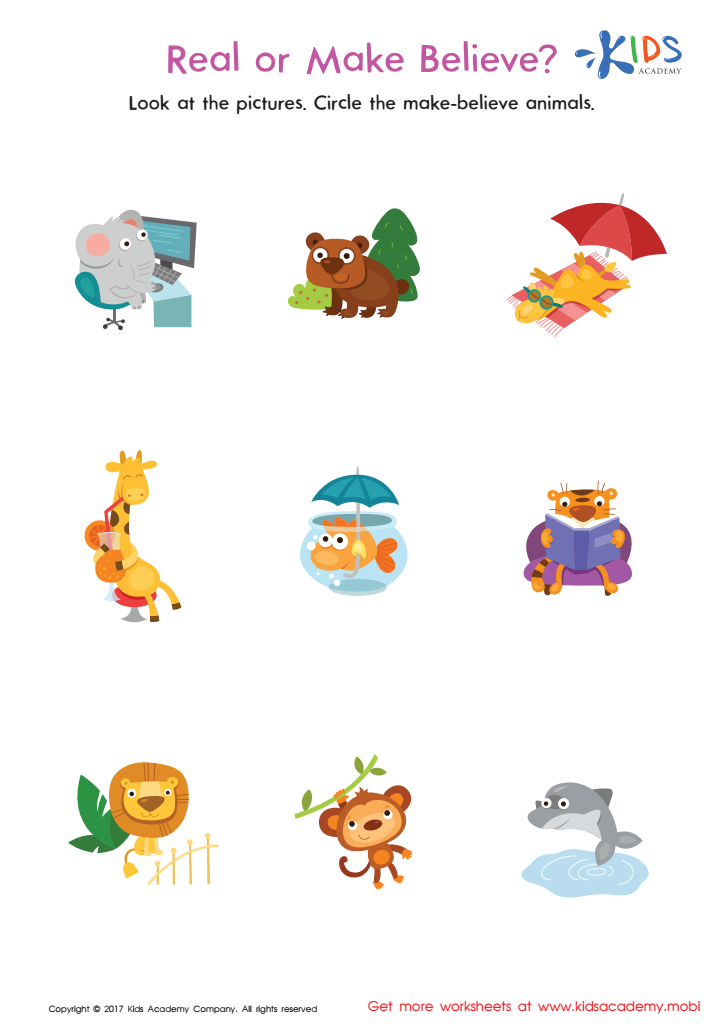
Fact or Make Believe Worksheet
 Assign to My Students
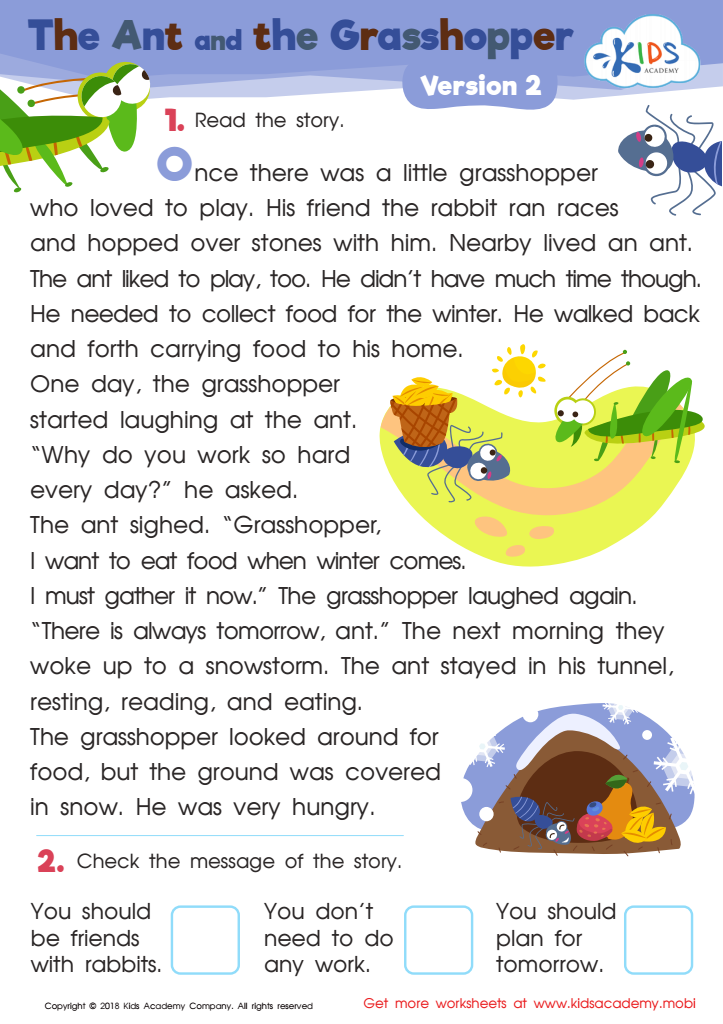
The Ant and The Grasshopper Version 2 Worksheet
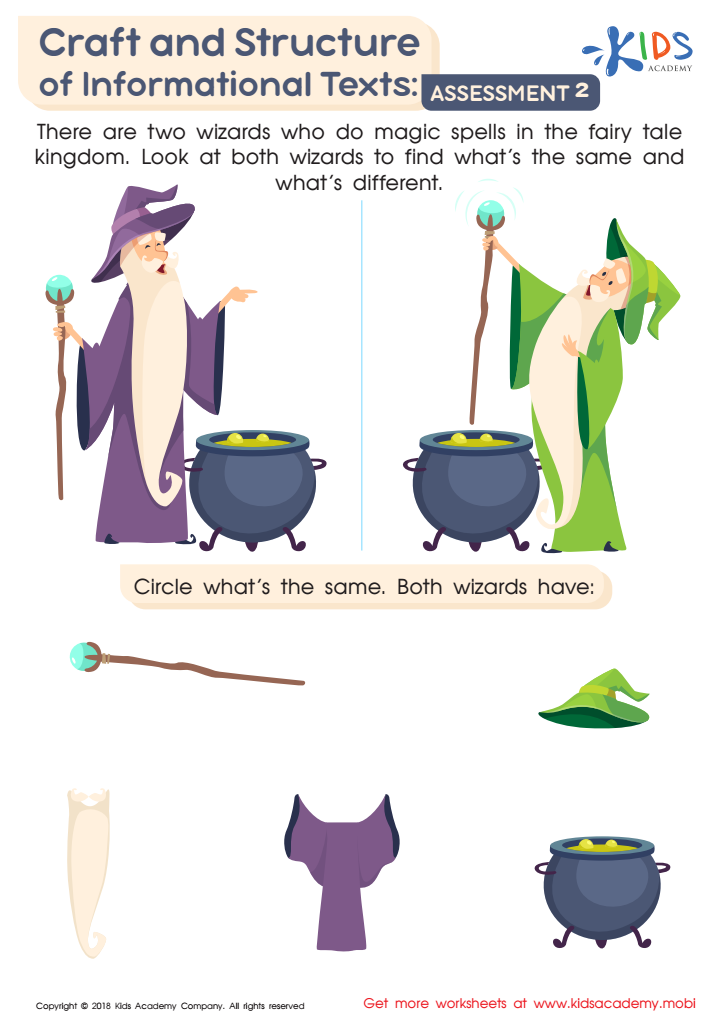
Craft and Structure of Informational Texts: Assessment 2 Worksheet
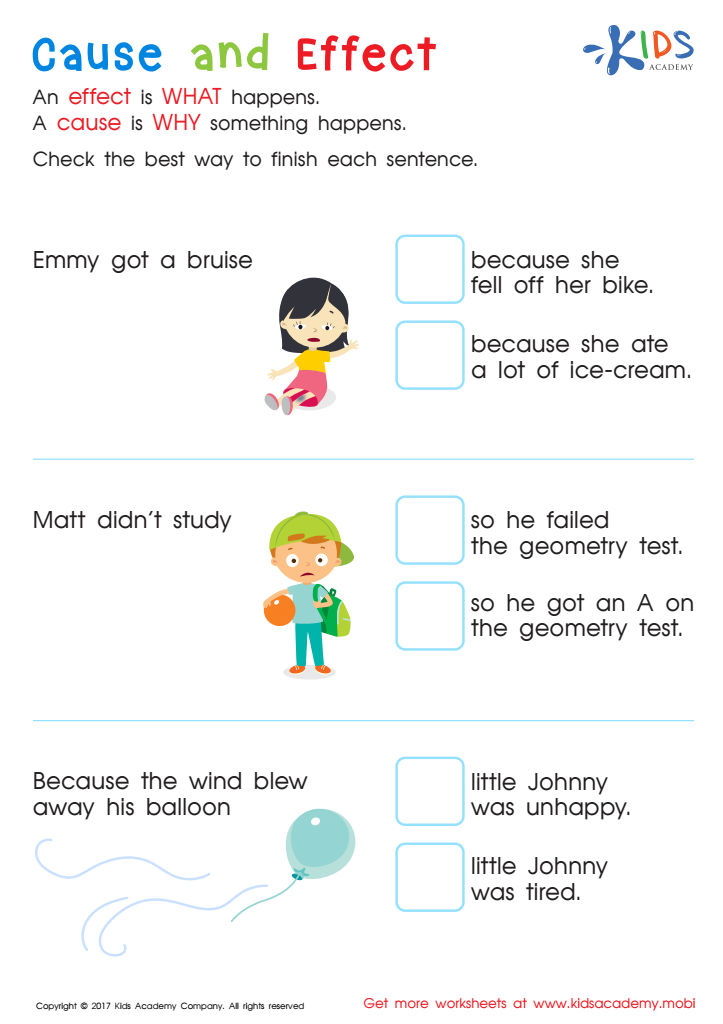
Cause and Effect Worksheet








Critical thinking development through reading fiction for children ages 4-9 is essential for several reasons. Firstly, engaging with fictional narratives helps young readers learn to analyze situations, recognize different perspectives, and evaluate characters' motivations—skills vital for critical thinking. When children delve into stories, they are prompted to ask questions about the plot, characters, and outcomes, fostering an inquisitive mindset.
Furthermore, reading fiction encourages imagination and creativity. Children learn to envision alternate realities and outcomes, which broadens their thinking and problem-solving abilities. These imaginative exercises support cognitive flexibility, allowing kids to approach real-life challenges with innovative solutions.
Moreover, fiction often tackles complex themes and moral dilemmas, prompting discussions among parents and teachers about right and wrong, empathy, and social issues. Engaging in conversations about these topics not only enhances comprehension but also promotes emotional intelligence.
Lastly, the language-rich environments created through reading can significantly boost vocabulary and expressive skills. Combined, these factors create a solid foundation for critical thinking, equipping children with the necessary tools to navigate the complexities of life. Therefore, it is crucial for parents and teachers to actively facilitate and encourage the reading of fiction during these formative years.








