
Moral lesson understanding Reading Fiction Worksheets for Ages 4-9
5 filtered results
Difficulty Level
Grade
Age
-
From - To
Subject
Activity
Standards
Unlock the world of storytelling with our "Moral Lesson Understanding Reading Fiction Worksheets" designed specifically for ages 4-9! These engaging worksheets foster critical thinking and comprehension as young learners explore the moral lessons embedded within their favorite tales. Each activity encourages children to reflect on themes such as kindness, honesty, and empathy, enhancing their reading experience. Aligned with childhood development standards, our resources make learning fun and effective. Perfect for home or classroom use, these worksheets help children connect personally with stories, teaching them valuable life lessons through fiction. Enhance your teaching toolkit today and inspire thoughtful discussions and insights!
Favorites
With answer key
Interactive
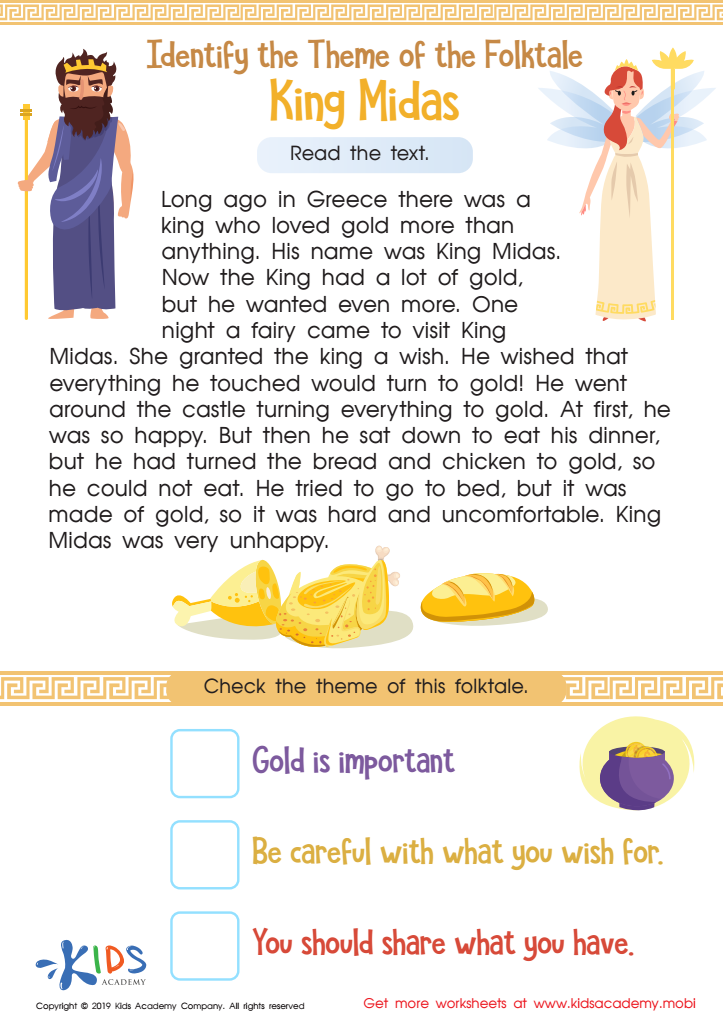
King Midas Worksheet
Read the ancient Greek history of King Midas to your kids. If they're into Greek gods and mythology, they'll be excited to complete the exercise. Read the text carefully, and if needed, twice. Help your kids locate the story's theme at the bottom of the page. 80 words.
 Assign to My Students
King Midas Worksheet
Worksheet
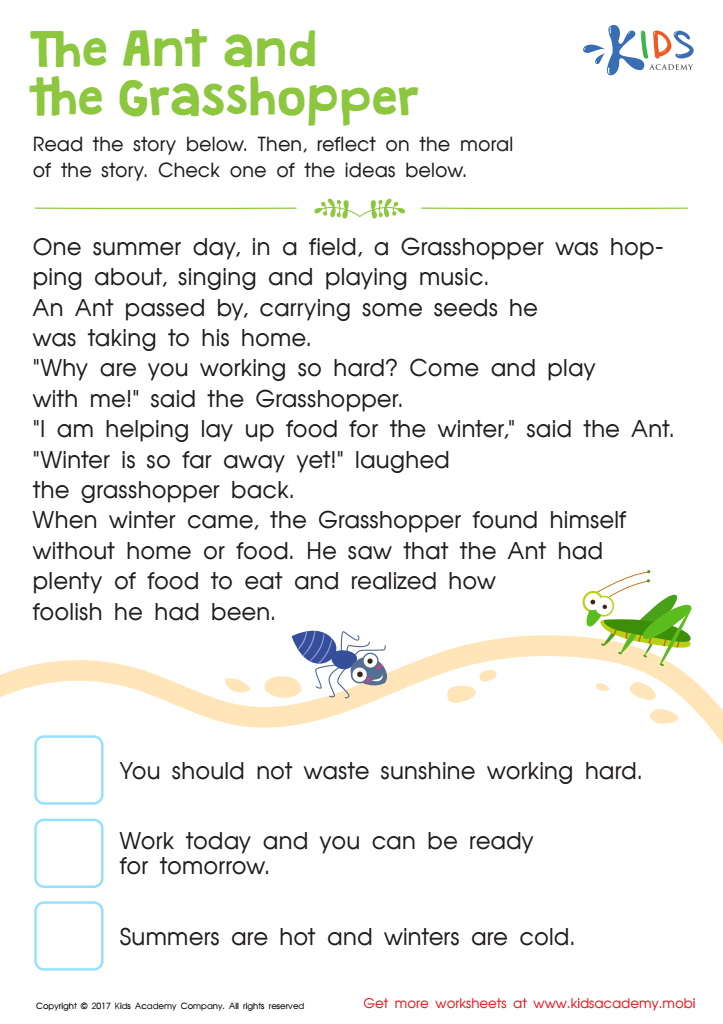
The Ant and The Grasshopper Printable
Aesop's fables have clear messages, which make them memorable and loved by children and adults. Use Kids Academy's ant and grasshopper worksheet to help your child reflect on stories and discover the life lesson.
The Ant and The Grasshopper Printable
Worksheet
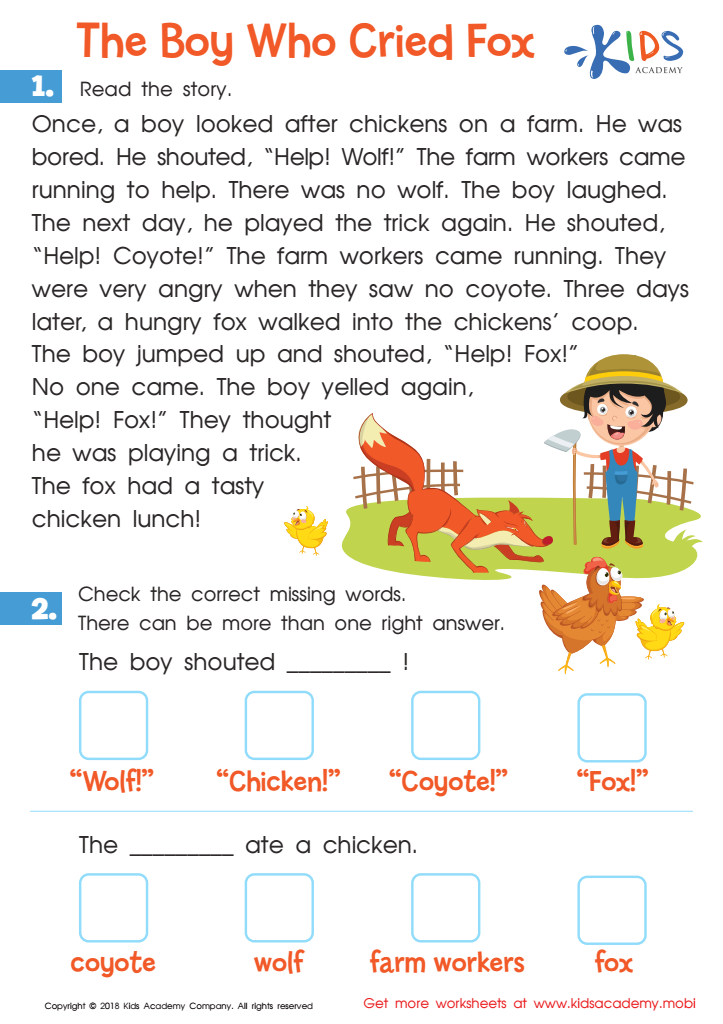
The Boy Who Cried Fox Worksheet
This worksheet encourages students to recall details from a story and answer questions to test their comprehension. Perfect for reading lessons, enrichment, or extra help.
The Boy Who Cried Fox Worksheet
Worksheet
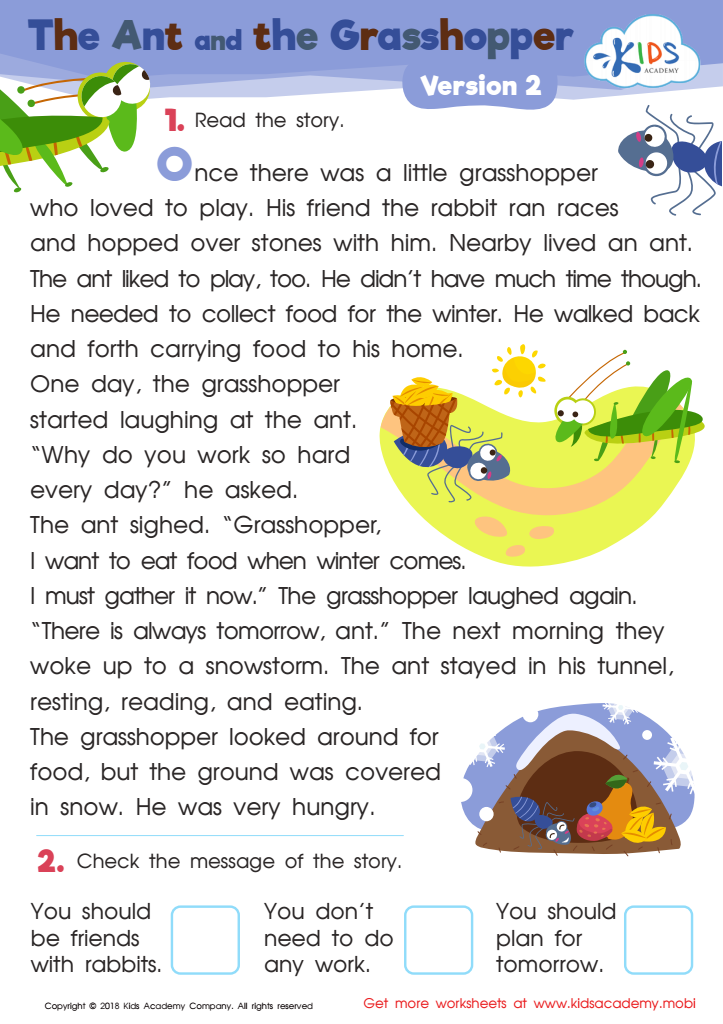
The Ant and The Grasshopper Version 2 Worksheet
Story time is a great way to bond with kids and share a fun story. The Ant and the Grasshopper is a classic with a lesson for everyone. Listen together and then ask your students what the message of the story was. Prompt them with choices from the worksheet and see which one they select. It's a great way to increase their vocabulary and help them learn important lessons.
The Ant and The Grasshopper Version 2 Worksheet
Worksheet
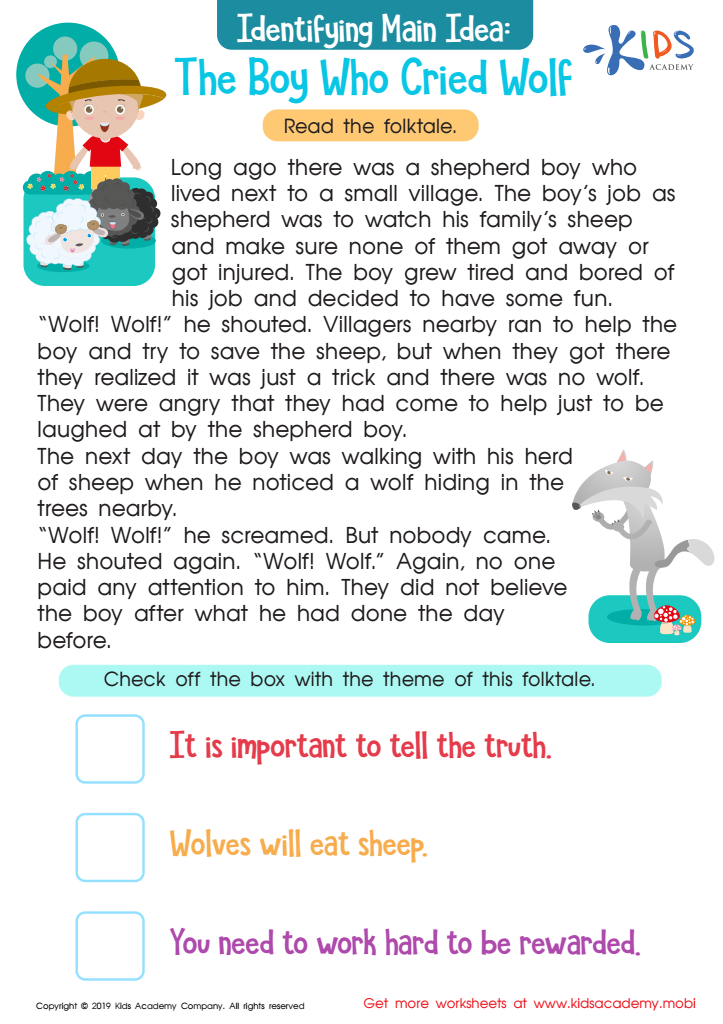
The Boy Who Cried Wolf Part 2 Worksheet
Kids love story time - no doubt they know their favorites! This worksheet tells a story with a theme or main idea. Read it carefully with your kids and ensure they understand every word. Then, help them answer the simple questions at the bottom of the page.
The Boy Who Cried Wolf Part 2 Worksheet
Worksheet
Join Kids Academy for Free
Who is primarily going to use this learning content?






.jpg)

Parents and teachers should prioritize understanding the moral lessons found in fiction for children aged 4-9 for several important reasons. First, these stories introduce young readers to complex themes such as empathy, honesty, friendship, and fairness, which are foundational to moral development. By engaging with characters' choices and consequences, children learn to distinguish right from wrong in a relatable manner.
Moreover, fiction inspires critical thinking; as children discuss various moral dilemmas, they develop the ability to analyze situations and express their opinions. This also fosters effective communication skills and encourages emotional intelligence, as they learn to recognize and manage their own feelings alongside those of others.
Additionally, sharing stories with strong moral messages creates opportunities for bonding among parents, teachers, and children. These shared experiences establish meaningful conversations about values and encourage children to apply these lessons in real-life situations.
Ultimately, by highlighting moral lessons in fiction, adults can guide children toward becoming thoughtful, principled individuals, equipped to navigate the complexities of human relationships. Advocating for a rich literary experience helps cultivate a sense of responsibility and social awareness, ultimately shaping compassionate and engaged community members.








