Visual interpretation Reading Fiction Worksheets for Ages 4-9
5 filtered results
-
From - To
Unlock your child's imagination with our Visual Interpretation Reading Fiction Worksheets for Ages 4-9! Designed to enhance comprehension and critical thinking skills, these worksheets encourage young readers to actively engage with stories through vibrant visuals. Each worksheet combines fun illustrations with captivating narratives, allowing kids to visualize characters, settings, and key plot points. Perfect for parents and teachers, these activities make learning interactive and enjoyable, fostering a lifelong love for reading. Explore our wide range of printable worksheets to support your child's reading journey today at Kids Academy, where storytelling meets creativity!
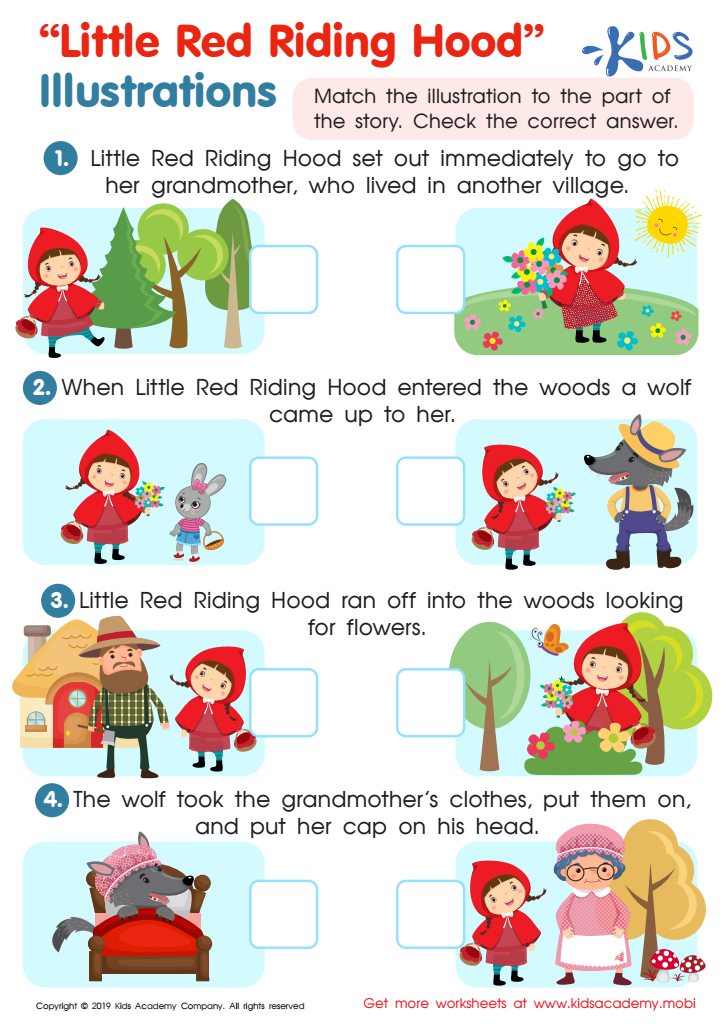
Little Red Riding Hood: Illustrations Worksheet
 Assign to My Students
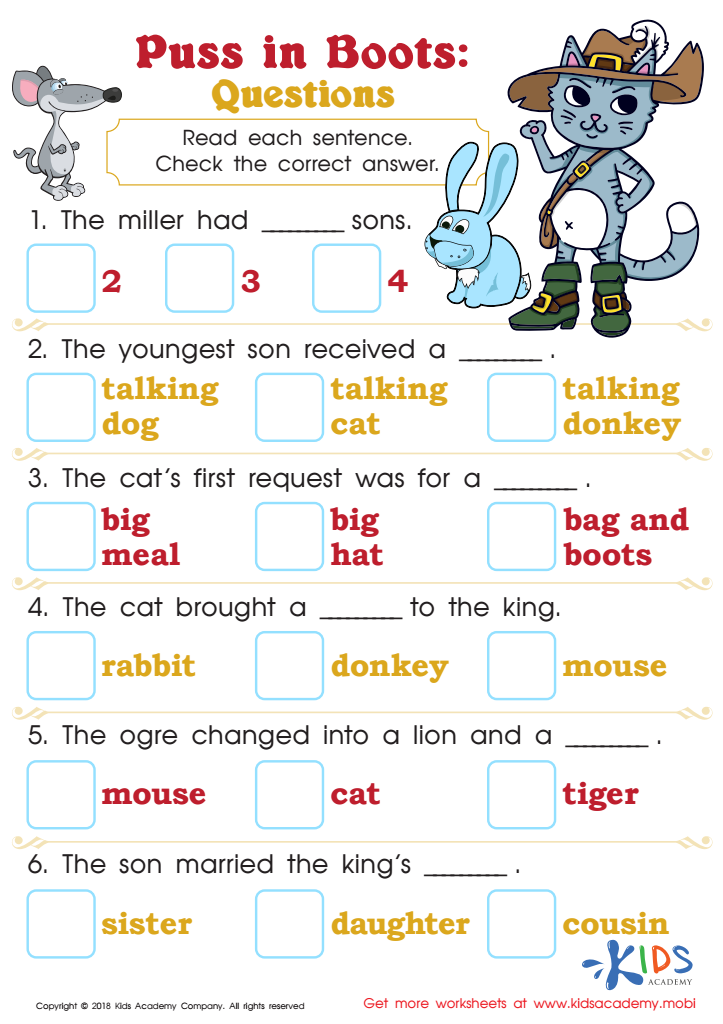
Puss in Boots: Questions Worksheet
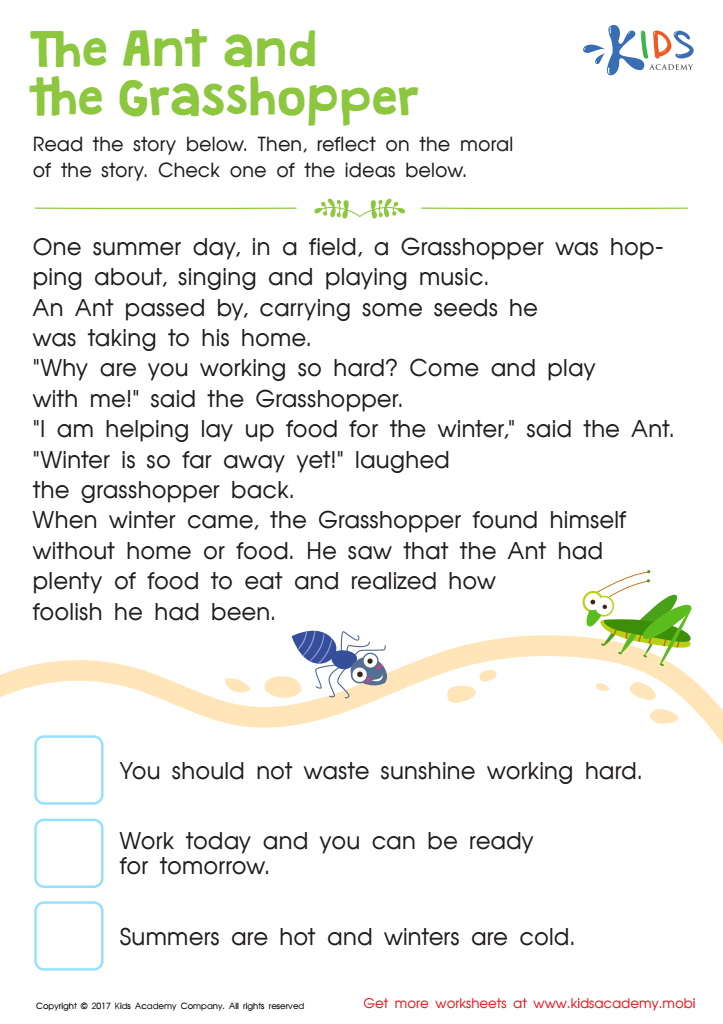
The Ant and The Grasshopper Printable
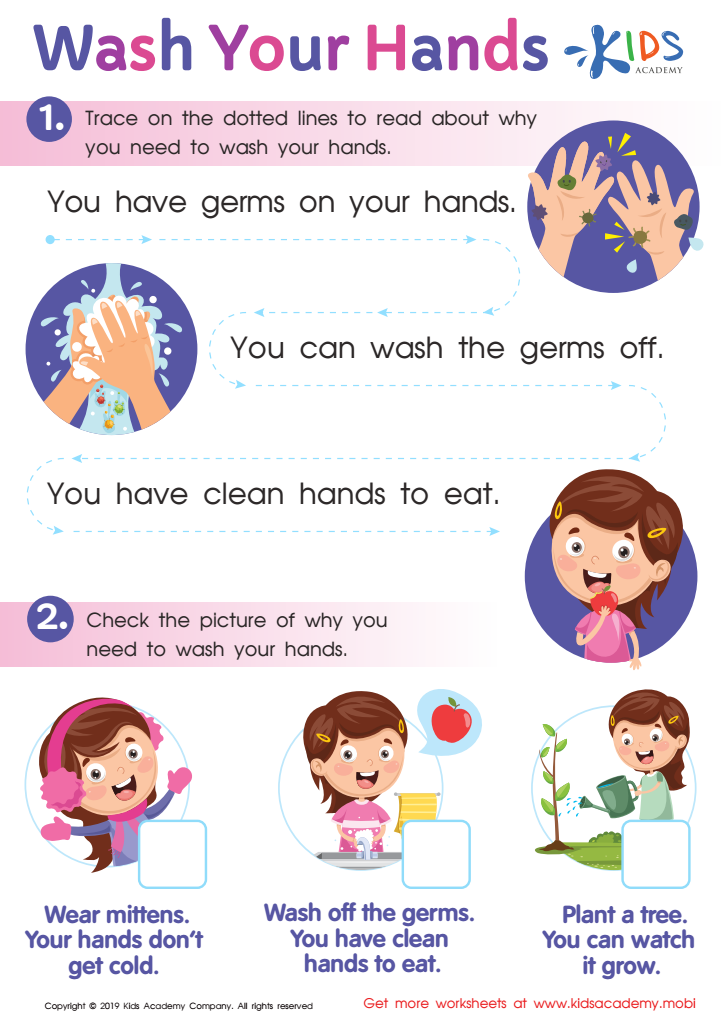
Wash Your Hands Worksheet
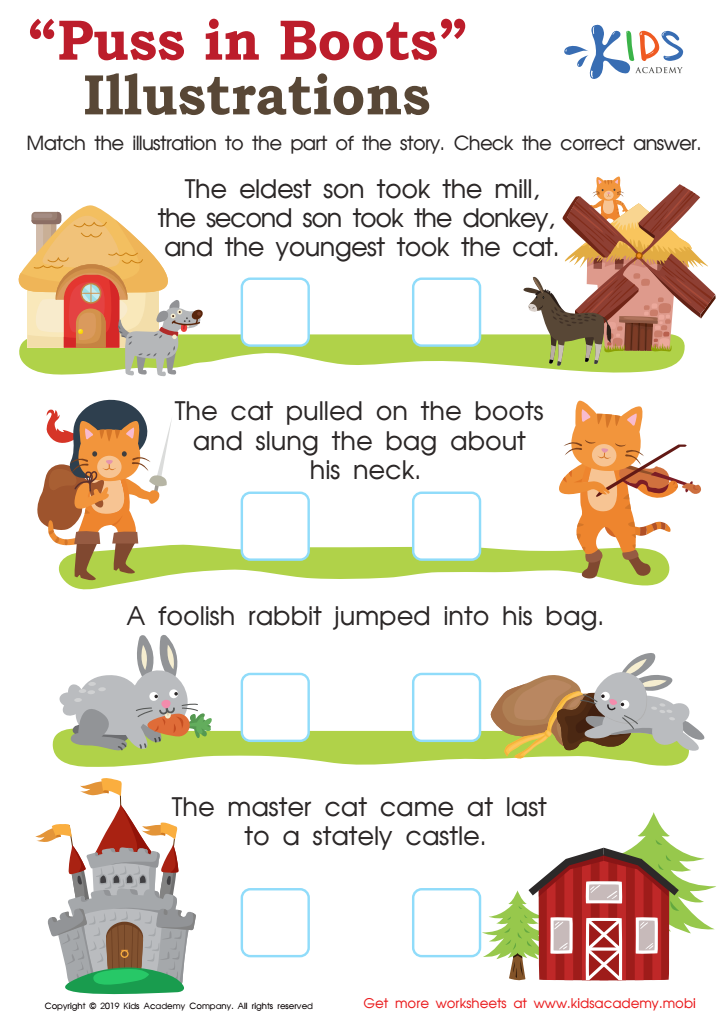
Puss in Boots Illustrations Worksheet


.jpg)





Visual interpretation involves understanding and interpreting images, which plays a crucial role in reading fiction for young children aged 4-9. At this developmental stage, children are highly visual learners who grasp concepts better through images or visual aids. Fiction, when combined with vivid illustrations, helps children comprehend narratives more effectively, fostering both their reading skills and imagination.
Parents and teachers should care about visual interpretation in reading fiction because it enhances cognitive development. Pictures in storybooks aid in vocabulary building, as children associate words with images, facilitating better retention and understanding. This also aids in developing critical thinking skills, as children analyze the illustrations to make sense of the story, predict outcomes, and draw inferences.
Visual interpretation also fosters emotional development. Illustrations can depict emotions and social situations, helping children learn to identify and understand feelings and perspectives. Artistic elements in books can boost empathy, enabling young readers to connect with characters on an emotional level.
Additionally, engaging visuals invite reluctant readers to enjoy stories, instilling a lifelong love for reading. When parents and teachers support visual interpretation in reading fiction, they not only make reading more appealing but also contribute to a child's all-rounded educational development, playing a vital role in shaping proficient, discerning, and empathetic readers.








