Filters

29 filtered results

Clear all filters
Favorites
With answer key
Interactive

29 filtered results

Difficulty Level

Grade


Check out this FREE Trial Lesson on Reading Fiction for age 4-9!

Illustrations in a Text

Favorites
With answer key
Interactive
  • 4-9
  • Vocabulary enhancement
  • Reading Fiction
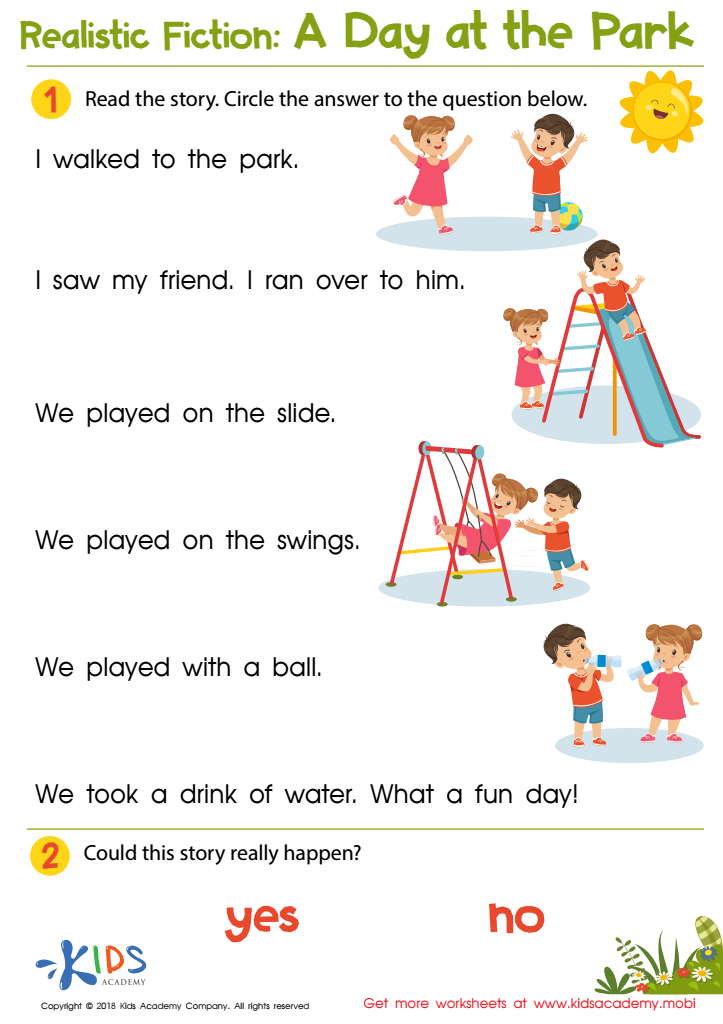
A Day at the Park Worksheet

A Day at the Park Worksheet

Kids as young as preschool-age can be taught to evaluate stories! Use this fun worksheet about a day at the park. Read each sentence aloud, looking at the pictures. Ask your child if the events in the story could happen in real life - if yes, circle yes, otherwise circle no. When finished, discuss with them the genre, realistic fiction.
A Day at the Park Worksheet
Worksheet
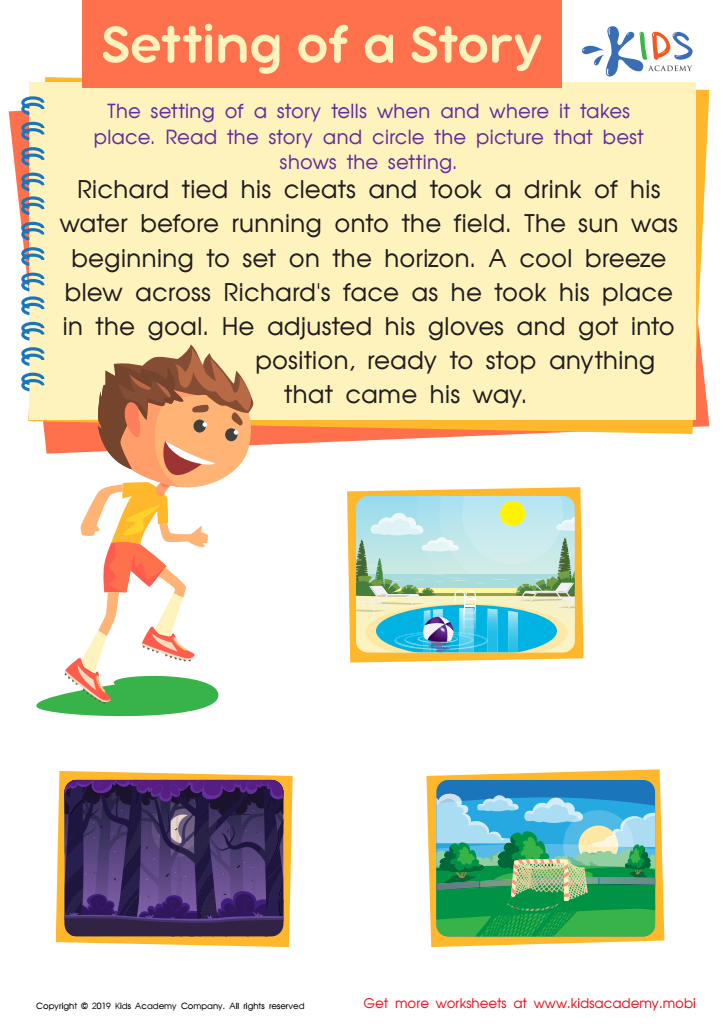
Setting of a Story Worksheet

Setting of a Story Worksheet

You need characters, theme, POV, plot and setting to tell a good story. Ask your kids to explain them and use this worksheet with a story to teach them about setting. Read the story with your kids, then have them circle the picture that best shows the setting.
Setting of a Story Worksheet
Worksheet
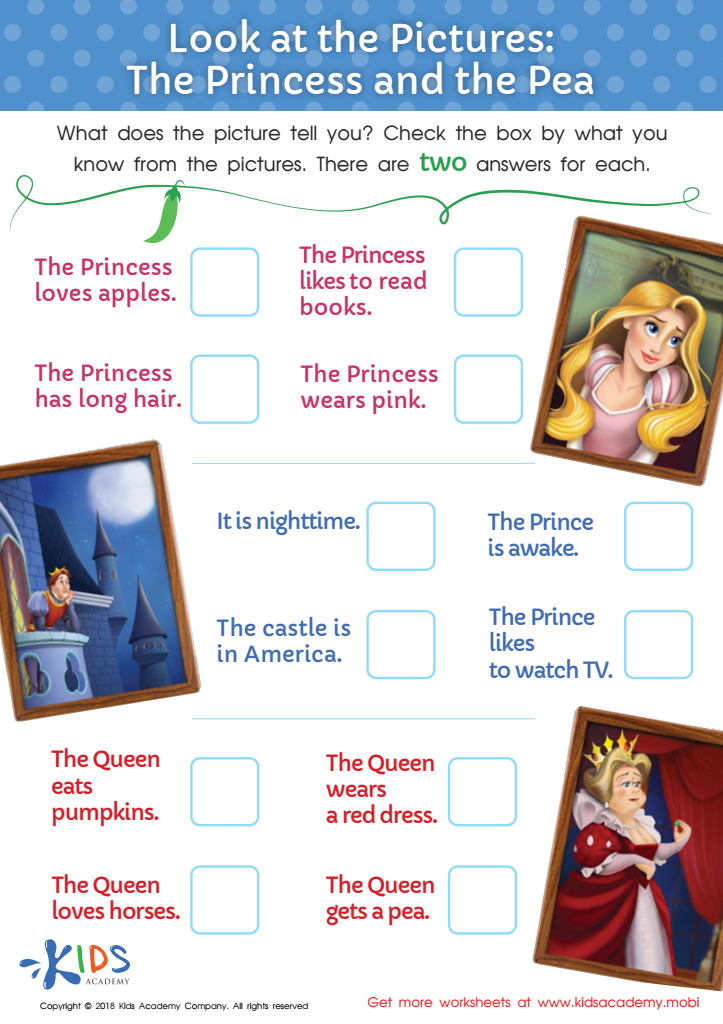
Look at the Pictures: The Princess and the Pea Worksheet

Look at the Pictures: The Princess and the Pea Worksheet

Early readers can benefit from picture clues to understand stories and text. Looking at images helps them learn the meaning of words and comprehend events. Use this worksheet on The Princess and the Pea to let students observe and learn from the pictures. It's a great way to help them comprehend early reading materials.
Look at the Pictures: The Princess and the Pea Worksheet
Worksheet
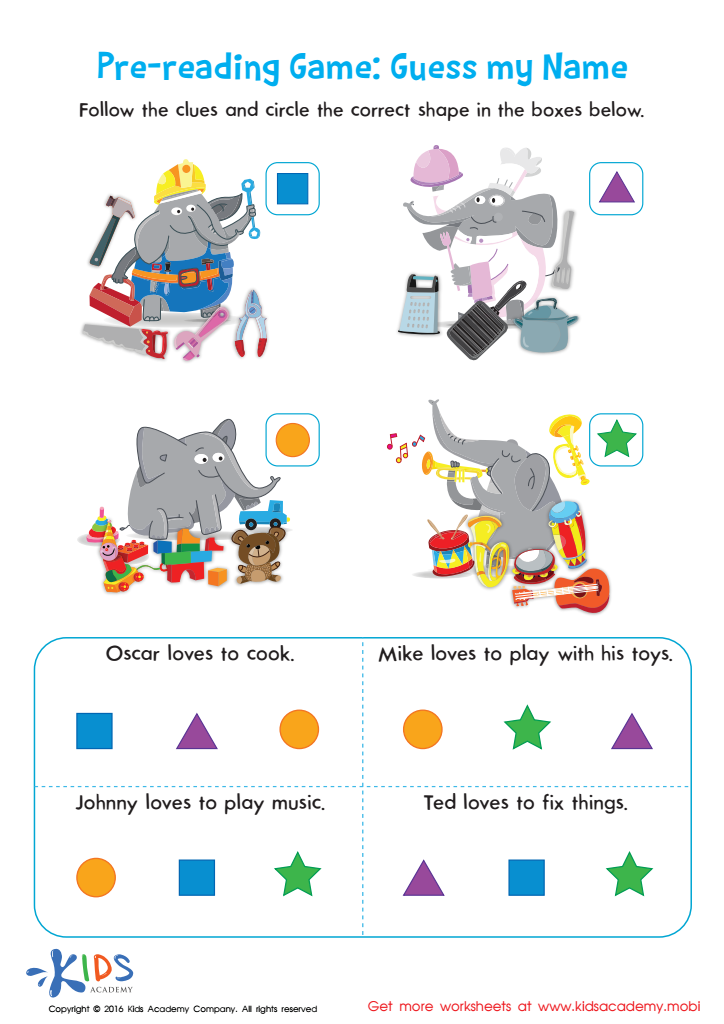
Pre reading worksheet guess my name

Pre Reading Worksheet Guess My Name

Guess My Name is a fun way to practice inference skills. Guess My Name is a fun pre-reading game to help your child practice drawing inferences from clues. With colorful illustrations, they'll use clues to match each elephant with its sentence and sharpen their inference skills.
Pre Reading Worksheet Guess My Name
Worksheet
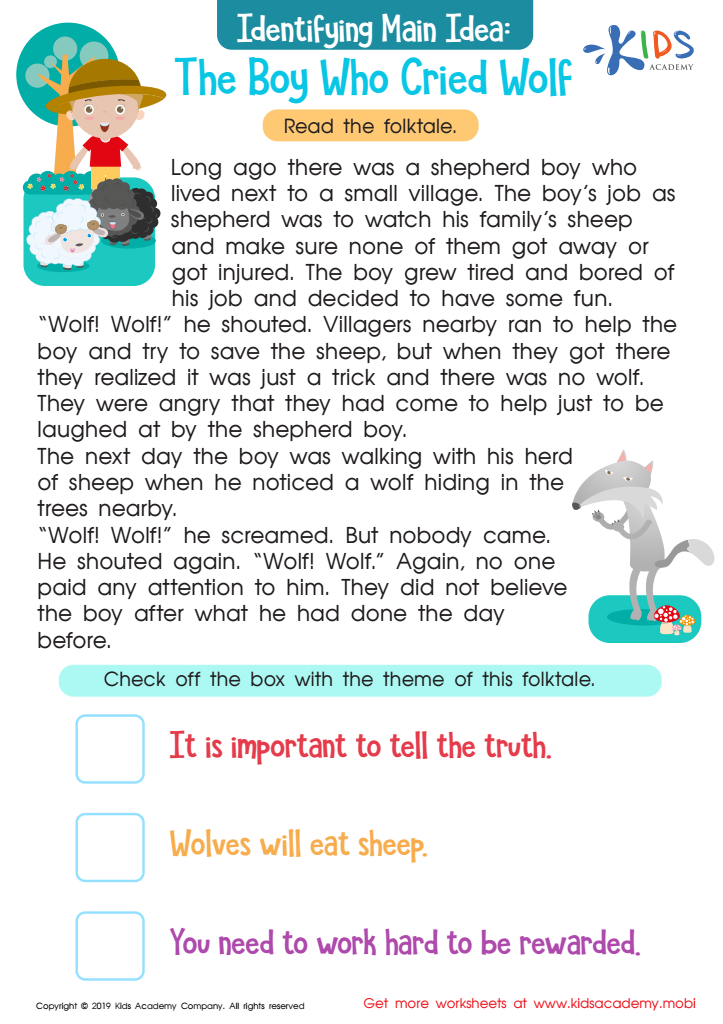
The Boy Who Cried Wolf Part 2 Worksheet


The Boy Who Cried Wolf Part 2 Worksheet

Kids love story time - no doubt they know their favorites! This worksheet tells a story with a theme or main idea. Read it carefully with your kids and ensure they understand every word. Then, help them answer the simple questions at the bottom of the page.
The Boy Who Cried Wolf Part 2 Worksheet

Worksheet


Vocabulary enhancement through reading fiction is essential for children aged 4-9 as it lays the foundational skills for effective communication and critical thinking. During these formative years, children are developing language skills rapidly, and exposure to rich, varied vocabulary through engaging stories enhances their understanding and use of language. Fictional books introduce new words in context, which helps children comprehend their meanings and increases their ability to express themselves.

Reading fiction also promotes imagination and creativity, encouraging children to explore different perspectives and emotions. This experience not only stimulates cognitive development but also fosters emotional intelligence, as children connect with characters and their stories. Furthermore, improved vocabulary supports literacy skills, making reading comprehension more accessible and enjoyable.

For parents and teachers, nurturing these skills is vital. Children with a robust vocabulary tend to perform better in school, have increased confidence, and exhibit a lifelong love for reading. By prioritizing vocabulary enhancement through fiction reading, parents and teachers contribute significantly to children’s academic success and personal growth—equipping them with the language skills necessary to navigate and thrive in an increasingly complex world. Investing in early literacy has far-reaching benefits for children's future educational journeys.