Comparing quantities Sight Words Worksheets for Ages 4-9
3 filtered results
-
From - To
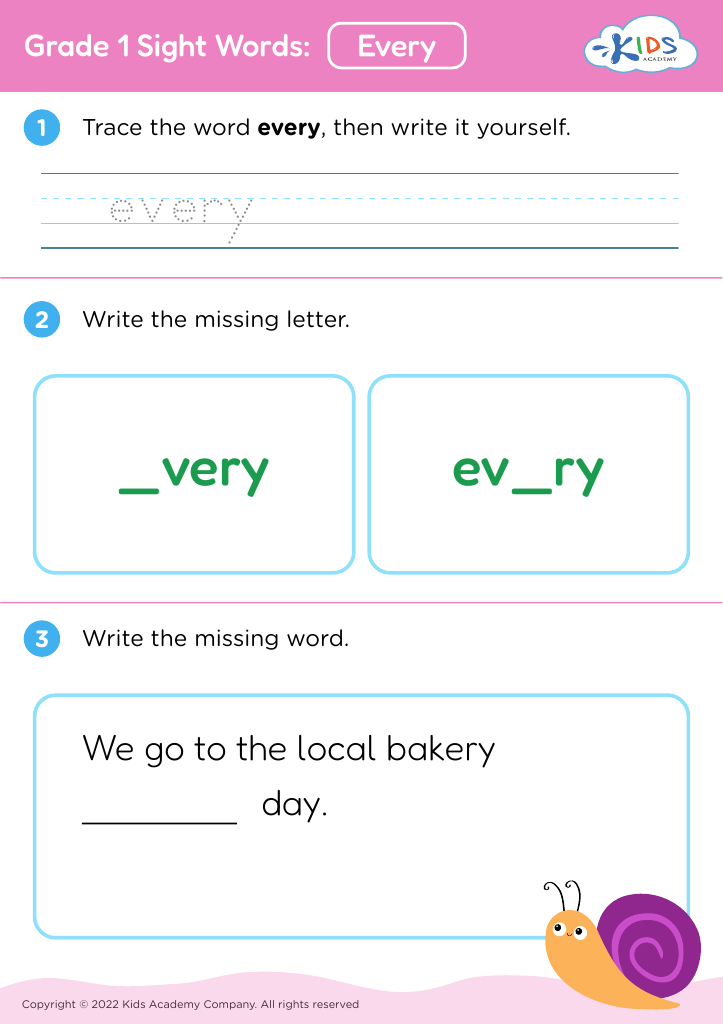
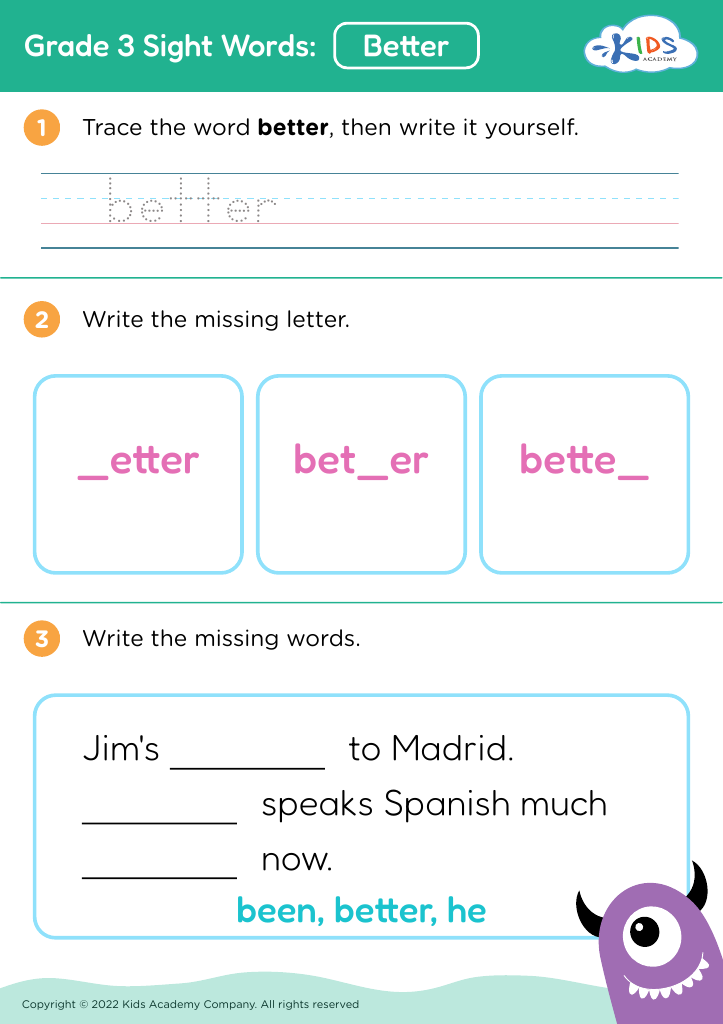
Explore our engaging "Comparing Quantities Sight Words Worksheets" designed specifically for children aged 4 to 9! These interactive worksheets help young learners master essential sight words while developing their understanding of comparing quantities. Through fun activities, children will enhance their reading comprehension skills and boost their vocabulary as they practice identifying and comparing different amounts. Our user-friendly resources promote essential literacy skills aligned with early education standards. Perfect for classroom use or homeschooling, these worksheets provide a lively approach to learning, fostering a love for reading. Help your child become confident in both sight words and basic math with our carefully crafted materials!
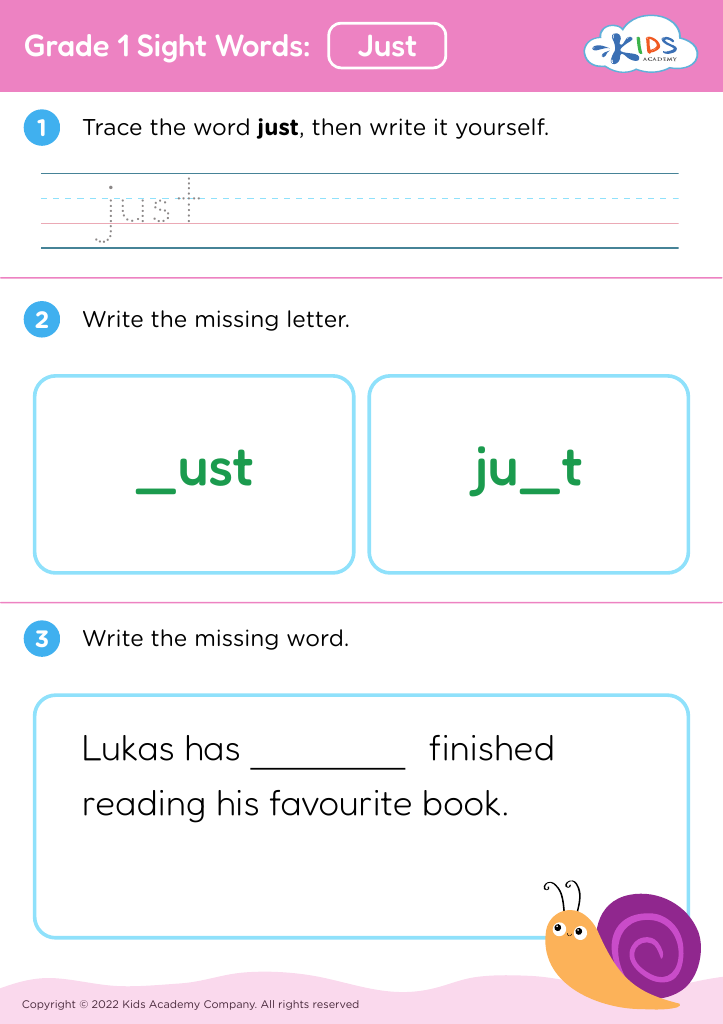









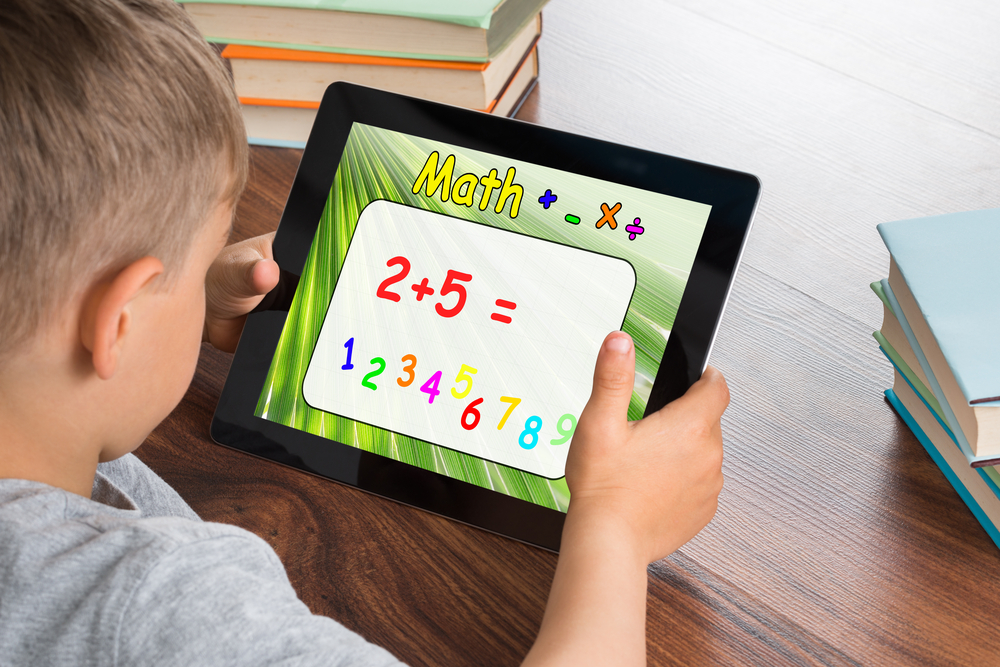

Comparing quantities sight words are essential for early learners aged 4-9 as they lay the foundation for mathematical understanding and critical thinking skills. At this age, children are developing their language and comprehension abilities, making it crucial for parents and teachers to focus on these foundational terms. Familiarity with sight words related to numbers and quantities enables students to engage effectively with math concepts, fostering a positive attitude toward mathematics from an early age.
When children learn to compare quantities, they master essential skills like one-to-one correspondence and basic operations such as addition and subtraction. Understanding these concepts helps children make sense of the world around them, fostering a sense of confidence as they solve real-life problems. Furthermore, integrating sight words related to comparing quantities into daily activities, such as counting objects during playtime or comparing sizes of family members, allows for immersive learning experiences.
Parents and teachers play a crucial role in encouraging this aspect of math literacy. By creating interactive and fun learning environments, they can enhance children's understanding of these important concepts, empowering them with skills that will benefit their academic journey and daily life. Prioritizing comparing quantities sight words ultimately supports their holistic development.