Improve counting skills Sight Words Worksheets for Ages 4-9
7 filtered results
-
From - To
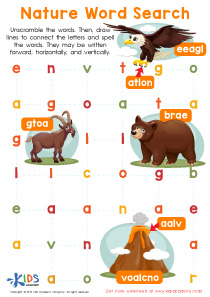
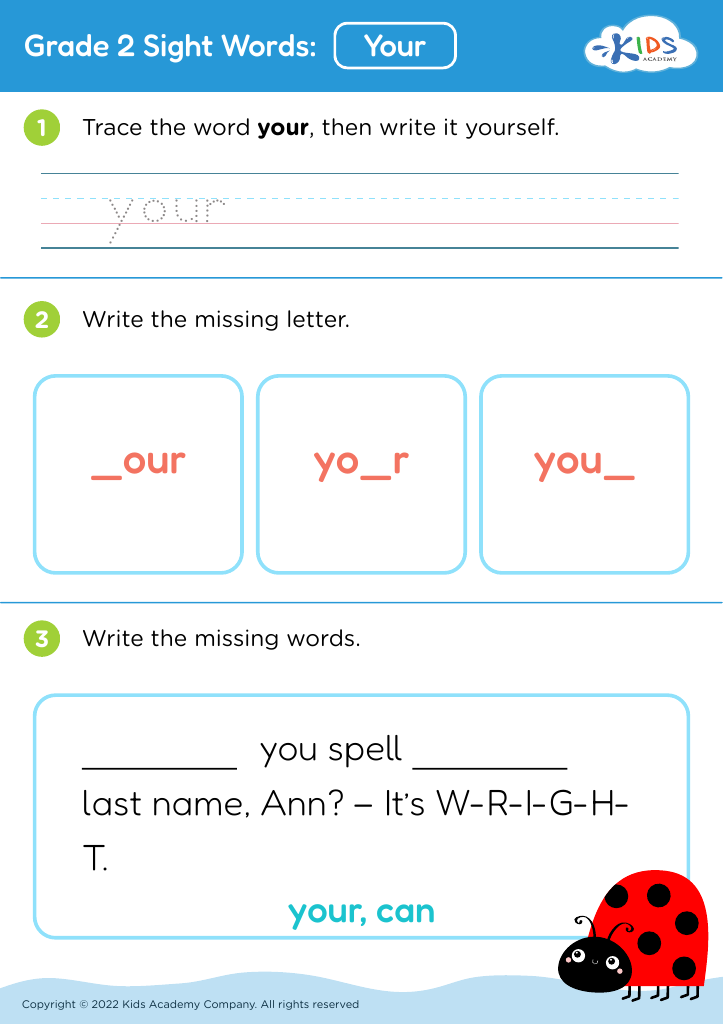
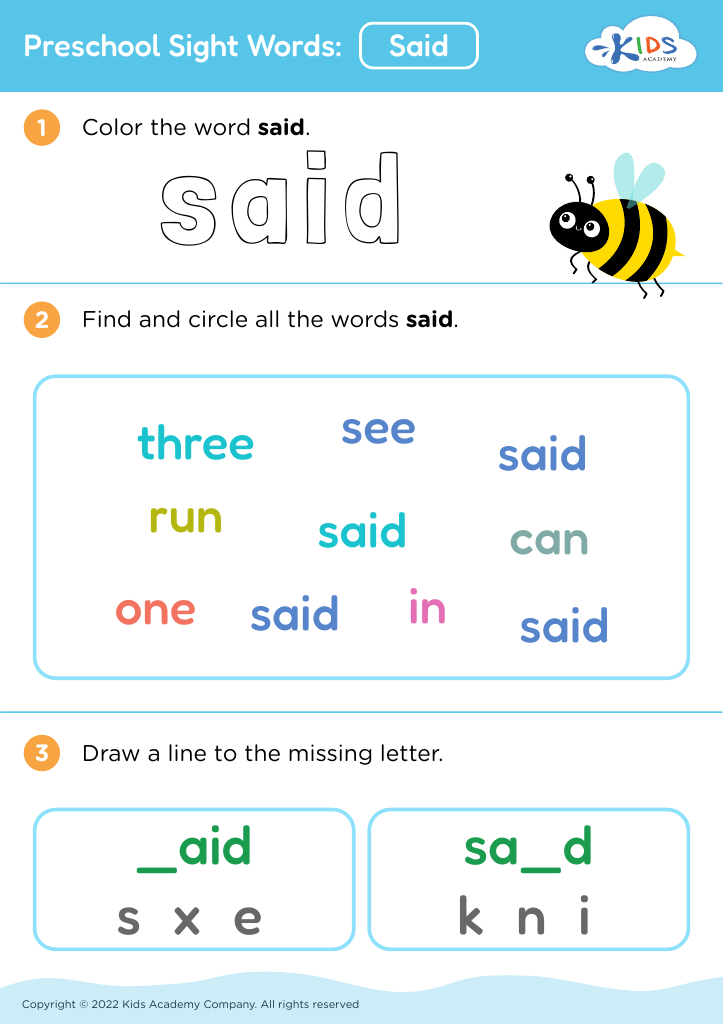
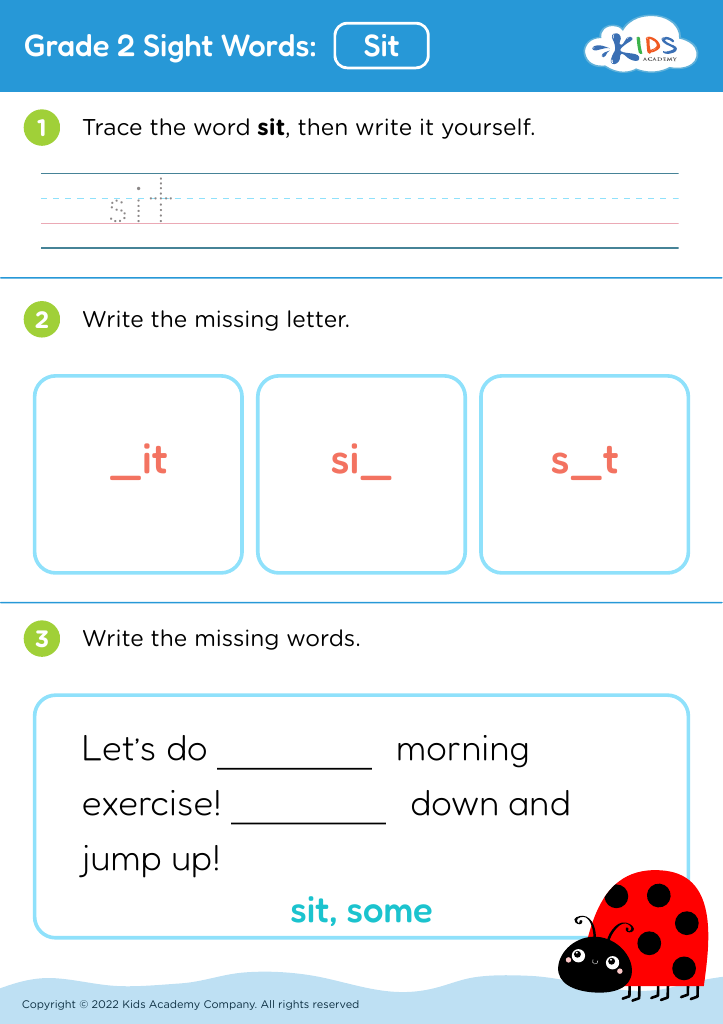
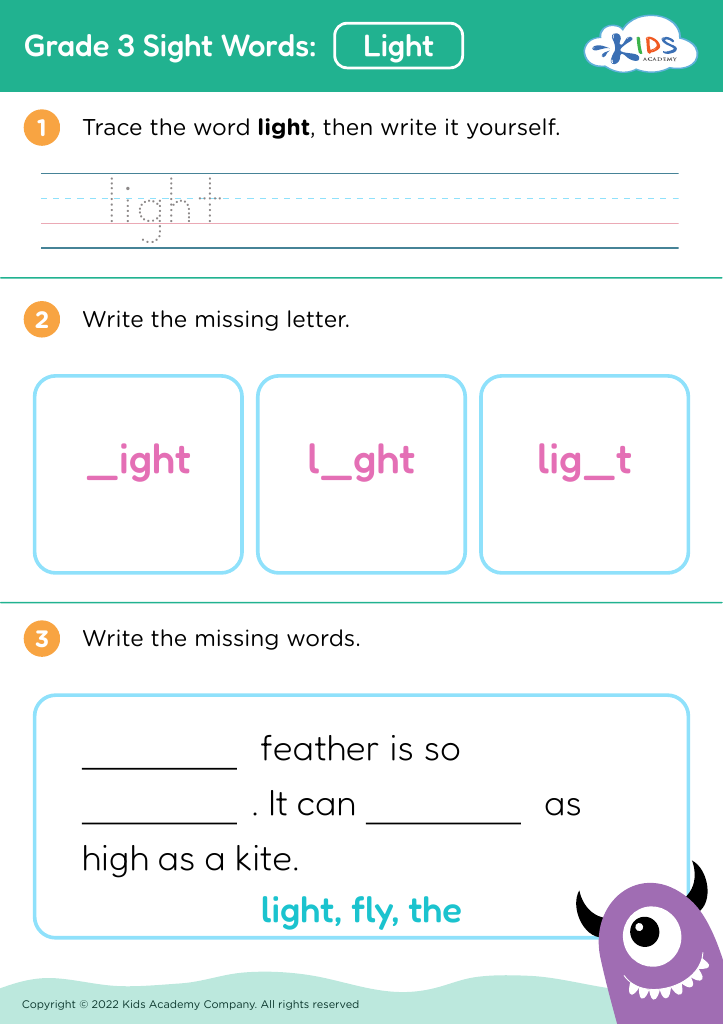
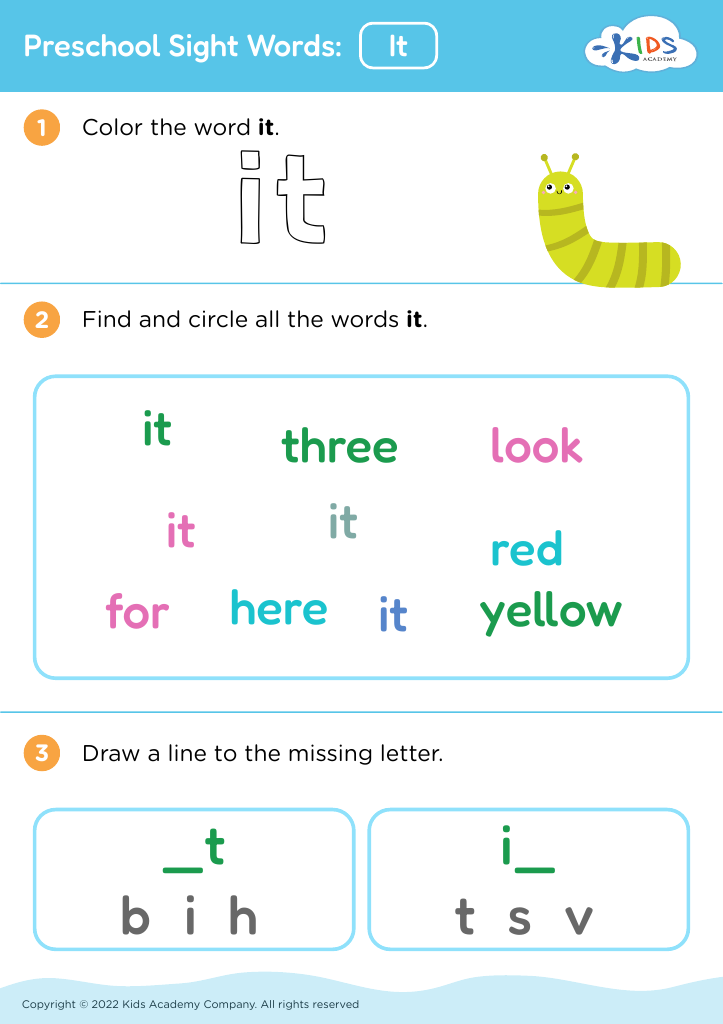
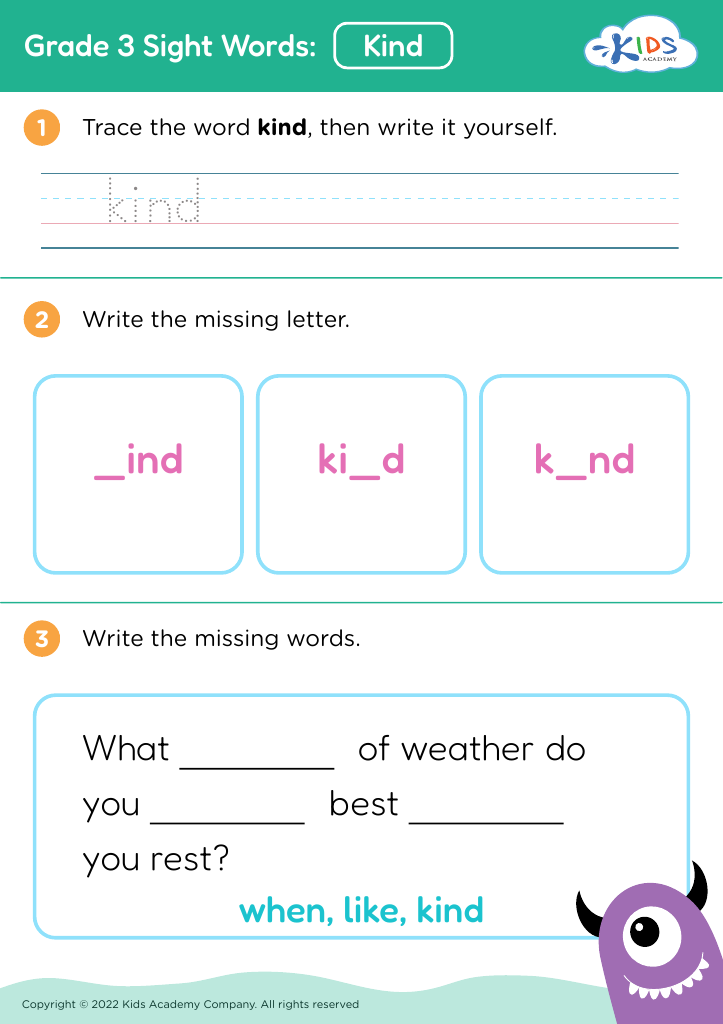
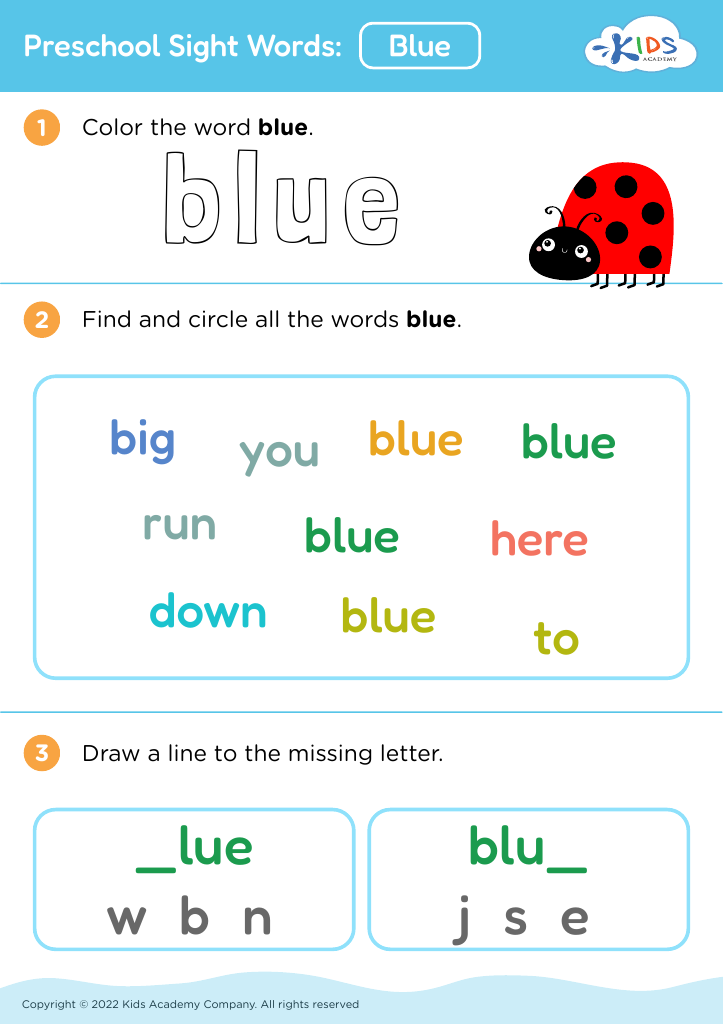
Boost your child's counting skills with our engaging Sight Words Worksheets, designed for children ages 4-9. These thoughtfully crafted resources integrate essential sight words with interactive counting activities, ensuring a fun and effective learning experience. By emphasizing the connection between numerical comprehension and reading recognition, kids will develop confidence in both areas. Featuring colorful illustrations and age-appropriate exercises, these worksheets cater to various learning styles, making them perfect for classroom environments or home schooling. Help your young learners build a strong foundation in math and literacy with our Improve Counting Skills Sight Words Worksheets—where learning becomes an enjoyable adventure!













.jpg)

Improving counting skills and sight word recognition for children aged 4-9 is crucial for their overall development and academic success. First, counting skills form the foundation for mathematical concepts that children will encounter later in their education. Mastering counting helps them understand quantities, develop spatial reasoning, and solve basic arithmetic problems. These early experiences with numbers foster a love for math, making future learning easier and more enjoyable.
Similarly, sight words—common words that frequently appear in texts—are essential for reading fluency. Recognizing sight words allows children to read more confidently and independently, enhancing their comprehension skills. When children struggle with basic reading, it can lead to frustration and a decreased interest in learning.
By focusing on these fundamental skills, parents and teachers actively contribute to a child's educational journey. Engaging in counting games and sight word activities creates a supportive learning environment that reinforces these skills. Ultimately, proficiency in counting and reading lays the groundwork for children’s success in all subjects, promoting critical thinking, problem-solving abilities, and a lifelong love for learning. Therefore, nurturing these skills early on is vital for holistic child development.