Improving reading skills Sight Words Worksheets for Ages 4-9
4 filtered results
-
From - To
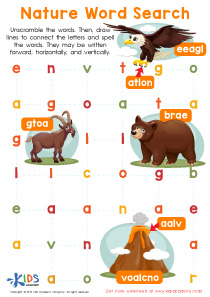
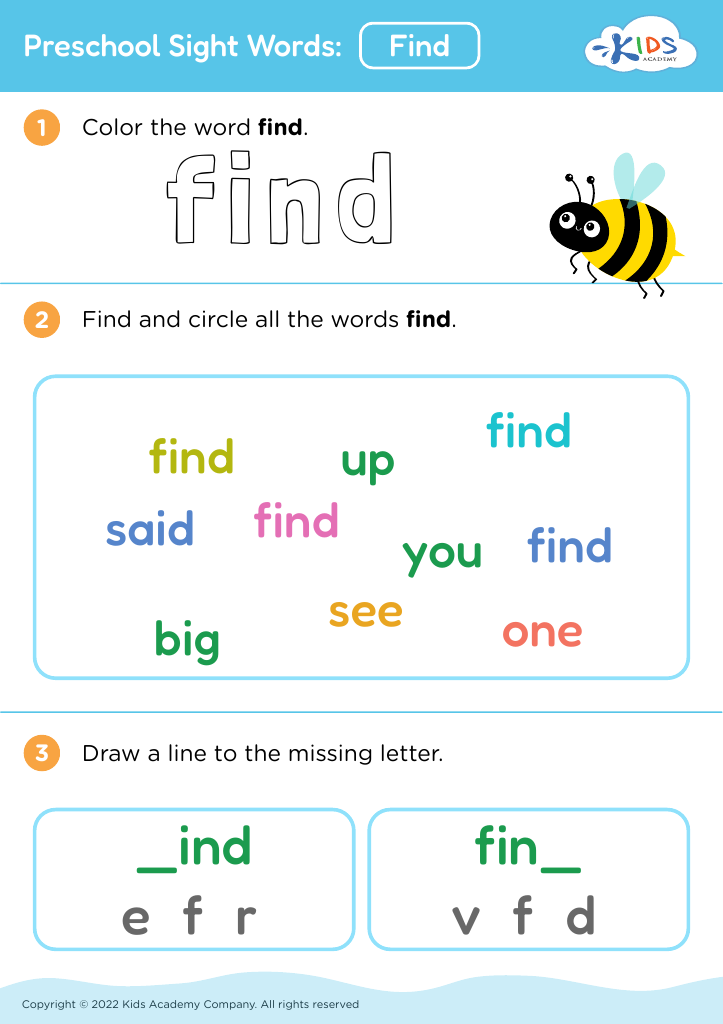
Boost your child's reading confidence with our "Improving Reading Skills Sight Words Worksheets for Ages 4-9". These expertly designed worksheets provide engaging activities that help young readers master essential sight words, enhancing their fluency and comprehension. Perfect for home or classroom use, each worksheet offers varied exercises to keep learning fun and effective. With our resources, children steadily improve their recognition of common words, which forms the foundation for their future reading success. Invest in your child's literacy with activities tailored to their developmental stage, ensuring a smooth and enjoyable reading journey. Visit Kids Academy to explore our collection today!





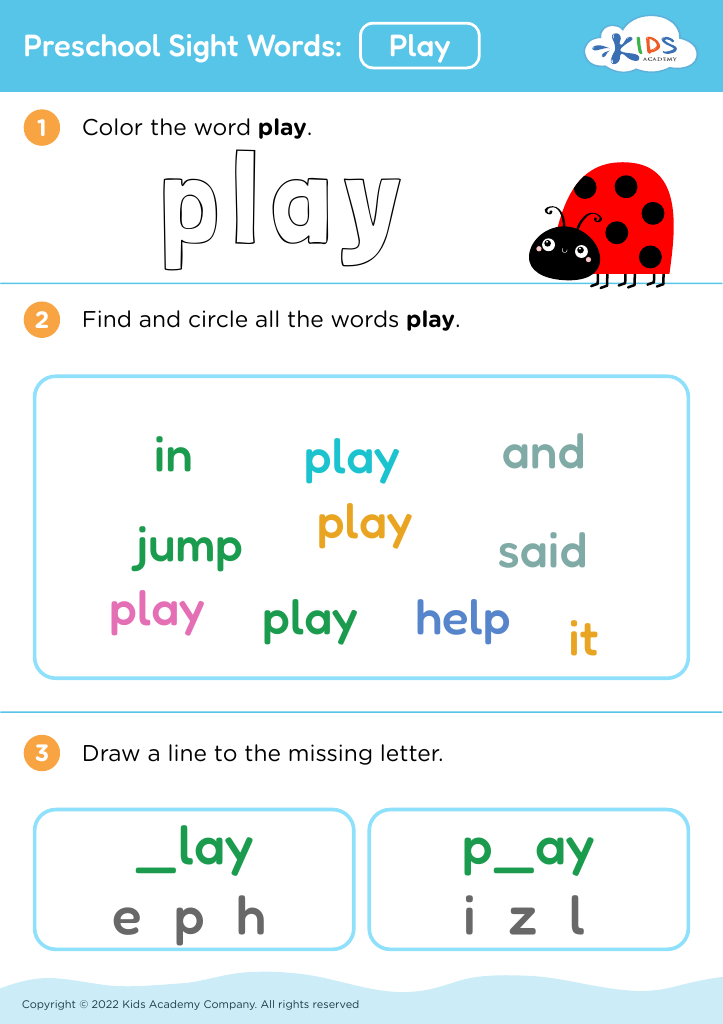
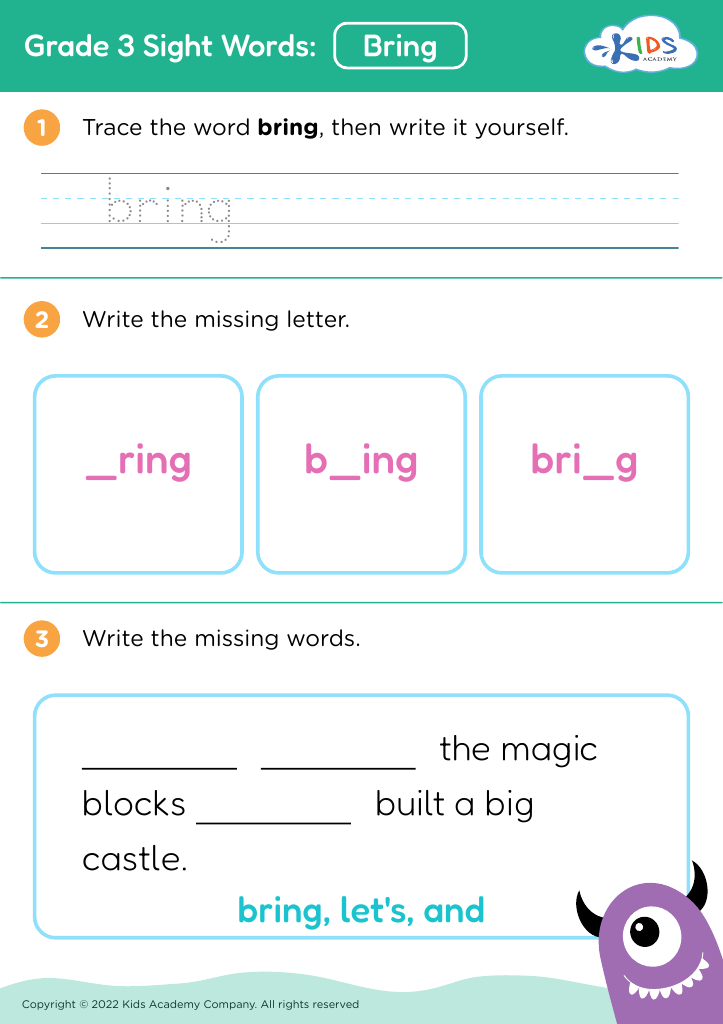
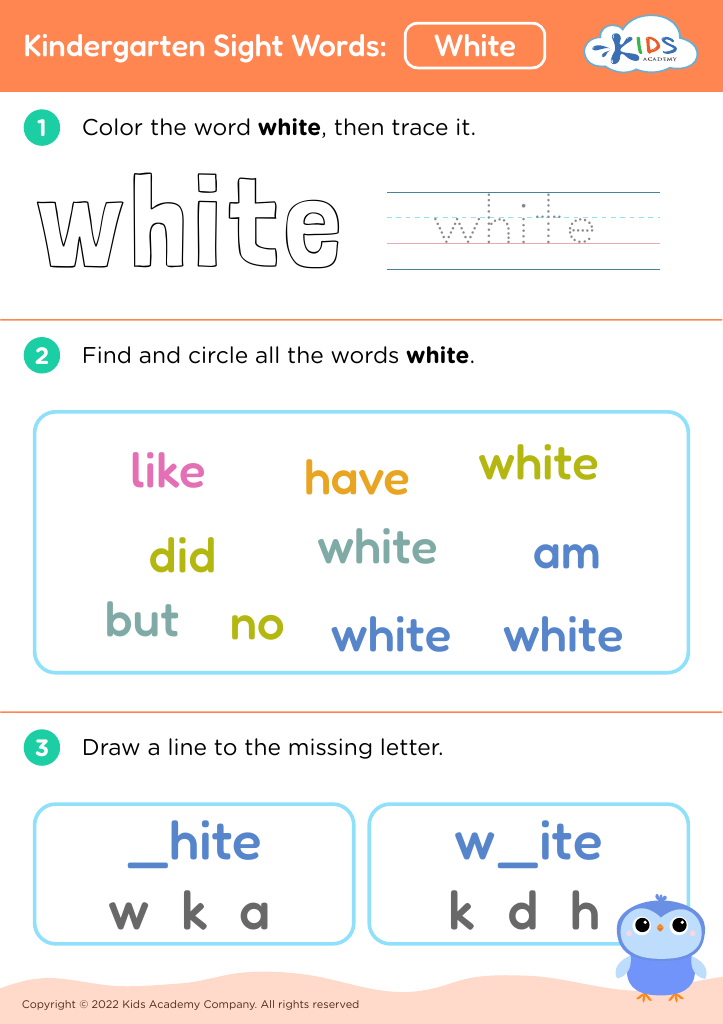








Improving reading skills, particularly sight words, in children ages 4-9 is crucial for several fundamental reasons. At this formative age, young learners are in the prime developmental stage for language acquisition. Sight words, which are frequently encountered and often do not adhere to standard phonetic rules, form the foundation of early reading. Mastery of these words enables children to read more fluidly and comprehend more complex texts as they progress academically.
For parents, nurturing reading skills bolsters their child's confidence and academic performance, laying a solid groundwork for lifelong learning. Reading proficiency is pivotal for success across various subjects, from science to social studies. Engaging children with sight words can transform reading into an enjoyable activity rather than a daunting task, thereby fostering a love for books and learning.
For teachers, competency in sight words allows for more effective lesson planning, as fluent readers can engage more critically with instructional materials. This efficiency enhances overall classroom dynamics and freeing educators to focus on higher-order skills rather than basic decoding.
Moreover, strong reading skills are linked to improved cognitive development, better listening skills, and stronger emotional intelligence. By prioritizing sight words, both parents and teachers contribute significantly to a child’s educational trajectory, ensuring that they possess the essential literacy tools to thrive in school and beyond.