Rhyme recognition Songs Worksheets for Ages 4-9
3 filtered results
-
From - To
Enhance your child's literacy journey with our Rhyme Recognition Songs Worksheets, designed for ages 4 to 9! These engaging worksheets feature fun songs that captivate young learners while teaching them to recognize and appreciate rhymes. Ideal for both classroom and home environments, our resources help develop phonemic awareness, improve vocabulary, and foster a love for reading. With colorful visuals and interactive activities, children will enjoy practicing their rhyme skills through music and play. Whether you're a teacher or a parent, these worksheets are a perfect tool to support your child's reading development and spark enthusiasm for learning. Start exploring today!
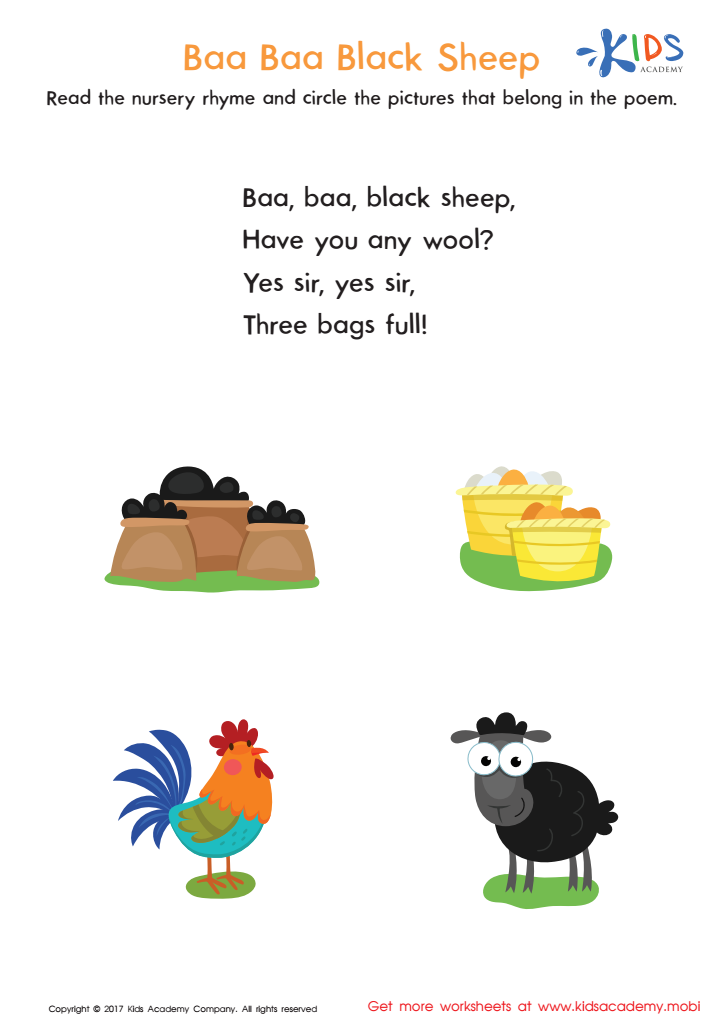
Baa Baa Black Sheep Printable
 Assign to My Students
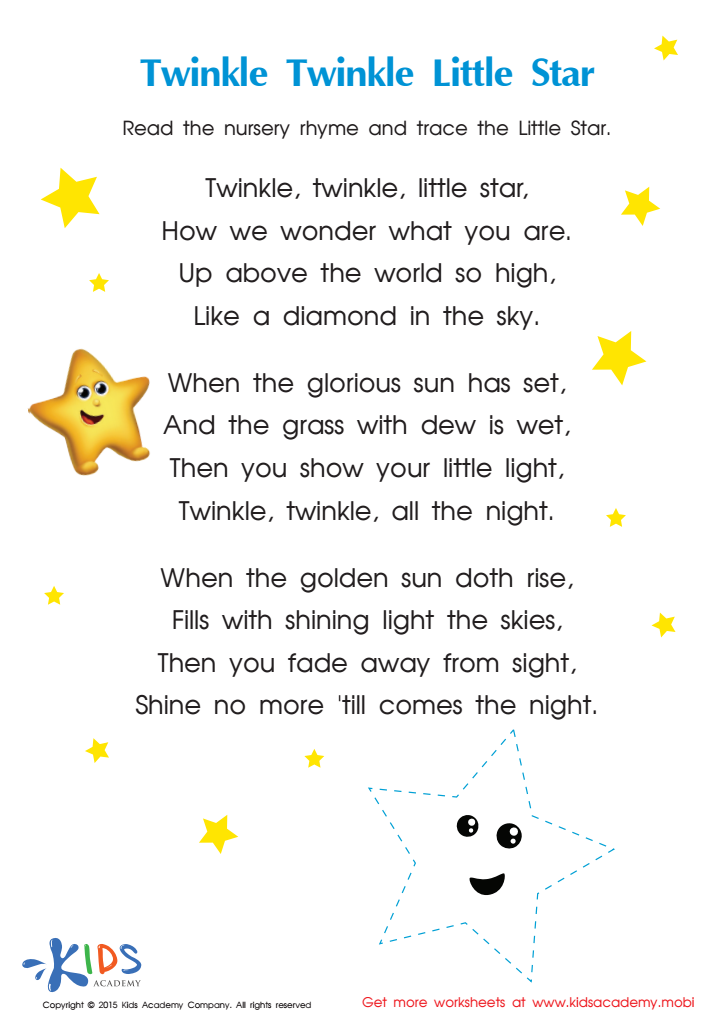
Nursery Rhymes: Twinkle Little Star Worksheet
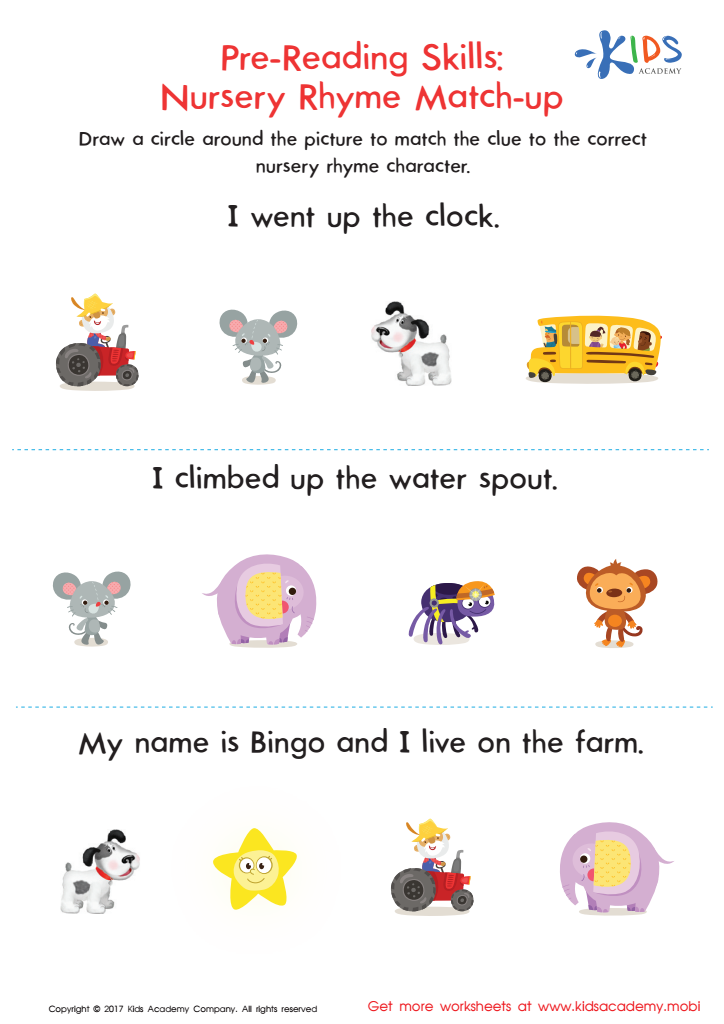
Nursery Rhyme Match–Up Worksheet








Rhyme recognition songs play a crucial role in early literacy development for children aged 4-9. One significant reason parents and teachers should care about these songs is their effectiveness in enhancing phonemic awareness, a foundational skill for reading. When children engage with rhyming songs, they learn to identify and manipulate sounds in words, building their ability to decode unfamiliar words when they begin reading.
Moreover, rhymes contribute to vocabulary expansion. As children are exposed to new words and concepts through catchy tunes, they often remember and use them in conversation or their writing. Rhy rhyming songs are also enjoyable and can motivate children to engage with language actively, promoting a love for reading.
Additionally, these songs often embed critical social skills. Through sing-alongs, children learn to cooperate, take turns, and express themselves, reinforcing emotional and social development. Overall, incorporating rhyme recognition songs into early education nurtures not just reading skills but also language acquisition, cognitive growth, and interpersonal skills, laying a strong foundation for future learning. Thus, the attention of parents and teachers to rhyme recognition songs is essential in fostering a well-rounded educational environment for young learners.








