Counting skills World Around Us Worksheets for Ages 4-9
5 filtered results
-
From - To
Introduce young minds to the joy of counting with our "Counting Skills World Around Us Worksheets for Ages 4-9." These engaging and educational worksheets, available at Kids Academy, encourage children to explore numbers through relatable, real-world contexts. Designed by experts, each activity helps develop foundational math skills, enhances pattern recognition, and promotes critical thinking. Perfect for classroom use or homeschooling, our colorful and interactive sheets ensure learning is fun and effective. Empower your child’s early math journey and watch them build confidence as they count their way through the world around them! Download today and make math moments memorable.
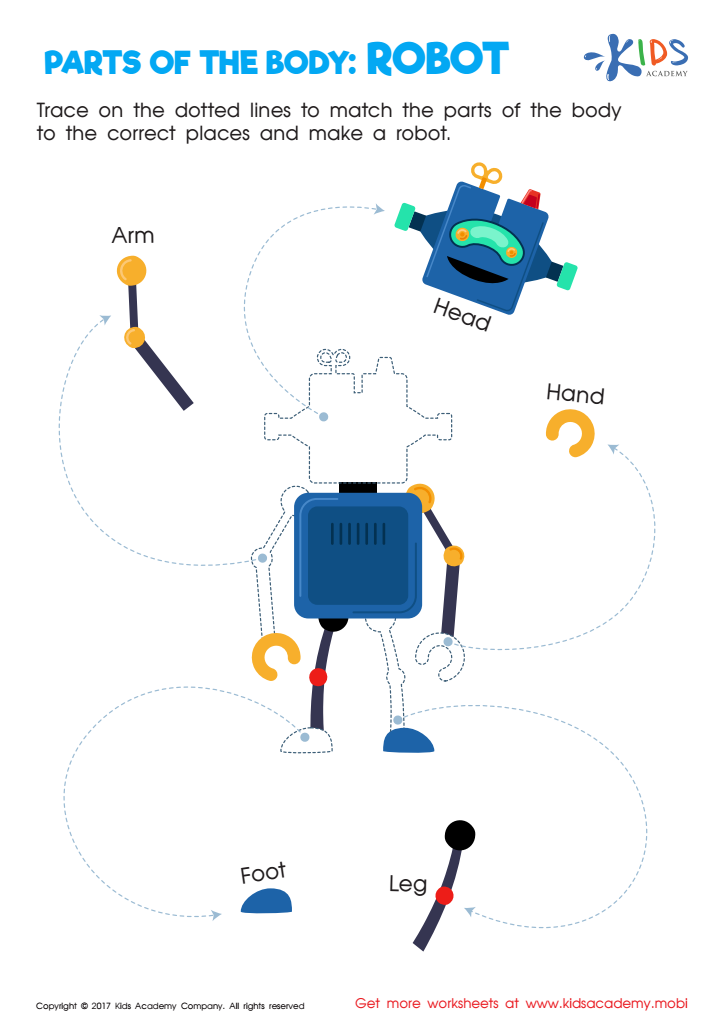
Robot Printable
 Assign to My Students

African Wildlife: Giraffe Worksheet
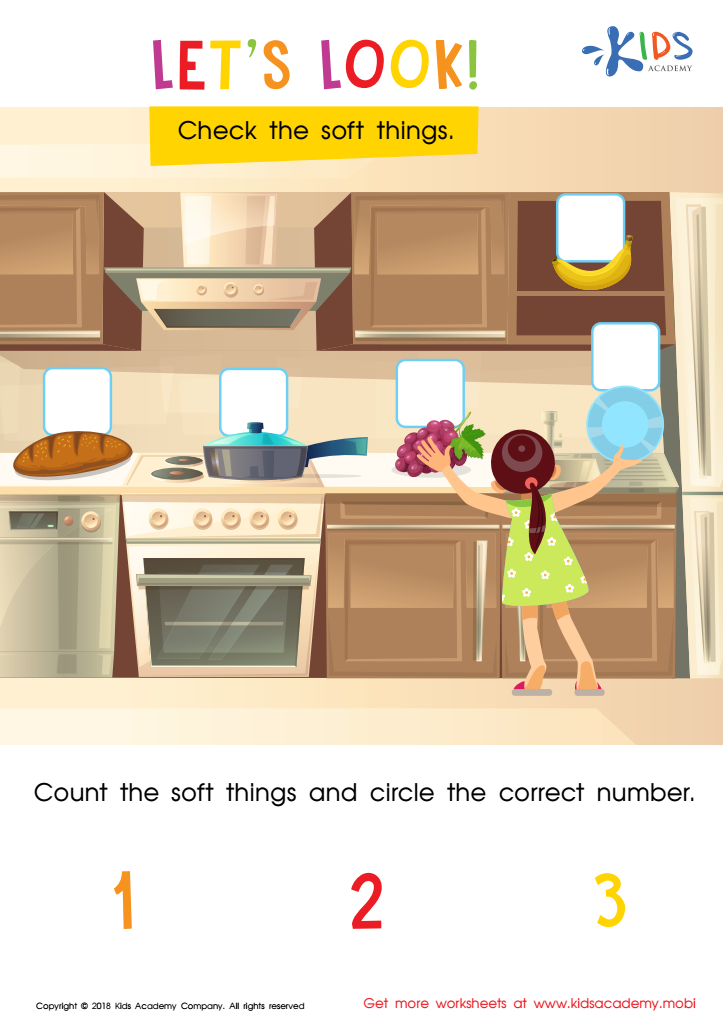
Let's Look! Assessment Worksheet
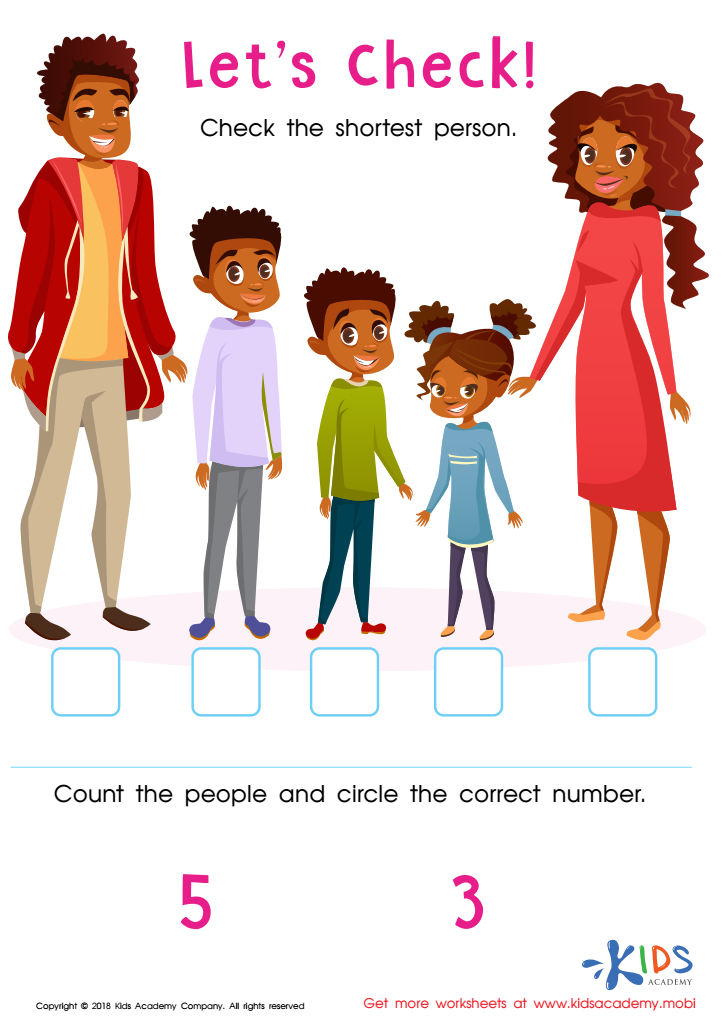
Let's Check! Assessment Worksheet
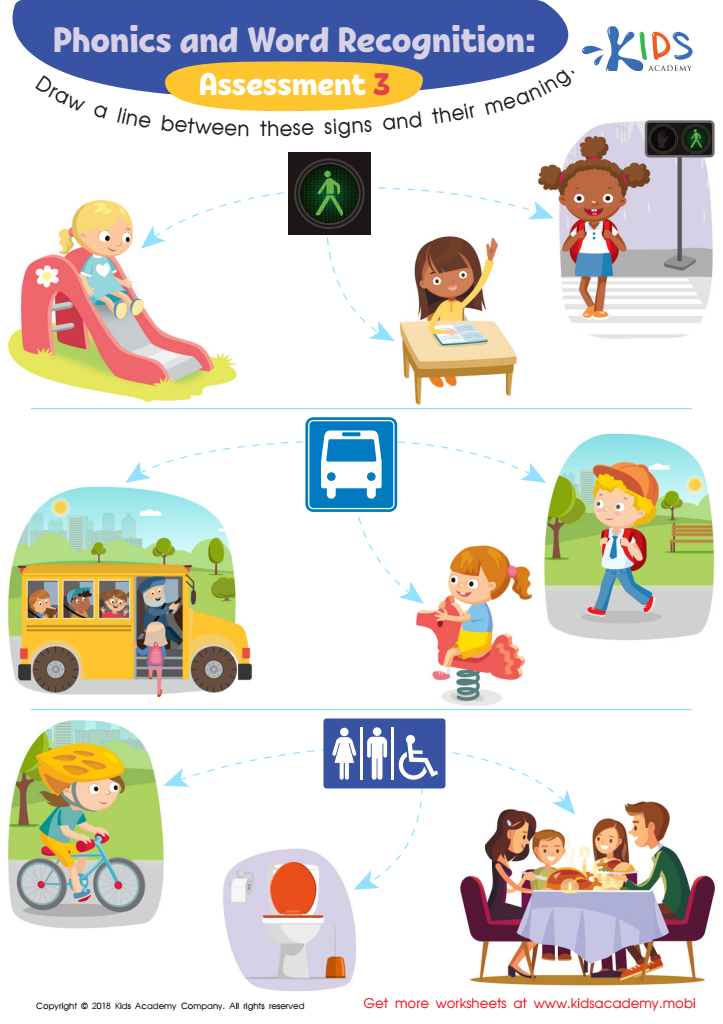
Phonological Awareness: Assessment 3 ELA Worksheet







Counting skills are fundamental in developing a child's mathematical and intellectual abilities, particularly between the ages of 4-9. At this tender age, children are not just learning numbers; they are building a foundation for critical thinking, problem-solving, and analytical skills crucial for everyday life.
Parents and teachers should care about nurturing counting skills because these skills are directly linked to a child's ability to perform more complex mathematical operations in the future. Counting provides the groundwork for addition, subtraction, understanding time, and handling money—all essential life skills. For instance, a child who can count objects will find it easier to grasp the concept of 'more' and 'less,' which later becomes crucial for understanding positive and negative numbers.
Moreover, counting also enhances cognitive development by improving memory, attention to detail, and the ability to follow sequences. It fosters children's curiosity about the world around them, making learning interactive and engaging. Using everyday contexts, such as counting apples at the grocery store or steps on a staircase, shows children that mathematics is not an isolated subject but an integral part of their lives.
By supporting counting skills early on, parents and teachers help instill confidence and a positive attitude towards learning, setting a successful educational trajectory. Therefore, paying attention to these fundamental skills should be a priority in early childhood education.