Vocabulary enhancement Weather Worksheets for Ages 4-9
3 filtered results
-
From - To
Explore our engaging Vocabulary Enhancement Weather Worksheets tailored for children ages 4-9! These interactive activities are designed to enrich young minds with essential weather-related vocabulary. Kids will learn about various weather phenomena through fun exercises, including matching, fill-in-the-blank, and word searches. Our worksheets encourage creativity and critical thinking while fostering a love for learning about the environment. Perfect for home or classroom use, these resources help to build foundational language skills essential for academic success. Dive into the world of weather with vibrant illustrations and easy-to-understand instructions that make learning enjoyable for every child. Start your journey to language mastery today!
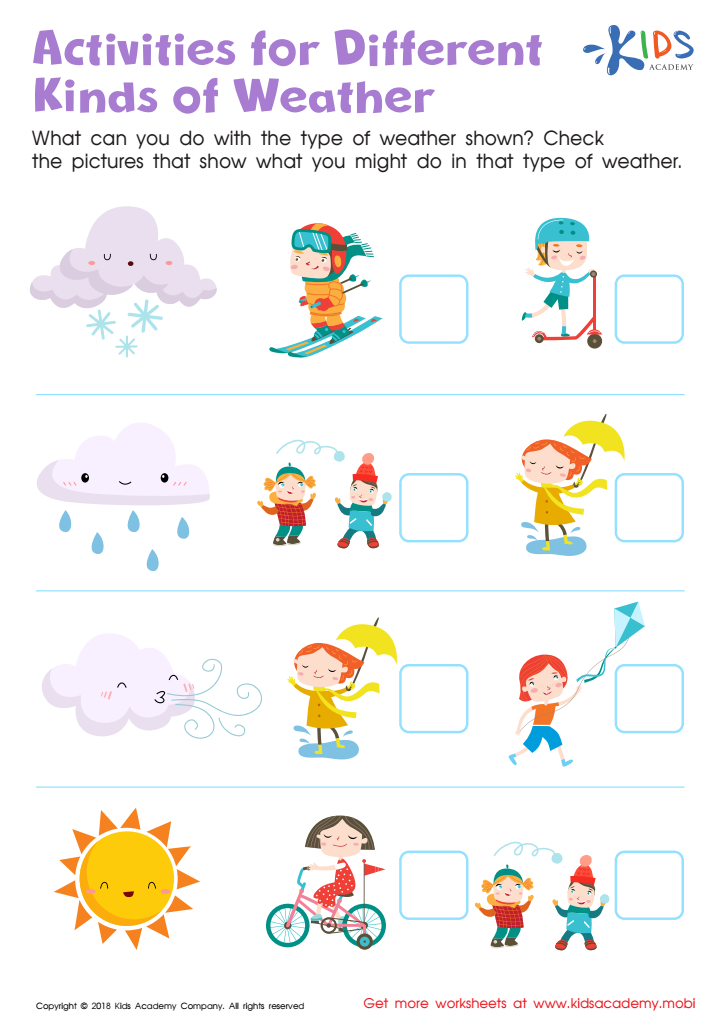
Activities for Different Kinds of Weather Worksheet
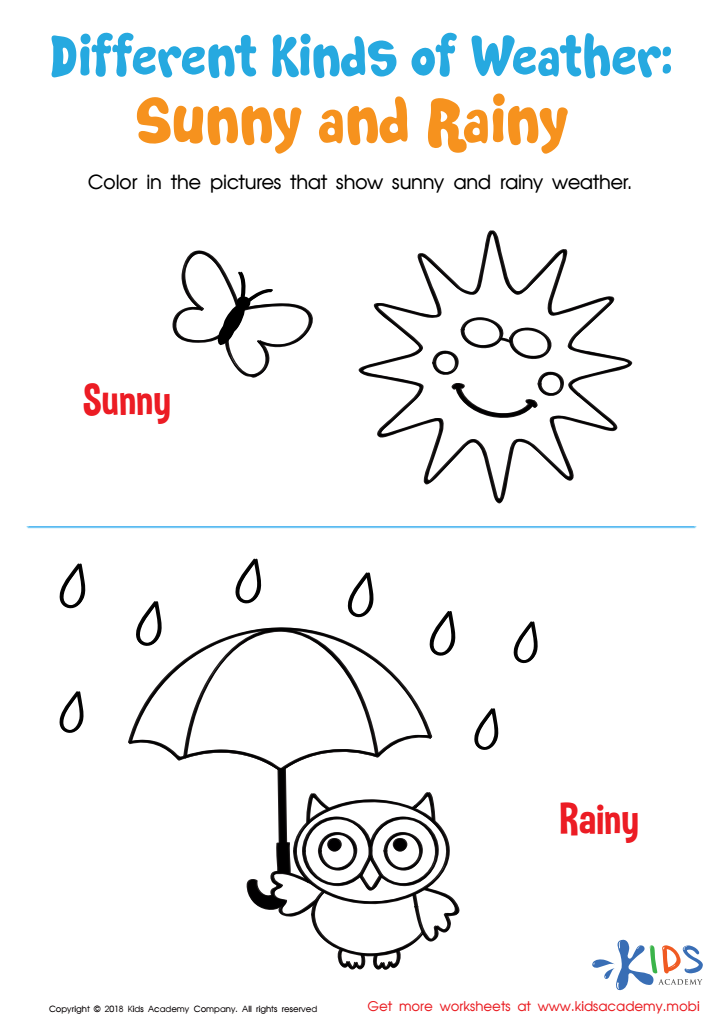
Different Kinds of Weather: Sunny and Rainy Worksheet
 Assign to My Students
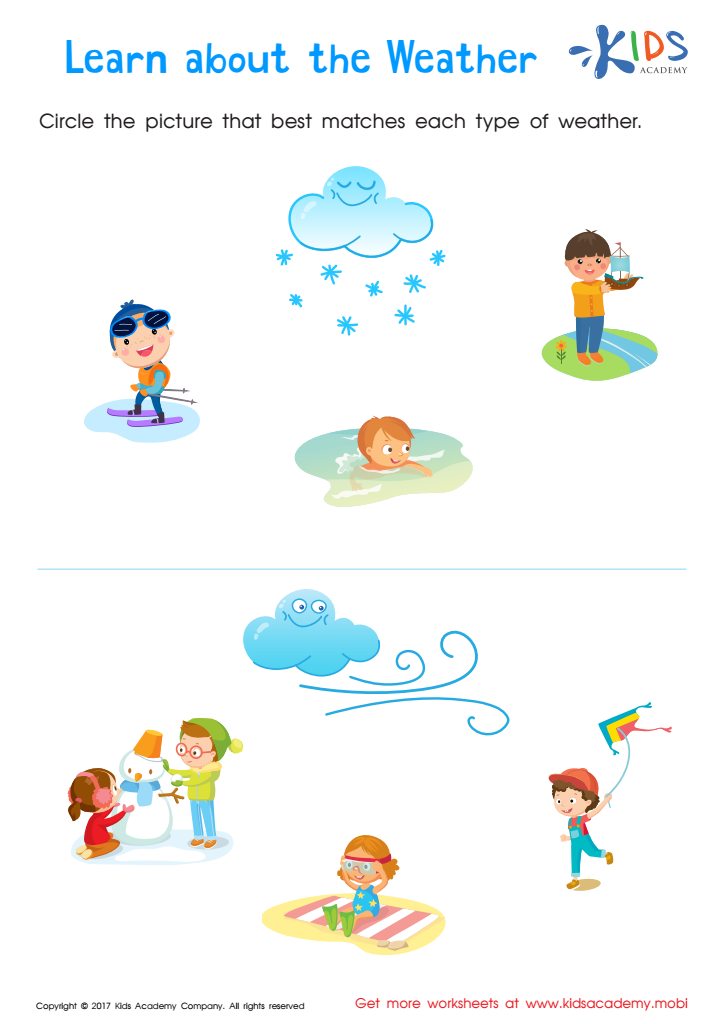
About the Weather Printable








Vocabulary enhancement related to weather for children aged 4-9 is vital for multiple reasons. Firstly, this age group is naturally curious about the world around them, and weather is a relatable, everyday subject. Developing terminology connected with weather—such as “storm,” “cloud,” “sunny,” and “temperature”—promotes children’s ability to describe their experiences and articulate their thoughts, helping them to engage in conversations about their environment.
Additionally, strong vocabulary skills are essential for reading comprehension and academic success. Children with a rich vocabulary typically find it easier to understand storylines and concepts in their reading materials. By introducing weather-related vocabulary, parents and teachers can lay a strong foundation for literacy development.
Furthermore, an understanding of weather can also foster emotional intelligence, as children learn to express their feelings about different weathers, such as happiness on a sunny day or sadness during rain. Vocabulary acquisition at this young age encourages critical thinking and aids in scientific inquiry as children begin to ask questions about weather patterns and climate.
Ultimately, enriching children's vocabulary in this context not only supports language and literacy but also nurtures their curiosity, emotional awareness, and cognitive skills, laying the groundwork for lifelong learning.