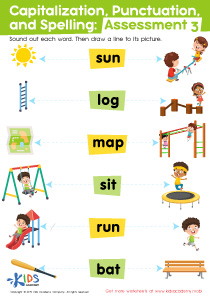
Improving vocabulary Grammar Worksheets for Ages 4-9
6 filtered results
-
From - To
Enhance your child's language skills with our "Improving Vocabulary Grammar Worksheets" designed for ages 4 to 9. These engaging worksheets provide a fun way for young learners to expand their vocabulary and strengthen their grammar abilities. Each worksheet includes age-appropriate exercises that focus on key concepts like word meanings, synonyms, and sentence structure. Ideal for use at home or in the classroom, these resources help children develop essential communication skills while fostering a love for learning. Discover a variety of interactive activities that challenge and inspire your child to express themselves confidently and creatively. Perfect for young linguists!
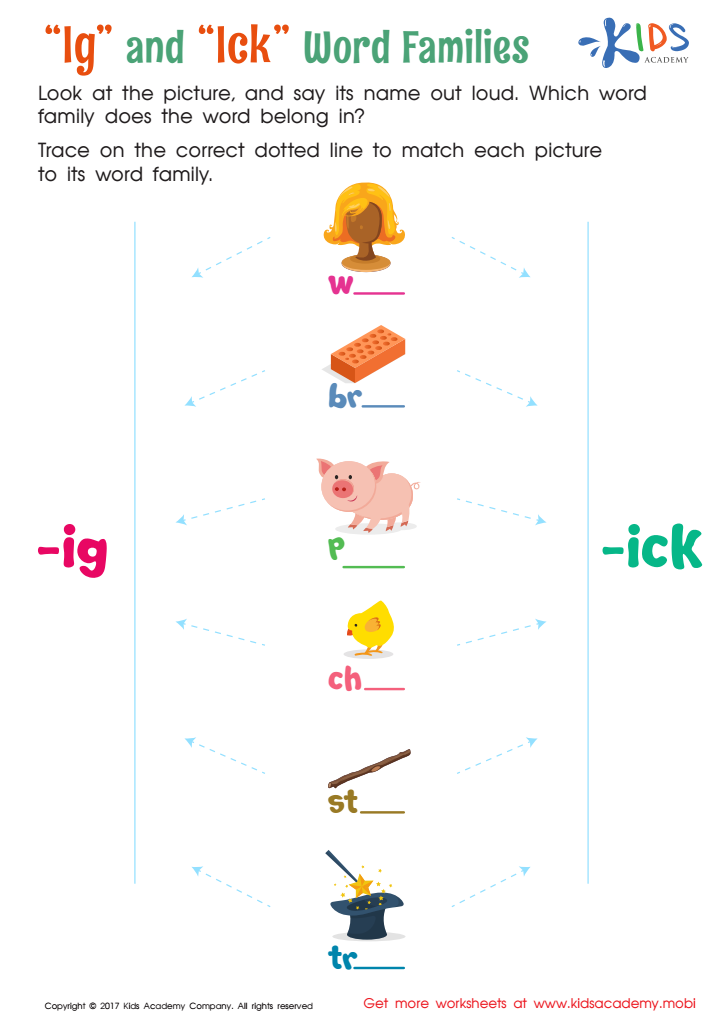
Words Families "ig" and "ick" Spelling Worksheet
 Assign to My Students
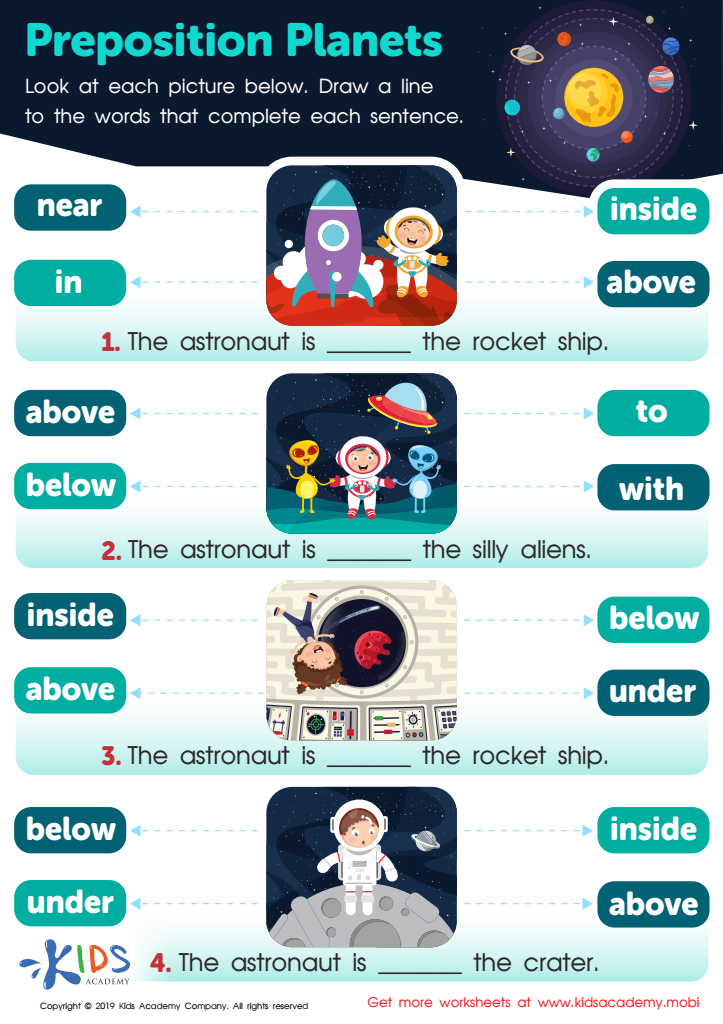
Preposition Planets Worksheet
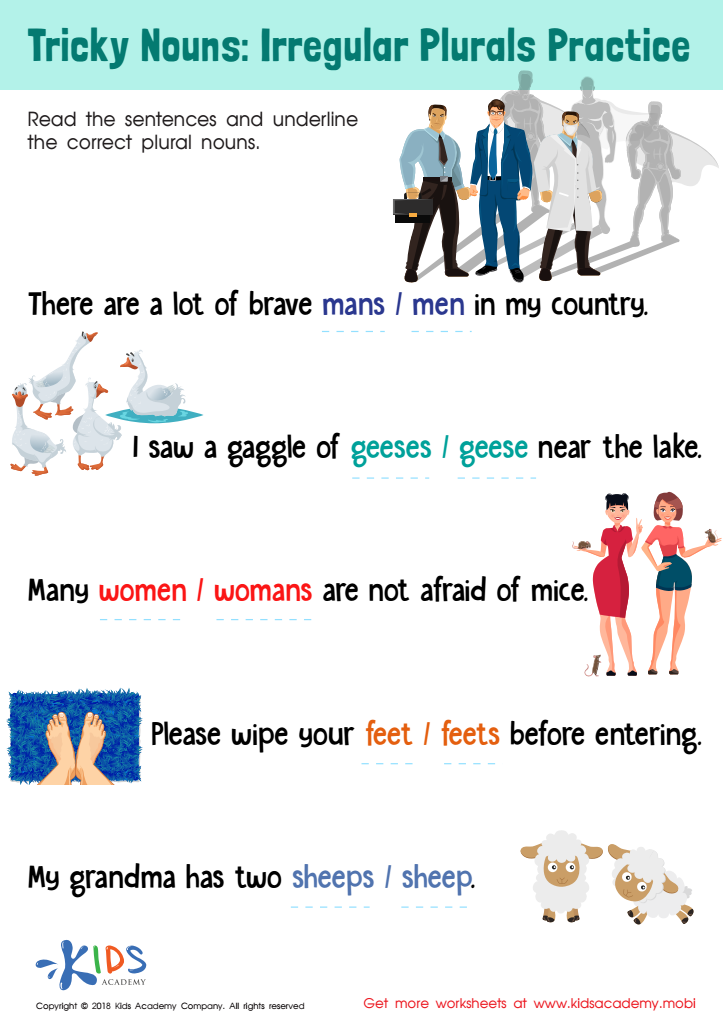
Tricky Nouns: Irregular Plurals Practice Worksheet
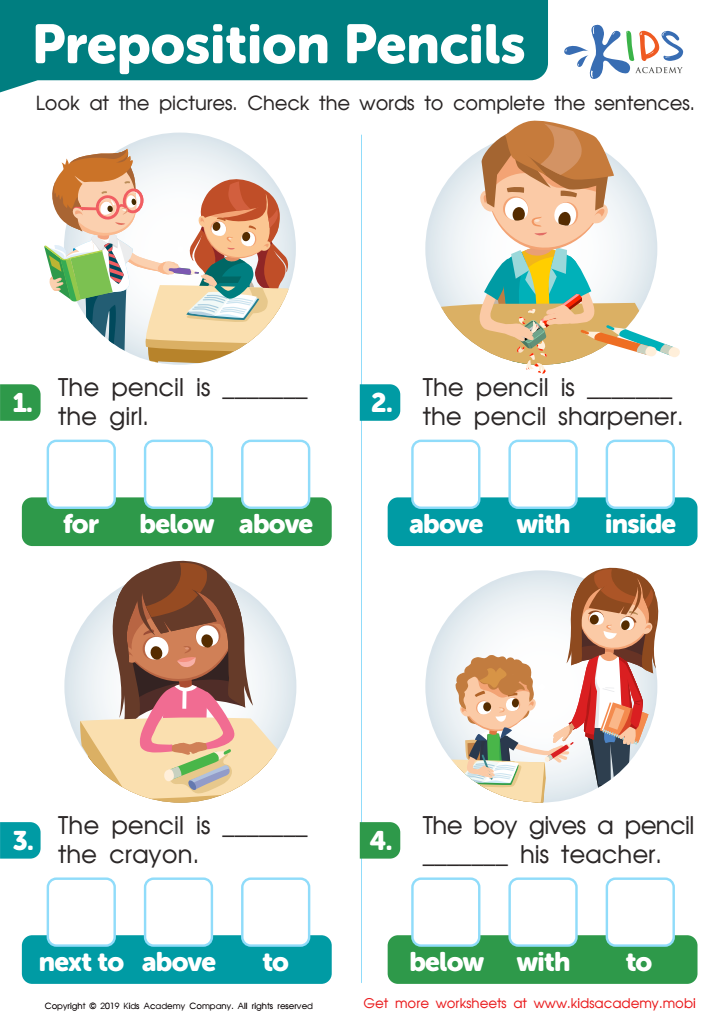
Preposition Pencils Worksheet
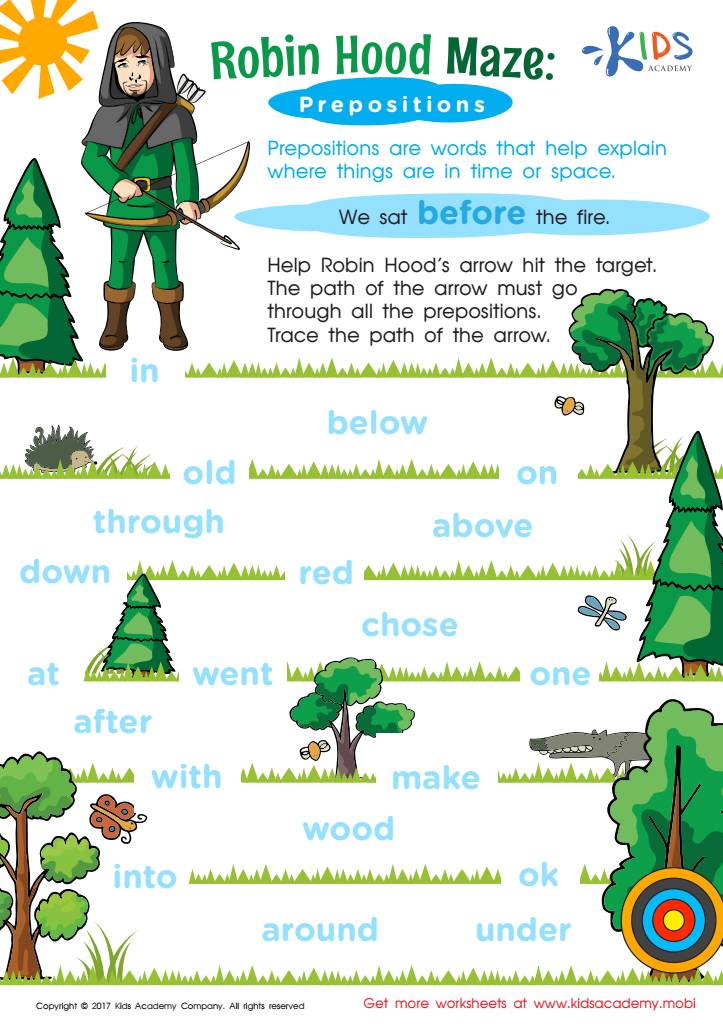
Prepositions Worksheet
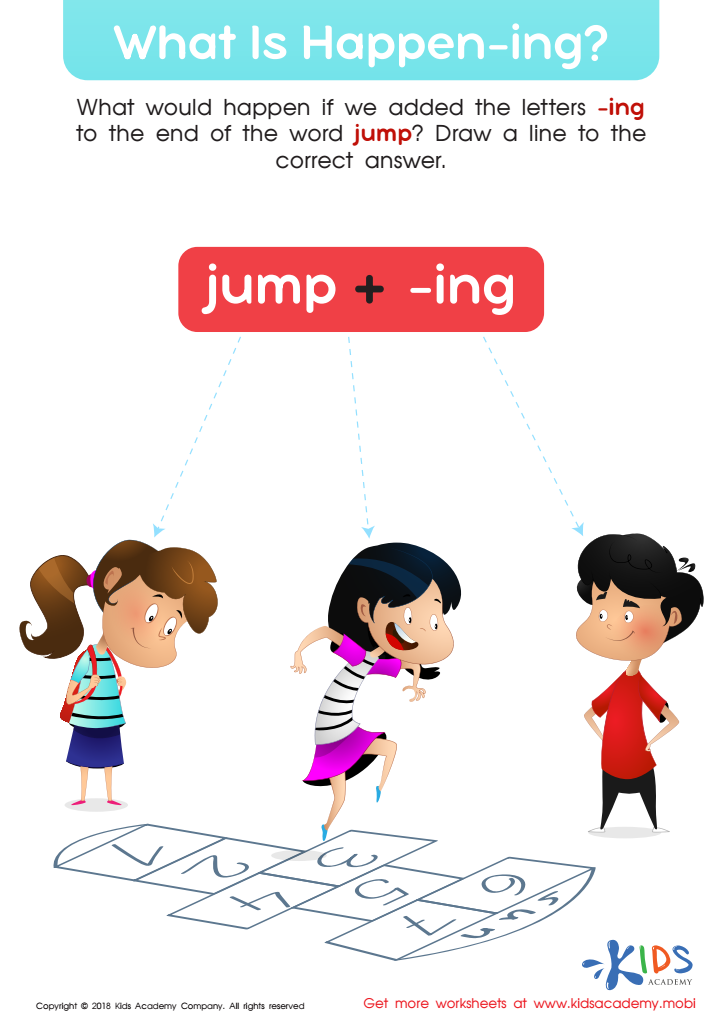
What Is Happen-Ing? Worksheet






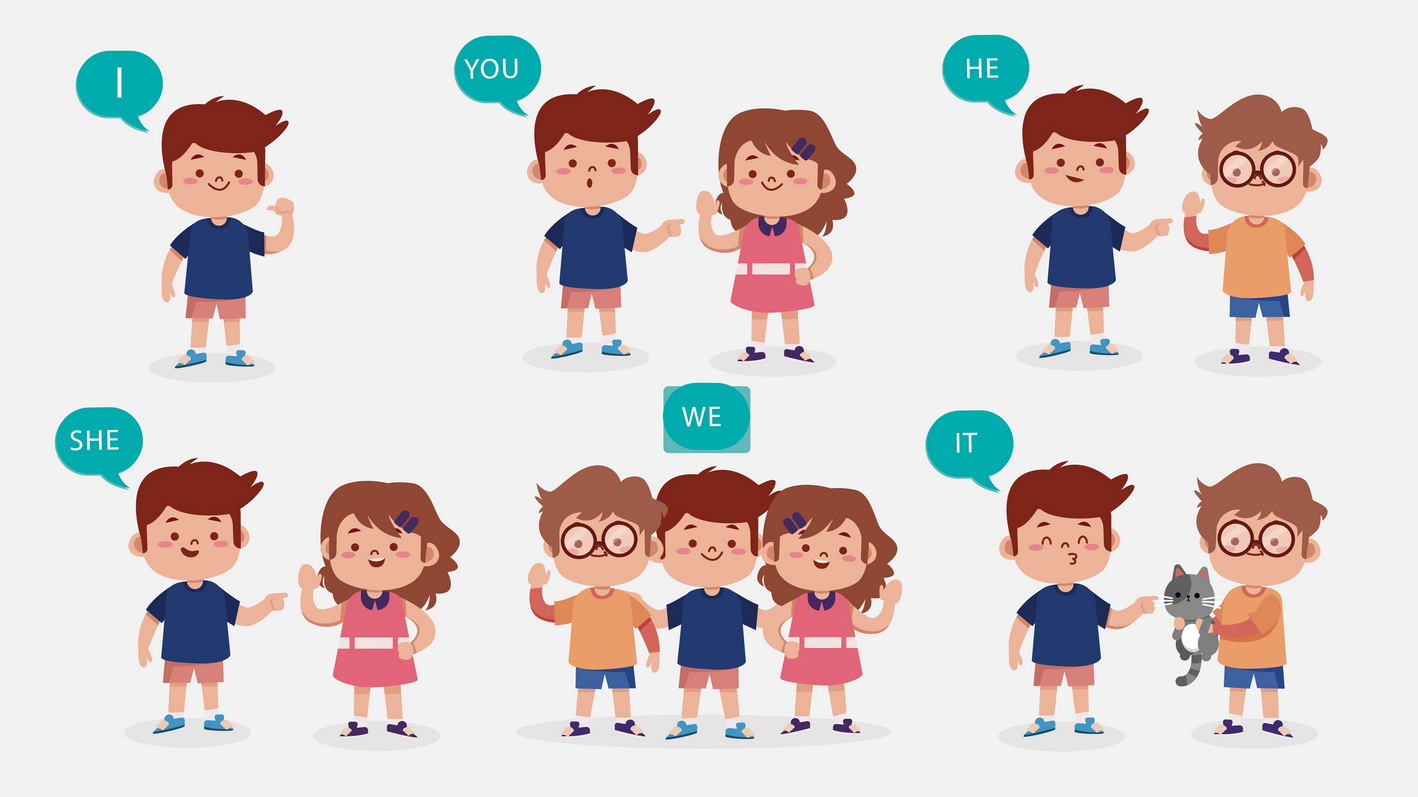
Improving vocabulary and grammar for children aged 4-9 is essential for several reasons. First, this developmental stage is crucial for language acquisition; children are naturally inclined to absorb new words and structures. A rich vocabulary helps them express their thoughts, feelings, and ideas more clearly, serving as a foundation for effective communication throughout their lives.
Moreover, strong vocabulary and grammar skills enhance reading comprehension. As children progress in their education, they encounter increasingly complex texts. A solid grasp of language mechanics aids in understanding and interpreting information, which is vital for academic success.
Additionally, language skills are linked to cognitive development and critical thinking. When children engage with diverse vocabulary and grammatical structures, they develop better analytical and reasoning skills. Furthermore, language proficiency has social implications, facilitating positive interactions with peers and adults, which is important for building self-confidence and social skills.
Ultimately, by prioritizing vocabulary and grammar, parents and teachers equip children with essential tools that contribute to their overall educational development, future literacy, and lifelong learning. Building these foundational skills early on can pave the way for more sophisticated language abilities later in life.