Phonics skills improvement Grammar Worksheets for Ages 4-9
3 filtered results
-
From - To
Enhance your child's reading and writing abilities with our Phonics Skills Improvement Grammar Worksheets, designed for ages 4-9. These engaging worksheets are perfect for young learners to explore sounds, blend letters, and develop essential phonics skills. Our carefully crafted activities foster literacy confidence, making phonics fun and accessible. Each worksheet aligns with educational standards to support your child's learning journey, whether at home or in the classroom. Boost your child's phonetic understanding and comprehension with interactive exercises that stimulate interest and promote active learning. Discover the joy of mastering phonics and watch your child thrive as they build a strong foundation for language skills!
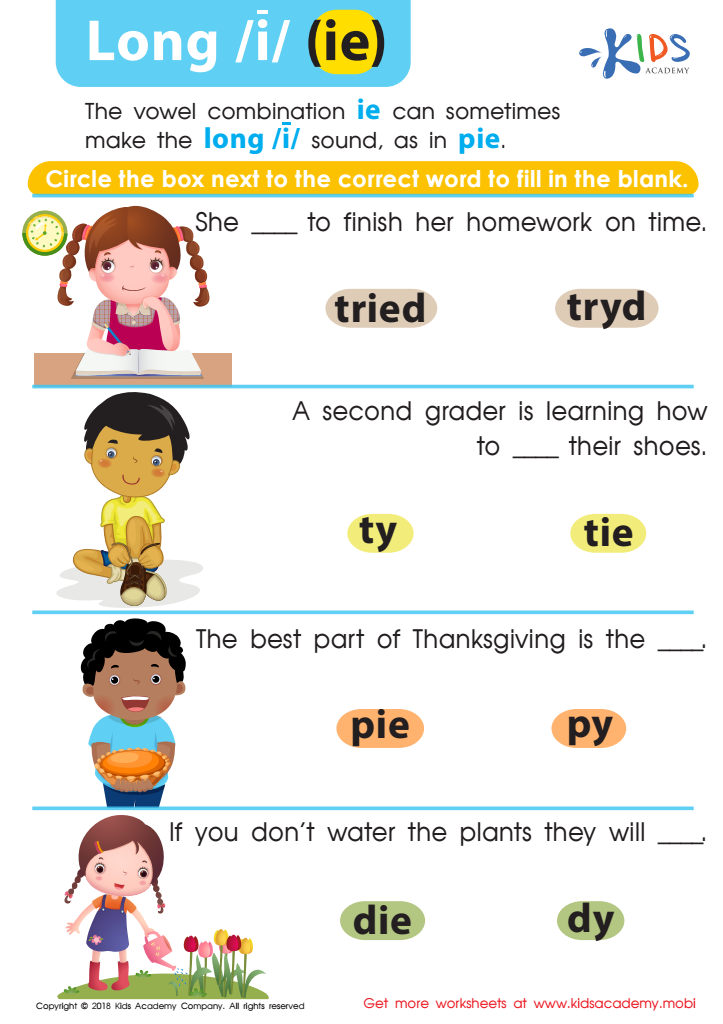
Reading: Long I and IE Worksheet
 Assign to My Students
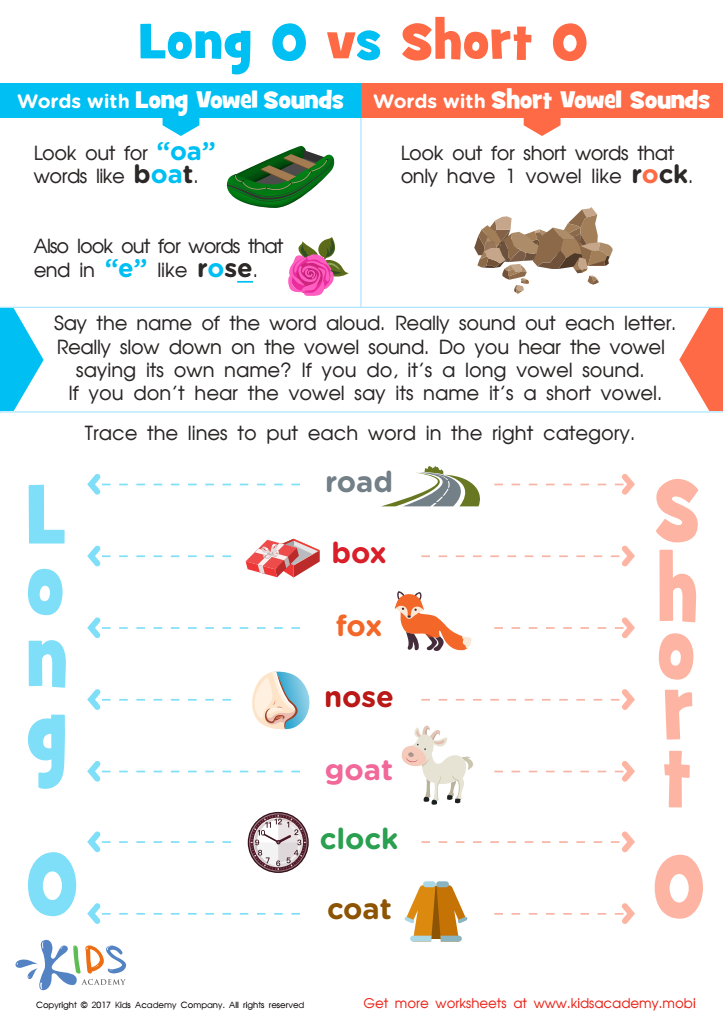
Long and Short Vowel O Spelling Worksheet
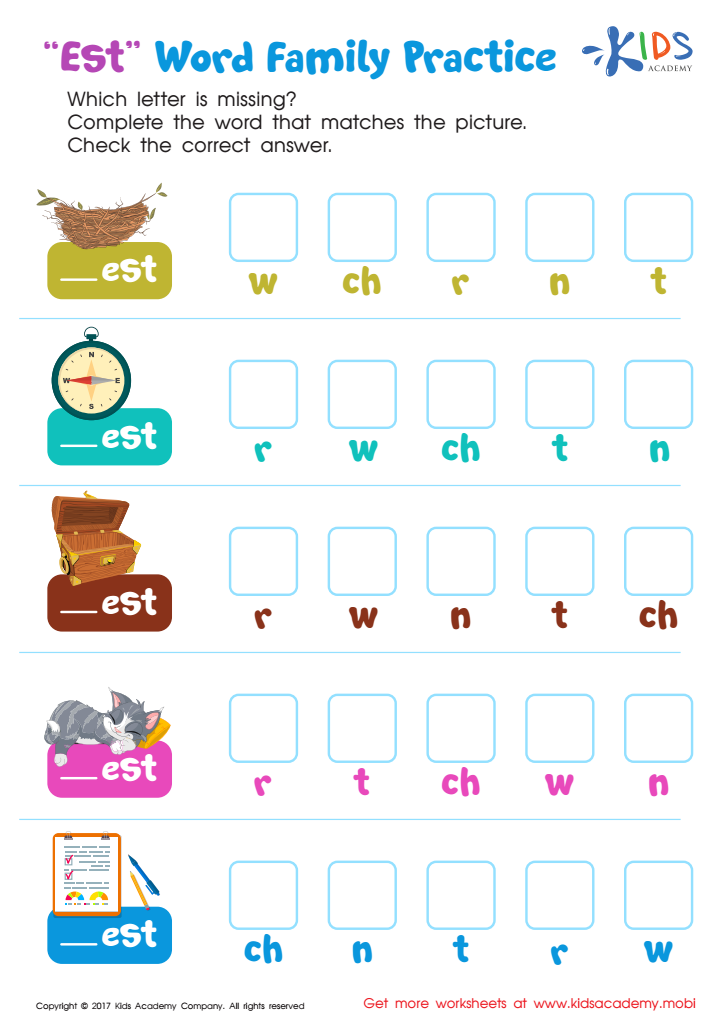
Words Family "est" Spelling Worksheet







Phonics skills play a crucial role in a child’s early literacy development. For children ages 4-9, mastering phonics is essential for reading fluency and comprehension, as it provides the foundational skills needed to decode words. Understanding the relationship between letters and sounds enables children to recognize familiar patterns in language, which in turn builds confidence and motivation in reading.
Parents and teachers should prioritize phonics improvement because it enhances overall academic performance. Children who are proficient in phonics are better equipped to tackle more complex texts, leading to improved literacy across subjects, including writing and comprehension activities. Strong phonics skills also support the development of grammar, as children learn to construct sentences correctly and understand the rules of language.
Furthermore, early phonics intervention can prevent reading difficulties later on. By fostering these skills in a supportive environment, parents and educators can help children develop a lifelong love for reading and learning. Ultimately, investing time and resources in phonics skill improvement yields significant long-term benefits, paving the way for successful communication and expression throughout a child's educational journey. Prioritizing phonics ensures that all children have the tools they need to succeed in an increasingly literacy-centric world.








