
Logical thinking Writing Worksheets for Ages 4-9
4 filtered results
Difficulty Level
Grade
Age
-
From - To
Subject
Activity
Standards
Enhance your child's problem-solving abilities with our "Logical Thinking Writing Worksheets for Ages 4-9". Specially designed to boost cognitive skills, these fun and engaging activities nurture analytical thinking, sequencing, and reasoning. Kids will enjoy puzzles, match-ups, patterns, and story-based exercises, making learning enjoyable. Our worksheets provide a foundation for future academic success and support early writing development. Ideal for both parents and teachers, these resources make learning interactive and rewarding. Foster critical thinking in young minds and set them up for success in school and beyond with our expertly crafted worksheet collection.
Favorites
With answer key
Interactive
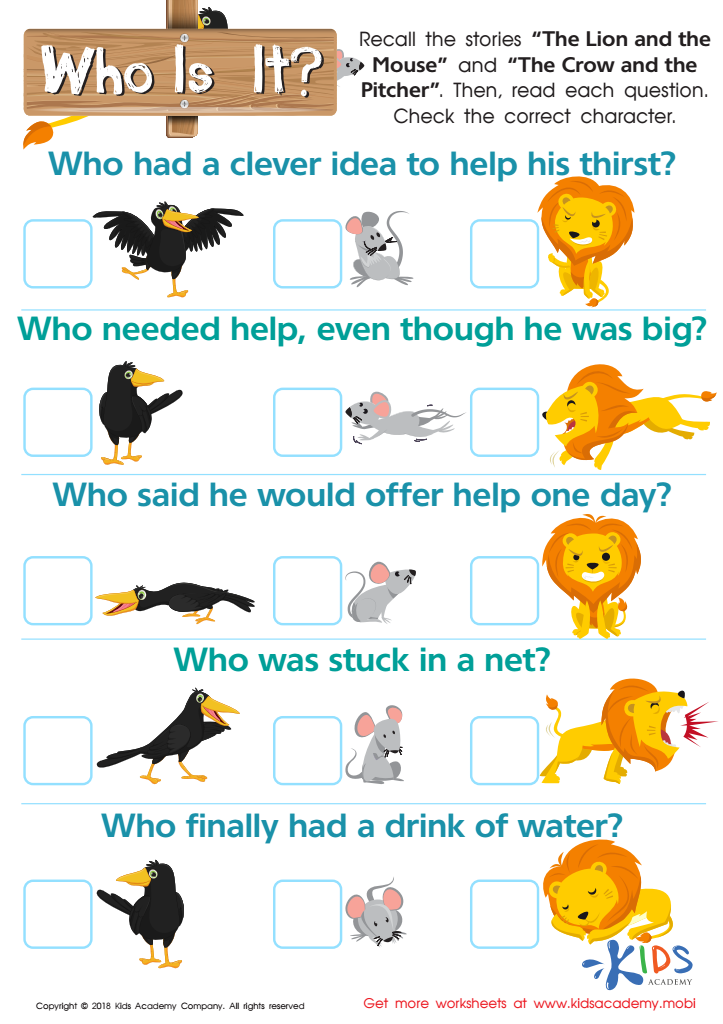
Who Is It? Worksheet
This worksheet helps students recall details from The Crow and the Pitcher and The Lion and the Mouse stories. Students will answer questions about the characters' actions. Use it to assess their understanding of both stories, as this is a key comprehension skill.
 Assign to My Students
Who Is It? Worksheet
Worksheet
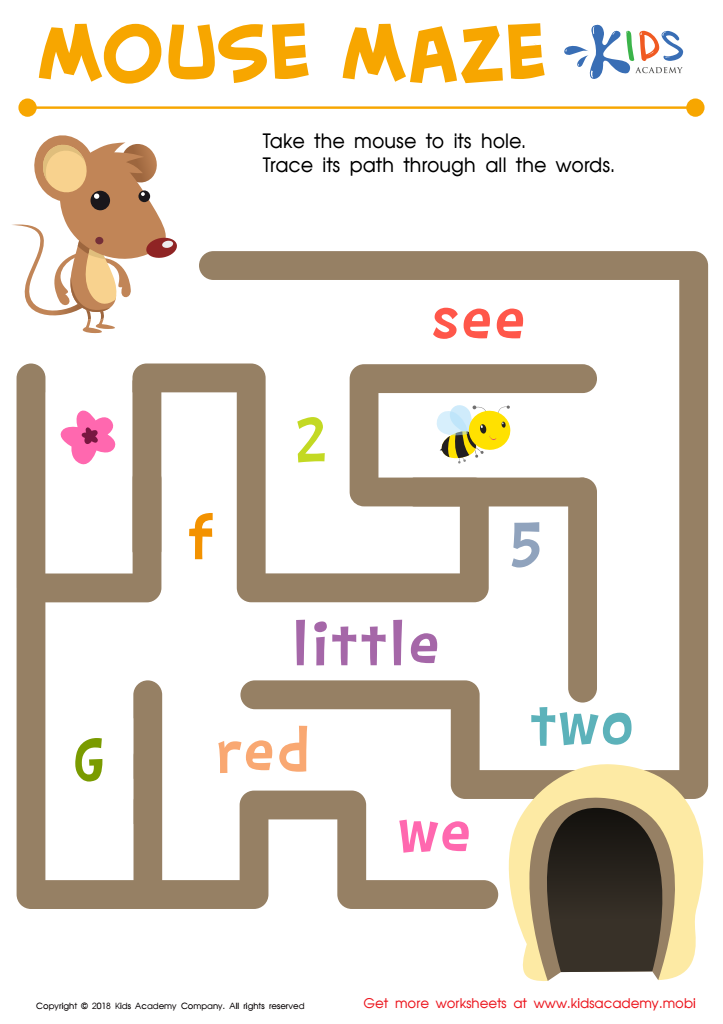
Find Words Mouse Maze Worksheet
Help your child identify words and guide the mouse home! Ask them to point out the colorful animal on the worksheet, then take their hand and show them how to trace the path, going through all the words in the maze to get the mouse back to its hole.
Find Words Mouse Maze Worksheet
Worksheet
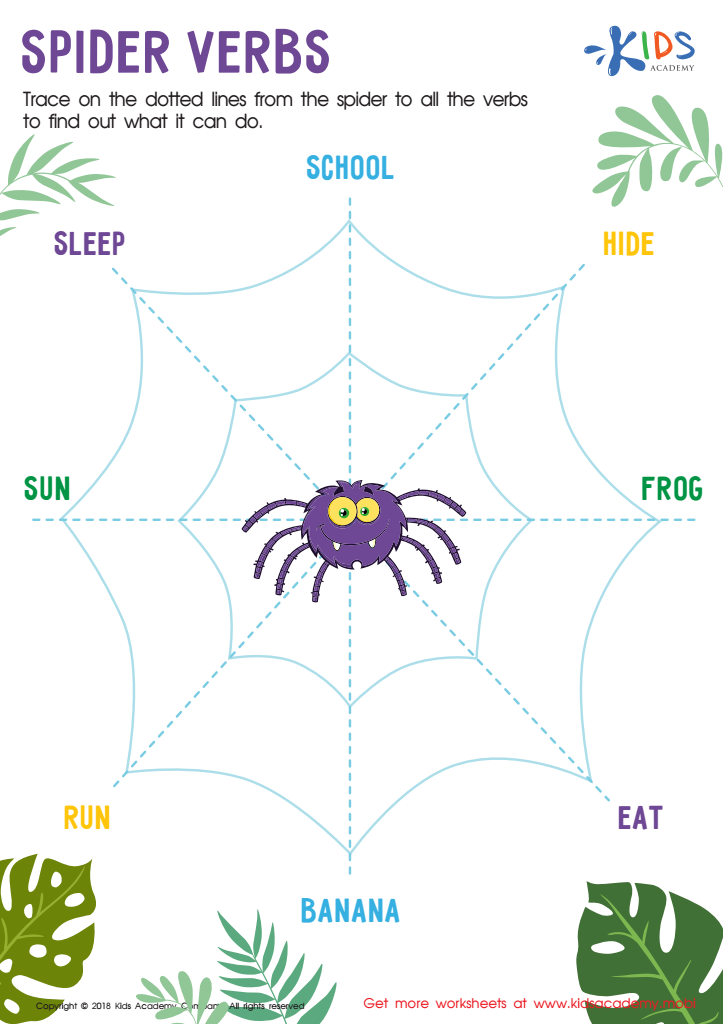
Spider Verbs Worksheet
Verbs are action words. Examples: run, play, talk. Show your child this tracing sheet for them to learn about verbs. Ask them to trace the dotted lines from the spider to the words that are verbs. These words are what the spider can do.
Spider Verbs Worksheet
Worksheet
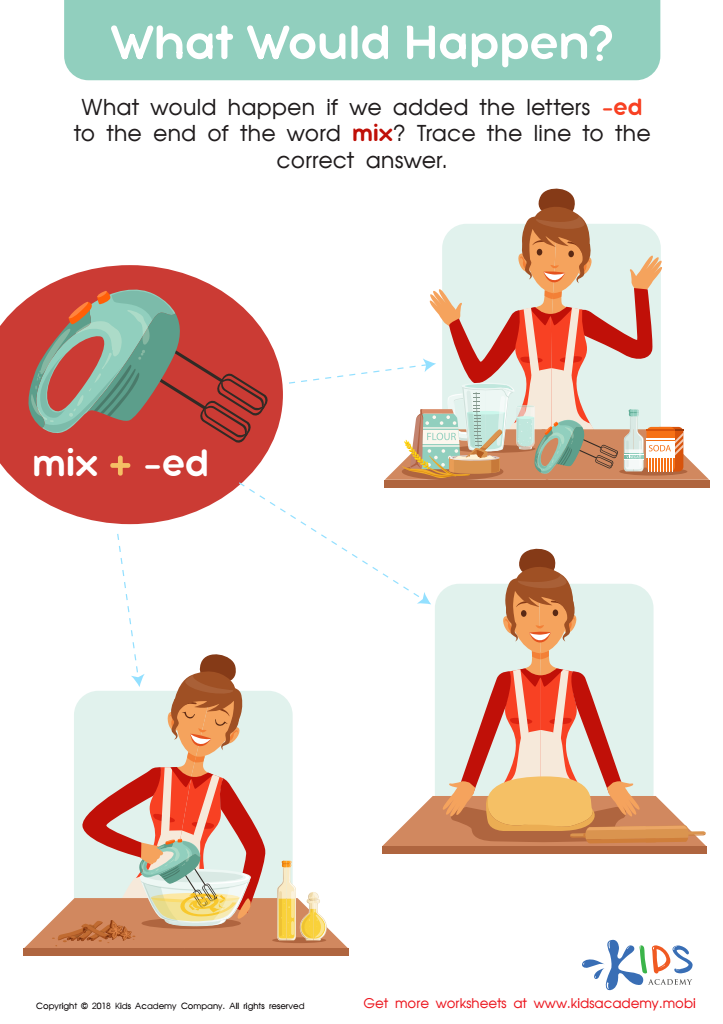
What Would Happen? Worksheet
Are your kids struggling with tenses? Use this worksheet to help them. See what they know by asking them to add '-ed' to the end of 'mix'. Guide them through the tracing sheet as they look for the correct answer.
What Would Happen? Worksheet
Worksheet
Join Kids Academy for Free
Who is primarily going to use this learning content?







Parents and teachers should recognize the significance of nurturing logical thinking and writing skills in children aged 4-9 as both are foundational elements crucial for their intellectual development and future academic success. At this formative stage, their cognitive abilities are rapidly evolving, making it a critical period to introduce logical reasoning. Logical thinking helps children process information, make connections, and solve problems systematically, fostering a clear and structured thought process that supports broader learning experiences.
When incorporated into writing exercises, logical thinking enhances children’s ability to articulate ideas coherently and sequentially. This skill not only bolsters their written communication but translates into other areas such as storytelling, math problem-solving, and understanding cause-and-effect relationships in science. These exercises also encourage children to reflect on their ideas and improve their concentration and creativity.
Moreover, cultivating logical thinking and writing skills at an early age equips children with the ability to discern patterns, evaluate evidence, and make informed decisions. This nurtures their confidence and autonomy in learning, enabling them to tackle academic challenges with resilience and innovation. For parents and teachers, focusing on these skills paves the way for well-rounded, critical thinkers prepared to navigate an increasingly complex world.








