Letter recognition Tracing Words Worksheets for Ages 4-9
3 filtered results
-
From - To
Discover our engaging Letter Recognition Tracing Words Worksheets designed for children ages 4-9. These fun, printable resources help young learners develop essential pre-writing skills through tracing activities that enhance letter recognition and fine motor skills. Each worksheet presents vibrant illustrations and age-appropriate words, making learning interactive and enjoyable. By combining play with education, children practice letter formation while fostering their vocabulary and reading readiness. Perfect for classroom settings or homeschooling, our worksheets offer a structured approach to reinforcing literacy fundamentals. Unlock your child's potential and inspire a love for writing with our comprehensive tracing worksheets today!
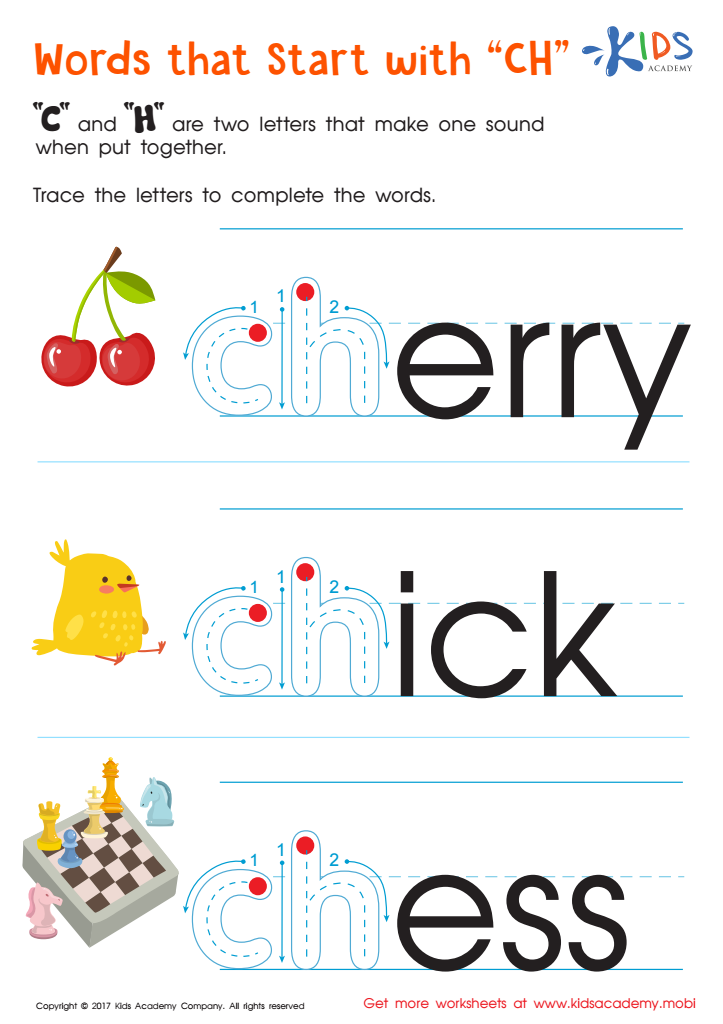
Words That Start with "ch" Spelling Worksheet
 Assign to My Students
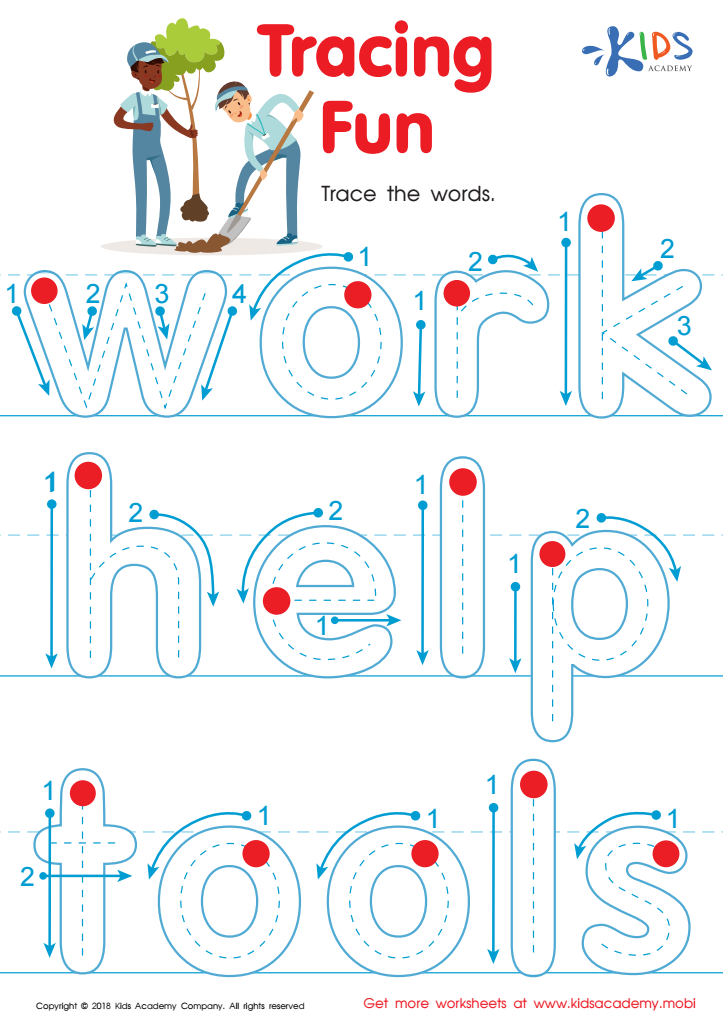
Tracing Fun Worksheet
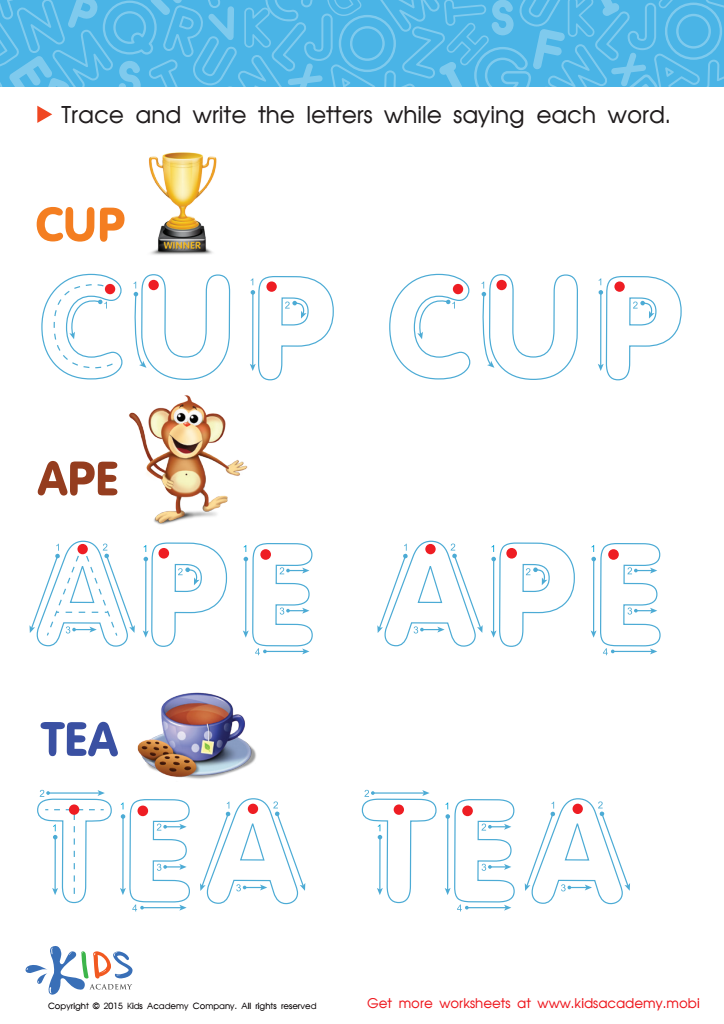
A Cup, an Ape and Tea Spelling Worksheet







Letter recognition and tracing words are fundamental skills for children aged 4-9, forming the foundation of literacy development. For parents and teachers, understanding the significance of these skills is crucial as they play a pivotal role in early education.
Letter recognition helps children identify and differentiate letters, which is essential for reading. The ability to recognize both uppercase and lowercase letters sets the stage for decoding words and understanding printed language. Tracing words further reinforces this, as it helps children with fine motor skills, hand-eye coordination, and spatial awareness.
Engaging in tracing activities also enhances cognitive development; it reinforces memory recall, attention to detail, and the ability to follow sequences. As children practice, they gain confidence in their writing abilities, which leads to improved literacy skills over time. Moreover, cultivating these skills early can spark a lifelong love for reading and writing.
Supporting children in mastering letter recognition and tracing promotes self-expression and communication abilities. In an increasingly literate world, ensuring that children develop these foundational skills empowers them to succeed academically and socially, fostering a positive and enriching learning environment. In essence, investing time and resources into this area is crucial for holistic child development.








