
Letter identification Alphabet Worksheets for 4-Year-Olds
4 filtered results
Difficulty Level
Grade
Age
-
From - To
Subject
Activity
Standards
Enhance your preschooler's learning experience with our engaging Letter Identification Alphabet Worksheets designed specifically for 4-year-olds! These worksheets focus on helping young learners recognize and distinguish letters through fun activities and colorful illustrations. Each activity promotes early literacy skills while encouraging creativity and critical thinking. Kids will enjoy tracing, coloring, and identifying letters, making learning enjoyable and interactive. These printable worksheets align with early childhood education standards, ensuring a comprehensive approach to alphabet identification. Perfect for home or classroom use, our worksheets provide the essential foundation for your child's reading journey. Start their learning adventure today!
Favorites
With answer key
Interactive
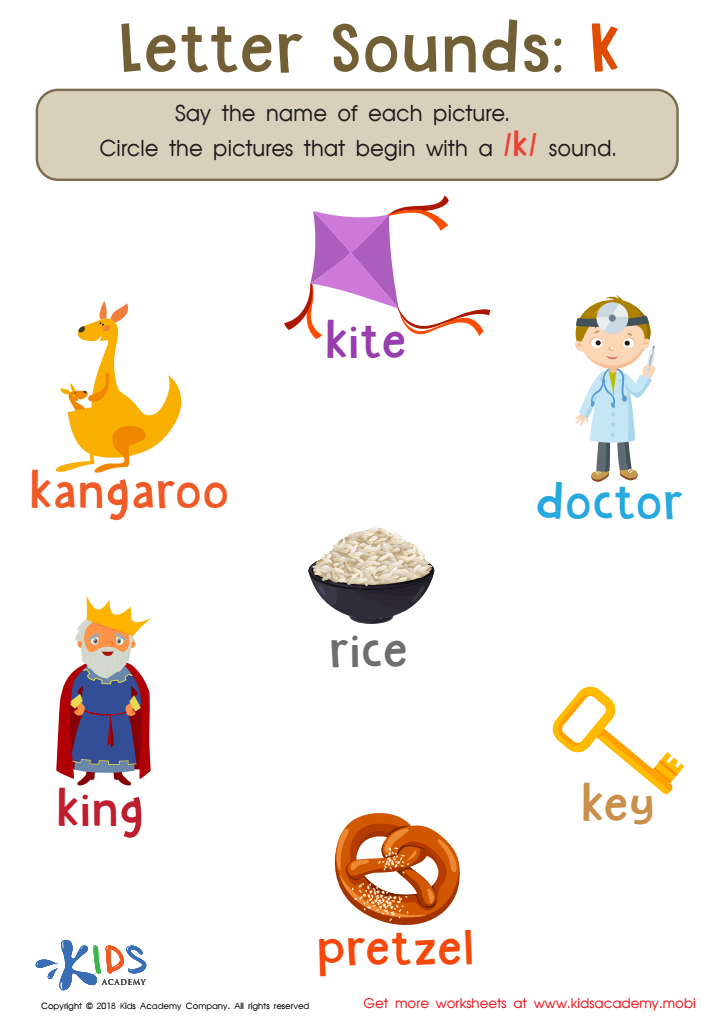
Letter K Sounds Worksheet
Help your child practice phonics with Kids Academy's illustrated worksheet! Have them look at the pictures, read the words and say them aloud. Only circle those that start with a hard 'K' sound. Perfect for preschoolers and kindergarteners! Plus, they'll learn the silent K used in a few words.
 Assign to My Students
Letter K Sounds Worksheet
Worksheet
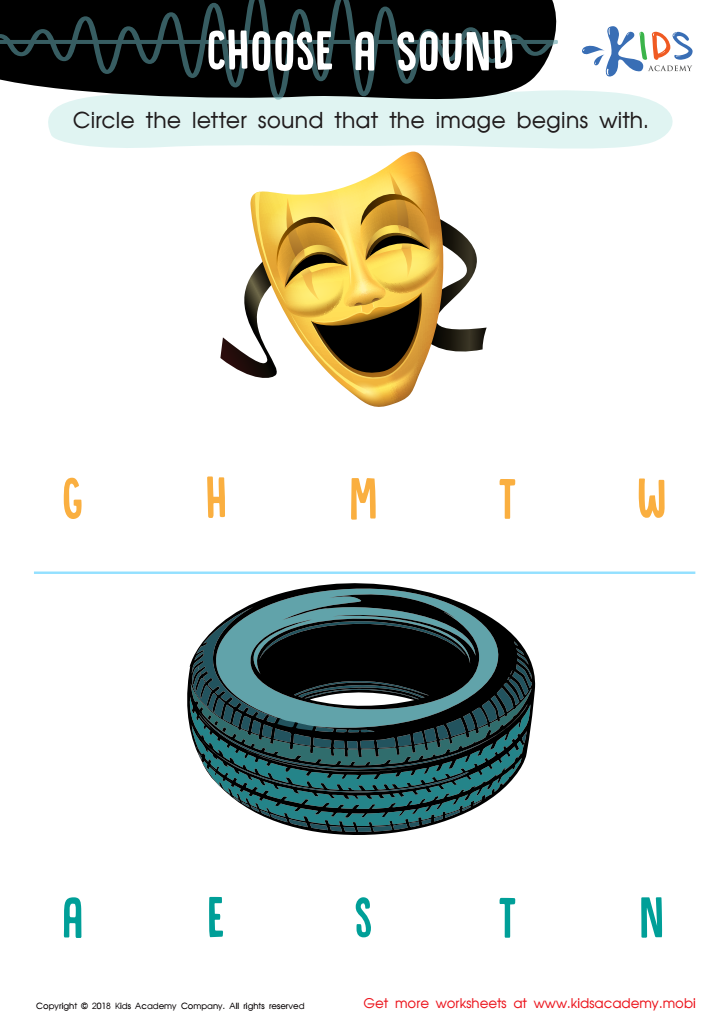
Choose a Sound Worksheet
Help your child hone pre-reading skills with this colorful worksheet! They'll practice tracing letter sounds, develop phoneme awareness, and gain confidence. Plus, it's a fun way to work on their fine motor skills.
Choose a Sound Worksheet
Worksheet
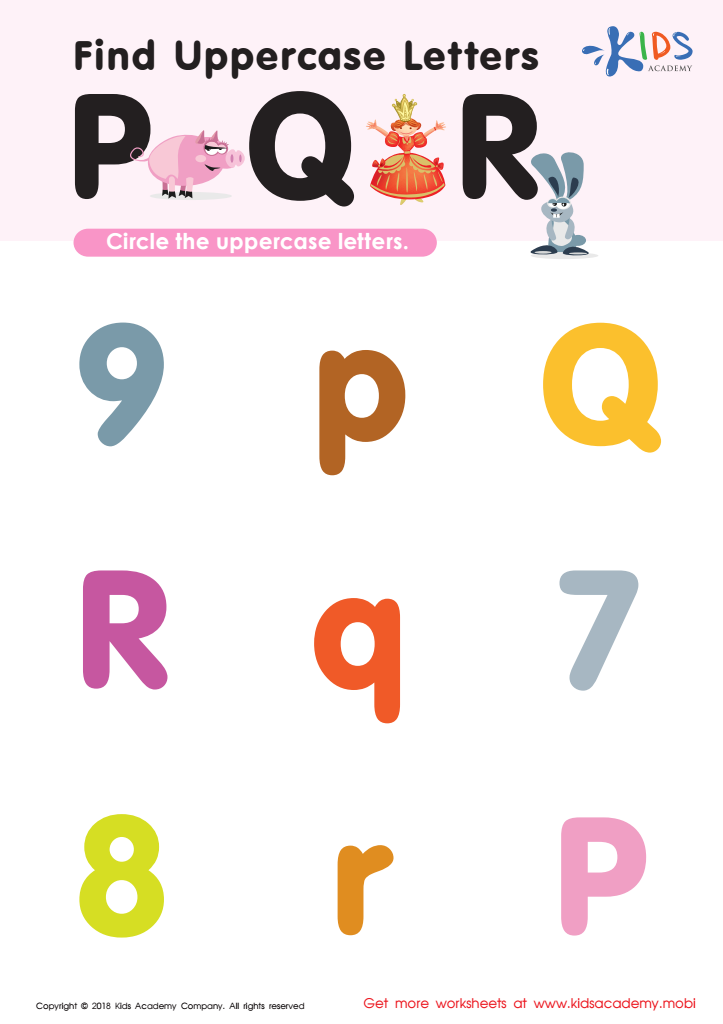
Find Uppercase Letters P, Q, and R Worksheet
Kids learn best when they can make connections. This free printable worksheet guides kids to solve the puzzle using the example letters P, Q, and R, supported by graphics and colors. Point out the page is pink, like the pig (which starts with P!) and solve by finding and circling the uppercase letters – be careful of the numbers!
Find Uppercase Letters P, Q, and R Worksheet
Worksheet
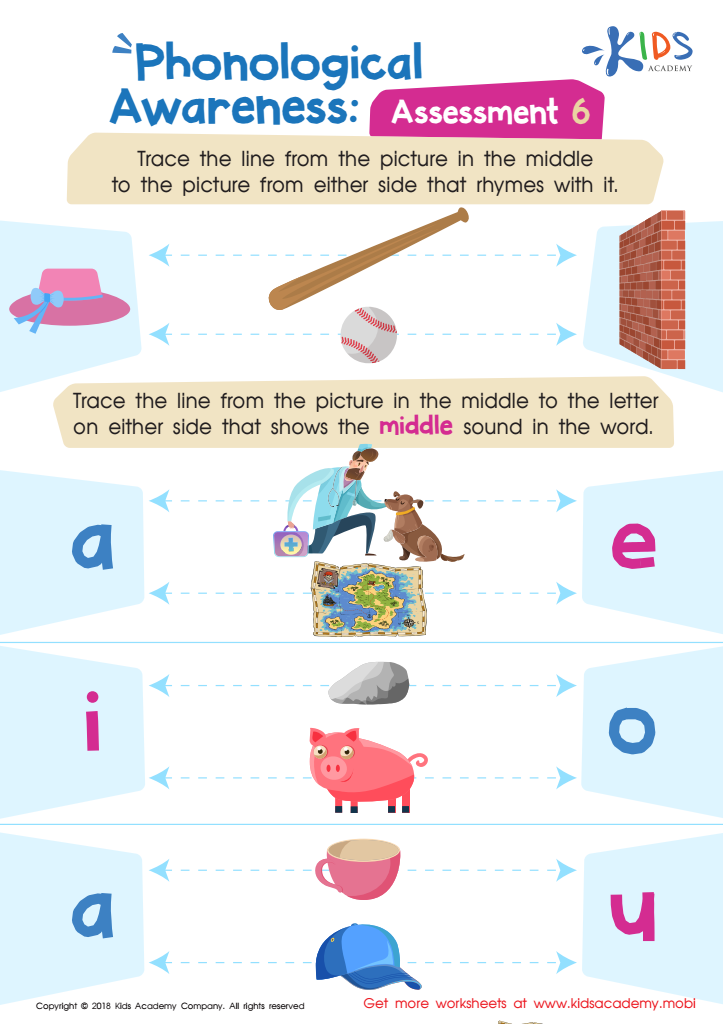
Phonological Awareness: Assessment 6 Worksheet
Check your child's ability to recognize middle word sounds using this free worksheet. Help them learn phonics by practicing with rhyming. Trace the line from the image to its rhyming match then encourage them to name each image aloud to identify which letter matches the sound. It's a great way to assess letter and sound recognition.
Phonological Awareness: Assessment 6 Worksheet
Worksheet
Join Kids Academy for Free
Who is primarily going to use this learning content?







Letter identification is a crucial skill for 4-year-olds as it lays the foundation for literacy and language development. Understanding the alphabet enables children to recognize, read, and eventually write words, which is essential for their academic success. It supports phonemic awareness; knowing letters helps children decode sounds, making it easier for them to read simple texts.
Parent and teacher involvement in letter identification is vital as it nurtures a child’s curiosity and promotes a love for learning. Engaging in activities such as reading, singing the alphabet, or playing letter games makes the learning process enjoyable and interactive. When parents and teachers actively participate in this learning journey, children often feel more motivated and confident in their abilities.
Furthermore, early literacy skills have long-term effects on a child's educational outcomes. Research shows that children who master letter recognition before entering school tend to perform better academically in later years. By emphasizing letter identification, parents and teachers can help create a supportive environment that encourages children to explore language, ultimately contributing to stronger communication skills and greater academic achievement as they progress through their education. Prioritizing this skill is an investment in a child’s future success.







