Reading readiness Alphabet Worksheets for 4-Year-Olds
6 filtered results
-
From - To
Discover our engaging "Reading Readiness Alphabet Worksheets for 4-Year-Olds," designed to cultivate essential foundational skills in early literacy. These worksheets incorporate fun activities that help children recognize letters, associate sounds, and develop pre-reading skills through interactive exercises. Each worksheet features captivating illustrations and simple instructions, making it easy for young learners to explore the world of letters. With a focus on hands-on learning, your child will enhance their vocabulary and gain confidence in their reading abilities. Perfect for home or classroom use, our printables offer a delightful way to nurture a love for reading while preparing your little one for academic success!
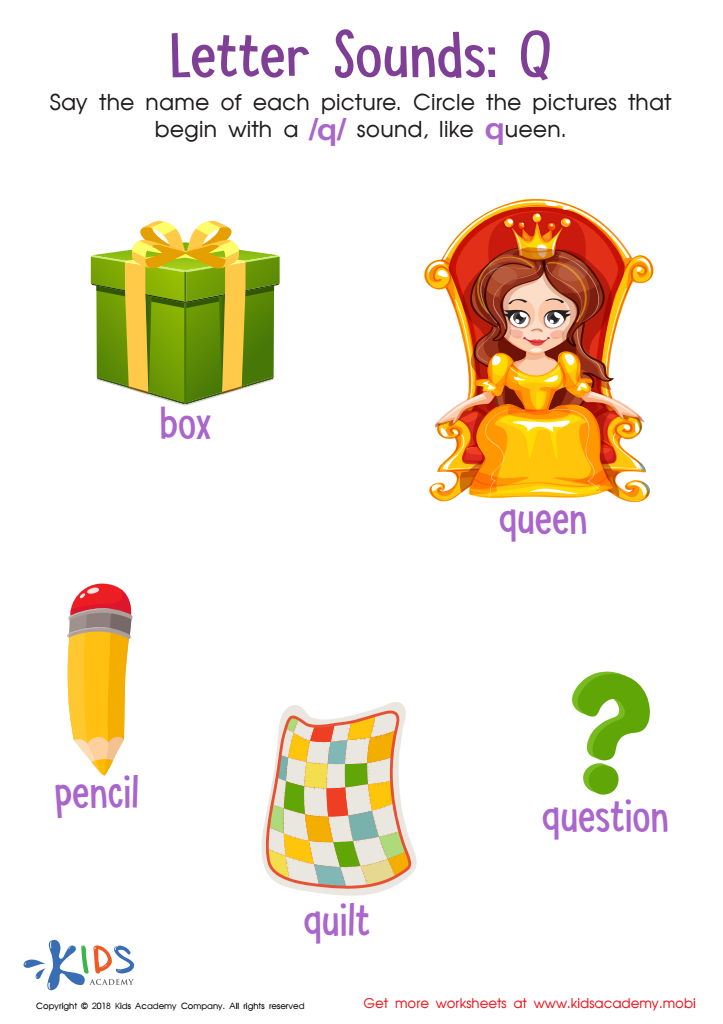
Letter Q Sounds Worksheet
 Assign to My Students
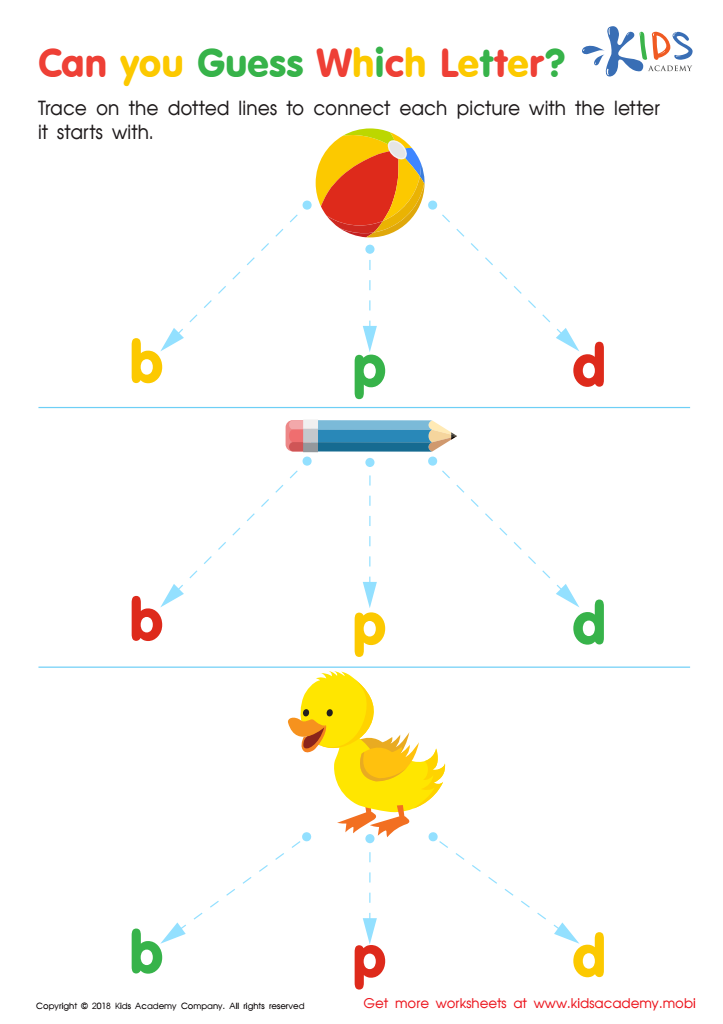
Can you Guess Which Letter? Worksheet
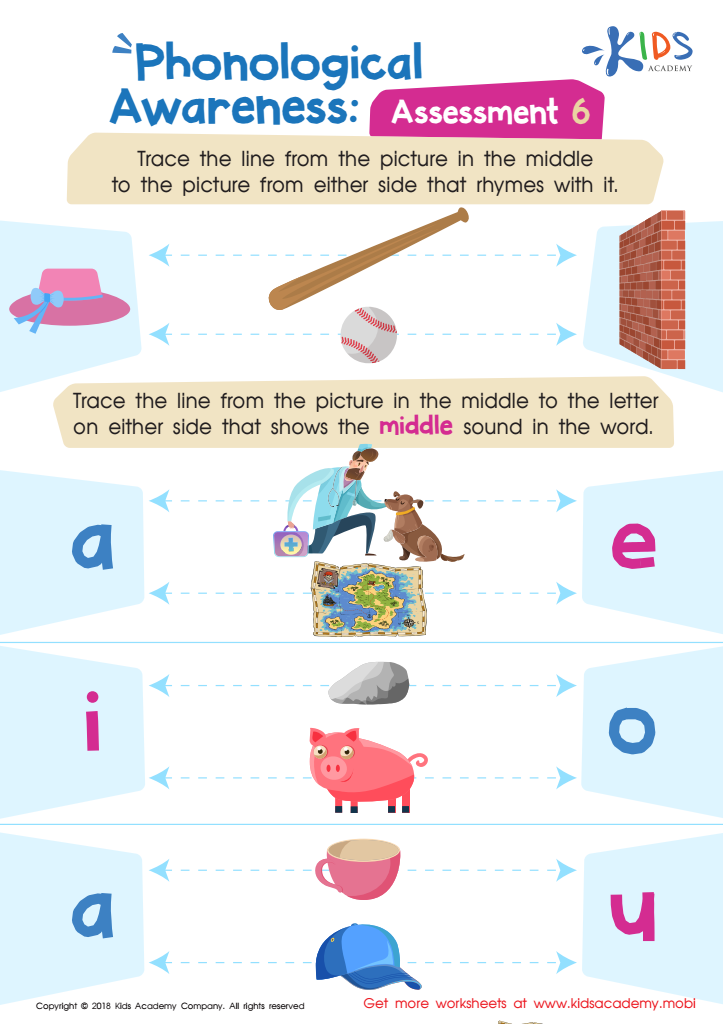
Phonological Awareness: Assessment 6 Worksheet
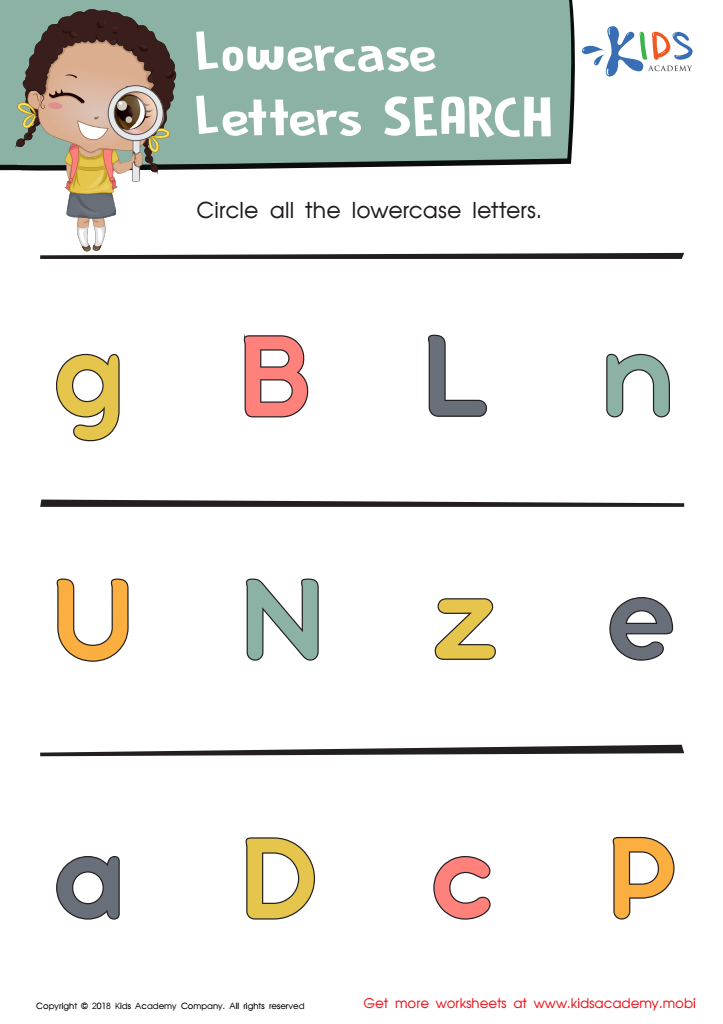
Lowercase Letters Search: Assessment Worksheet
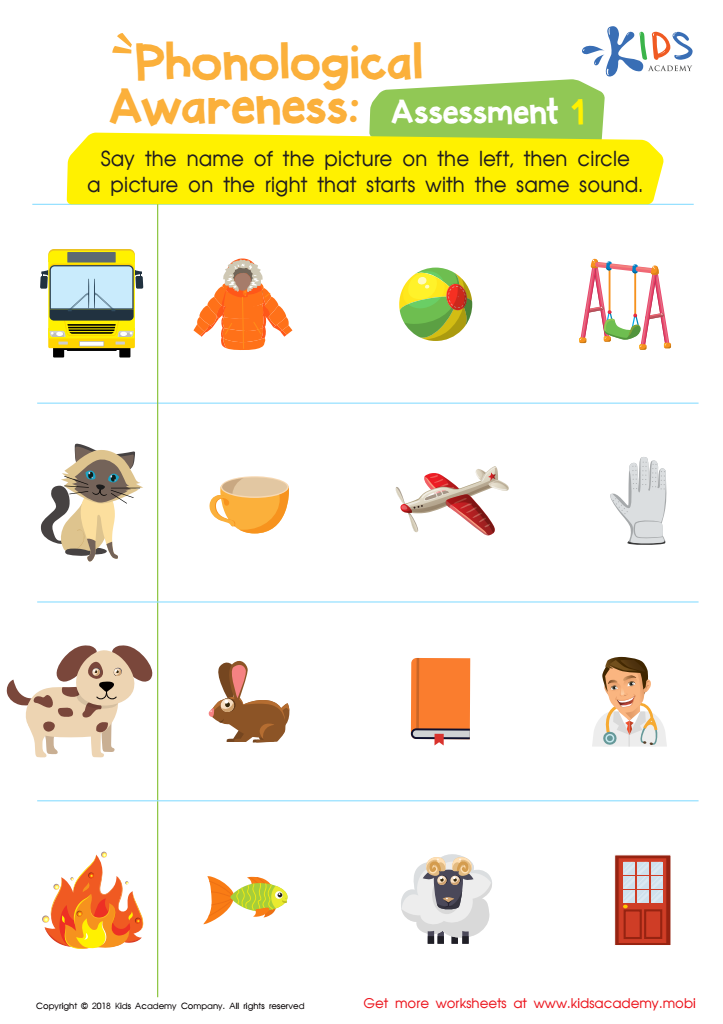
Phonological Awareness: Assessment 1 Worksheet
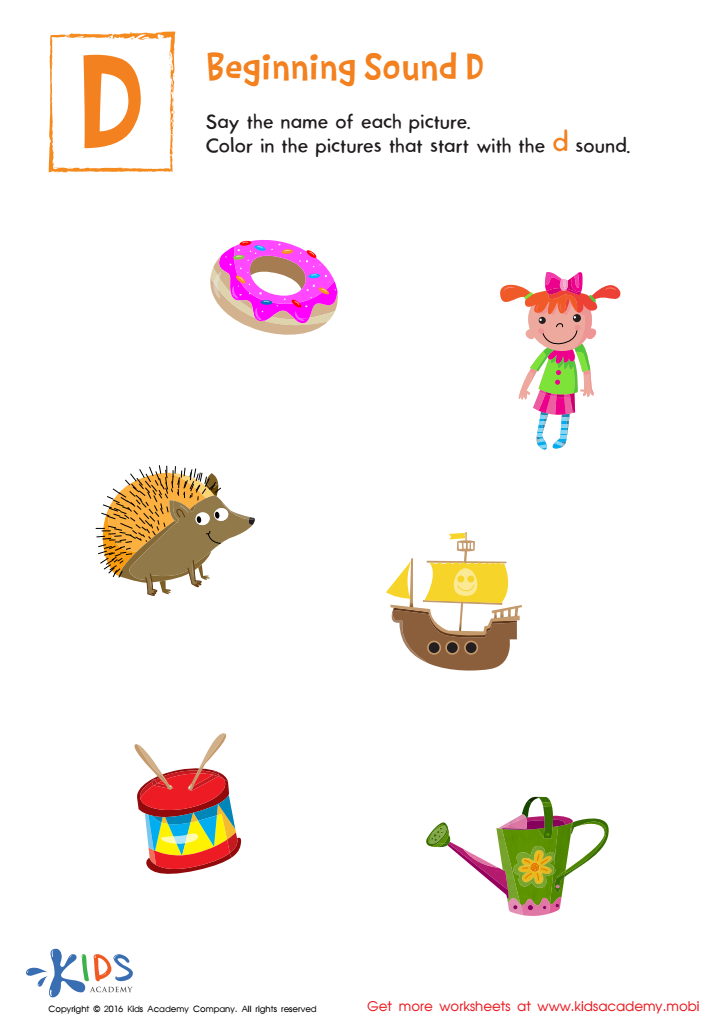
Beginning Sound D Worksheet








Reading readiness and learning the alphabet are crucial for 4-year-olds as they lay the foundation for a child's literacy development. Understanding letters and their corresponding sounds is essential for decoding words, leading to better reading skills later on. Parents and teachers should care about this stage because early exposure to the alphabet enhances phonemic awareness, which is the ability to hear, identify, and manipulate sounds in spoken language—skills that are critical for reading success.
Moreover, when children grasp the basics of the alphabet, they cultivate a sense of confidence and curiosity toward learning. Engaging alphabet activities can promote language skills and stimulate cognitive development. It also fosters their social and emotional skills when learning occurs in group settings, such as classrooms or playgroups.
Additionally, teaching the alphabet can support vocabulary building, enabling children to express themselves more effectively. This sets the tone for their future academic achievements and love for reading, a lifelong skill.
Investing time and resources into helping 4-year-olds become alphabet-ready creates a strong foundation for literacy, making it essential for parents and educators to prioritize this critical developmental milestone. Reading readiness goes beyond simple letter recognition; it cultivates a lifelong appreciation for learning.







