Sound-letter correlation Alphabet Worksheets for 4-Year-Olds
3 filtered results
-
From - To
Unlock the exciting world of literacy for your 4-year-old with our engaging Sound-letter Correlation Alphabet Worksheets! Specifically designed for young learners, these worksheets foster a foundational understanding of the relationship between sounds and their corresponding letters. Through fun, interactive activities, children will enjoy identifying and matching letters with their sounds, enhancing their phonemic awareness and early reading skills. Perfect for preschoolers, our printable resources are user-friendly and can be seamlessly integrated into your daily learning routine. Equip your little one with the essential tools to embark on their reading journey confidently! Explore and download now on Kids Academy.
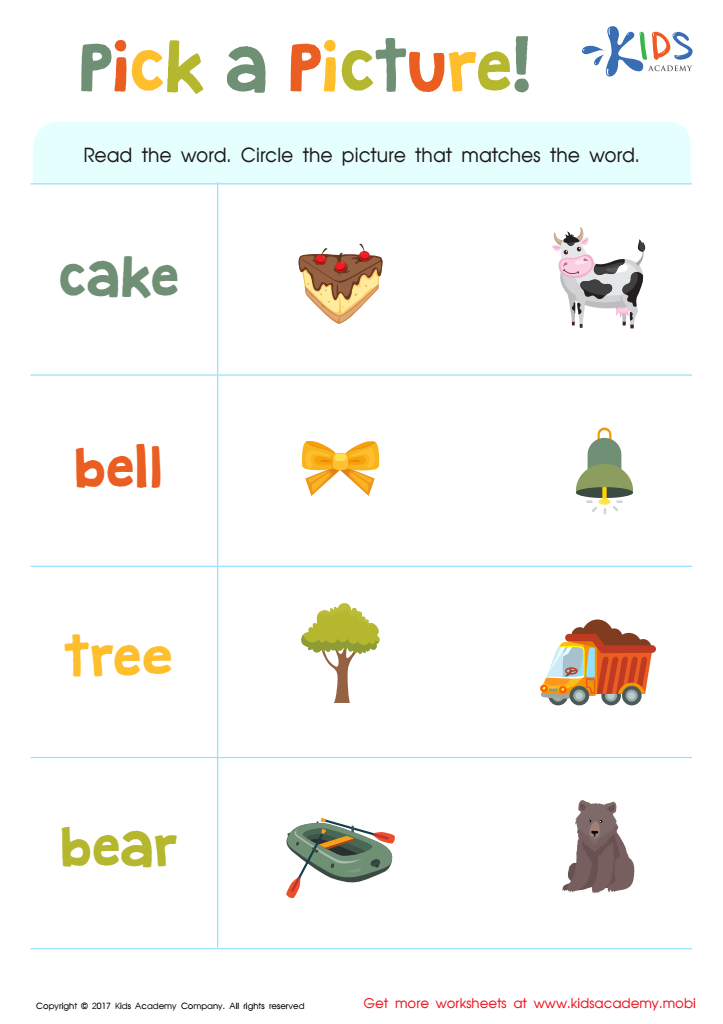
Pick a Picture Word Recognition Worksheet
 Assign to My Students
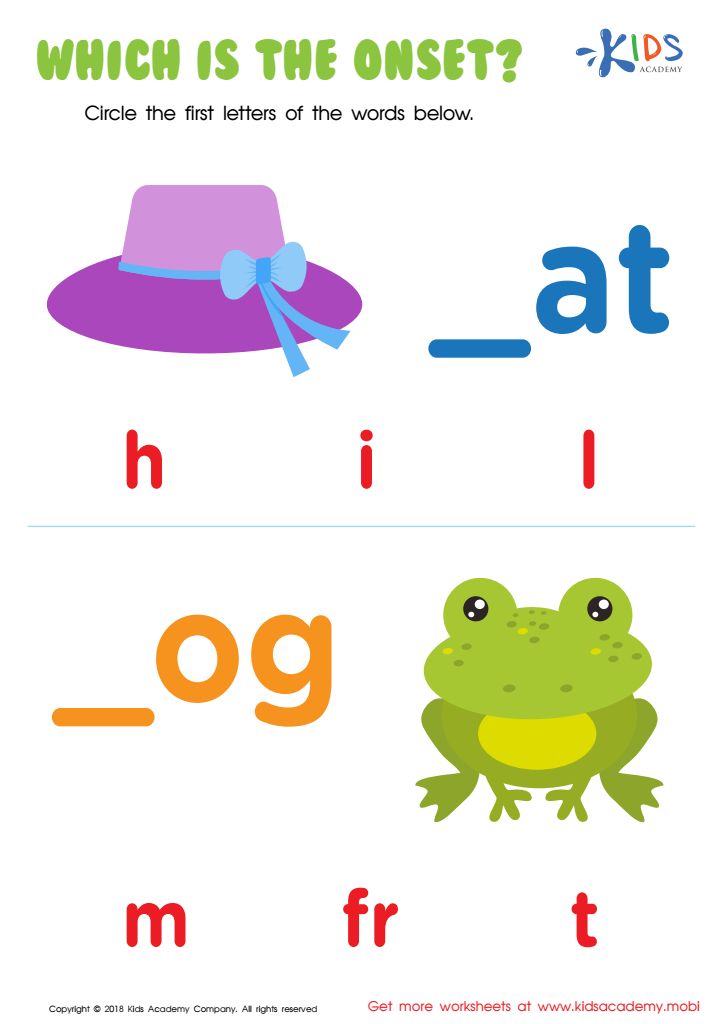
Which Is the Onset? Worksheet
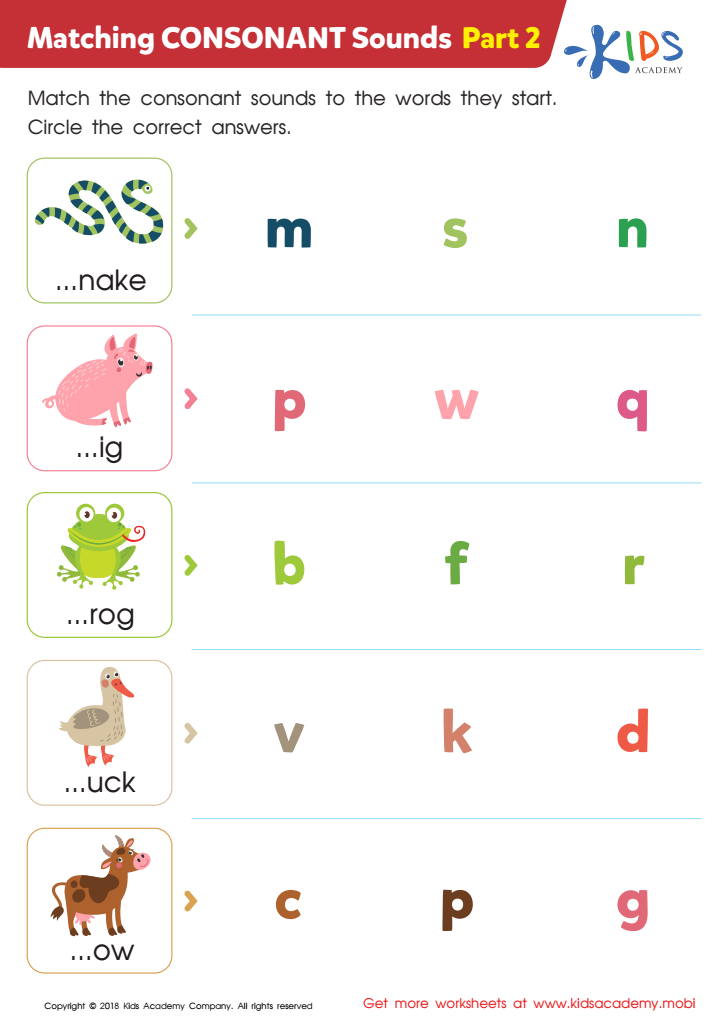
Matching Consonant Sounds: Part 2 Worksheet








The sound-letter correlation, also known as phonics, forms the foundation of early literacy and is vital for young learners, especially 4-year-olds. At this age, children are like sponges, rapidly absorbing new information, and introducing them to the relationship between sounds (phonemes) and letters (graphemes) sets them on a path to successful reading and writing.
Understanding sound-letter correlation equips children with the skills to decode words, thereby enhancing their ability to read independently. This early literacy skill is not just about recognizing words; it helps in building vocabulary, comprehension, and cognitive development. Phonics instruction also encourages phonological awareness, which is the recognition and manipulation of sounds. This skill is crucial for later academic success and the ability to tackle more complex reading and writing tasks.
For parents and teachers, emphasizing phonics can make learning to read a systematic and engaging process, offering a collection of ‘decoding tools’ that children can use confidently. It becomes easier for children to approach new words, improving their confidence and motivation to learn. Early intervention in teaching sound-letter correlations can prevent future reading difficulties and instill a lifelong love of books, benefiting academic performance across subjects. In short, investing time in teaching and reinforcing phonics during these formative years yields long-lasting educational benefits.







