Vowel Recognition Vowels Worksheets for 4-Year-Olds
10 filtered results
Difficulty Level
Grade
Age
-
From - To
Subject
Activity
Standards
Introduce your child to the world of vowels with our engaging "Vowel Recognition Vowels Worksheets for 4-Year-Olds"! These expertly designed worksheets from Kids Academy feature colorful, fun activities to help your little one identify and pronounce vowels effortlessly. Perfect for early learners, these worksheets make learning enjoyable with games, and exercises that reinforce key vowel sounds and shapes. Boost your child’s reading readiness and phonics skills while keeping them entertained and motivated. Ideal for parents and educators looking for effective, age-appropriate resources for vowel recognition. Start your child's educational journey confidently with our interactive vowel worksheets!
Favorites
With answer key
Interactive
Long and Short Vowel Match up Reading Worksheet
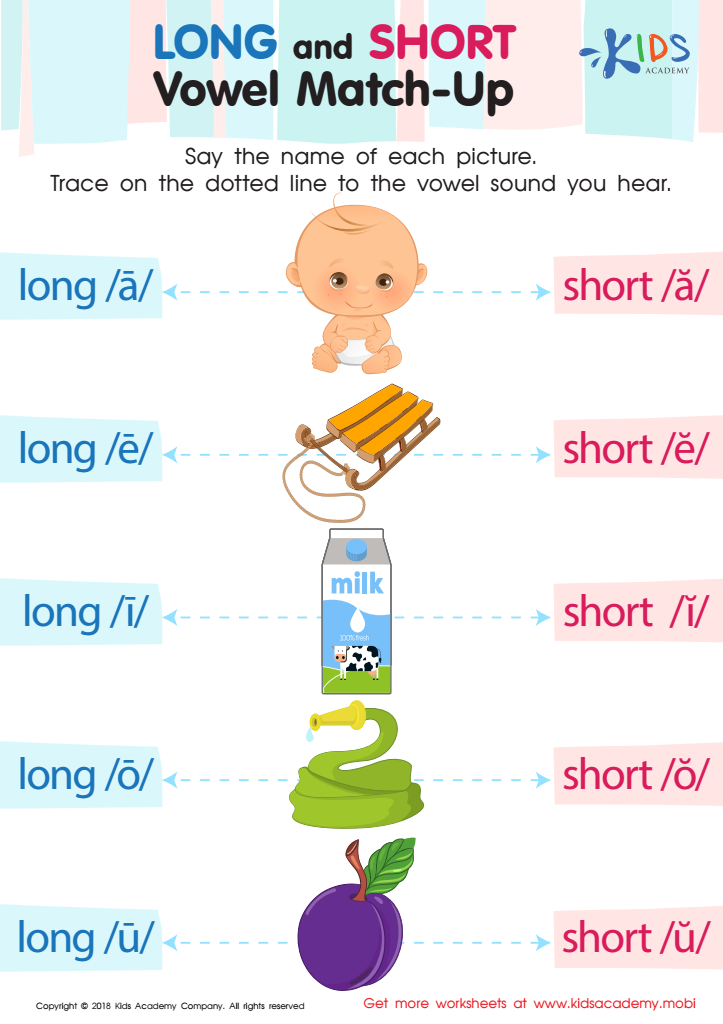
Help your reader build confidence and refine their decoding skills! This worksheet combines long and short vowel recognition with a traceable component to improve fine motor skills. Your learner will name each picture and trace the dotted lines to get to the correct vowel sounds.
 Assign to My Students
Long and Short Vowel Match up Reading Worksheet
Worksheet
Short Vowel Sound U Worksheet Worksheet
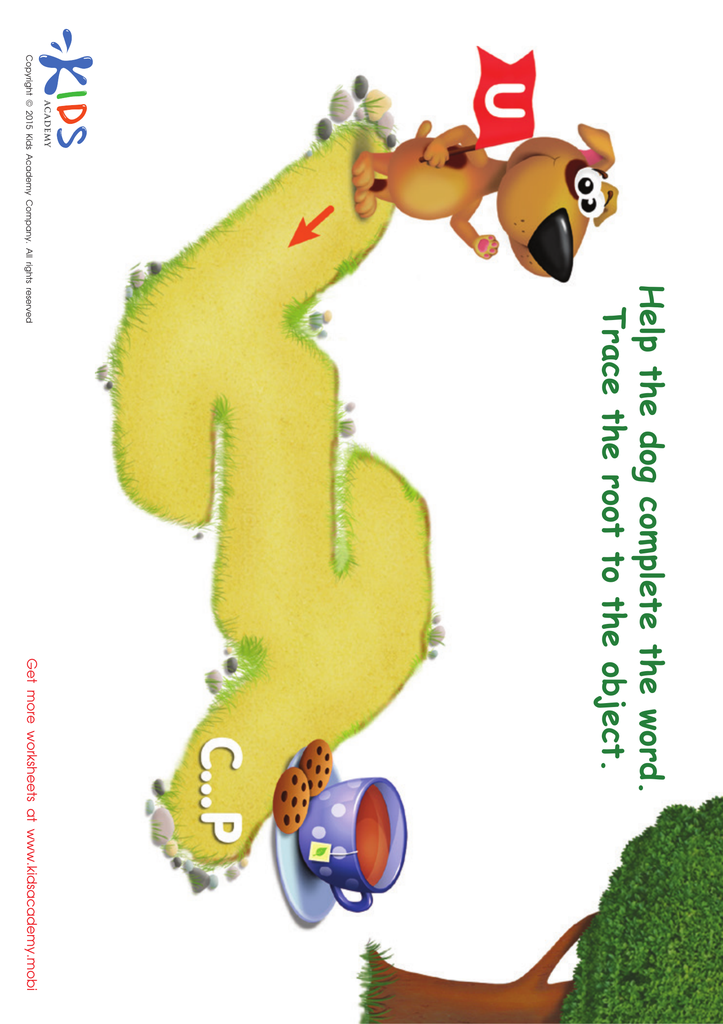
Help your early reader join the adorable dog on his way to the cup of tea with cookies. This traceable worksheet reinforces the short -u sound and strengthens fine motor skills. Kids don't realize they are practicing reading skills while having fun!
Short Vowel Sound U Worksheet Worksheet
Worksheet
Long Vowel Sound A Worksheet
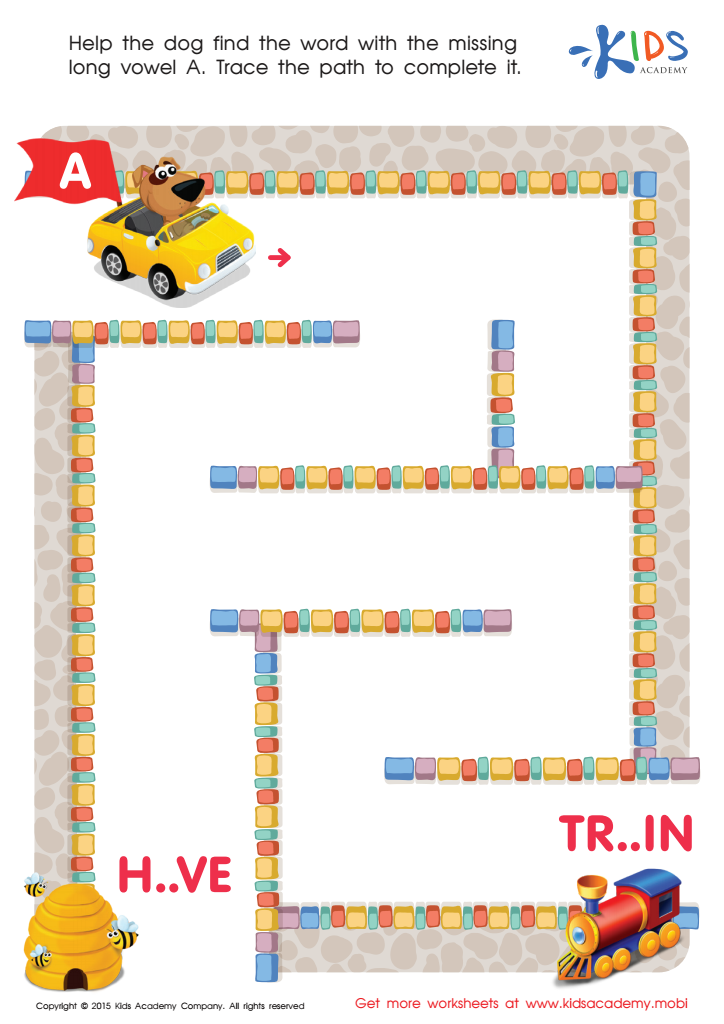
Teach your young learner about the long vowel A with this colorful free printable phonics worksheet. The long vowel A says its name while the short vowel A does not. Complete the worksheet by tracing the root to the toy train and helping the dog by filling in the missing letter A. Have them practice writing and spelling with phonics while having fun!
Long Vowel Sound A Worksheet
Worksheet
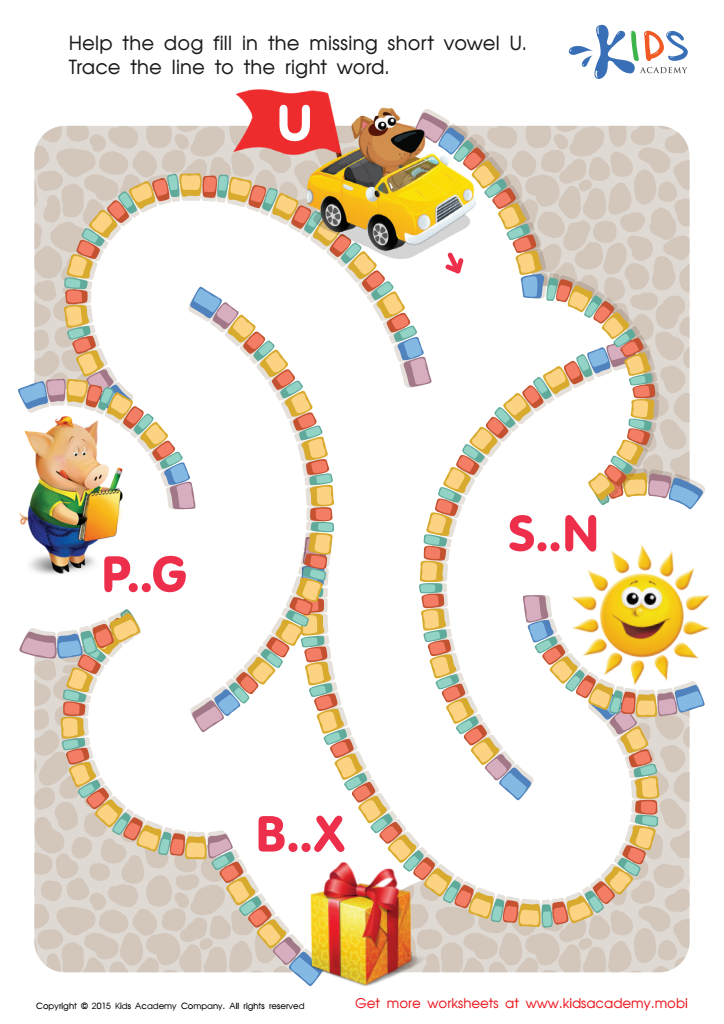
Short Vowel Sound U Worksheet
Practice abc phonics to help young learners link sounds to letters. This free printable phonics worksheet helps your kid learn the short vowel sound U. Guide them through the maze to help the dog complete the word "sun". Make sure they say the word out loud to emphasize the short U sound. Check out more phonics worksheets with mazes here.
Short Vowel Sound U Worksheet
Worksheet
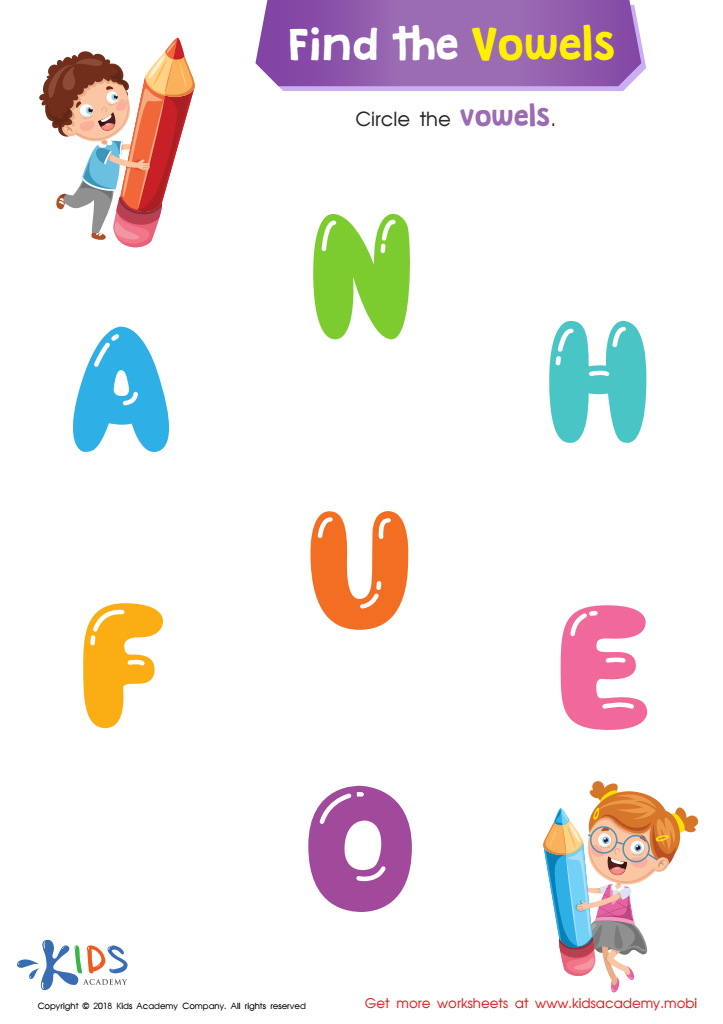
Find the Vowels Reading Worksheet
This worksheet helps kids identify vowels with bright colors and engaging activities to strengthen their visual discrimination and fine motor skills. Young learners will find it easy to succeed and be excited to keep reading!
Find the Vowels Reading Worksheet
Worksheet
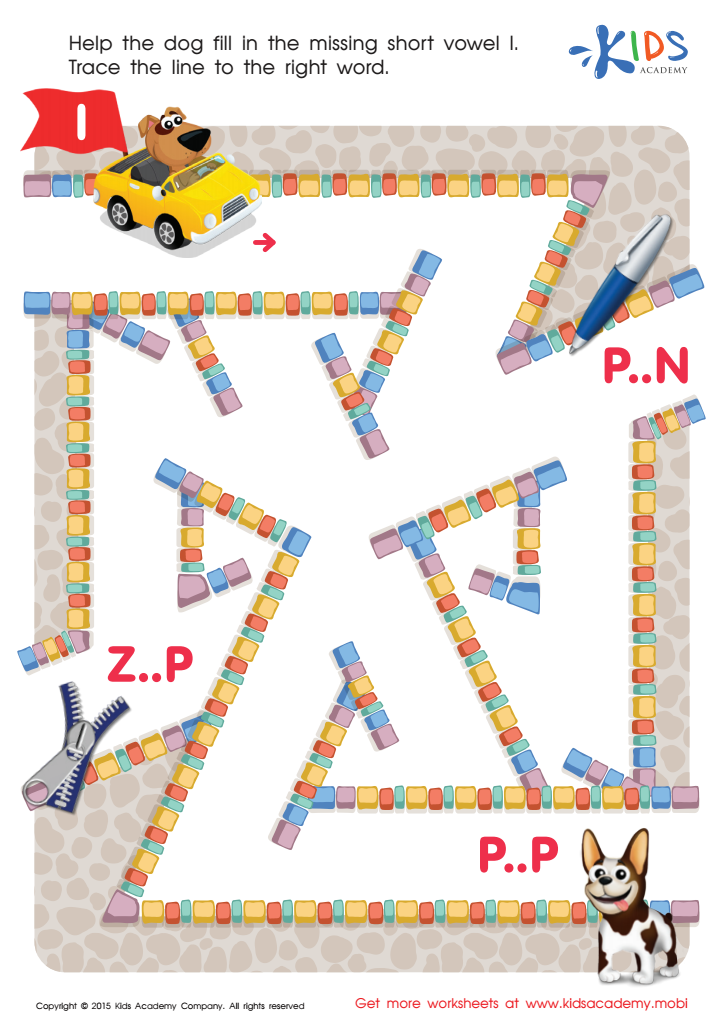
Short Vowel Sound I Worksheet
This free printable phonics worksheet will get your kid prepped for reading! It's a maze to help the dog complete the word “zip” with the missing letter I. Have your kid say the word aloud to learn the I sound. It's a great way to practice reading, writing and spelling skills. Check out here for more phonics worksheets!
Short Vowel Sound I Worksheet
Worksheet
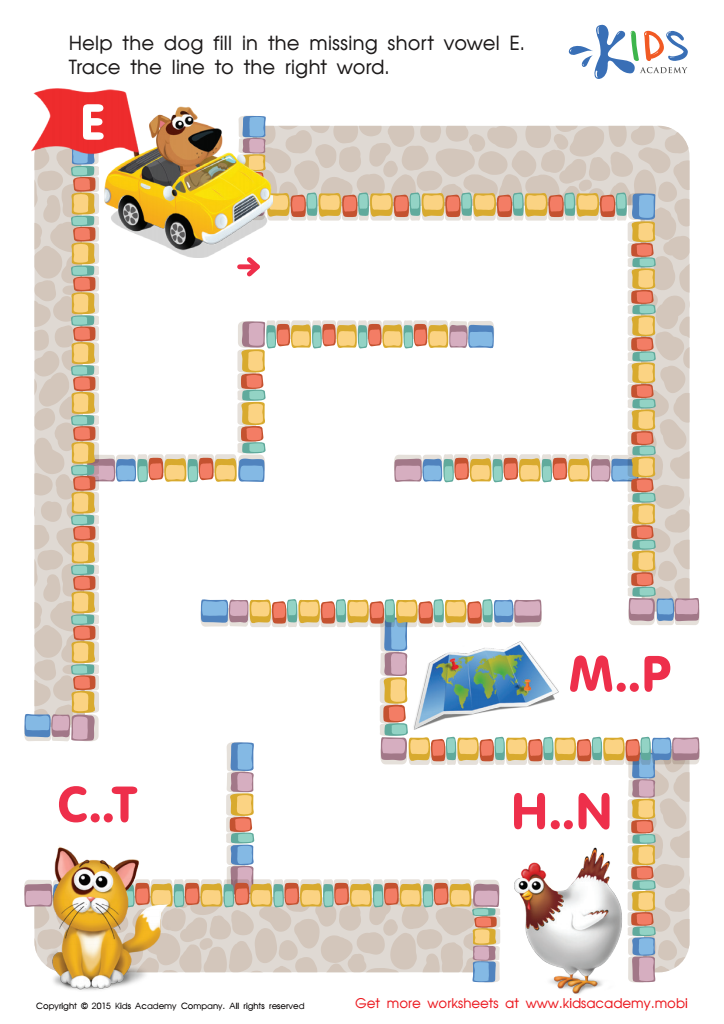
Short Vowel Sound E Worksheet
This free printable phonics worksheet helps kids learn the short vowel sound E. Kids need to help the dog complete the word “hen” by finding their way through a maze. It teaches kids to see the connection between letters and sounds and also strengthens their writing and spelling skills. Fun and educational, this phonics worksheet is great for kids. Want more? Check out here.
Short Vowel Sound E Worksheet
Worksheet
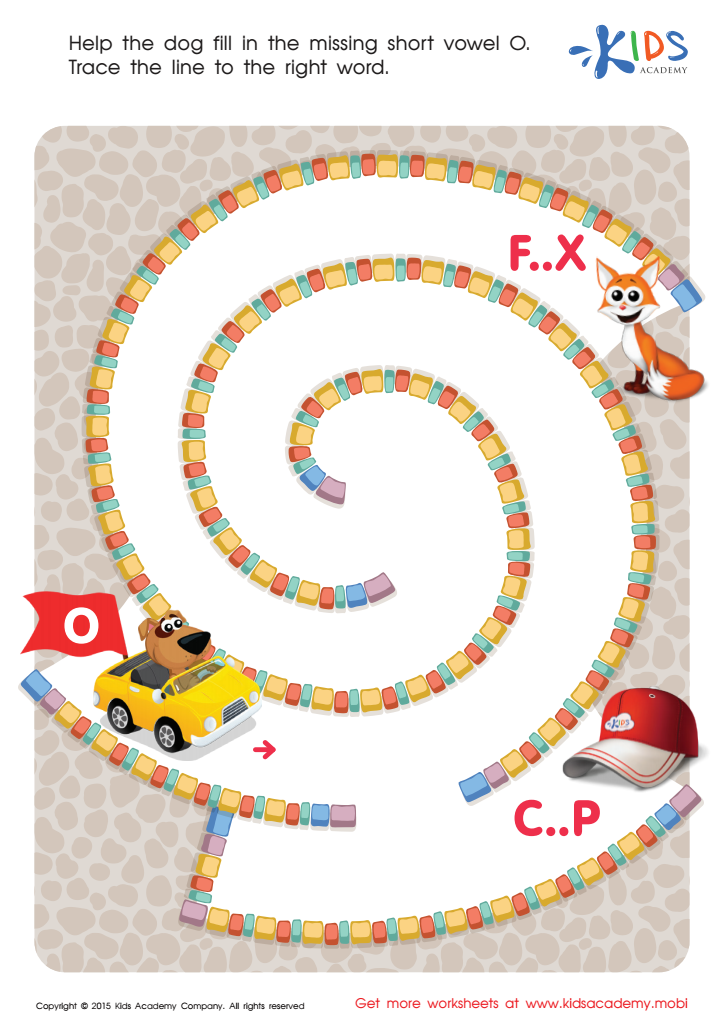
Short Vowel Sound O Worksheet
Help your child learn the short vowel sound O with this fun and free printable phonics worksheet! They'll need to complete the maze to help the dog finish the word "fox" with the missing letter O. Engage their fine motor muscles while they color or trace the maze with crayon or pencil. This educational activity is sure to bring a smile to your little learner's face! For more phonics worksheets, check here.
Short Vowel Sound O Worksheet
Worksheet
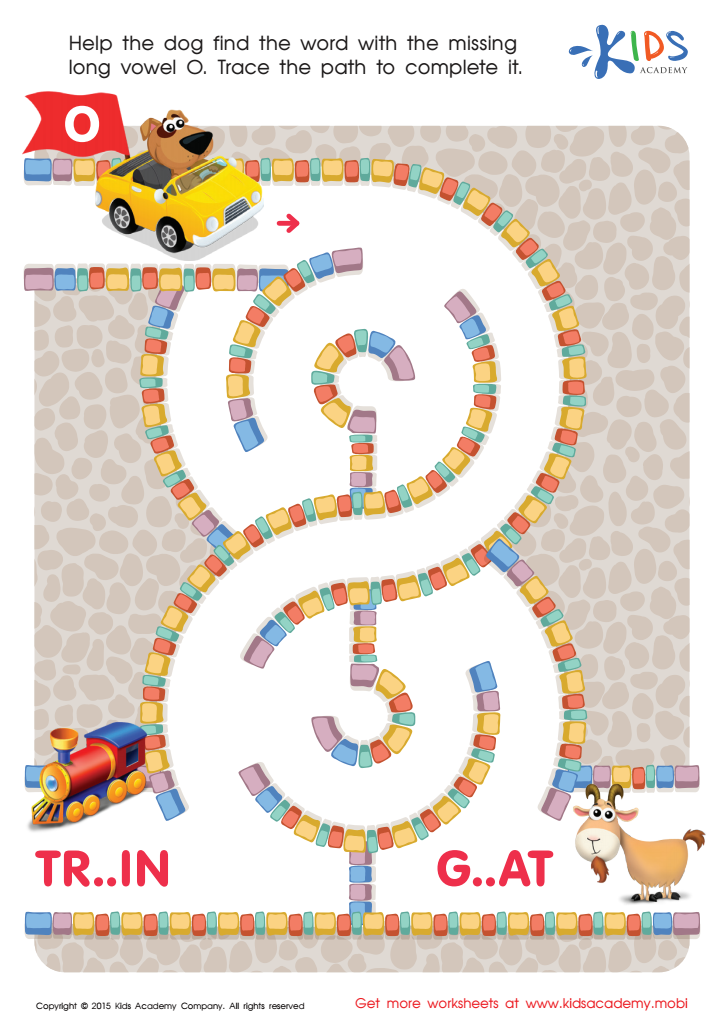
Long Vowel Sound O Worksheet
Help the goat find her missing O! Guide your little learner through this fun maze to help the goat get its vowel sound back. Make phonics learning engaging and enjoyable with this free printable worksheet.
Long Vowel Sound O Worksheet
Worksheet
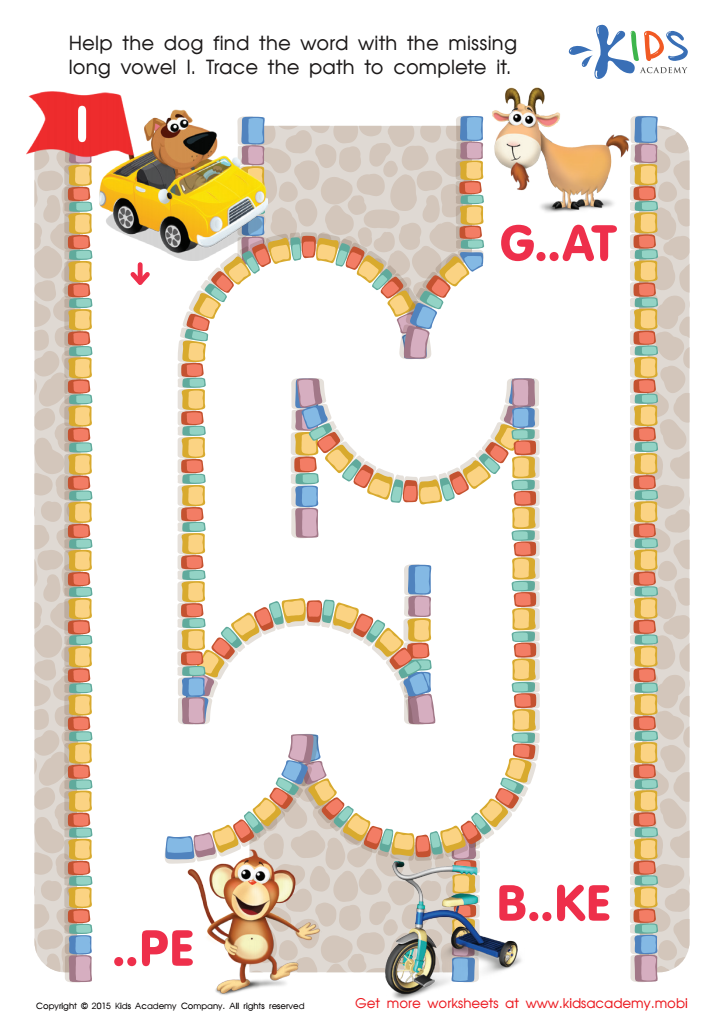
Long Vowel Sound I Worksheet
Learning long vowels is essential to becoming a good reader. Ask your child to distinguish between the long and short I vowel sounds. Remind them that the long I says its name, while the short I doesn't. With this fun printable phonics worksheet, your kid can practice writing and spelling while helping a dog find his way through a maze. Check out our phonics worksheets for more learning activities.
Long Vowel Sound I Worksheet
Worksheet
Join Kids Academy for Free
Who is primarily going to use this learning content?





Vowel recognition is a foundational aspect of early literacy that can significantly influence a child's reading and writing development. Parents and teachers should care about vowel recognition for 4-year-olds because it helps build the essential blocks of phonemic awareness, a crucial pre-reading skill. Recognizing vowels enables children to understand the fundamental sounds in words, aiding in speech clarity and vocabulary expansion.
Early familiarity with vowels enhances decoding skills, allowing children to phonetically break down and read new words more efficiently. This understanding not only improves fluency but also promotes confidence and a love for learning. Mastery of short and long vowel sounds paves the way for understanding more complex phonics rules later on, such as silent "e" and diphthongs.
Moreover, vowel recognition supports writing development. Children who can identify and articulate vowel sounds are more adept at spelling, forming words, and eventually composing sentences. They become better equipped to articulate their thoughts clearly and creatively in writing.
Investing time and effort into teaching vowel recognition at a young age sets a strong linguistic foundation, reduces future literacy challenges, and promotes academic success. Parents and teachers play a pivotal role in nurturing these early skills, ultimately empowering children on their journey to becoming skilled, enthusiastic readers and communicators.