Alphabetical order Worksheets for 4-Year-Olds
3 filtered results
-
From - To
Explore our engaging Alphabetical Order Worksheets designed specifically for 4-year-olds! These worksheets help young learners recognize and arrange words alphabetically, enhancing their foundational reading and language skills. With colorful images and fun activities, children will enjoy practicing letter identification and sequencing in a playful manner. Perfect for homeschooling, classroom use, or extra practice at home, our resources foster a love for learning while building essential early literacy skills. Download these worksheets today and empower your little ones to become confident readers as they embark on their educational journey! Suitable for preschoolers ready to explore the magic of letters in alphabetical order.
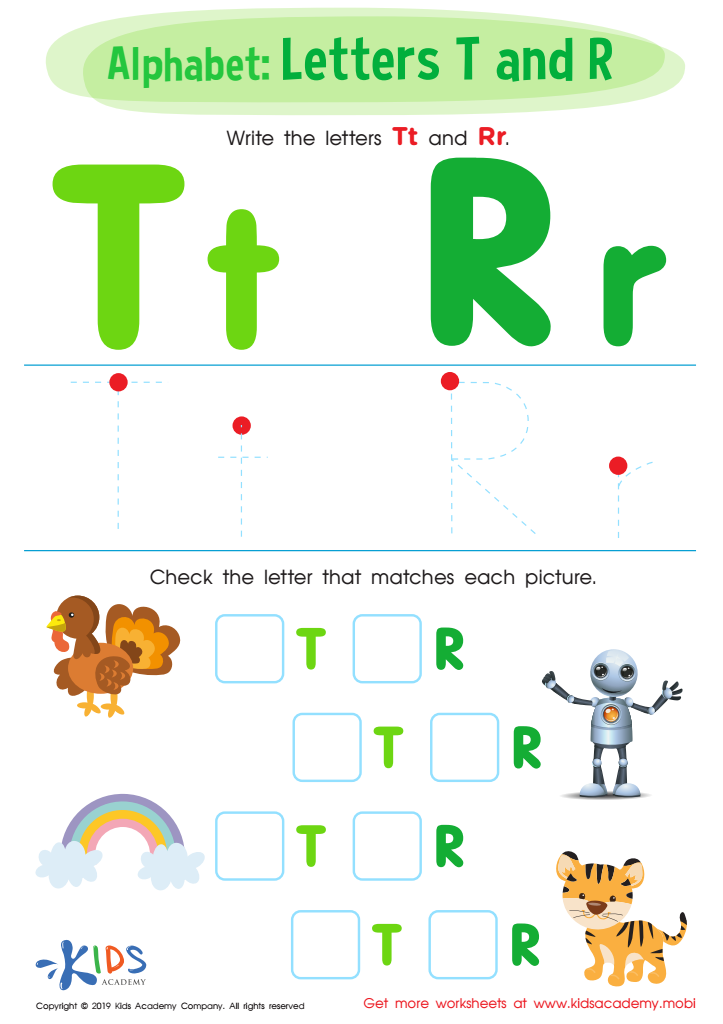
Letters T and R Worksheet
 Assign to My Students
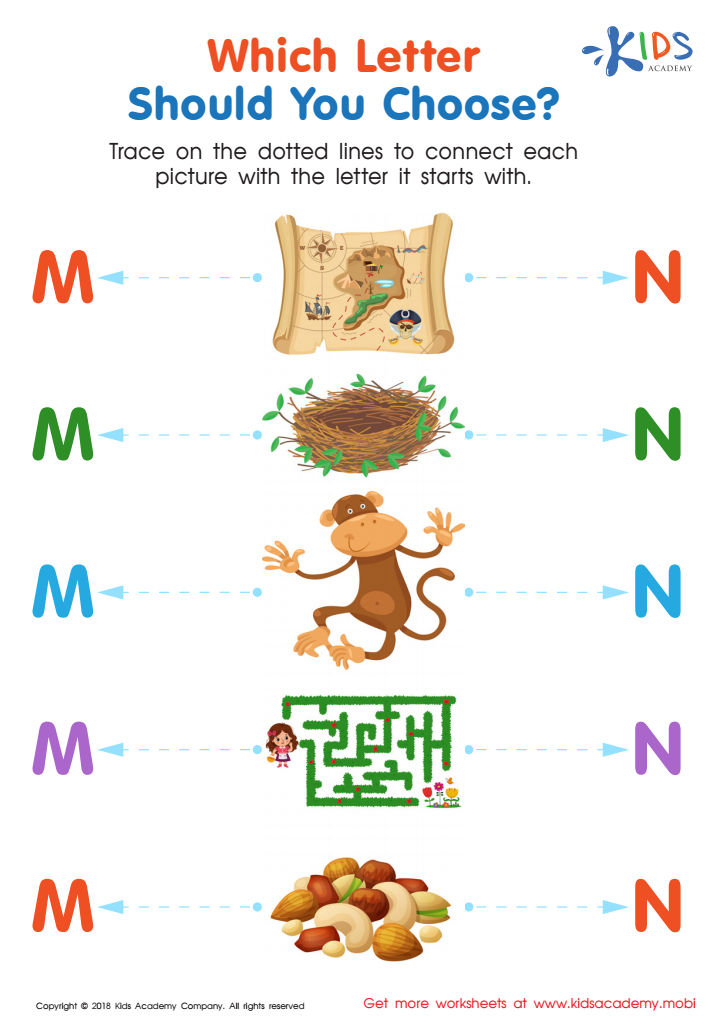
Which Letter Should you Choose? Worksheet
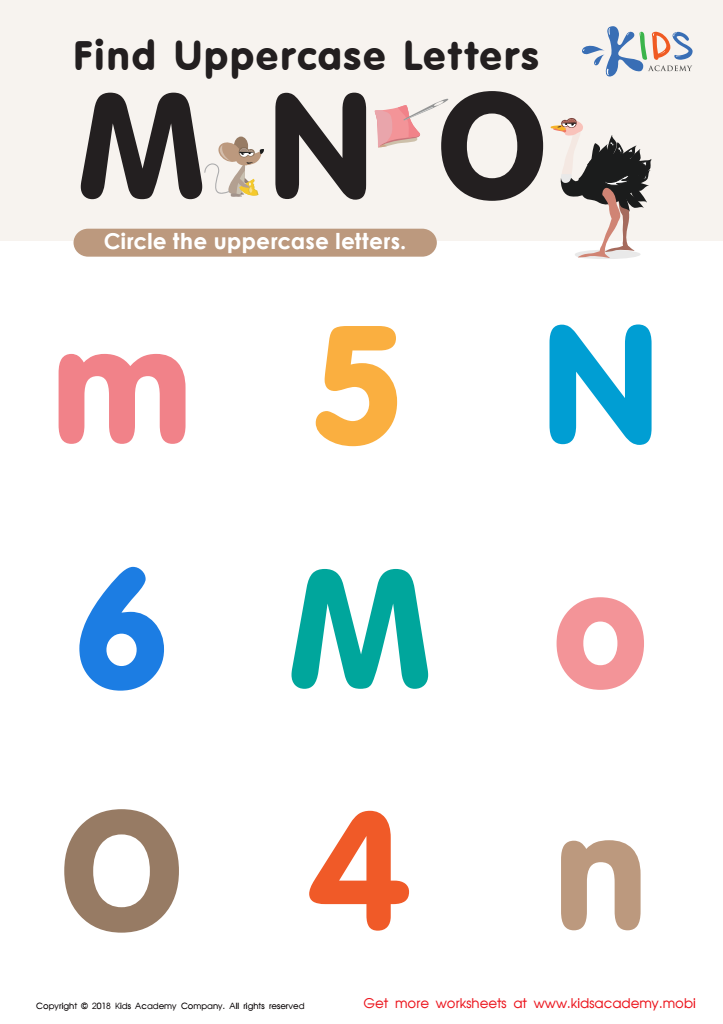
Find Uppercase Letters M, N, and O Worksheet








Teaching 4-year-olds about alphabetical order is essential for several reasons. First, it lays the foundation for literacy development. Recognizing the sequence of letters in the alphabet helps young children understand how words are formed and organized, which boosts their reading and writing skills. Engaging with the alphabet also fosters phonemic awareness, enabling children to decode words more easily as they advance in their education.
Second, understanding alphabetical order encourages cognitive development. It develops critical thinking and problem-solving skills as children learn to categorize and organize information—a fundamental life skill. These abilities are vital for subjects beyond literacy, such as math and science.
Moreover, introducing alphabetical order can be a fun and interactive learning experience. Using games, songs, or storytelling can make learning engaging, igniting a child's curiosity and love for learning. Additionally, familiarizing children with alphabetical order aids in navigating educational resources—such as books and libraries—eventually empowering them to find information independently.
In conclusion, teaching alphabetical order is not just an academic exercise; it’s a vital skill that enhances literacy, cognitive development, and independent learning—critical elements for a child's success both in school and in life. Parents and teachers should prioritize this foundational concept to help children thrive.








