Animal Classification Worksheets for 4-Year-Olds
5 filtered results
-
From - To
Introduce your little learner to the amazing world of animals with our engaging Animal Classification Worksheets for 4-Year-Olds! Designed to captivate young minds, these worksheets help children distinguish between different animal groups through fun activities and colorful visuals. With the perfect blend of education and entertainment, kids can learn about mammals, birds, fish, and other animals, enhancing their observation and critical thinking skills. Whether at home or in the classroom, these printable worksheets from Kids Academy make learning an enjoyable adventure for preschoolers. Spark curiosity and foster a love for nature, one worksheet at a time!
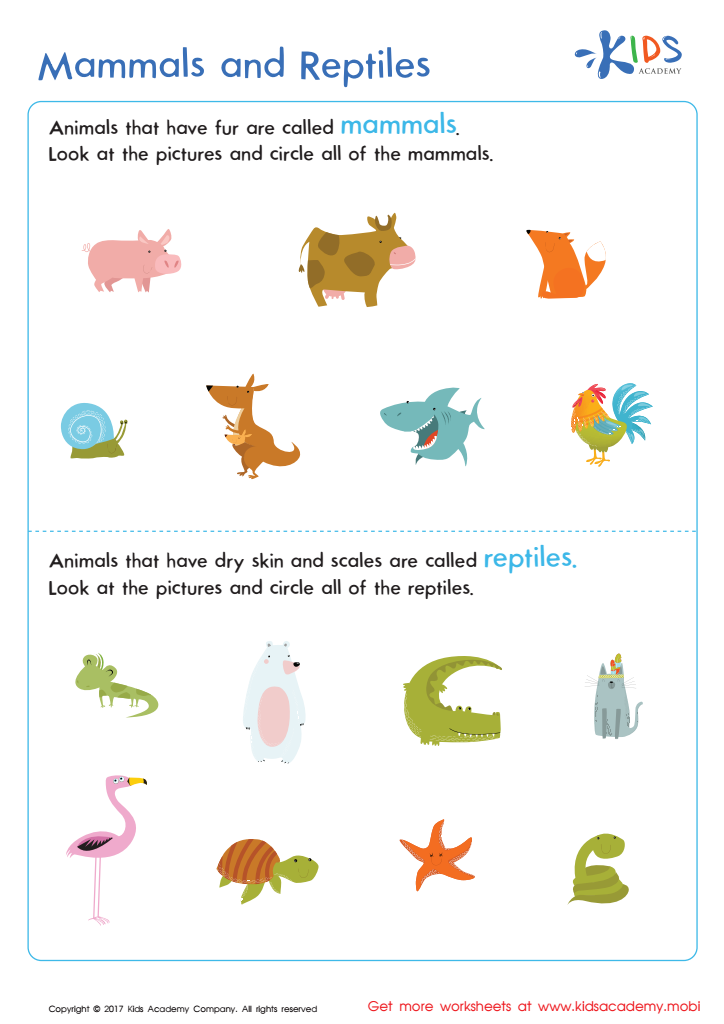
Mammals and Reptiles Worksheet
 Assign to My Students
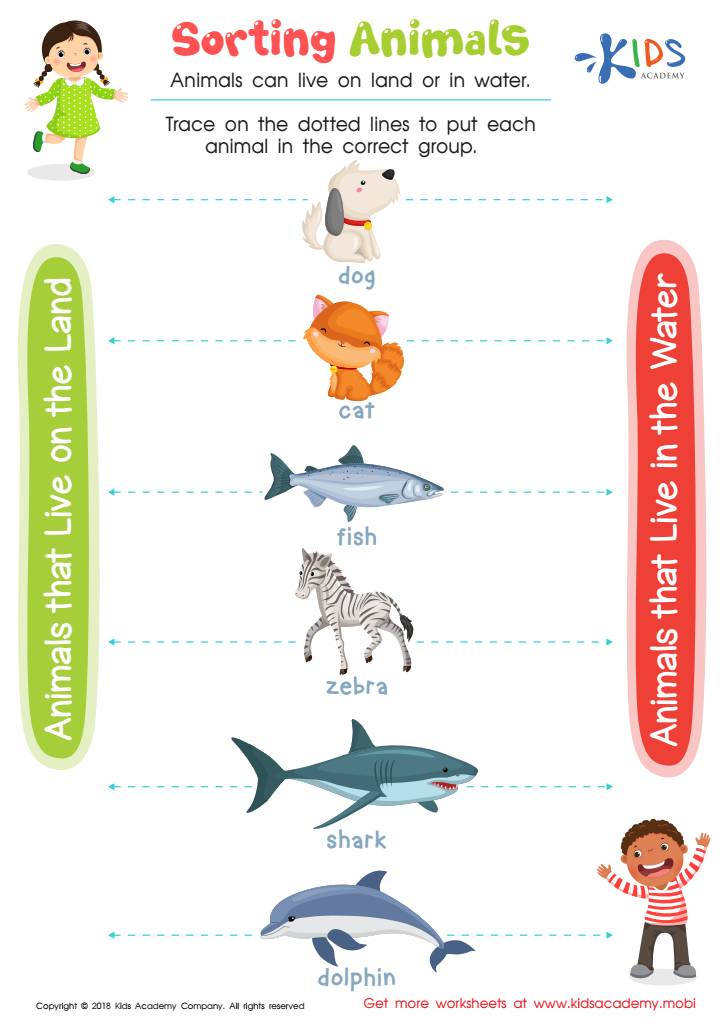
Sorting Animals Worksheet
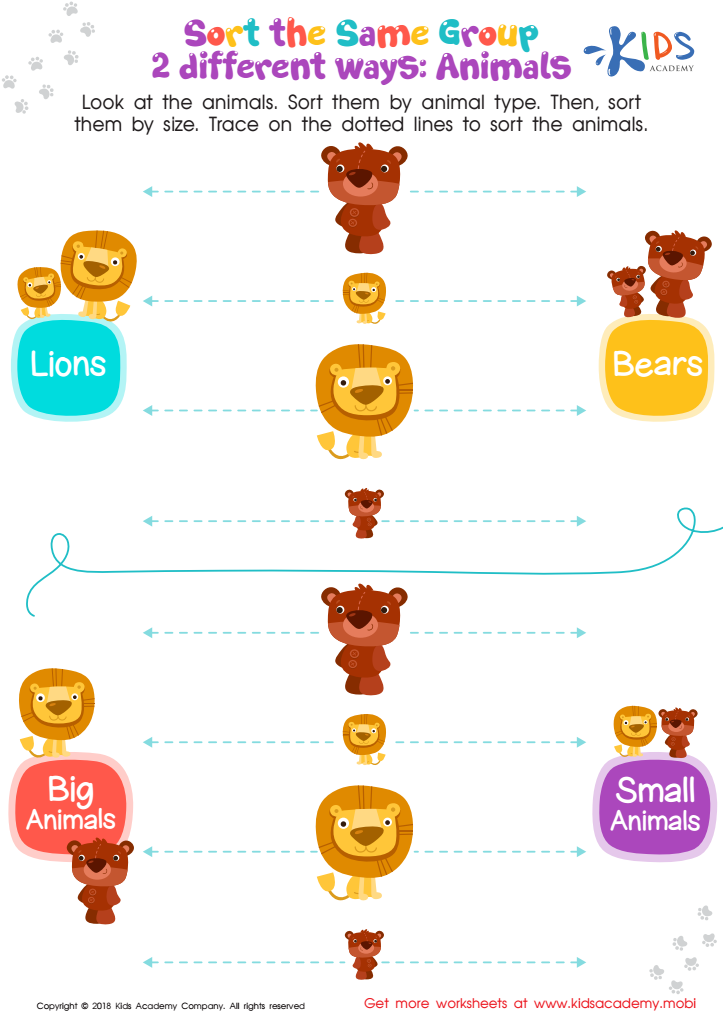
Sort the Same Group 2 Different Ways: Animals Worksheet
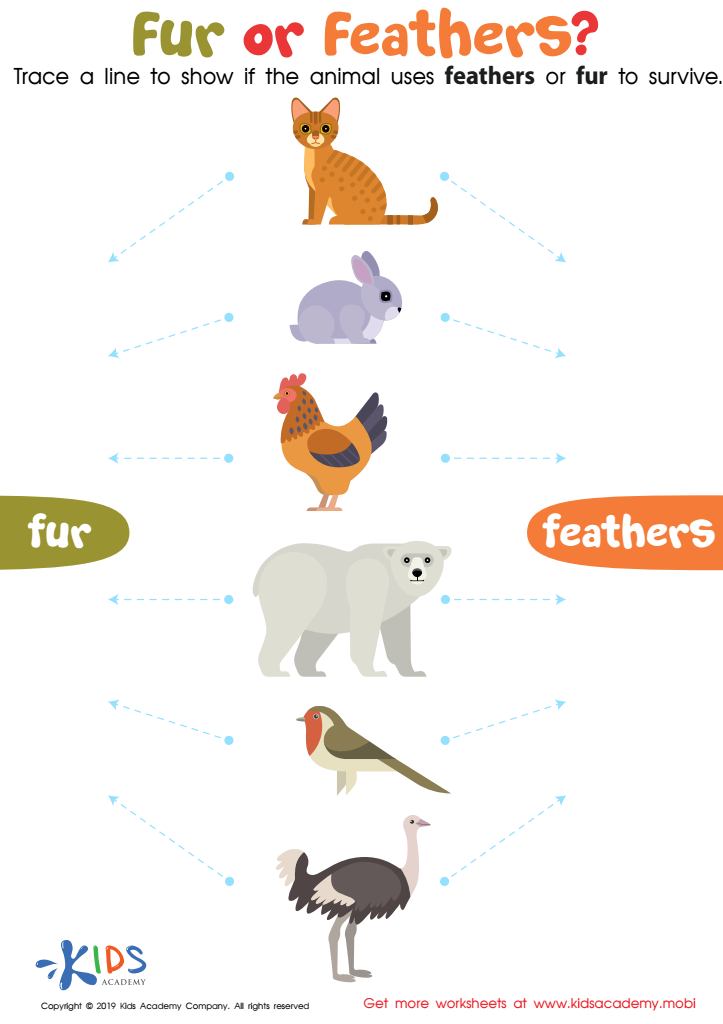
Fur or Feathers? Worksheet
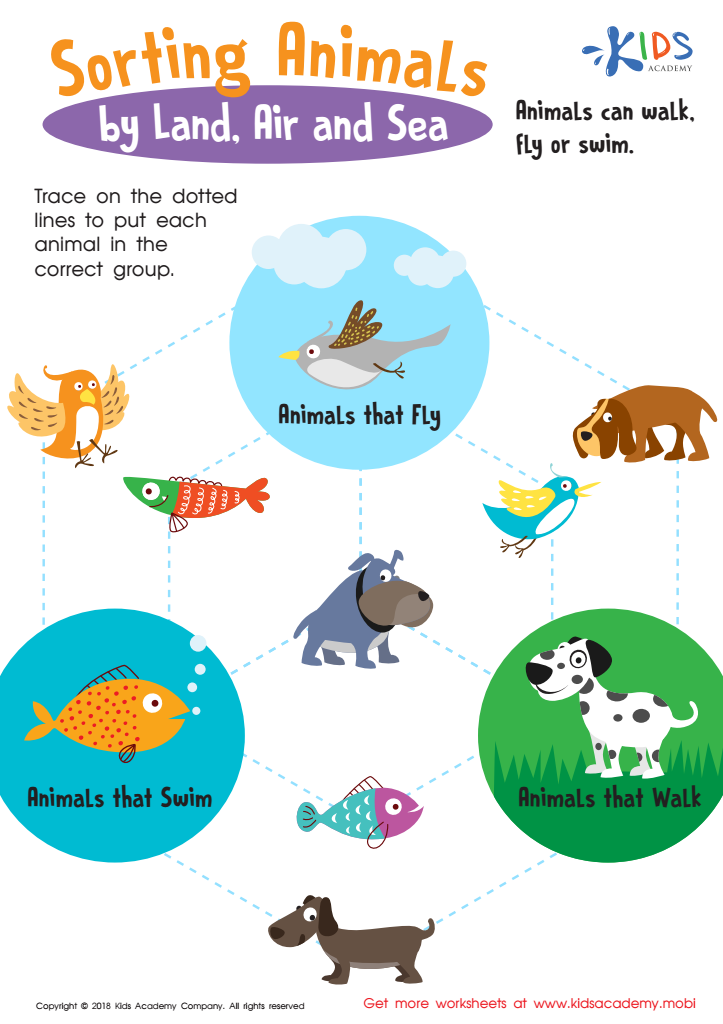
Sorting Animals by Land, Air and Sea Worksheet






Understanding animal classification at an early age can be immensely beneficial for young children. First, it taps into children’s natural curiosity about the world around them. Kids love to explore and ask questions, and introducing them to concepts like mammals, birds, fish, and reptiles provides them with a structured way to understand biological diversity. This foundational knowledge boosts observational skills and critical thinking. For instance, when a child sees a bird, they can start to classify it based on features like feathers and the ability to fly.
Moreover, early exposure to animal classification fosters language development. Children will learn new vocabulary and concepts, such as habitats and diets, which enhances their linguistic abilities and contextual understanding. Discussing why a whale is a mammal even though it lives in the sea, or why a bat is not a bird despite having wings, promotes cognitive development and logical reasoning.
Additionally, teaching animal classification helps cultivate empathy and environmental awareness. When children learn about different animals and their habitats, they are more likely to care about conservation and the natural world. They develop a sense of responsibility towards protecting these creatures and their environments, fostering lifelong habits of environmental stewardship.
In essence, early lessons on animal classification equip children with scientific knowledge, language skills, and a compassionate mindset, laying a solid foundation for future learning.








