Comparing object weights Worksheets for 4-Year-Olds
3 filtered results
-
From - To
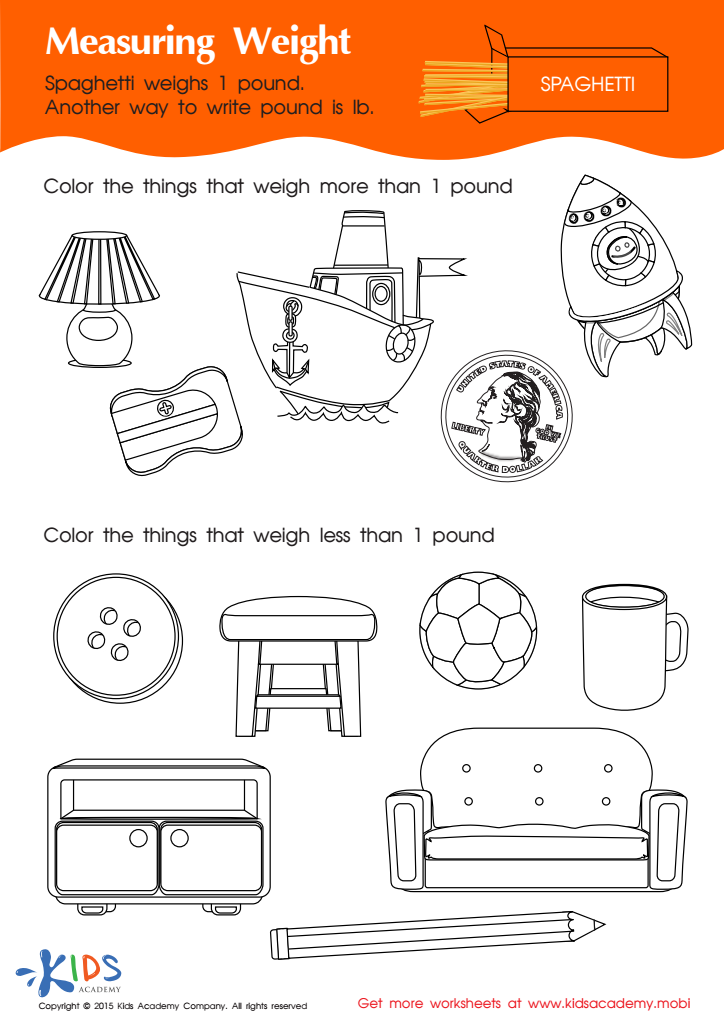
Introduce your little learners to the exciting world of weights with our "Comparing Object Weights Worksheets" designed specifically for 4-year-olds! These engaging, interactive worksheets encourage early math skills as children explore the concept of weight through fun comparisons. By using simple visuals and age-appropriate examples, kids enhance their critical thinking abilities while developing a foundational understanding of heavier and lighter objects. Perfect for preschool and kindergarten settings, these worksheets combine playful learning with essential skills, making them a must-have resource for early grade teachers and parents alike. Jumpstart your child's journey into the fascinating world of measurements today!
 Assign to My Students
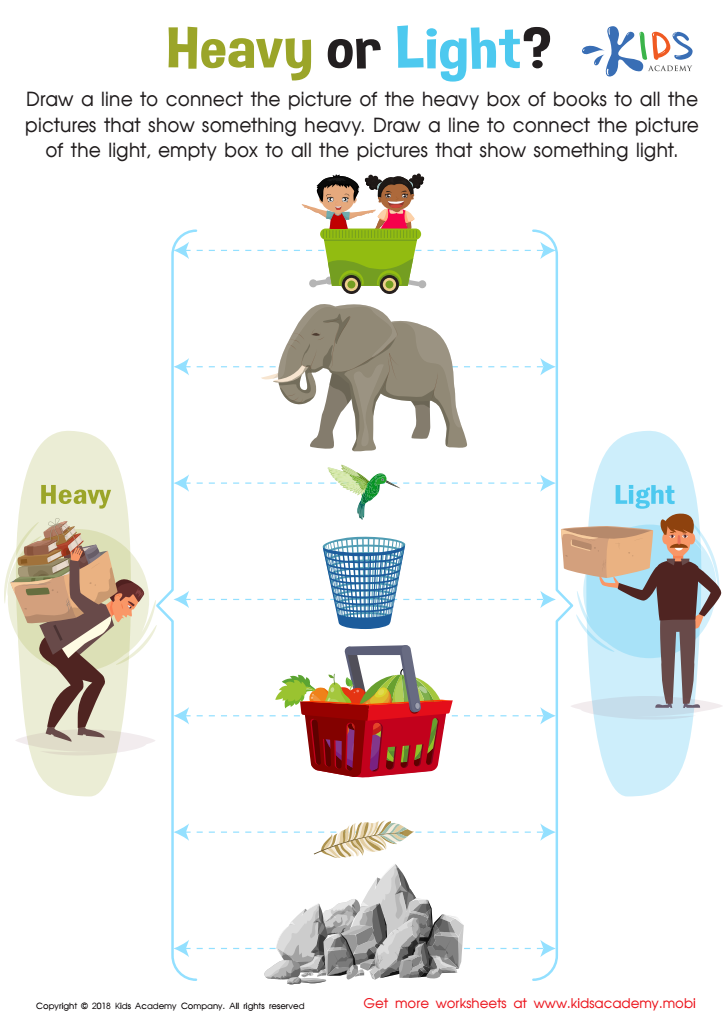
Heavy or Light? Worksheet
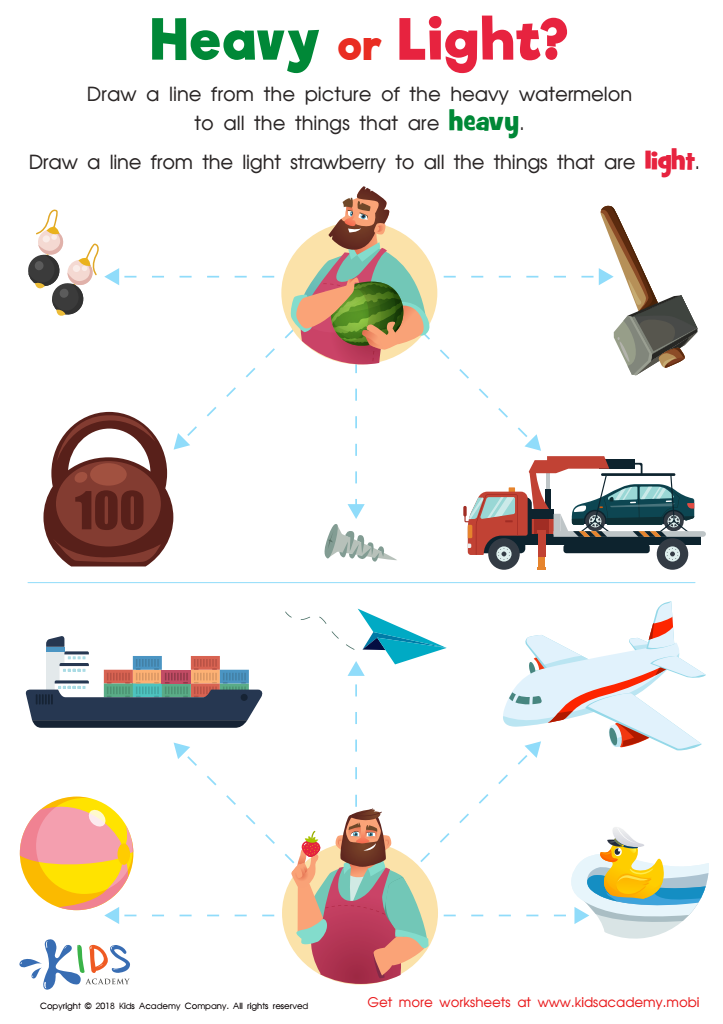
Heavy or Light? Worksheet





.jpg)
Comparing object weights is an essential activity for 4-year-olds that provides several developmental benefits. Firstly, it enhances their understanding of basic mathematical concepts. By comparing the weights of different objects, children begin to grasp the ideas of heavier and lighter, greater and lesser, and foster early measurement skills. These foundational math abilities will support their future learning in mathematics.
Secondly, discussing and engaging in weight comparison cultivates critical thinking and reasoning skills. As children analyze which objects are heavier or lighter, they use observation, prediction, and experimentation—core aspects of scientific thinking. This hands-on approach encourages active learning, making their educational experience more interactive and enjoyable.
Additionally, these activities promote language development. As children describe their observations and express their thoughts, they expand their vocabulary and improve their communication skills.
Finally, weighing objects can also encourage social skills. When children work in pairs or small groups to compare weights, they learn to collaborate, share ideas, and respect different viewpoints. Overall, incorporating weight comparison activities into daily routines benefits children's cognitive, social, and language development, making it an impactful focus for parents and teachers in early childhood education.








