Comparing objects Worksheets for 4-Year-Olds
6 filtered results
-
From - To
Discover our engaging "Comparing Objects Worksheets for 4-Year-Olds" designed to boost your child's observation and critical thinking skills! These interactive worksheets offer a fun way for young learners to explore concepts of size, shape, weight, and quantity. By comparing different objects, children develop foundational skills essential for early math and science understanding. Each worksheet is colorful and age-appropriate, making learning enjoyable and effective. Ideal for classroom use or at home, these resources encourage hands-on activities that promote cognitive development. Help your preschooler excel in their learning journey with our thoughtfully crafted comparing objects worksheets!
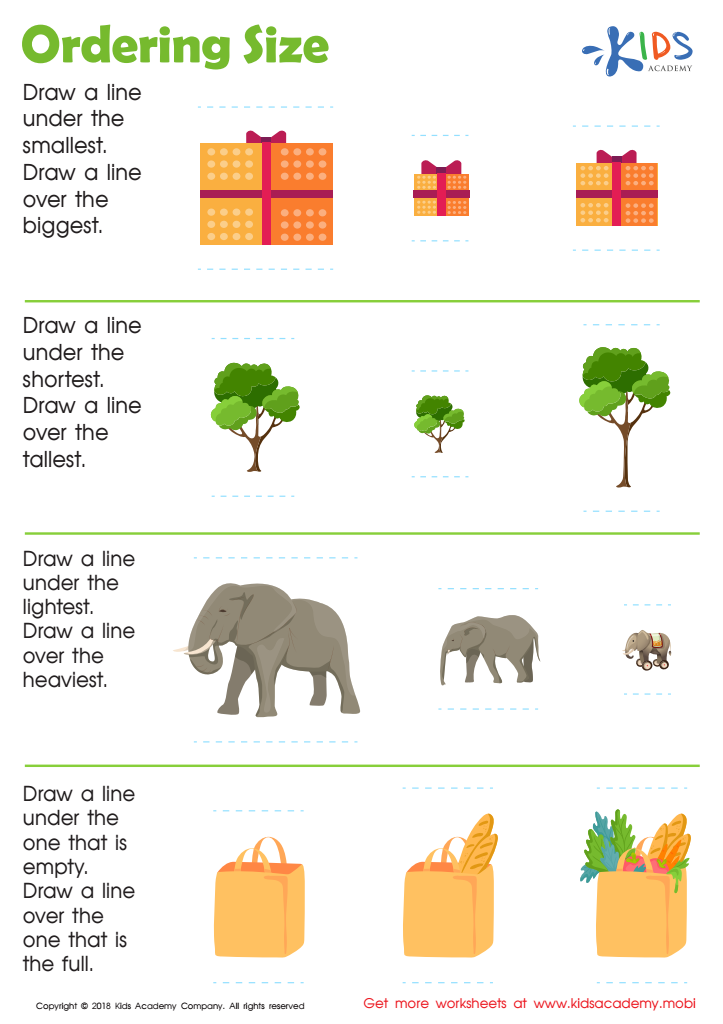
Ordering Size Worksheet
 Assign to My Students
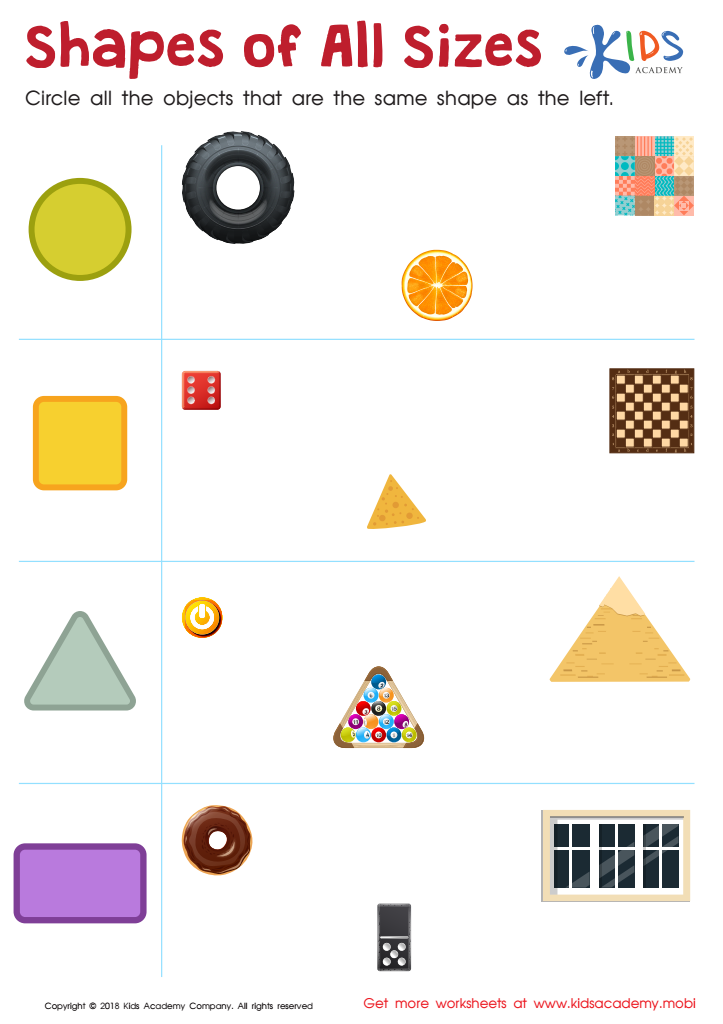
Shapes of All Sizes Worksheet
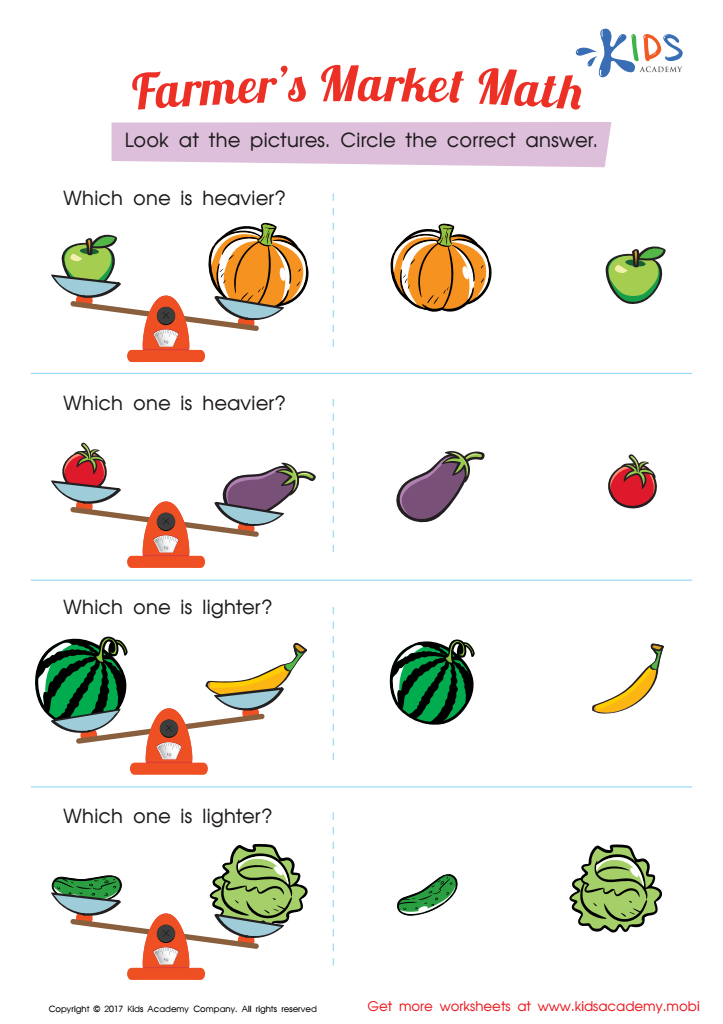
Which One Is Heavier Worksheet
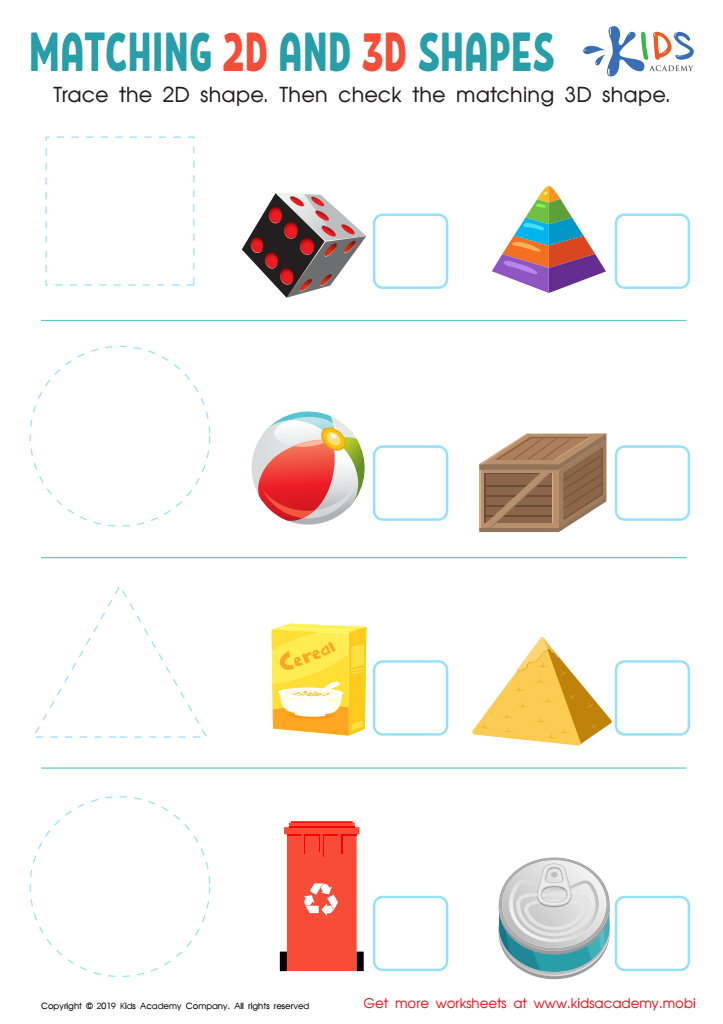
Matching 2D and 3D Shapes Worksheet
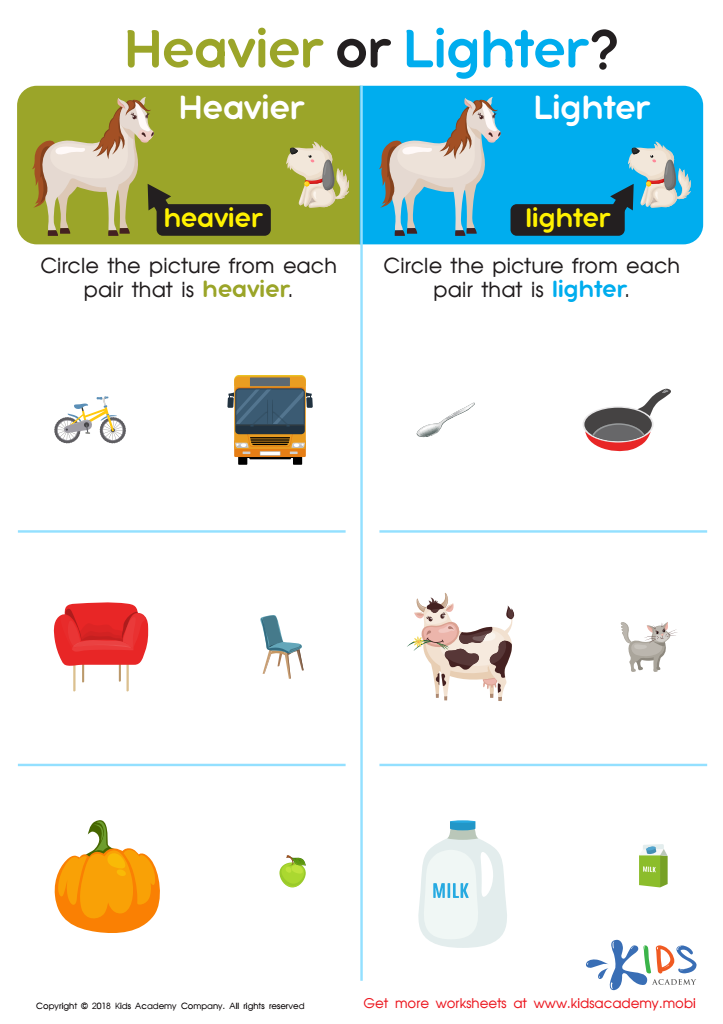
Heavier or Lighter? Worksheet
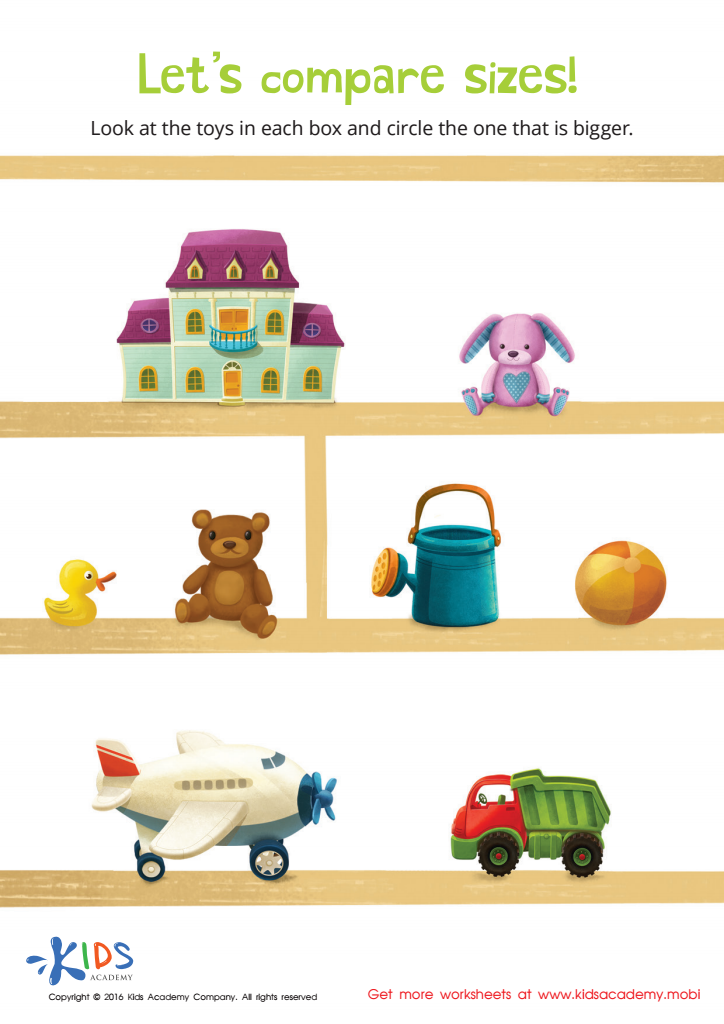
Classifying by Size Sorting Worksheet






Comparing objects is a vital skill for 4-year-olds, and understanding its importance can help parents and teachers foster cognitive and social development in young children. At this age, children are naturally curious and eager to explore their surroundings. By encouraging them to compare objects based on size, shape, color, and quantity, adults can promote critical thinking, problem-solving, and observational skills.
When children engage in comparing objects, they learn to categorize and organize their experiences. This foundational skill enhances mathematical understanding, as children begin to grasp concepts of more, less, and equal. Moreover, comparing objects aids vocabulary development; as they describe differences and similarities, they expand their language use and communication skills.
Additionally, comparison fosters social interactions. Engaging in group activities that involve comparing objects encourages cooperation, listening, and sharing opinions, all of which are crucial for emotional intelligence and collaborative skills.
In summary, supporting 4-year-olds in comparing objects equips them with essential cognitive and social tools, laying the groundwork for future learning. Parents and teachers play a significant role by providing enriching activities and discussions that encourage this exploration, ultimately contributing to a child's overall development and readiness for more complex concepts in the future.








