Filters

304 filtered results

Clear all filters
Favorites
With answer key
Interactive

304 filtered results

Difficulty Level

Grade


Introducing our engaging Counting Practice Worksheets for 4-Year-Olds, designed to enhance foundational math skills while making learning fun! These colorful, interactive worksheets help young learners become familiar with numbers and counting through various playful activities. Kids will enjoy counting objects, connecting dots, and identifying numbers, all tailored to support their developmental milestones. Our resources foster essential cognitive skills, encouraging children to grasp basic math concepts with ease. Perfect for classroom use or at-home learning, our worksheets are crafted to provide a supportive, enjoyable learning environment. Start your child's journey to numeracy success today with our delightful counting practice resources!

Check out this FREE "Counting practice" Trial Lesson for age 4!

Counting to 5

Favorites
With answer key
Interactive
  • 4
  • Counting practice
Math PDF Worksheet: Drawing the Bear’s Route by Number

Drawing the Bear's Route by Number Worksheet

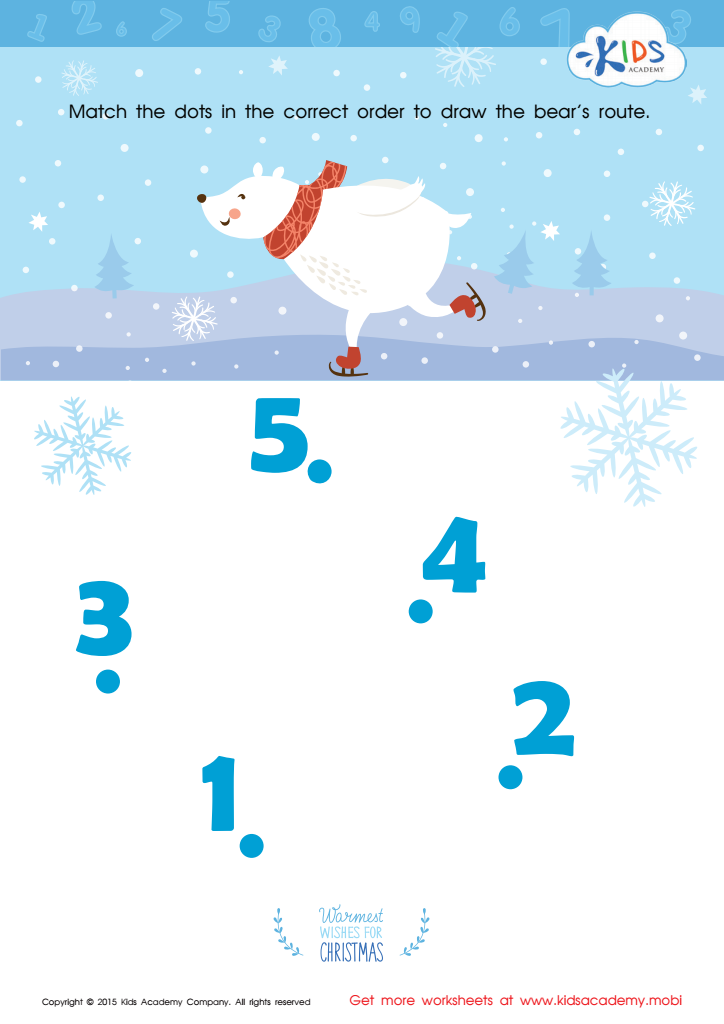
This winter-themed math worksheet is perfect for counting practice. Have fun learning and celebrating the season with your kindergartener as they trace and recognize numbers. It also helps develop fine motor muscles. For more fun, check out the math worksheets on Kids Academy.
Drawing the Bear's Route by Number Worksheet
Worksheet
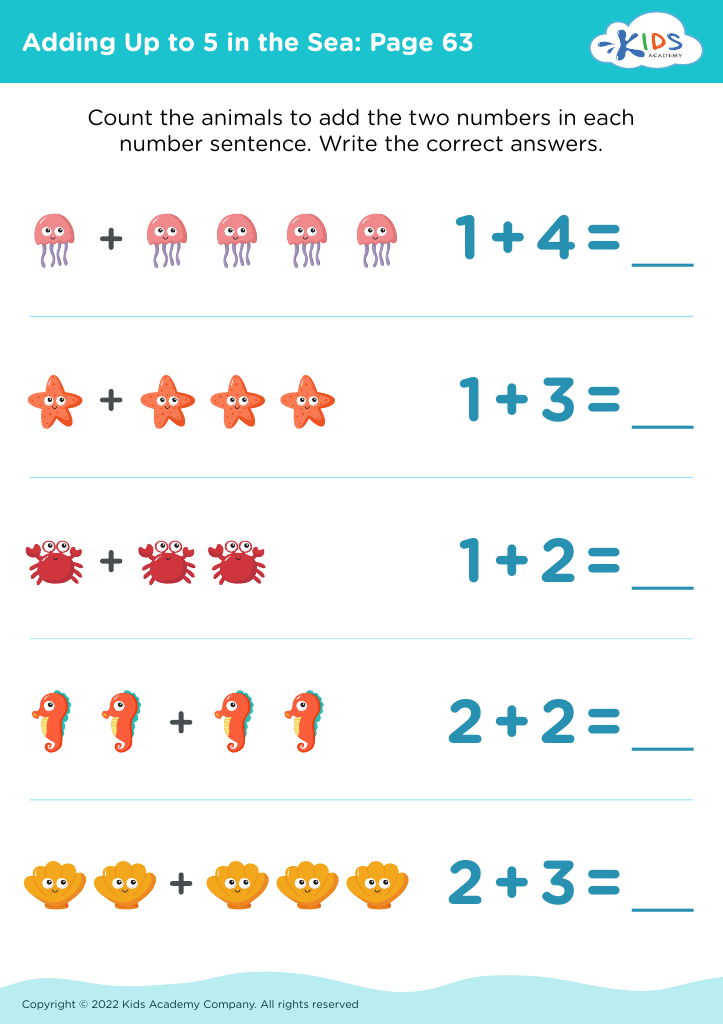
Adding Up to 5 in the Sea: Page 63
Worksheet
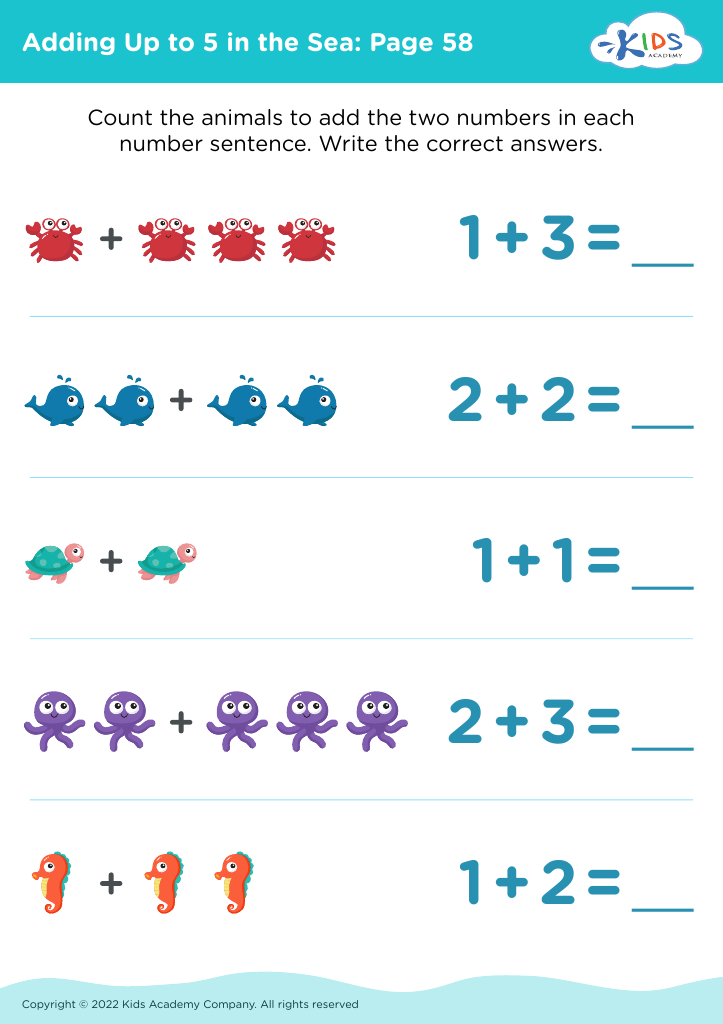
Adding Up to 5 in the Sea: Page 58
Worksheet
Base Ten Block Counting Worksheet

Base Ten Block Counting Worksheet

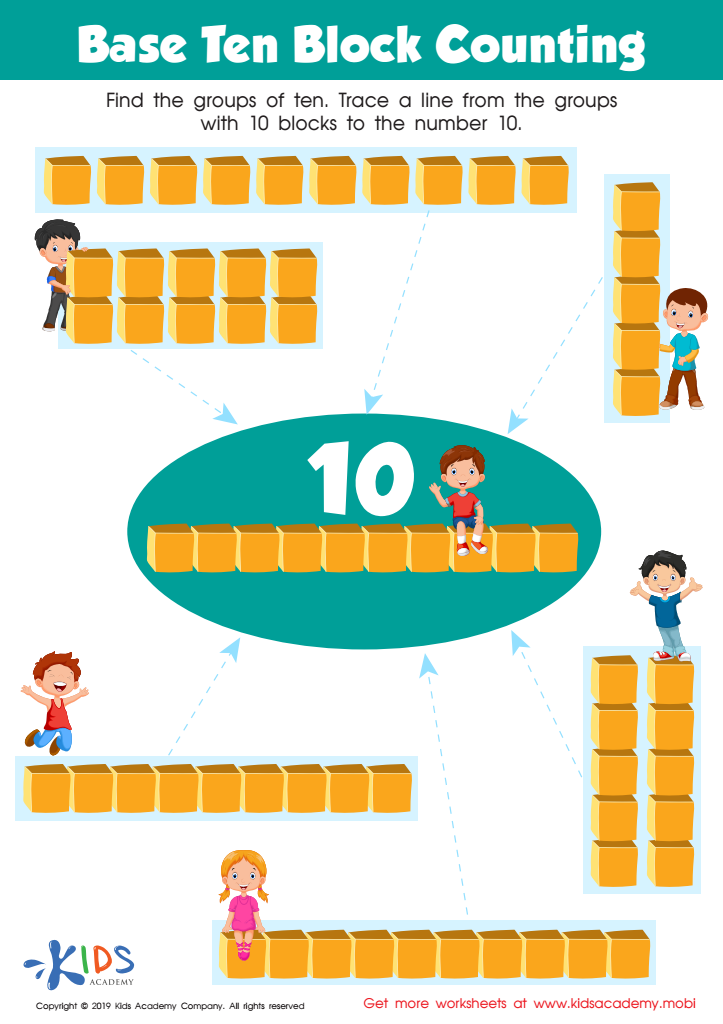
Introduce your kids to counting with educational DVDs and video games. Then use this worksheet: look at the picture and help them find the groups of ten; trace a line from the groups with 10 blocks to the number 10. This will help them practice and gain a better understanding of counting.
Base Ten Block Counting Worksheet
Worksheet
Сounting from 11 to 20 Worksheet

Ordering 11–20: Busy Bee Counting Worksheet
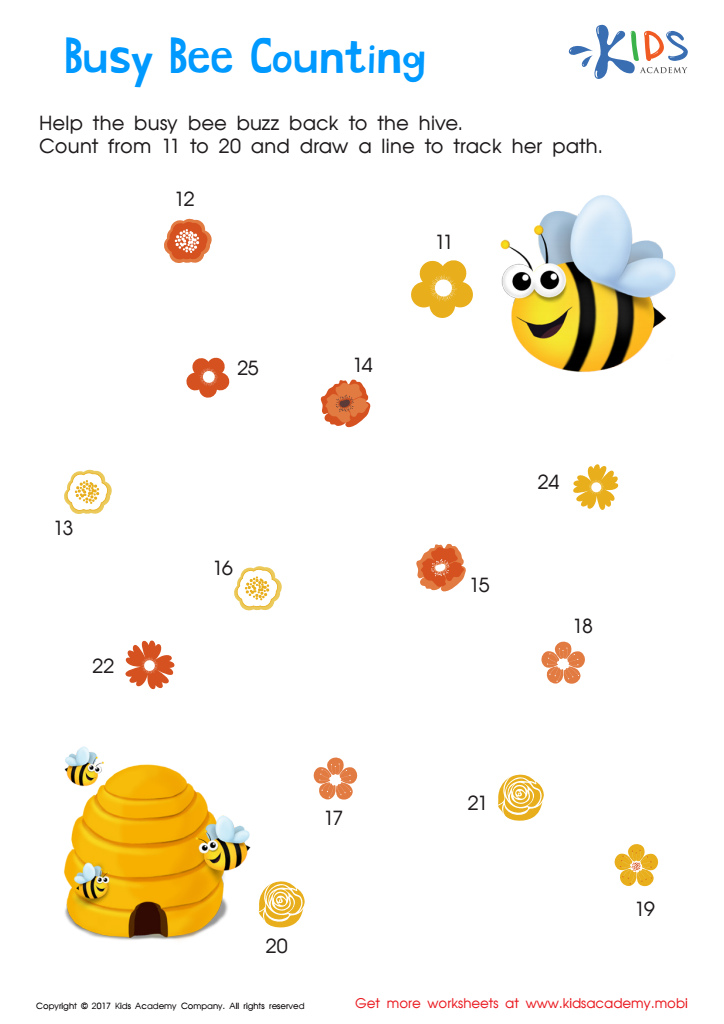
Help your child master counting from 11 to 20 with our connect the dot counting worksheet. Kids will have fun counting, drawing and problem-solving with this vibrant worksheet. With clear directions, adorable pictures and a sense of purpose, your child will develop crucial numeracy skills without even knowing it!
Ordering 11–20: Busy Bee Counting Worksheet
Worksheet
Force and Interactions: Assessment 1 Worksheet
Force and Interactions: Assessment 1 Worksheet
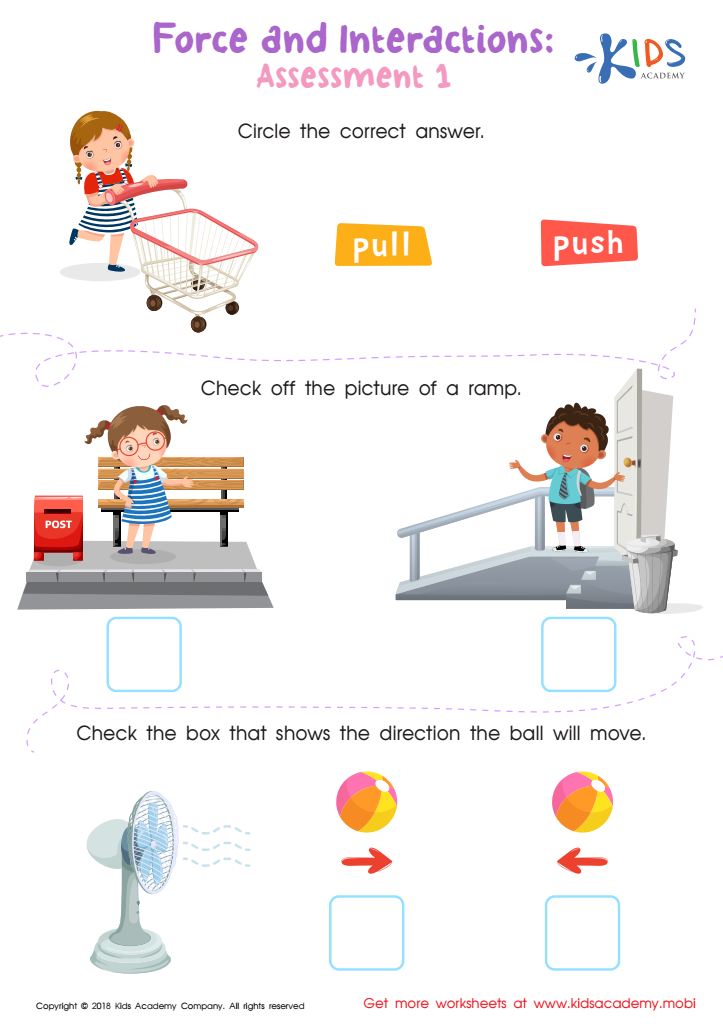
Test your students' knowledge of pushing, pulling, ramps and wind with this worksheet. The first task requires them to identify push or pull pictures. The second asks them to identify a ramp and the third to explain which direction a ball will move when exposed to wind.
Force and Interactions: Assessment 1 Worksheet
Worksheet
Adding Up to 5 in the Forest: Page 73
Worksheet
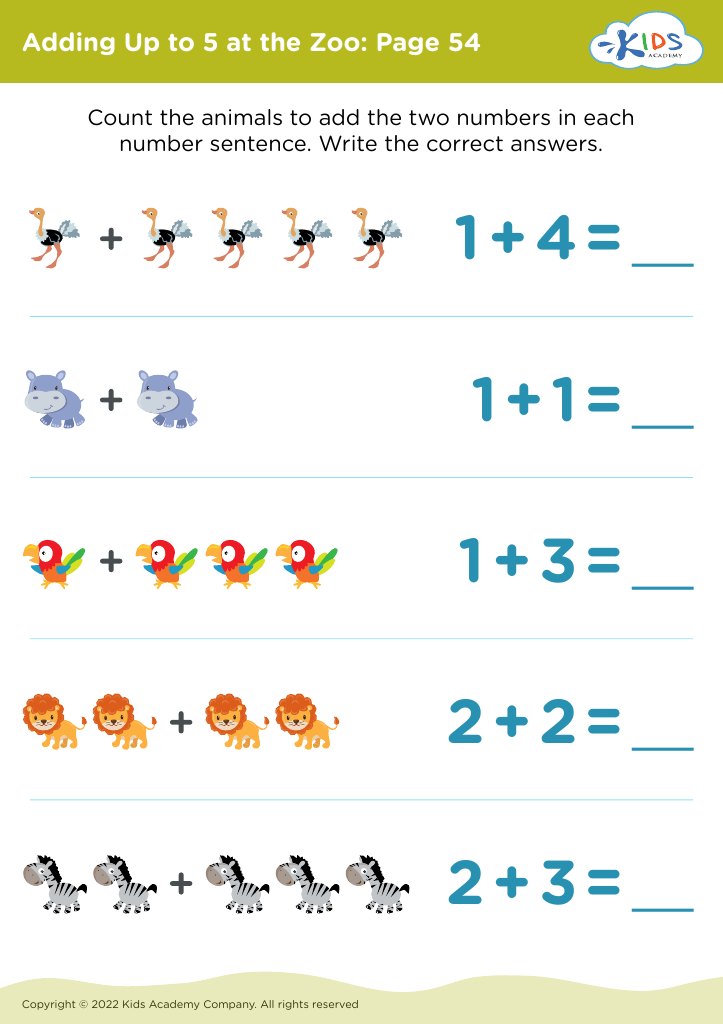
Adding Up to 5 at the Zoo: Page 54
Worksheet
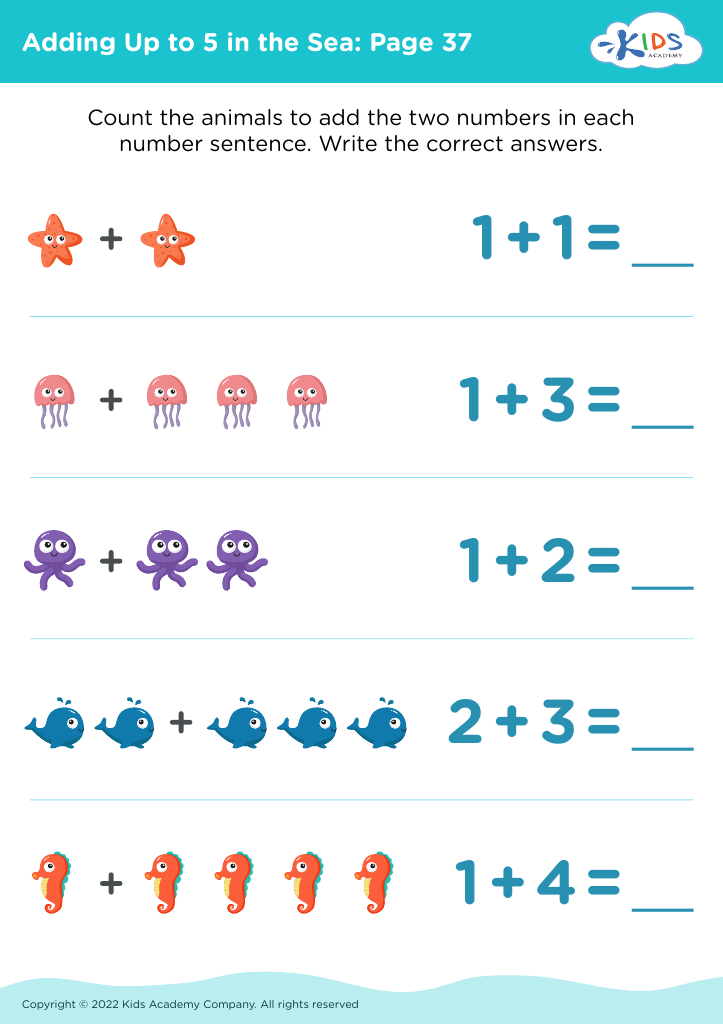
Adding Up to 5 in the Sea: Page 37
Worksheet
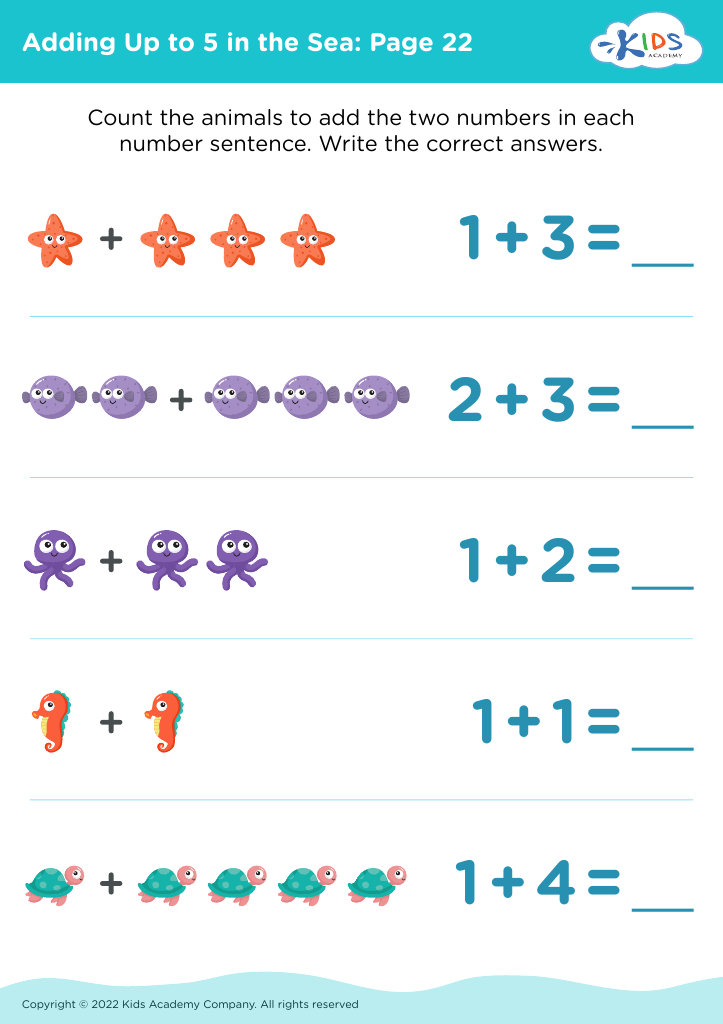
Adding Up to 5 in the Sea: Page 22
Worksheet
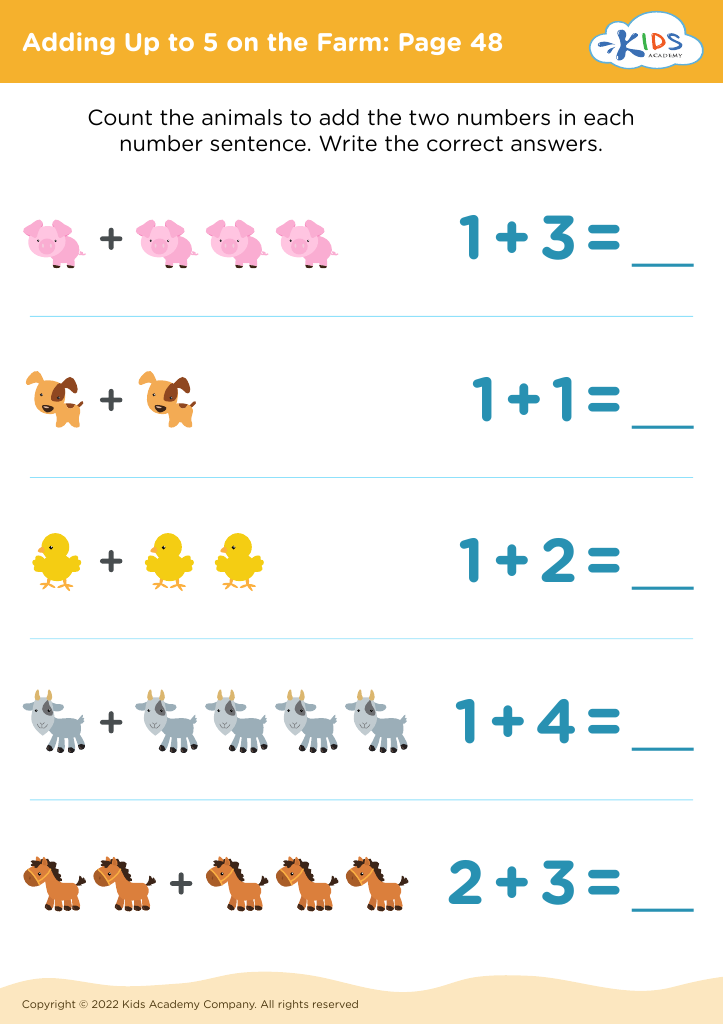
Adding Up to 5 on the Farm: Page 48
Worksheet
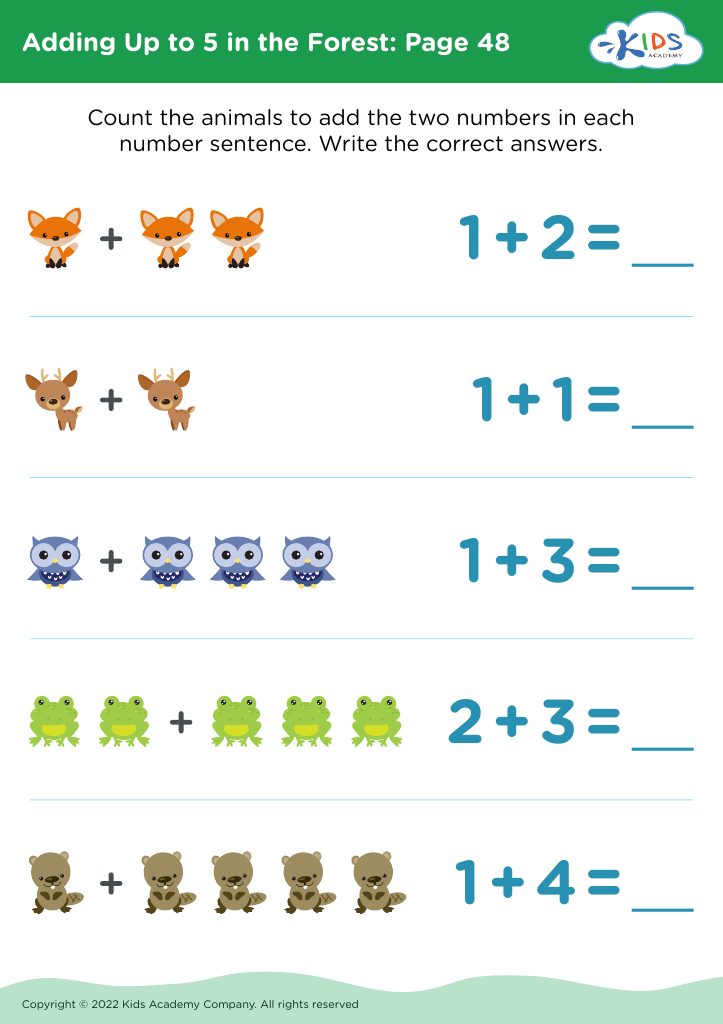
Adding Up to 5 in the Forest: Page 48
Worksheet
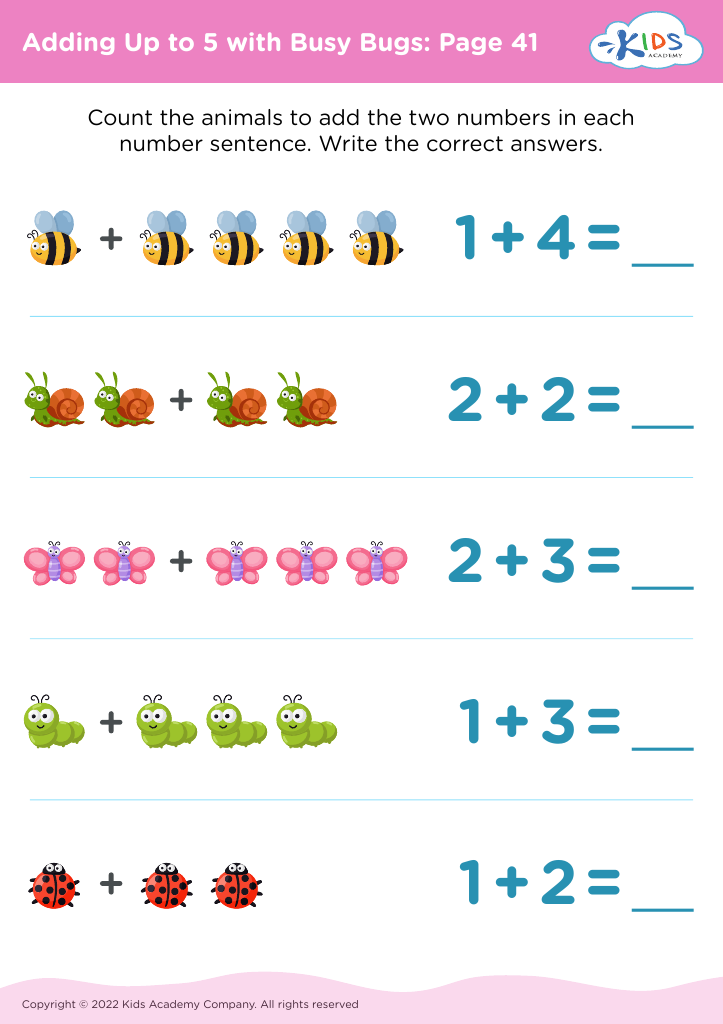
Adding Up to 5 with Busy Bugs: Page 41
Worksheet
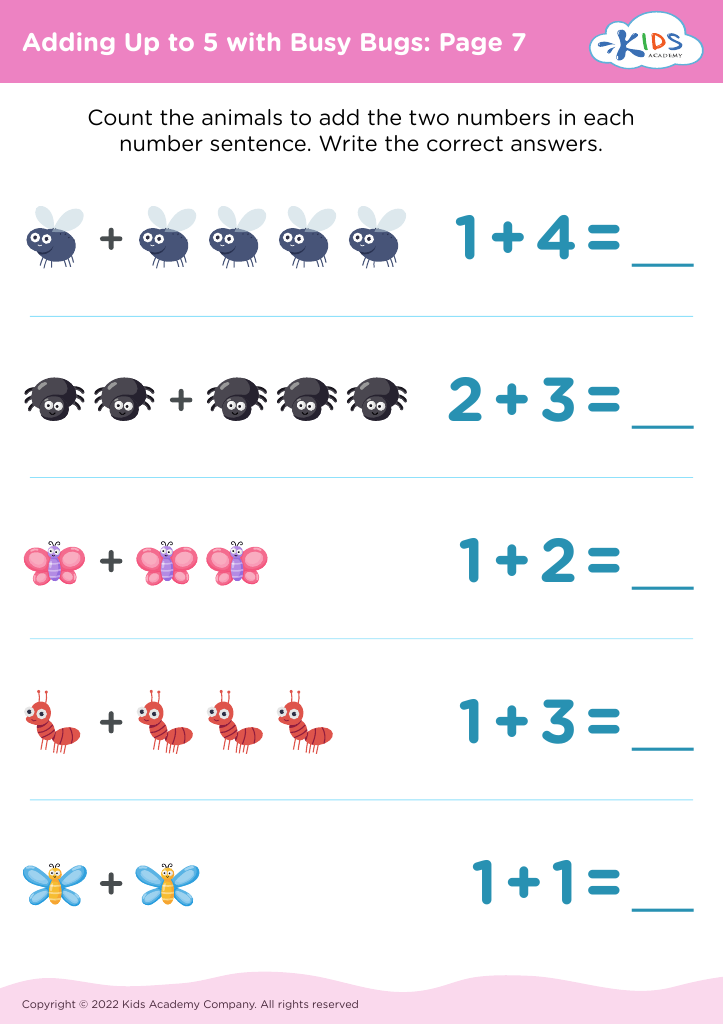
Adding Up to 5 with Busy Bugs: Page 7
Worksheet
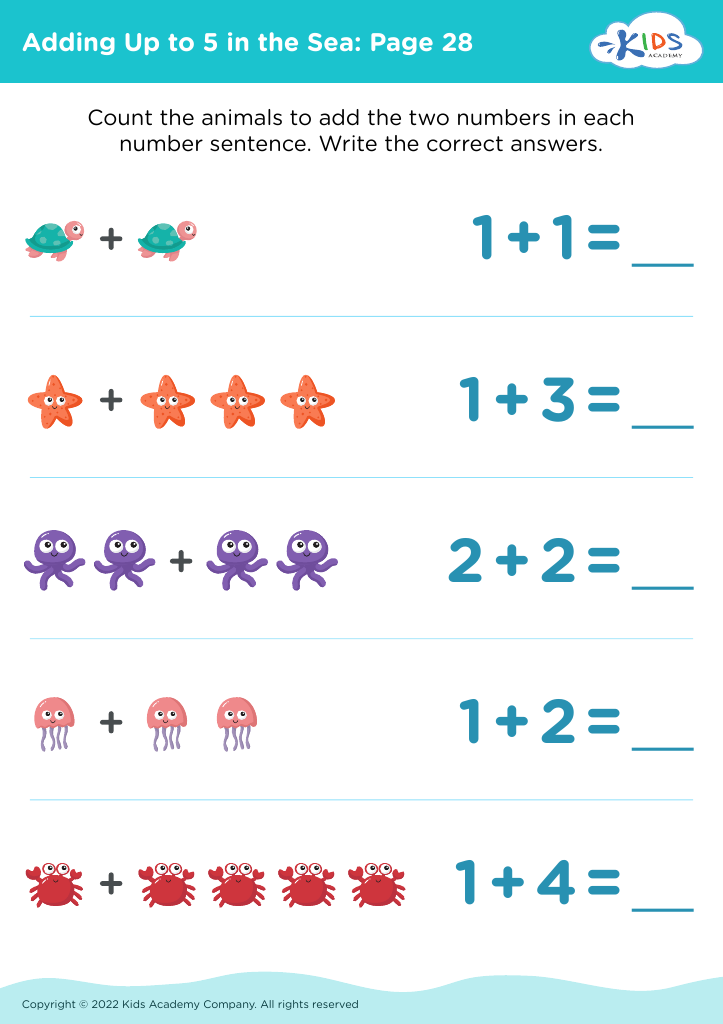
Adding Up to 5 in the Sea: Page 28
Worksheet
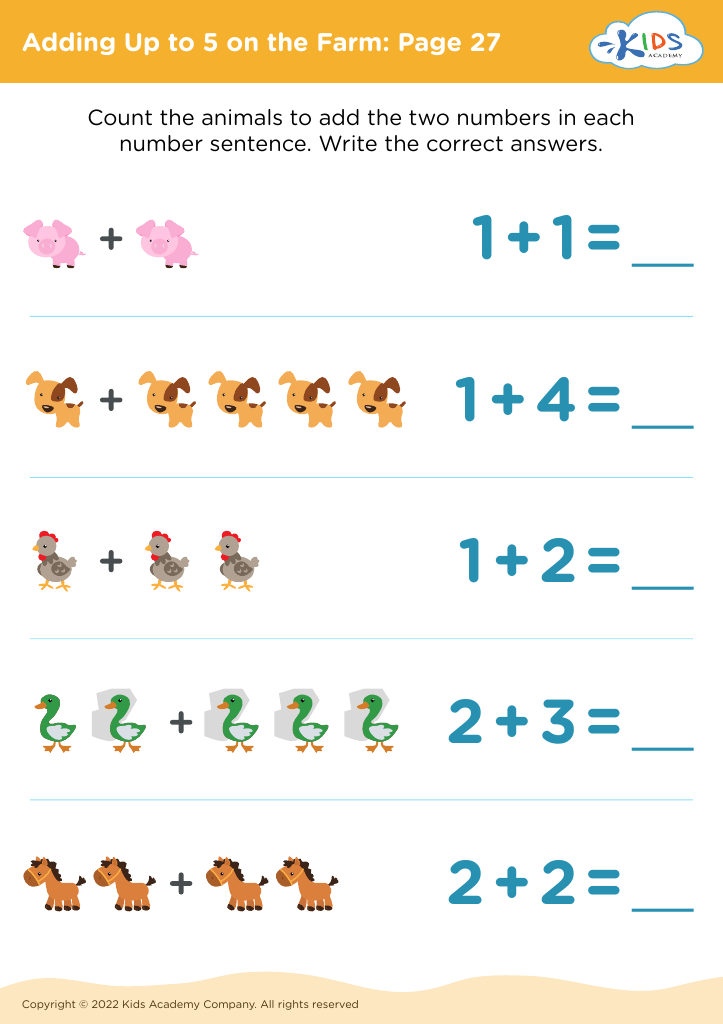
Adding Up to 5 on the Farm: Page 27
Worksheet
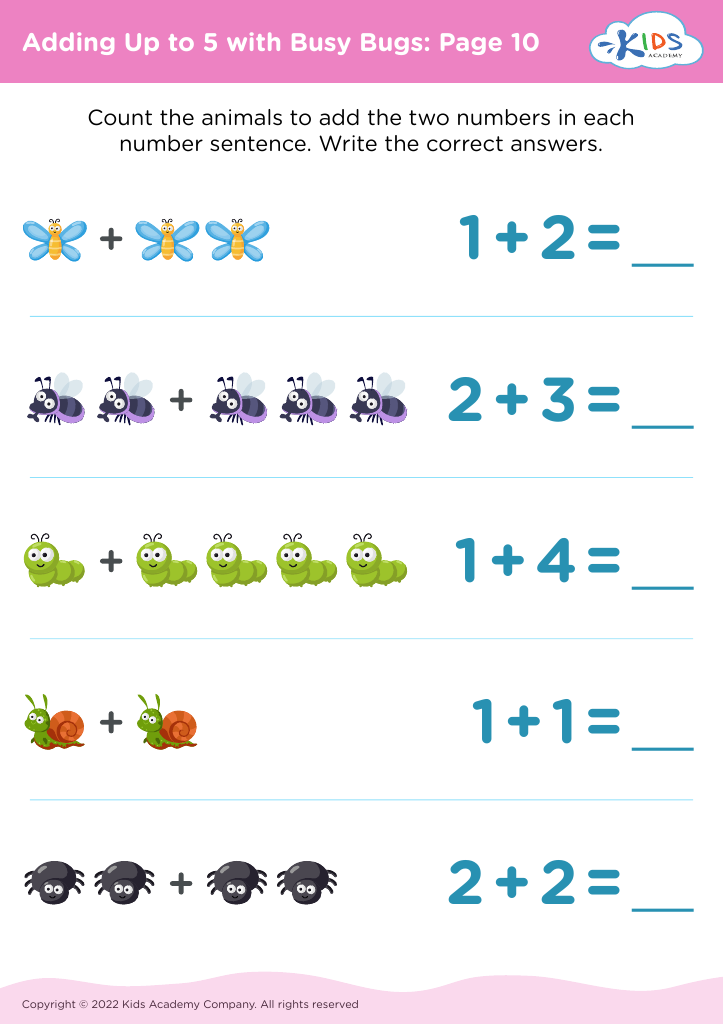
Adding Up to 5 with Busy Bugs: Page 10
Worksheet
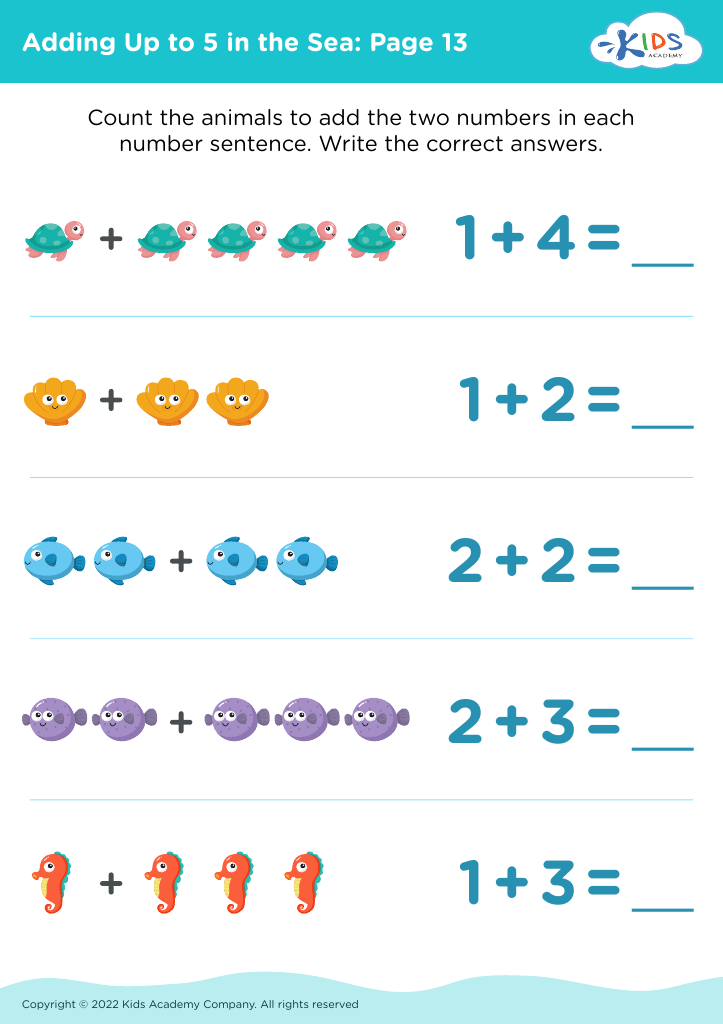
Adding Up to 5 in the Sea: Page 13
Worksheet
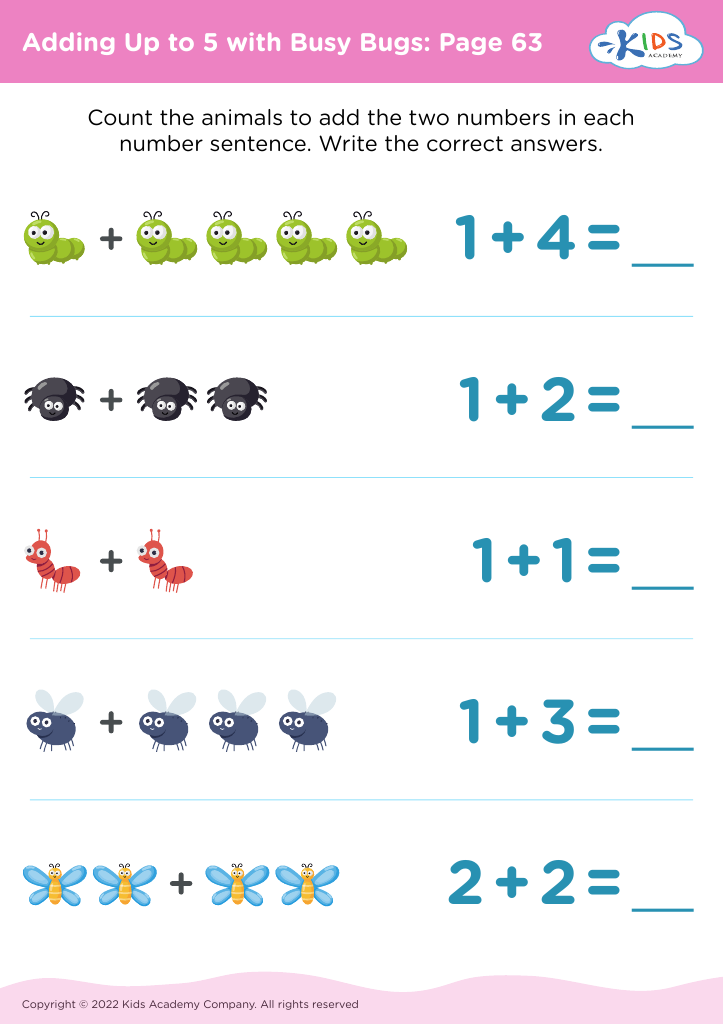
Adding Up to 5 with Busy Bugs: Page 63
Worksheet
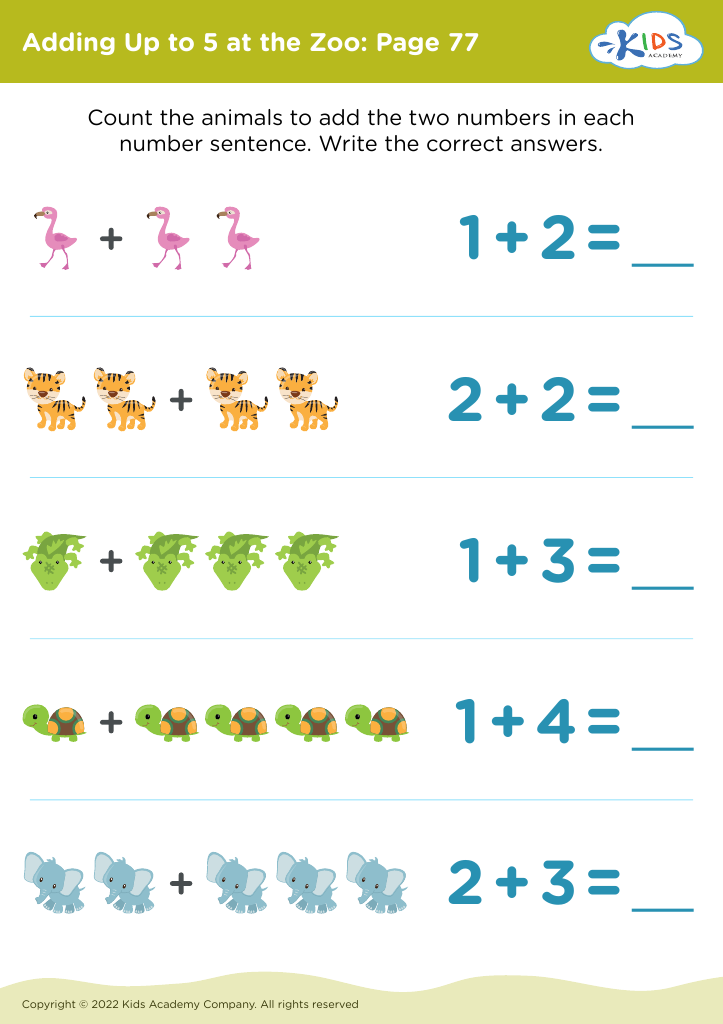
Adding Up to 5 at the Zoo: Page 77
Worksheet
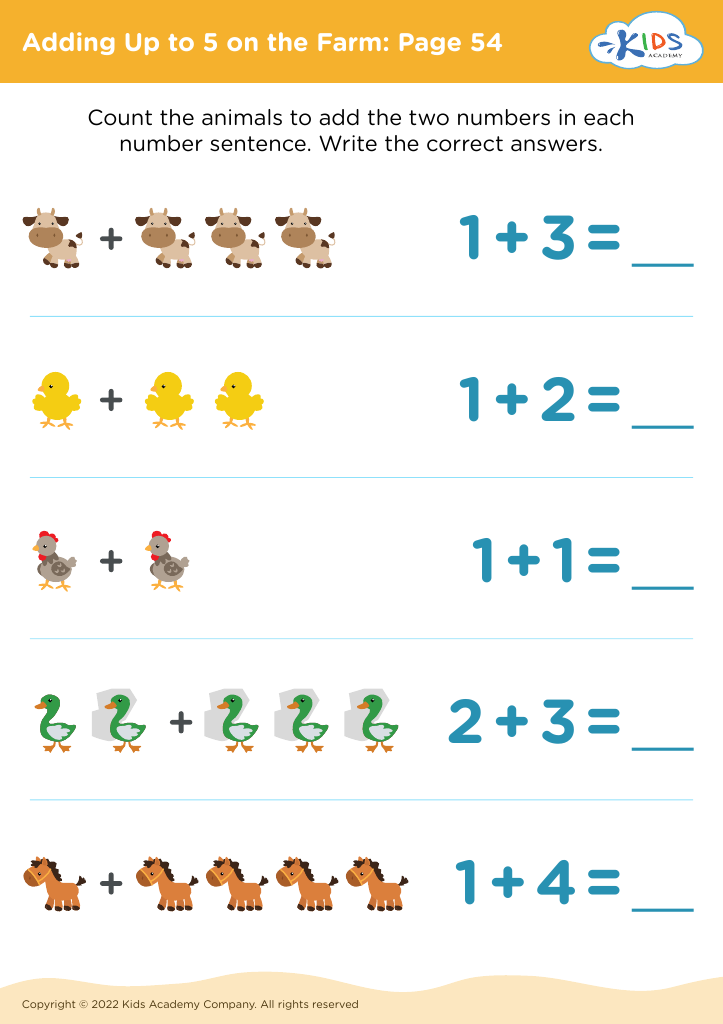
Adding Up to 5 on the Farm: Page 54
Worksheet
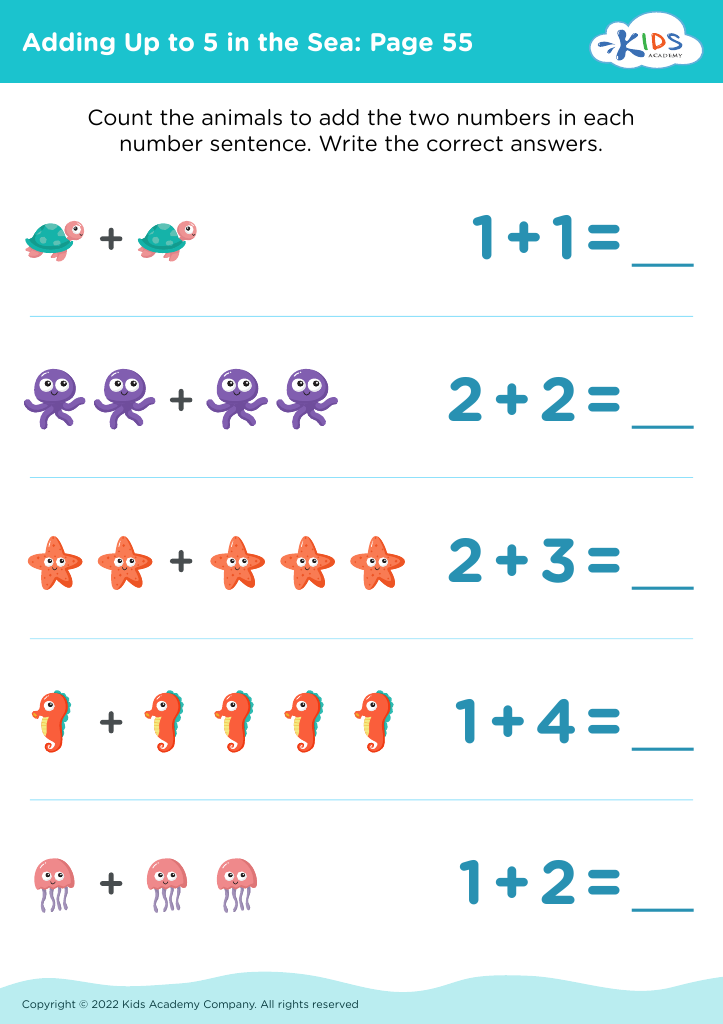
Adding Up to 5 in the Sea: Page 55
Worksheet
Baa Baa Black Sheep printable worksheet

Baa Baa Black Sheep Printable
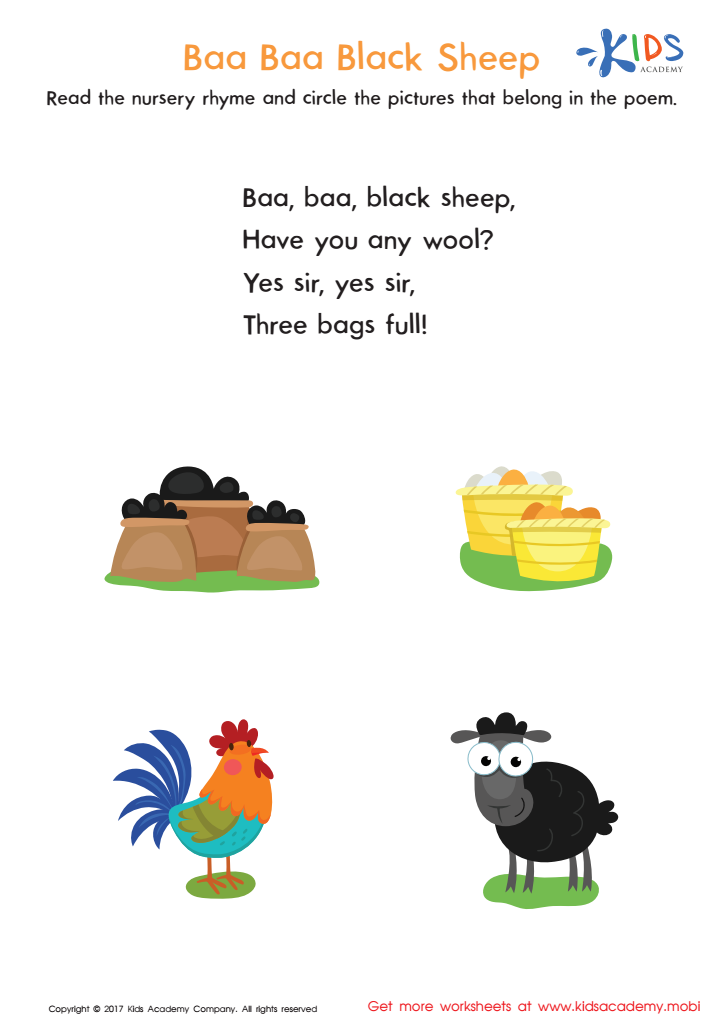
Jumpstart your child's reading skills with this printable Baa Baa Black Sheep worksheet! Recite the lines with them, then have them select the pictures associated with the poem to test comprehension. Fun and educational!
Baa Baa Black Sheep Printable
Worksheet
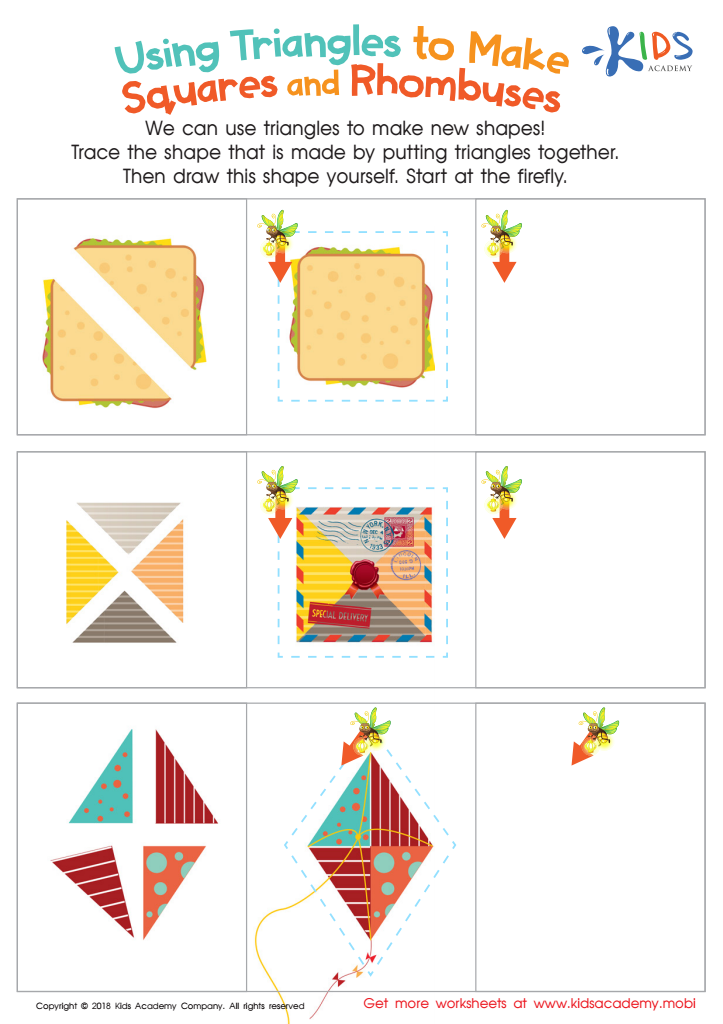
Using Triangles to Make Squares and Rhombuses Worksheet


Using Triangles to Make Squares and Rhombuses Worksheet

Learning shapes is a fun way to boost spatial skills and critical thinking. This worksheet shows children how to use triangles to construct squares and rhombuses. Clear illustrations and a printout help children draw the new shape. A great activity for the math classroom! 80 words.
Using Triangles to Make Squares and Rhombuses Worksheet
Worksheet


Counting practice for 4-year-olds is crucial as it lays the foundation for early mathematics and cognitive development. At this age, children are naturally curious and eager to explore numbers, making it an opportune time for structured counting activities. Engaging in counting helps develop not only numerical skills but also enhances their problem-solving abilities and critical thinking.

Parents and teachers should care because counting activities promote language development; as children verbalize numbers, they increase their vocabulary and conceptual understanding. Furthermore, counting introduces concepts such as sequence, quantity, and comparison, essential for future math learning.

Incorporating counting in fun ways, such as through songs, games, or everyday activities (like counting toys or steps), allows children to grasp mathematical ideas in a playful context. This makes learning enjoyable and reinforces positive attitudes towards education.

Lastly, early proficiency in counting translates to greater confidence in math skills later on. By fostering a strong mathematical foundation at this young age, parents and teachers prepare children for more complex mathematical concepts as they progress in their education, ultimately supporting their overall academic success.